
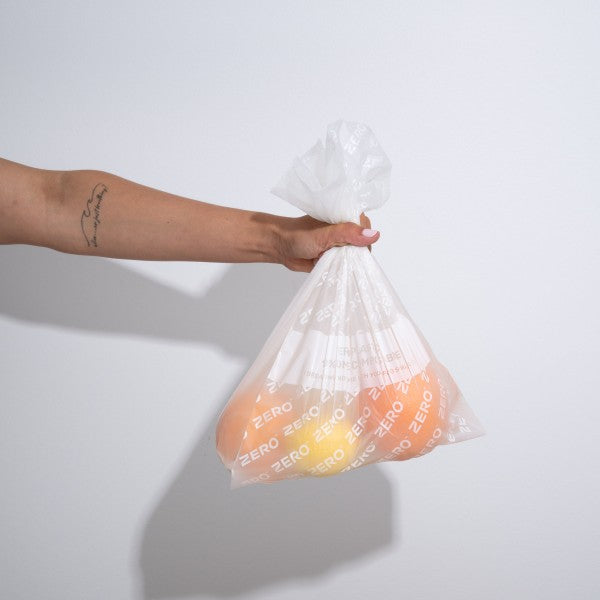
Our commitment to people and planet isn't a side project. It's built into how we design, what we make and the everyday calls we make as a small team.
Starting from ZERO
We look hard at every stage of a product's life so that, while we solve one problem, we don't create another. Being a young company is an advantage here: we got to start with a clean slate and ask better questions from day one.
Why it matters
Climate change is the biggest challenge of our time, and it won't ease until the way we make and buy everyday things changes. Delay is the new denial. And we're not alone in thinking that: more people than ever want to know what's in the things they buy, and what happens when they throw them away.
Everyday products are where most of us meet plastic, every single day. That's where we think the biggest shift can happen, and why we design swaps that are easy to make.
Our why, what and how
Our why: to radically reduce the plastic waste that comes with everyday life, starting with the stuff that comes with raising a family.
Our what: intuitive, design-led everyday products that replace plastic ones.
Our how: rigorous material choices, independent certification, and honesty about where we're at.
The code we work by
Be responsible
- Be rigorous about materials at the very start of the design process.
- Take ownership of the whole product life cycle.
- Choose materials that have a better end of life than the plastic they replace.
- Where we can, make good use of existing plant-based by-products, like the sugarcane bagasse in our cling wrap.
Be accountable
- Our resources are limited, so we stay focused on the things that make the biggest difference.
- Back up what we say with independent certification, not adjectives.
- Be accountable even when no one is looking.
Be thoughtful
- Look after our community, because that flows on to the planet.
- Design for the future, with a clear goal in mind.
Be transparent
- Tell you what our products are made from, including the parts we're still working on.
What we believe
If nothing changes, nothing changes.
Big ideas are great. Real-world action is better. We'd rather put a better product in your hands today than wait for a perfect one.
Do the right thing, even when it's hard.
Knowing the right thing is easy; living it is the hard part. We promise to face the facts, tell the truth, own our mistakes and learn from them. That includes going back over what we've published and correcting anything that overreached.
The plastics problem is real, and it's solvable.
We've made it our mission to help solve it, one everyday swap at a time.
A better future starts now.
We've got ambitious plans for a world with far less plastic in it, one our kids, and their kids, can be proud of.
Where we are today
Materials. Our wipes and cloths are made from timber viscose, a plant fibre made from wood pulp. Our cling wrap is mainly PLA from sugarcane with about 20% PBAT for stretch, and our food storage bags are PBAT, corn starch and calcium carbonate.
End of life. Our Cling Wrap, Food Storage Bags, Produce Bags, Nappy and Puppy Waste Bags are certified home compostable. Our Commercial Cleaning Cloth is certified biodegradable in soil, so it breaks down at everyday temperatures without a compost heap and can go in your home compost too. Our wipes and Reusable Cleaning Cloths are made to be used again and again.
Skin. Our Baby Wipes are sold dry, with nothing added – just water – and are OEKO-TEX® STANDARD 100 Class 1 certified.
Where we intend to go
These are intentions, not promises with dates on them. We'll share progress as it happens.
- Materials: move completely away from petroleum-based polymers by developing our own materials through R&D.
- Waste: keep designing out anything that ends up as lasting waste.
- Energy and freight: favour renewable energy and lower-emission freight as we grow.
- Water: consider water use when we choose materials.
- Certification: keep every material claim independently certified.
- Reporting: share what we learn about our impact as we get the data.
How we keep improving
- Set goals – big, aspirational ones, broken into smaller steps.
- Plan – map out what it takes to get there.
- Monitor and act – check progress, find the gaps, adjust.
- Report – share what we've done and what we've learned.
- Review – weigh up risks and opportunities, environmental and social alongside financial.
Thinking in life cycles
To be both sustainable and affordable, we have to think big. Plenty of eco products work at a small scale but price most people out. We want better choices to be for everyone, not just the few, so we weigh up every product across four phases:
- Material source
- Manufacturing
- Freight and distribution
- End of life
We'll keep publishing our thinking here. Feels good to do good. If you'd like to start with an easy swap, try our Cling Wrap or the Zero Waste Kitchen Family Kit.
You may also like
Share:
When we say ZERO, we mean it
The founding story: where ZERO began