
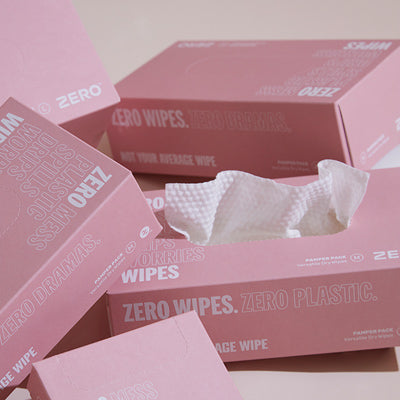
Most ingredient lists are long. Ours is short. Here's exactly what goes into ZERO Baby Wipes, what doesn't, and how to get the most out of them.
What's in them
Timber viscose. That's it. Timber viscose is a fibre made from wood pulp, and ours is made from wood pulp sourced from FSC- and PEFC-certified forests. It's soft, absorbent and holds water well, which is exactly what you want from a wipe you're going to wet yourself.
The wipes come dry, in a cardboard box. You add the water.
What's not in them
Because the wipes are dry, there's no liquid formula, which means:
- No preservatives. Wet wipes need preservatives to stop microbes growing in the damp pack. A dry wipe doesn't.
- No fragrance. Nothing is added to the fibre to make it smell a certain way.
- No lotion or cleanser. Just the wipe. You decide what goes on it, and for most jobs that's plain water.
Why does that matter? Preservatives and fragrances are among the ingredients most commonly linked to contact dermatitis from personal care products. In 2014, Melbourne dermatologists writing in the Medical Journal of Australia reported a rise in allergy to the preservative methylisothiazolinone in their patients, with wet wipes used for nappy changes the most common source. Formulations change over time and plenty of people use wet wipes without any problems, but it's a good illustration of why some parents prefer to keep things simple.
What OEKO-TEX® STANDARD 100 Class 1 means
ZERO Baby Wipes are certified to OEKO-TEX® STANDARD 100, Class 1.
- OEKO-TEX® STANDARD 100 is an independent certification for textiles. Certified products are tested for a long list of harmful substances.
- Class 1 is the strictest of its product classes, set aside for baby articles.
It's a check you don't have to take our word for: it's done independently, to a published standard.
What it isn't: a medical claim. OEKO-TEX certification is about what's in the textile, not about treating or preventing any skin condition. If your baby has a rash or a skin concern, your GP, child health nurse or pharmacist is the right person to talk to.
How to use them
- Wet the wipe. Run it under the tap, or keep a small spray bottle or bowl of water at the change table. Warm water is nicer on a cold morning.
- Squeeze out the excess. Damp, not dripping.
- Wipe. The fibre holds onto mess rather than pushing it around.
- Bin or wash. For nappy changes, we recommend using a fresh wipe each time. For everyday messes like sticky hands, faces and high-chair spills, rinse it out and go again.
On the go? Pop a few dry wipes in your bag with a small water bottle. Dry wipes are lighter to carry than a damp pack and won't dry out on you.
Washing and reusing
ZERO Baby Wipes are reusable and machine washable. Wash them with your normal load (a laundry bag stops them getting lost) and let them dry. Use them for as long as they're doing the job well.
Not just for babies
The same wipe works across the house. There are Makeup Wipes for taking off the day and Cleaning Wipes for benches, spills and glasses. Same material, same idea.
And for the other end of the nappy-change job, our Nappy Waste Bags are certified home compostable.
FAQ
Do ZERO Baby Wipes contain any preservatives or fragrance?
No. They're dry wipes, so nothing is added. You just add water.
What are they made from?
Timber viscose, a fibre made from wood pulp.
Are they certified?
Yes, to OEKO-TEX® STANDARD 100 Class 1, the strictest class, which is for baby articles.
Will they help with nappy rash?
We don't make any claims about treating or preventing skin conditions. If your baby has a rash, talk to your GP, child health nurse or pharmacist.
Can I compost them?
Please pop used wipes in the general waste bin, or wash and reuse them.
This article is general information only and isn't medical advice.
Share:
What Is Benzalkonium Chloride, and Why Is It in Some Wet Wipes?
Why "Chemical Free" Is a Misleading Label (and What to Look For Instead)