
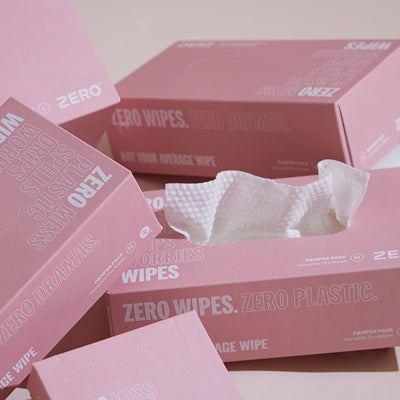
Baby wipes feel soft, papery and harmless. So it surprises a lot of people to learn that many of them are made, at least partly, from plastic. Not plastic you can see, like a bottle or a bag, but plastic fibres woven into the wipe itself.
Here's what that means, how to check your own wipes, and an easy swap if you want one.
Where the plastic is
In the wipe
Many conventional wet wipes are made from a nonwoven fabric that includes synthetic fibres such as polyester or polypropylene. Both are plastics, made from fossil fuels. Polyester is the same family of material used in plenty of drink bottles and clothing.
Not every wipe is the same. Some are blends of synthetic and plant-based fibres, and some are fully plant-based. The trouble is, it isn't always obvious from the front of the pack.
Around the wipe
Wet wipes need to stay wet, so they usually come in a sealed plastic soft pack or tub. Even if the wipe itself is plant-based, the packaging often isn't.
Why it matters
Conventional plastics don't break down the way plant materials do. A wipe made with synthetic fibres that ends up in landfill, or somewhere it shouldn't, will hang around for a long time.
And wipes do end up where they shouldn't. Australian water utilities regularly ask people not to flush wipes. Sydney Water, for example, asks households to only flush the three Ps (pee, poo and toilet paper) because wipes can cause blockages in home plumbing and the sewer network. That goes for all wipes, including ZERO's: please put them in the bin, not the loo.
How to check your wipes
- Look for the fibre. Check the pack or product page for words like polyester, polypropylene, PET or "synthetic fibres". Those are plastics.
- Look for plant-based fibres. Viscose, lyocell and cotton are made from plants.
- If it doesn't say, ask. It's a fair question and a brand should be able to answer it.
- Check the packaging too. Is it a plastic pouch, a tub or a cardboard box?
- Be wary of vague claims. "Eco" or "natural" on its own doesn't tell you what the wipe is made of.
The easy swap: a dry wipe
ZERO Baby Wipes do things a bit differently.
- The wipe: made from timber viscose, a fibre made from wood pulp. No polyester, no polypropylene.
- What's added: nothing. They come dry, so you just add water. No preservatives and no fragrance, because there's no liquid in the pack to preserve.
- Certified: OEKO-TEX® STANDARD 100 Class 1, meaning the material has been independently tested for harmful substances, to the strictest class, for baby articles.
- Reusable: machine washable, so you can rinse and reuse them for everyday messes. For nappy changes, we recommend a fresh wipe each time.
Because they're dry, they're also lighter to carry and they won't dry out in the change bag. A few wipes plus a small water bottle and you're sorted.
Same material, other jobs: Makeup Wipes for your face and Cleaning Wipes for around the house.
FAQ
Are all baby wipes made of plastic?
No. Many conventional wet wipes include synthetic fibres like polyester or polypropylene, but some are blends and some are fully plant-based. Check the pack, or ask the brand.
What are ZERO Baby Wipes made from?
Timber viscose, a fibre made from wood pulp, with nothing added.
Can I flush ZERO wipes?
No. Please don't flush any wipes. Put used wipes in the bin, or wash and reuse them.
How do I use a dry wipe?
Wet it, squeeze out the excess, wipe. Rinse and reuse for everyday messes, or use a fresh one for nappy changes.
Share:
What Are Dry Baby Wipes? (And How to Shop for a Better Wipe)
Normal Makeup Wipes vs ZERO Makeup Wipes