
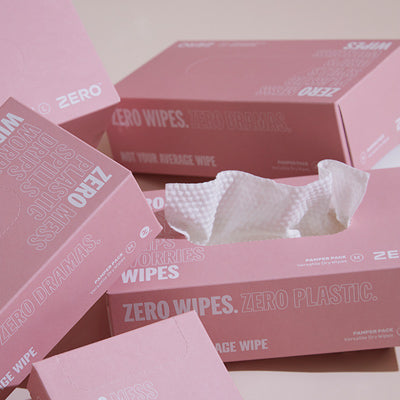
A dry wipe is exactly what it sounds like: a wipe that comes without the liquid. You add the water when you need it. Simple idea, but it changes quite a lot about what goes into a wipe and what you get out of it.
What are ZERO Baby Wipes?
ZERO Baby Wipes are dry wipes made from timber viscose, a fibre made from wood pulp sourced from FSC- and PEFC-certified forests. Nothing else is added. They're soft, absorbent and strong enough to wash and reuse.
- Material: timber viscose (wood pulp).
- What's added: nothing. Just add water.
- Certification: OEKO-TEX® STANDARD 100 Class 1. That means the material has been independently tested for harmful substances, to the strictest class, which is for baby articles.
- Reusable: machine washable, so you can rinse and reuse them for everyday messes.
Dry wipes vs wet wipes
What's in the pack
A wet wipe sits in liquid in a sealed pack, often for months. To keep that damp environment from growing microbes, wet wipes need a preservative, and many also contain fragrance and other ingredients. A dry wipe has no liquid to preserve, so there's nothing to add. You decide what goes on it, and most of the time that's tap water.
That's worth knowing because preservatives and fragrances are among the ingredients most commonly linked to contact dermatitis from personal care products. Melbourne dermatologists writing in the Medical Journal of Australia in 2014, for example, reported a rise in allergy to the preservative methylisothiazolinone in their patients, with wet wipes used for nappy changes a common source. Formulations change and many families use wet wipes with no issues at all, but it's a good reason to read the label.
What the wipe is made of
Many conventional wet wipes are made with synthetic fibres such as polyester or polypropylene, which are plastics. ZERO wipes are made from timber viscose, a fibre made from wood pulp.
One wipe, many uses
Because ZERO wipes are strong and machine washable, you can rinse and reuse them for the everyday stuff: sticky hands, faces, high chairs, spills. For nappy changes, we recommend a fresh wipe each time.
How to shop for baby wipes
Whatever you end up buying, these are the things worth checking.
1. What's the wipe made of?
Look for the fibre on the pack or the product page. If it doesn't say, it's fair to ask. Synthetic fibres like polyester and polypropylene are plastics. Plant-based fibres like viscose are made from wood pulp.
2. What's been added?
For wet wipes, read the full ingredient list, not just the front of the pack. Look for preservatives and "parfum" or "fragrance". If you already know your family reacts to a particular ingredient, that's where you'll spot it.
3. Is there an independent certification?
Words like "natural", "gentle" or "chemical free" on their own don't tell you much. An independent certification, checked against a published standard, does. For textiles, OEKO-TEX® STANDARD 100 is a well-known one, and Class 1 is the strictest class, for baby articles.
4. Can you reuse it?
A wipe you can wash and use again for everyday jobs means fewer wipes going in the bin.
5. Does it suit your routine?
Dry wipes need water. At home, keep a small bowl or spray bottle at the change table. Out and about, a few dry wipes and a small water bottle in the change bag does the job. They won't dry out in the pack, because they start dry.
A note on skin
We don't make claims about treating or preventing rashes, eczema or any other skin condition. If your baby has a rash or a skin concern, talk to your GP, child health nurse or pharmacist. They can help you work out the cause and what to do.
FAQ
How do I use a dry wipe?
Wet it under the tap or with a spray bottle, squeeze out the excess, and wipe. That's it.
Do ZERO Baby Wipes contain preservatives or fragrance?
No. They're dry, with nothing added.
Can I wash them?
Yes, they're machine washable. A laundry bag stops them going missing in the wash.
What else can I use them for?
Pretty much any wipe-down job. We also make Makeup Wipes and Cleaning Wipes from the same material.
This article is general information only and isn't medical advice.
Share:
The founding story: where ZERO began
How Much Plastic Is Really in Baby Wipes?