
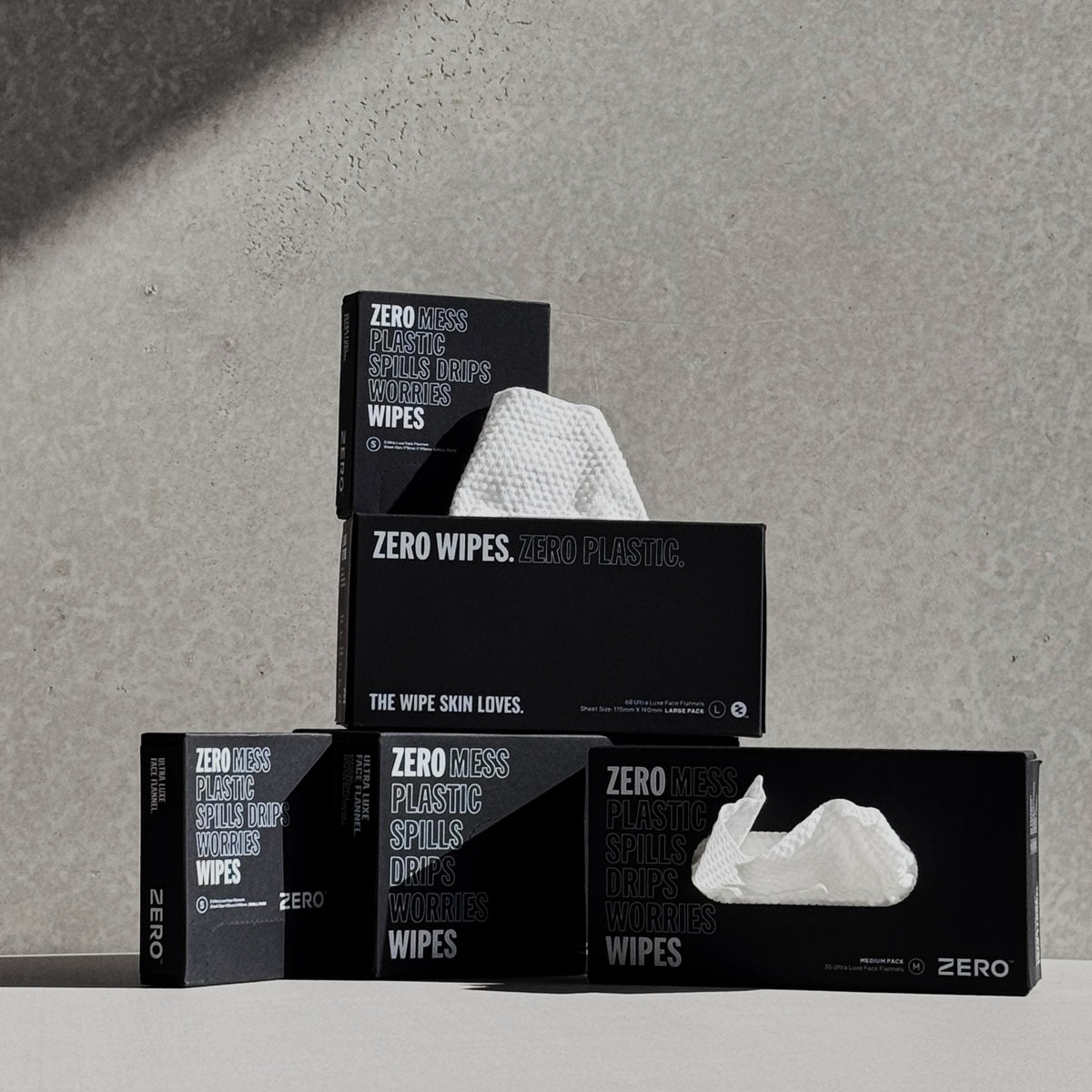
The beauty aisle is full of wipes promising to be the gentlest, the greenest or the most effective. So let's skip the adjectives and look at what's actually in them, how they're used, and what to check before you buy.
What's in a typical makeup wipe
Most wet makeup remover wipes are two things: a fabric, and a liquid formula soaked into it.
The fabric
Many conventional wipes are made from a nonwoven fabric that can include synthetic fibres such as polyester or polypropylene, which are plastics. Some are blends with plant-based fibres, and some are fully plant-based. The pack doesn't always make it obvious.
The formula
The liquid typically includes:
- Water, the main ingredient.
- Cleansing agents (surfactants), which help lift makeup and oil off the skin.
- Emollients such as glycerin or oils, to stop skin feeling dry afterwards.
- Preservatives, such as phenoxyethanol, to stop microbes growing in the damp pack.
- Fragrance, in many (but not all) products.
These ingredients are there for a reason, and plenty of people use them without any problems. But preservatives and fragrances are among the ingredients most commonly linked to contact dermatitis from personal care products. Melbourne dermatologists writing in the Medical Journal of Australia in 2014 listed make-up removal wipes among the consumer sources of the preservative methylisothiazolinone, which they reported as a rising cause of allergic contact dermatitis in their patients. If you know you react to something, the ingredient list is where you'll find it.
ZERO Makeup Wipes: what's different
ZERO Makeup Wipes take the liquid out of the equation.
- The fabric: timber viscose, a fibre made from wood pulp sourced from FSC- and PEFC-certified forests. No polyester or polypropylene.
- The formula: there isn't one. They come dry, with nothing added. You add water, micellar water or your own cleanser. No preservatives and no fragrance in the wipe.
- Certified: OEKO-TEX® STANDARD 100 Class 1, meaning the material has been independently tested for harmful substances, to the strictest class.
- Reusable: rinse, dry and wash them with your normal laundry, then use them again.
Side by side
| Typical wet makeup wipe | ZERO Makeup Wipe | |
|---|---|---|
| Fabric | Often includes synthetic fibres (polyester, polypropylene) | Timber viscose (wood pulp) |
| Comes | Pre-moistened in a sealed pack | Dry, in a box |
| Preservatives and fragrance | Preservative needed; fragrance common | None. Nothing added |
| What goes on your skin | The brand's formula | Your choice: water or your own cleanser |
| Uses | Single use | Reusable and machine washable |
Tips for buying makeup remover wipes
Whatever you choose, these are worth checking:
- Read the full ingredient list. Not just the front of the pack. Look for preservatives and "parfum" or "fragrance" if those are things you avoid.
- Check the fabric. Polyester, polypropylene and PET are plastics. Viscose, lyocell and cotton are plant-based. If it isn't listed, ask.
- Look for specific claims and real certifications. "Natural" or "chemical free" doesn't tell you much. An independent certification like OEKO-TEX® STANDARD 100 does.
- Think about your makeup. Long-wear and waterproof products often need an oil-based remover or balm. A dry wipe lets you pair the right remover with the job.
- Don't flush them. Any wipe, any brand. Bin it, or wash and reuse it.
If your skin is reacting to a product, stop using it and talk to your GP or pharmacist.
How to use ZERO Makeup Wipes
- Wet the wipe with warm water, micellar water or your remover of choice.
- Press it over each eye for a few seconds to soften mascara, then wipe gently.
- Fold to a clean side for the rest of your face.
- Rinse, hang to dry and wash with your normal load.
Want the full set-up? Check out the makeup kit.
FAQ
Do ZERO Makeup Wipes contain any cleanser?
No. They're dry, with nothing added. Use them with water or your own cleanser.
Will they remove waterproof mascara?
Pair them with an oil-based remover or balm and they'll do the job. Water alone usually won't shift waterproof formulas, whatever wipe you use.
How many times can I reuse one?
Use it for as long as it's doing the job well, then pop it in the bin.
This article is general information only and isn't medical advice.
Share:
How Much Plastic Is Really in Baby Wipes?
A Thoughtful Gift Guide for New Mums and Newborns