
Flip over a pack of wet wipes, a nasal spray or a bottle of eye drops and there's a decent chance you'll see benzalkonium chloride on the label. It's one of the most widely used preservatives around. So what is it, why is it there, and what should you actually know about it? Here's the plain-English version.
What is benzalkonium chloride?
Benzalkonium chloride (often shortened to BAC or BAK) is a quaternary ammonium compound, or "quat". New Zealand's dermatology resource DermNet describes it as an organic salt used in cleaning agents, classified as a cationic detergent, that works as both an antiseptic and a preservative.
In other words, it does two jobs: it helps stop bacteria and fungi growing in a product, and in higher-strength products it's the ingredient doing the germ-killing.
Why is it in wet wipes?
A wet wipe is a damp piece of fabric sealed in a pack, often for months. Damp plus time is exactly what microbes love. That's why wet products need a preservative system, and why manufacturers reach for ingredients like benzalkonium chloride, phenoxyethanol or other preservatives.
It's a genuine problem to solve. A wet wipe that grows mould or bacteria in the cupboard is worse than one with a preservative in it. The preservative is there for a reason.
Where else you'll find it
According to DermNet, benzalkonium chloride turns up in a long list of everyday products, including:
- wet wipes, make-up removers, cleansers and moisturisers
- shampoos and hair products
- antiseptics
- eye drops and contact lens solutions
- nasal sprays and some asthma inhalers
- household products like laundry rinses and detergents
- sterilising solutions for medical instruments
So if you're checking for it, it's worth looking beyond the baby aisle.
Is it a problem for skin?
Here's where it pays to be precise rather than scary. DermNet notes that benzalkonium chloride is a well-known irritant, and that it can also cause allergic contact dermatitis in people who've become sensitised to it. Irritant reactions are the more common of the two.
The difference matters:
- Irritant reactions can happen to anyone, and tend to depend on how much contact there is and how often.
- Allergic reactions only happen in people who've developed a sensitivity. DermNet notes they're more likely when the skin barrier is already compromised, for example in people with atopic dermatitis.
That doesn't mean benzalkonium chloride is "toxic" or that every product containing it is a problem. Plenty of people use these products without any issue. It does mean that if you notice redness or itching where a product touches your skin, the preservative is one thing worth considering, and worth raising with a professional.
Benzalkonium chloride is also included in the Australian and New Zealand baseline patch test series, which dermatologists use to work out what someone is reacting to. If you suspect a reaction, a patch test is how it's properly diagnosed. Guesswork isn't.
How to spot it on a label
In Australia, cosmetics and personal care products list their ingredients, so you can check. Look for:
- benzalkonium chloride
- alkyldimethylbenzylammonium chloride
- BAC or BAK (sometimes used on pharmaceutical labels)
If you're reacting to more than one product, it can help to take the packaging with you when you see your GP or pharmacist, so they can see exactly what's in each one.
The dry-wipe option
Here's the thing about preservatives in wipes: they're needed because the wipe is wet. Take the water out and you take away the reason for the preservative.
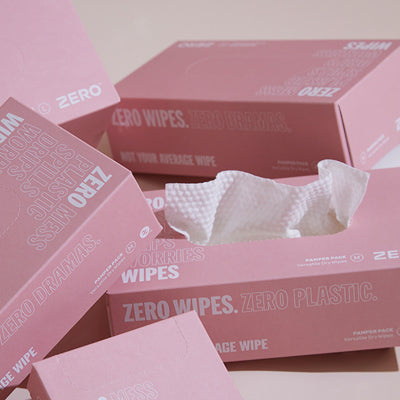
That's the idea behind ZERO Baby Wipes. They come dry, made from timber viscose (a fibre made from wood pulp), with nothing added. You add the water when you need it. No preservatives and no fragrance, because a dry wipe doesn't need them.
- Material: timber viscose, made from wood pulp.
- What's added: nothing. Just add water.
- Certification: OEKO-TEX® STANDARD 100 Class 1, meaning the material has been independently tested for harmful substances. Class 1 is the strictest class, for baby articles.
- Reusable: they're machine washable, so you can rinse and reuse them for everyday messes.
They also come as Makeup Wipes for your face and Cleaning Wipes for around the house. Same idea, same dry wipe.
FAQ
Is benzalkonium chloride banned in Australia?
No. It's a widely used, permitted ingredient. The point of this article isn't that it should be avoided by everyone, but that it's useful to know what it is and where it shows up.
Is it the same as a disinfectant?
It can be the active ingredient in disinfectants and antiseptics, and it's also used at lower levels as a preservative. Same compound, different jobs.
What should I do if I think I'm reacting to it?
Stop using the product and talk to your GP or pharmacist. They can help work out the cause, and refer you for patch testing if needed.
Do ZERO wipes contain benzalkonium chloride?
No. ZERO wipes are dry timber viscose with nothing added, so there's no preservative in them. You add the water.
This article is general information only and isn't medical advice. If you have concerns about your skin or your child's skin, talk to your GP or pharmacist.
Sources
- DermNet: Benzalkonium chloride contact dermatitis
- Benzalkonium Chloride: An Irritant and Sensitizer (Dermatitis, PubMed)
Share:
Wipes vs paper towels: what to use for which job
What's In (and Not In) ZERO Baby Wipes