
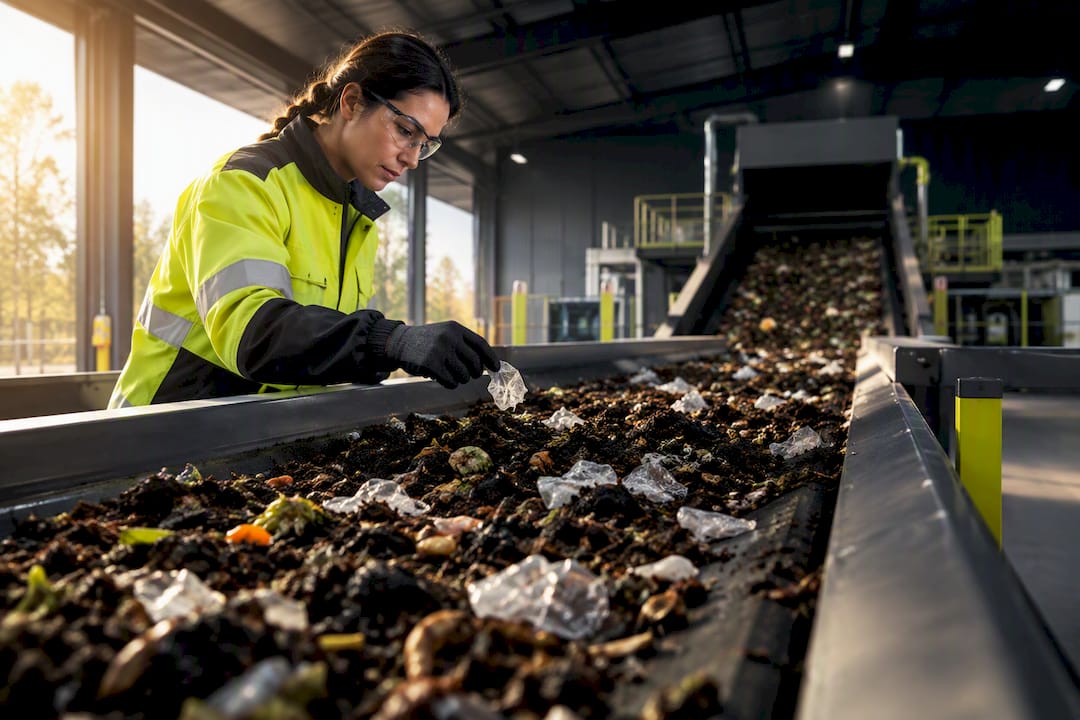
Compostable bags typically disintegrate within 6 to 12 weeks in an industrial composting facility, but that timeline stretches to several months or even a full year in a home compost heap, and can extend indefinitely in landfill or the ocean. The single biggest variable isn’t the bag itself. It’s whether it ever reaches the composting environment it was actually certified for.
TL;DR:
- Most certified compostable bags will disintegrate within 6 to 12 weeks in industrial facilities, but may take several months or longer in home compost heaps.
- Disintegration in landfills or marine environments can be extremely slow or effectively stalled because these environments lack the heat, oxygen, and microbial activity necessary for rapid breakdown.
- Certification marks like EN 13432 or ASTM D6400 indicate laboratory performance under ideal industrial conditions and do not guarantee performance in actual disposal environments.
- Home composting requires conditions such as high heat and regular turning; without these, breakdown can be unpredictable and much slower, often exceeding a year.
- Disposal success depends more on knowing your local waste management practices and choosing the right bag type for your actual environment than on relying solely on certification labels.
Table of Contents
- Compostable bags breakdown time by disposal environment
- What makes one compostable bag break down faster than another?
- What do compostable certification labels actually guarantee?
- How should you actually dispose of a compostable bag?
- What the research actually tells everyday consumers
- The gap between the label and the landfill
- Where to find plastic-free bags built for real composting outcomes
- Sources
- FAQ
Compostable bags breakdown time by disposal environment
The number that matters most is not “how long does a compostable bag take to decompose” in the abstract, it’s “in what, exactly.” A bag engineered for a commercial facility behaves nothing like the same material sitting in a backyard bin or a landfill cell.
Here’s roughly what to expect across the main disposal pathways:
- Industrial or municipal composting facility: around 6 to 12 weeks, given the high, sustained temperatures these operations maintain.
- Home compost heap: commonly several months, and often up to 12 months, depending on how actively the pile is managed.
- Landfill: breakdown can be extremely slow or effectively stalled, since landfills are compacted, low-oxygen, low-light environments that starve the microbial activity compostable plastics rely on.
- Marine or natural litter: similarly prolonged, with cooler temperatures and inconsistent moisture slowing the process further.
Pilot-scale industrial composting trials give a useful sense of just how variable “compostable” can be even within the fast lane. One 2024 study found starch-blend (TPS) bags exceeded 95% mass loss after just six weeks under industrial conditions, while some PLA-blend bags in the same industrial composting research failed to reach 90% disintegration in that timeframe. Same label, same test, different outcome.
Statistic worth remembering: in one set of laboratory-simulated industrial composting tests, disintegration after 90 days ranged from 75% to 100% across ten commercial biodegradable products. Eight products cleared 90%; two did not. That’s a real spread among products all marketed as compostable.
Municipal food-waste collection adds another layer of uncertainty that has nothing to do with chemistry. Some Australian councils accept certified compostable bags in kerbside organics bins; others explicitly ask for loose scraps only, because their processing equipment isn’t set up to screen out films. Checking before you bin is not optional if you actually want the bag composted rather than landfilled after being rejected at the sorting line.
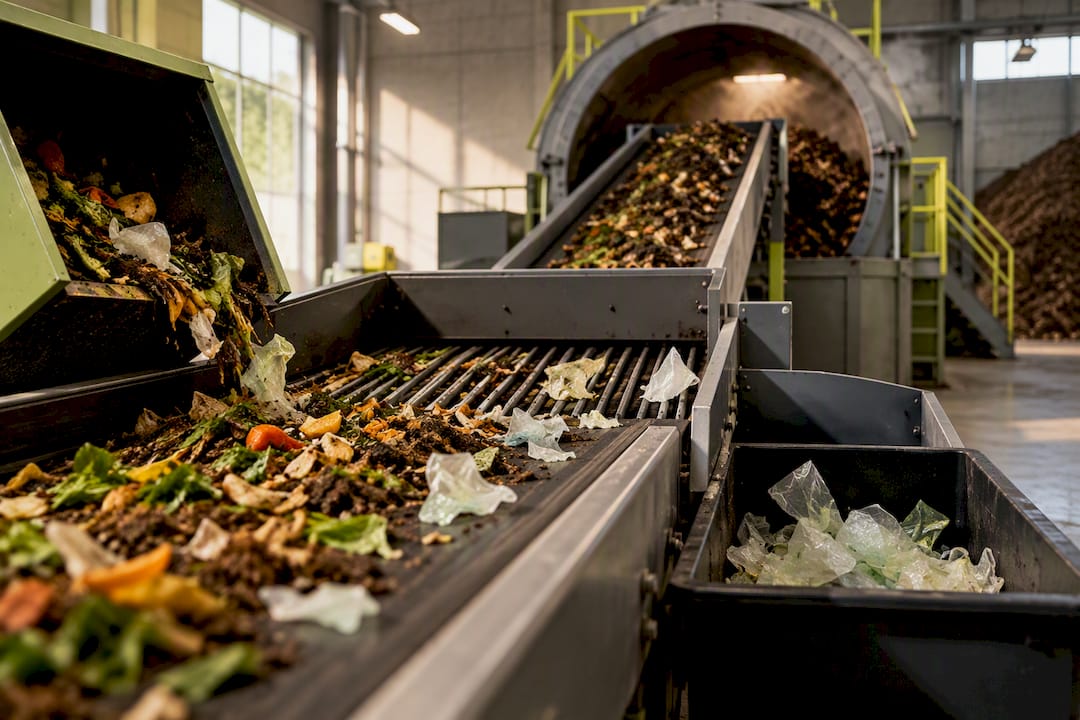
Home composting is the wildcard. Without the heat and turning frequency of a commercial operation, breakdown becomes far less predictable, and “12 weeks” on a packet often has little bearing on what happens in your own bin.
What makes one compostable bag break down faster than another?
Not all “compostable” plastics are built the same way, and the polymer behind the label drives a lot of the variation you’ll see in practice.
- TPS (starch blends): tend to disintegrate quickly under industrial heat, often outperforming other polymers in pilot tests.
- PBAT: performs strongly in several trials, with one study recording around 95% disintegration after 12 weeks under industrial composting conditions.
- PLA: more heat-dependent than most people assume. It needs sustained thermophilic temperatures to break down efficiently and can lag well behind TPS or PBAT if conditions dip.
- PHA: generally biodegrades across a wider range of environments, including some marine settings, though it’s less common in everyday retail bags.
Temperature is the real engine here. Industrial piles run at 55 to 70°C, the thermophilic range where the microbial communities doing the actual breakdown work fastest. A home heap rarely gets that hot for that long, which is the main reason home composting takes so much longer than the industrial figures suggest.
Thickness and construction matter too. A thin, single-layer film fragments faster than a thicker multilayer bag, and drawstrings, printed inks, or laminated windows can all slow the process regardless of the base polymer. There’s also a less comfortable finding worth knowing: some certified products still leave behind small fragments before full biodegradation completes, which is why disintegration and complete biodegradation are measured, and reported, as two separate things.
Pro Tip: If you’re composting at home, cutting or tearing a compostable bag into smaller pieces before adding it to the pile gives microbes more surface area to work with and can meaningfully speed things up.
What do compostable certification labels actually guarantee?
A certification tells you a product passed a specific lab test, not that it will break down in your bin, your council’s facility, or your backyard.
The main marks worth knowing:
- EN 13432 (Europe) and ASTM D6400 (US): require at least 90% biodegradation within roughly 12 weeks under industrial conditions, plus disintegration to fragments smaller than 2mm.
- BPI and OK Compost (Industrial): third-party verification schemes that test against those same industrial benchmarks.
- AS 5810: the Australian standard for home compostable products, which sets a longer, more forgiving timeframe than industrial standards because home conditions are less controlled.
- OK Compost Home: a separate mark specifically for products validated to break down in a domestic compost bin, not just a commercial facility.
The gap between “industrial compostable” and “home compostable” trips up a lot of shoppers, and it’s worth reading labels closely before assuming a bag suits your council bin. Passing a lab test also does not guarantee your local facility accepts the product or that your backyard heap gets hot enough to replicate the test conditions.
How should you actually dispose of a compostable bag?
Getting the outcome the label promises comes down to three questions, in this order:
- Check what your council actually accepts. Some kerbside organics collections take certified compostable bags; many don’t. If you’re unsure, loose scraps are the safer bet.
- Match the bag to the compost you actually have. Only use home-compostable bags (look for AS 5810 or OK Compost Home) in a heap that gets reasonably hot and is turned regularly. An industrial-only bag in a cold backyard bin may sit there for a year or more.
- Manage the pile properly. Chop contents, empty bags rather than tossing them in whole, keep moisture at a damp-sponge consistency, and turn the pile every week or two to keep oxygen circulating.
For dog waste and nappy waste, check what your local collection or council actually processes. Many general waste streams still send these to landfill regardless of the bag’s compostability claim, so a compostable nappy waste bag mainly helps if it’s going into general waste anyway, since it avoids adding more conventional plastic to that stream.
Pro Tip: When home compost conditions are uncertain, reusable containers or paper liners are often the more reliable choice. Save certified compostable bags for councils and facilities you know will actually process them.
What the research actually tells everyday consumers
The clearest pattern across the pilot studies and lab trials is this, certification plus the correct disposal pathway equals a real chance of timely breakdown. Certification alone, without the right facility or heap conditions, often means very little. A bag that passed an industrial lab test can sit largely intact in landfill for a long time, because landfill strips away the heat, oxygen and moisture the test relied on.
Before buying or binning, it helps to run through a short checklist:
- Look for a recognised certification mark relevant to where you’ll actually dispose of the bag (industrial vs home).
- Confirm your council’s organics or general waste policy before assuming a bag is accepted.
- Store bags correctly and use them within their recommended shelf life, since older stock can behave differently once it finally reaches compost.
The gap between the label and the landfill
Most of the conventional advice on compostable bags treats certification as the finish line. It isn’t. The lab tests behind EN 13432 or AS 5810 tell you what happens under near-ideal conditions, not what happens in a cold council bin or a landfill cell that never sees oxygen. That distinction gets lost in marketing copy, and it’s the reason so many well-meaning shoppers assume a compostable bag in landfill is doing something a plastic one isn’t. Often, it isn’t doing much at all.
What the studies actually support is a more modest claim: material matters, but pathway matters more. A PBAT or starch-blend bag with strong lab results is still only as good as the facility it ends up in. If you take one thing from the research, prioritise finding out what your council or local composting scheme actually accepts before you prioritise which polymer sounds more impressive on the packet. Buy for the disposal system you have, not the one you wish you had.
— Damien
Where to find plastic-free bags built for real composting outcomes
It can be helpful to match the right bag to the right job, rather than guessing at what a generic “eco” label actually delivers. Its range is built around the disposal realities covered above: real materials, clear specifications, and no vague green claims.
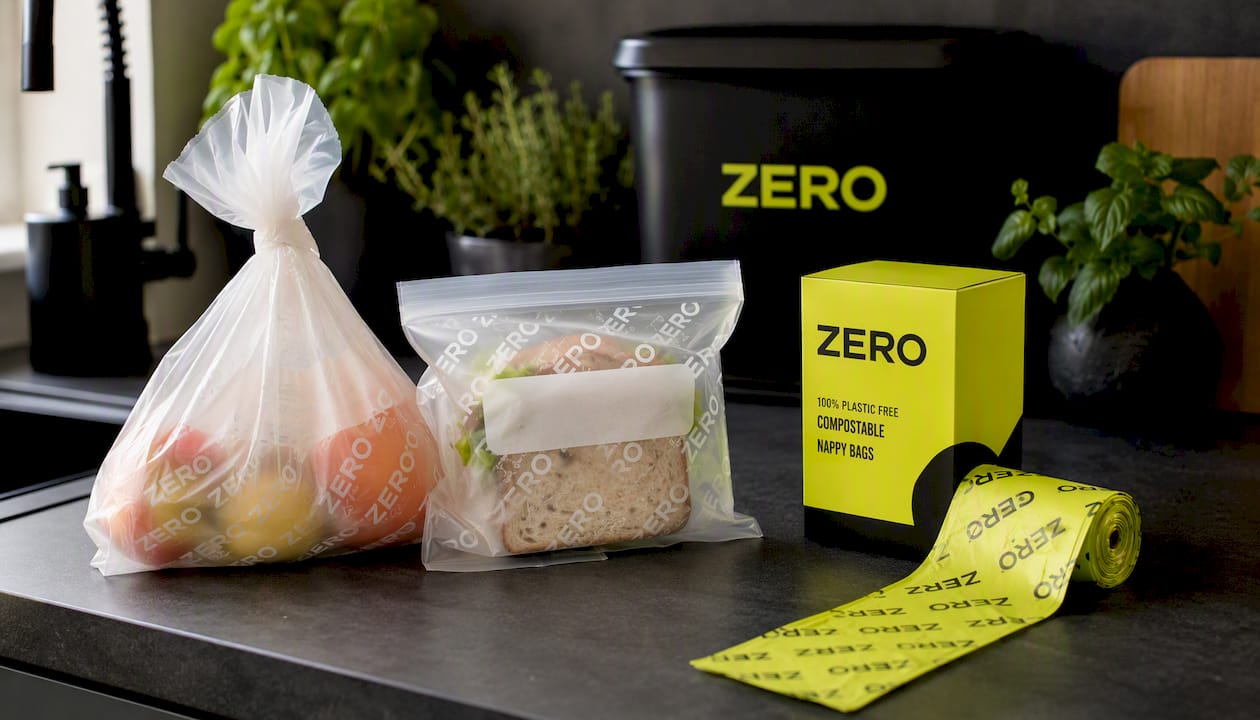
For kitchen scraps and grocery shopping, the Plastic Free Produce Bags (2 Pack) give you a plastic-free option for fruit and veg without the flimsiness that makes so many “eco” bags tear at the checkout. For everyday food storage, the Plastic Free Resealable Food Storage Bags offer a genuine alternative to single-use cling wrap and zip bags, with the material transparency this article has been talking about. For parents managing nappy waste, the Plastic Free Nappy Waste Bag is designed as a lower-impact option for a waste stream that’s notoriously hard to make sustainable.
Before buying, check what your council collects and how you’ll actually dispose of the bag. Then browse the full kitchen collection to find the products that fit your household’s setup.
Sources
- Decomposition of biodegradable plastic bags for kitchen waste collection in industrial composting
- Disintegration of commercial biodegradable plastic products under simulated industrial composting conditions
- Degradation and disintegration of PBAT-based biopolymers during industrial composting (Polymers)
- Clean Up Australia – waste challenges and guidance
FAQ
How quickly do compostable bags break down?
In an industrial composting facility, most certified compostable bags disintegrate within 6 to 12 weeks under sustained heat and moisture. In a home compost bin, the same bag can take several months to a year, since backyard piles rarely reach the same temperatures.
How long does it take for biodegradable poop bags to decompose?
It depends heavily on where the bag ends up. In a managed compost facility that accepts pet waste, breakdown can follow the same 6 to 12 week industrial timeframe; in general household waste headed to landfill, it can take considerably longer, since landfill conditions starve the microbial activity that drives decomposition.
Will compostable bags break down in landfill?
Not reliably. Landfills are compacted and largely oxygen-free, which slows or effectively halts the biological processes compostable plastics need. Australian waste organisations note that these products only deliver a real benefit when they reach proper composting infrastructure rather than general waste.
What takes around 4,000 years to decompose in landfill?
Certain types of glass are estimated to persist for roughly this long under landfill conditions, since glass doesn’t biodegrade in any meaningful sense, it simply doesn’t break down chemically. This sits at the opposite end of the spectrum from certified compostable bags, which are designed to fully disintegrate within weeks under the right conditions.
Do compostable and biodegradable bags mean the same thing?
No. “Biodegradable” is a broad, largely unregulated term with no fixed timeframe, while “compostable” typically refers to a bag that has been tested against a specific standard, such as EN 13432 or AS 5810, and meets defined disintegration and biodegradation benchmarks within a set period.
Does The produce bag’s qualification as compostable depends on specific product certifications available on the product page.
The Plastic Free Produce Bags (2 Pack) are made from plastic-free, bio-based materials designed as a genuine alternative to single-use plastic produce bags. For exact certification details, check the product specifications listed on the product page.
Share:
3–5× Ecosystem Damage: Bioplastic vs Plastic in Australia
Verify Compostable Bags in Australia: Look for EN 13432