
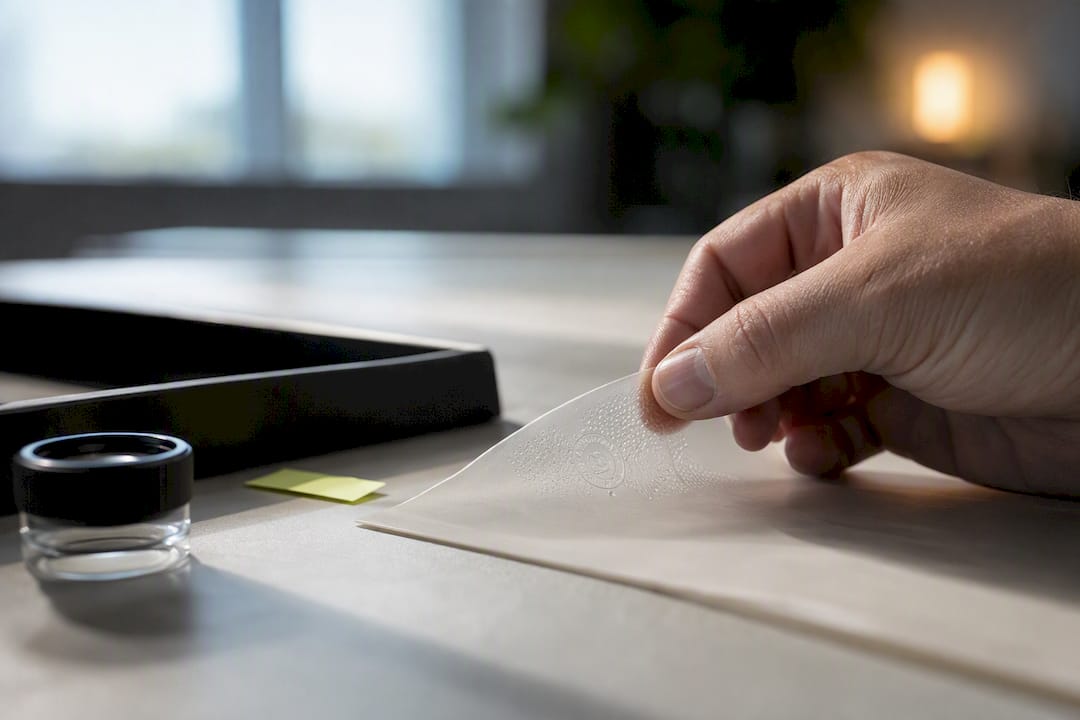
A certified compostable label means an independent body has tested the product against a named standard, such as EN 13432 or AS 4736, for a specific composting environment. That’s the whole verdict. The one thing worth doing before you trust the claim: find the licence or trace code on the logo and check it against the certifier’s public database, because industrial certification and home certification are not interchangeable.
TL;DR:
- Only products certified against standards like EN 13432 or AS 4736 with valid trace codes are reliably industrial or home compostable, respectively.
- Certification requires demonstrating biodegradation within specific timeframes, physical disintegration, and safety for soil and plants, not just biodegradability claims.
- Check the certifier’s public database using the license or trace code to verify that the finished product, including inks and coatings, is covered by the certification.
- Industrial composting operates at much higher temperatures than home composting, meaning products may need significantly longer to break down in domestic bins.
- Beware of greenwashing signals such as unlabeled “biodegradable” claims, missing certification details, or claims based solely on raw resin testing.
Table of Contents
- Compostable certifications explained: standards, certifiers and logos
- The main standards and logos, and what each one guarantees
- Industrial versus home compostable: matching the product to the bin
- How to verify a compostability claim before you buy
- Greenwashing signals worth watching for
- How The Zero Store documents its certifications
- Why traceable certification matters more than the logo itself
- A documented option if you’re ready to switch
- Where to check certificates and standards yourself
- Sources
- FAQ
Compostable certifications explained: standards, certifiers and logos
A standard is a technical document. It sets pass or fail thresholds for things like biodegradation percentage, disintegration time, ecotoxicity and heavy metal content. A certifier is the organisation that audits a manufacturer’s test results against that standard and then licenses a logo to appear on packaging. Confusing the two is where most of the misunderstanding around compostable labels starts, since a company can reference a standard in its marketing without ever having been independently audited against it.
That distinction matters because composting facilities, both industrial processors and household councils running FOGO (food organics, garden organics) collection, rely on certified claims to decide what they’ll accept. An uncertified “biodegradable” bag can contaminate a load of commercial compost, and processors know it.
Three things a genuine certification programme checks:
- Biodegradation: does the material actually convert to carbon dioxide, water and biomass within a set timeframe?
- Disintegration: does it physically break down into small enough fragments that it won’t need screening out?
- Ecotoxicity and heavy metals: does the resulting compost stay safe for soil and plants?
Skip any one of those and a product hasn’t earned the logo, no matter what the packaging implies.
The main standards and logos, and what each one guarantees
Here’s where the alphabet soup actually sorts itself out, once you know what each mark covers.
EN 13432 and the Seedling logo cover industrial composting in Europe. The OK Compost INDUSTRIAL mark, run by TÜV Austria, tests to the same benchmark. Both require biodegradation within a set timeframe as required by the standard and disintegration to a low residual mass within a specified period, alongside ecotoxicity and heavy metal limits designed to protect finished compost quality.
90% in 180 days. That’s the biodegradation bar a material must clear under EN 13432 to earn Seedling or OK Compost INDUSTRIAL certification. Anything short of that, and the claim doesn’t stand.
ASTM D6400 and D6868, verified through BPI in North America, run on functionally similar thresholds to EN 13432. BPI’s certification process also demands total fluorine screening, which catches PFAS contamination in coatings and inks before a product gets its mark.
AS 4736 (industrial) and AS 5810 (home) are the relevant standards for Australia and New Zealand, verified through the Australasian Bioplastics Association. ABA verification gives councils, waste processors and retailers a local reference point rather than relying solely on European or American marks.
OK Compost HOME and equivalent home tiers test under ambient backyard conditions rather than the elevated temperatures of an industrial facility, typically allowing longer timeframes for full breakdown.
Every legitimate logo carries a licence or trace code, often a string like 7PXXXX, alongside the registered trademark symbol. That code is what lets you check the certificate rather than take the logo on faith.
Industrial versus home compostable: matching the product to the bin
Industrial facilities run at 55 to 60 degrees Celsius for weeks at a stretch, forcing breakdown far faster than a home compost heap ever could. A home bin might sit at ambient temperature for months. That gap is why a product certified only to AS 4736 or EN 13432 (industrial) can sit in your compost heap for a year and barely change shape, while the same material would vanish in a commercial facility within twelve weeks.
Work through it in this order:
- Identify the certification tier on the packaging. Industrial only, home certified, or both.
- Check what your council or facility actually accepts. Many Australian FOGO programmes take AS 4736 industrial certified items; very few municipal systems process home compostable plastics at scale, so read your council’s list before assuming.
- Match the disposal action accordingly. Industrial certified goes in council organics collection where accepted. Home certified goes in your own compost or worm farm. Neither goes in general recycling, and uncertified “biodegradable” items go in landfill bins unless a local scheme says otherwise.
Films, coated papers and moulded fibre behave differently under each standard too, which is exactly why the tier printed on the pack, not the material description, is the detail to trust. Our guide to home versus industrial compostable products in Australia walks through common household items if you want the fuller comparison.
How to verify a compostability claim before you buy
Checking a claim takes about two minutes once you know the sequence.
- Locate the logo and its licence code. Every valid Seedling, OK Compost or BPI mark carries a unique number, not just the symbol.
- Search the certifier’s public database. TÜV Austria, BPI and the ABA all publish searchable certificate registers, and the entry should name the exact product line, not just the manufacturer.
- Confirm the certificate covers the finished product, including inks, adhesives and any coating, rather than just the raw resin pellet before conversion into a bag or wrap.
- Look for PFAS or total fluorine screening if the item touches food or goes into a compost system feeding edible gardens.
Pro Tip: Search the certifier’s database by product name first, not brand name. Some manufacturers license a mark for one product line while leaving others in the range uncertified, so the brand showing up doesn’t mean every item they sell is covered.
A product can pass every lab threshold and still struggle at a specific commercial facility, which is why some manufacturers pursue additional field disintegration testing through schemes like the Compost Manufacturing Alliance on top of standard certification.
Greenwashing signals worth watching for
Certain phrases and gaps show up again and again on products that won’t actually break down where you’d expect.
- “Biodegradable” with no certifier named. Everything is technically biodegradable over a long enough timeframe; the word alone guarantees nothing about speed or environment.
- Blurred industrial and home claims, or packaging that skips disposal instructions entirely, leaving you to guess which bin it belongs in.
- A certificate covering the raw resin only, not the finished, printed, laminated product you’re actually holding.
- Missing PFAS screening, small print exemptions, or no entry in the certifier’s public database when you go looking for it.
Wrong disposal guidance is one of the most common failure points behind contaminated compost loads, and it usually traces back to one of these gaps. Our greenwashing spotting guide covers more patterns if you want to dig further.
How The Zero Store documents its certifications
Licence codes, certifier names and disposal guidance are listed directly on product pages to help buyers verify certification status. On the Plastic Free Produce Bags (2 Pack) listing, that means the certification mark, its trace code, a link to the certifier’s lookup tool and a plain explanation of which bin the bags belong in once you’re done with them. For a deeper technical breakdown of one specific standard, our EN 13432 explainer covers the trace code system in more detail.
Why traceable certification matters more than the logo itself
Logos catch the eye, but the licence code is the part that actually protects you from a false claim. A product genuinely tested to AS 5810 for home composting will show it in the certifier’s own register, not just on its own packaging. That’s the habit worth building: check the code before the bin, every time, and treat any product that resists the check as a product that hasn’t earned it. For readers who want to take this further before buying anything, our home compostable certification guide breaks down what manufacturers actually submit to earn a home compostable mark.
— Damien
A documented option if you’re ready to switch
Compostable produce bags are one of the easier swaps to make once you know what to check, and it helps to buy from a page that shows its working rather than making you go hunting. The Zero Store’s Plastic Free Produce Bags (2 Pack) are built for exactly the household or market shop that’s tired of single use plastic bags with no end-of-life plan.
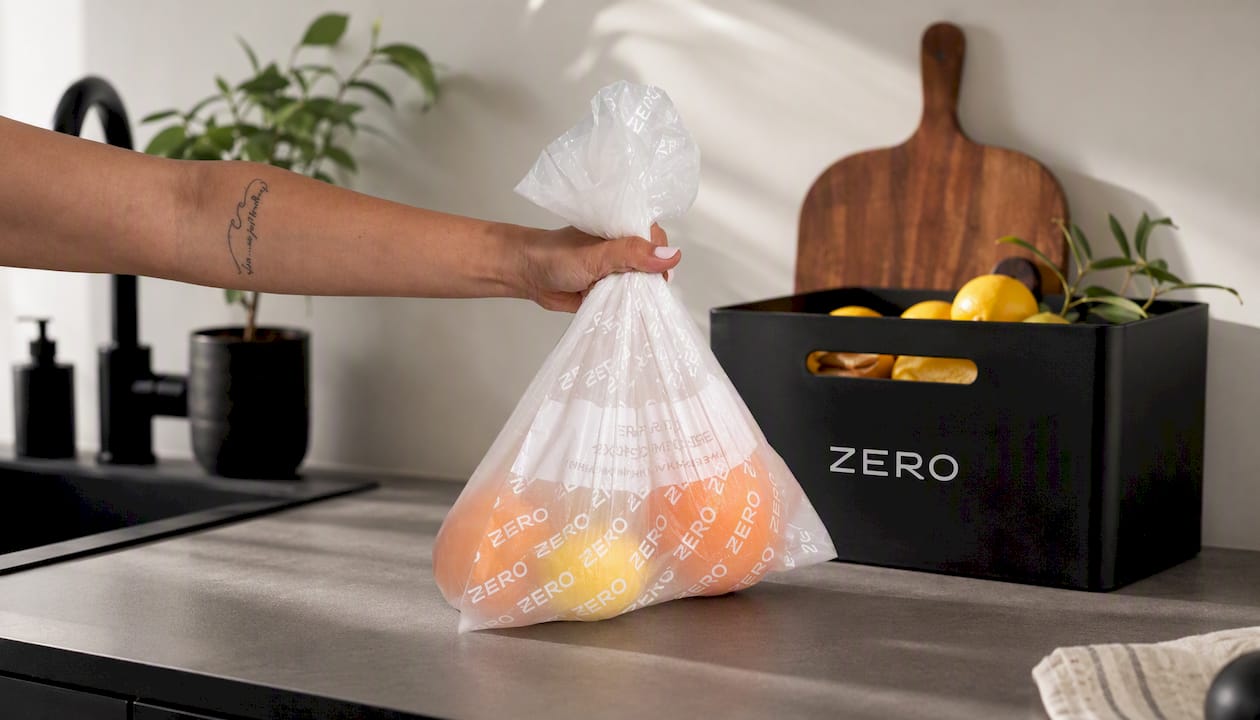
The product page lists the certification standard the bags meet, the licence code tied to that certification, and a direct explanation of where the bags belong once you’re finished with them, whether that’s council organics collection or your own compost. Before you buy anything claiming to be compostable, run the two minute check described above on the product you’re looking at, then compare it against what’s documented on our page. If it holds up, add the produce bags to your cart and start replacing the plastic ones sitting under your sink. If you’re setting up a home compost system to make the most of certified items like these, a good quality finished compost does more for your soil than most gardeners realise.
Where to check certificates and standards yourself
Verify claims directly through the ABA certification register, the Seedling database, or South Australia’s labelling guideline for practical wording rules.
Sources
- OK Compost / Seedling guidance — TÜV Austria (Seedling page)
- Compostable certifications – Why do they matter? — CompostConnect
- EN 13432 certified bioplastics performance in industrial composting — European Bioplastics
- Certification — Australasian Bioplastics Association
FAQ
What does “certified compostable” mean?
It means an independent certifier has tested the product against a named standard, such as EN 13432 or AS 4736, and verified it meets thresholds for biodegradation, disintegration and ecotoxicity in a specific environment.
What does BPI certification mean?
BPI certifies products to ASTM D6400 or D6868 for industrial composting in North America, and requires additional checks like total fluorine screening to catch PFAS in coatings and inks.
What’s the difference between commercially compostable and regular compostable?
Commercially (industrial) compostable products need the sustained high heat of a processing facility, typically 55 to 60 degrees Celsius, while home compostable products are certified to break down at ambient backyard temperatures over a longer period.
Is 100% biodegradable the same as compostable?
No. Biodegradable only means a material eventually breaks down, with no defined timeframe or environment, while compostable certification specifies how fast, under what conditions, and to what safety standard, verified by a named certifier.
Share:
Use Compostable Bags Within 6–12 Months: Shelf Life and Storage
Wipes vs Paper Towels: When 4–8¢ Wipes Beat 5¢ Sheets and Cut Waste