
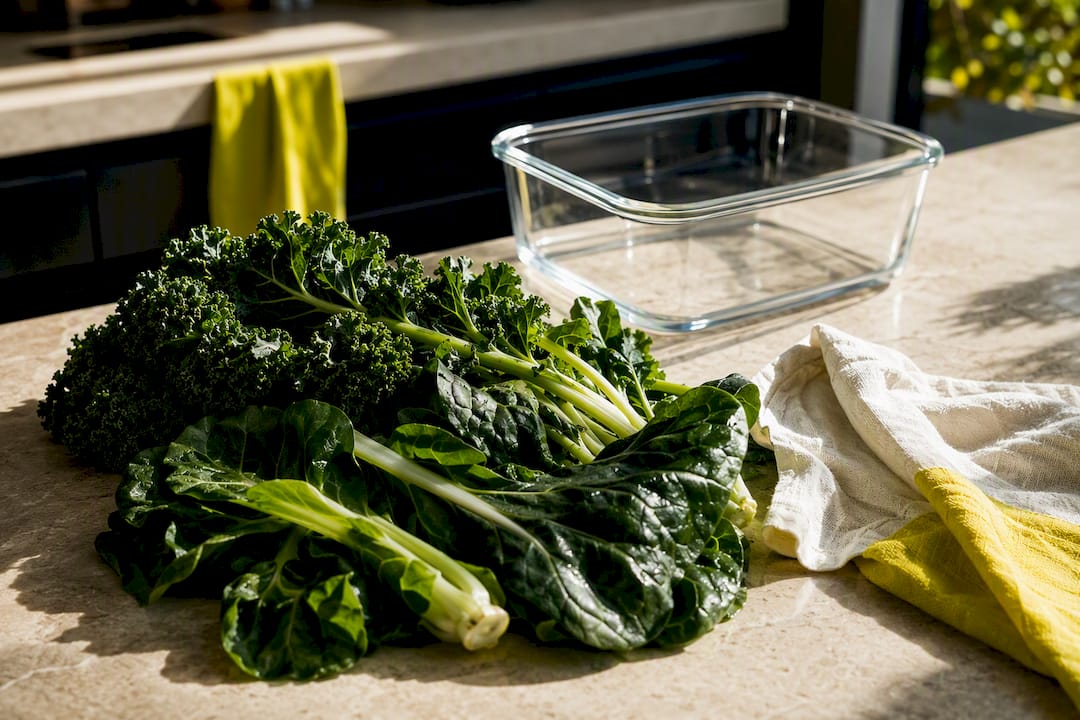
The most reliable way to store leafy greens without plastic is a slightly damp tea towel wrapped around the leaves, sealed inside an airtight glass container in the fridge crisper. For humid-loving greens like rocket or spinach, a damp towel-like produce bag works just as well. Keep the fridge below 5°C and toss anything slimy, mouldy, or sour rather than trying to save it. Some brands stock plastic-free storage gear built for exactly this job.
TL;DR:
- Using a damp cotton or produce bag wrapped around washed and dried greens in a sealed glass container provides a shelf life of up to two weeks for most leafy greens.
- Delicate greens like spinach and rocket benefit from airtight storage, while sturdier greens such as kale handle looser wraps and longer storage lives.
- Proper preparation involves thorough drying, removing bruised leaves, and portioning greens loosely to prevent spoilage caused by excess moisture or crushing.
- Freezing blanched greens is suitable for long-term storage, especially for cooking ingredients, although it does not maintain the texture needed for raw salads.
- Maintaining fridge temperatures below 5°C and avoiding pooled water in storage containers help prevent spoilage and support food safety.
Table of Contents
- How do you store lettuce and other leafy greens without plastic?
- How should you prepare leafy greens before storing them?
- What’s the right way to use each plastic-free storage method?
- Does the storage method change for different leafy greens?
- How do you revive limp greens and know when to bin them?
- Can you freeze leafy greens instead of storing them fresh?
- What fridge and hygiene habits keep plastic-free storage safe?
- One drawer, one habit: what actually sticks
- Which products make plastic-free storage easier?
- Sources
- FAQ
How do you store lettuce and other leafy greens without plastic?
Every plastic-free method solves the same problem: leafy greens lose water fast once cut from the ground, but too much water rots them just as quickly. The trick is giving leaves enough humidity to stay crisp without letting them sit in pooled moisture. Five methods cover almost every situation you’ll face in an Australian kitchen.
- Damp tea towel in a sealed glass container. Wrap washed, dried greens loosely in a barely damp cotton towel, then seal the lot in a glass container. Sustainability Victoria rates this good for roughly one to two weeks, depending on the green.
- A damp, towel-like produce bag. Wirecutter’s testing found a towel-fabric bag (the Vejibag style) kept greens noticeably fresher over several days than ordinary cotton or mesh bags, which tend to dry leaves out.
- Cloth-lined jars or lidded glass containers. Layering paper or a cotton cloth beneath the greens cushions them against bruising and soaks up any stray moisture.
- Beeswax or compostable wrap for cut salads. Fine for covering a bowl of prepped leaves for a day or two, but it’s not airtight enough to replace a sealed container for longer storage.
- Freezing and blanching for surplus greens. If you’ve got more kale or spinach than you’ll eat fresh, blanching and freezing turns waste into a stash for soups and smoothies.
For most households, the glass container and damp towel combination is the one to master first. It uses gear you probably already own, and it’s the method behind most zero-waste storage tips shared by sustainability groups.
How should you prepare leafy greens before storing them?
Preparation decides whether your greens last five days or fifteen, and most spoilage starts with a mistake made before the leaves ever reach the fridge.
- Decide whether to wash now or later. Pre-washed mixed salad leaves can go straight into storage once dried. Herbs like coriander and basil often keep better unwashed, with the wash done only at the point of use, since wet herb leaves bruise and blacken fast.
- Rinse under cold running water. Swish leaves gently in a bowl of cold water to loosen grit, lift them out (don’t drain the dirty water over them), and repeat if the water still looks cloudy.
- Dry thoroughly. A salad spinner does the job in seconds; otherwise, pat leaves dry with a clean towel until there’s no visible film of water left on the surface. Pooled water is the single biggest cause of premature slime.
- Remove bands, ties, and damaged leaves. Rubber bands bruise stems where they sit, and one damaged or bruised leaf can accelerate spoilage in everything touching it.
- Portion without crushing. Divide a large bunch into loosely packed portions rather than jamming it all into one container, which lets air move and reduces bruising from weight.
Pro Tip: Keep a stack of clean cotton cloths near the fridge and swap a saturated one out immediately. A cloth that’s gone from damp to wet is no longer humidifying your greens, it’s rotting them.
What’s the right way to use each plastic-free storage method?
The method you choose only works if you get the details right, because a poorly executed cloth-and-jar combination can spoil greens faster than doing nothing at all.
Damp tea towel and glass container. Wet a cotton towel, wring it out until it’s damp rather than dripping, and wrap it loosely around washed, dried leaves. Use a container roomy enough that leaves aren’t crushed against the glass, check the towel every two to three days, and replace it the moment it feels saturated rather than damp.
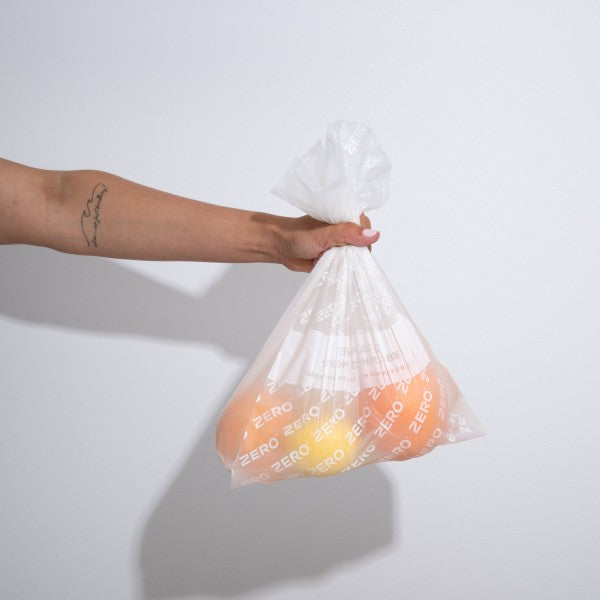
Damp towel-like produce bag. Dampen the bag under the tap and wring it out the same way you would a towel. Don’t overfill it. Wirecutter’s comparison found that this fabric style holds humidity far better than lightweight mesh or cotton bags, which dry produce out rather than protect it. Wash the bag after each use and let it air dry fully before storing it away, so it doesn’t develop mildew.
Cloth-lined jars and lidded containers. Line the base with a paper towel or cotton cloth, layer leaves loosely on top, and leave a little headspace for air movement. This method suits delicate herbs and baby leaves that bruise easily against bare glass.
Beeswax or compostable wraps. These are covers, not humidity chambers. They’re the right call for a bowl of prepped salad you’ll eat within a day or two, but they don’t hold moisture the way a sealed container does. So don’t rely on them for a week-long stretch.
Reusable silicone pouches and other resealable options. Any washable, reusable pouch with a firm seal can substitute for a zip-lock bag, provided it’s cleaned between uses and dried fully before the next fill.
The decision that matters most is airtight versus loose. Moisture-loving greens like spinach and rocket want an airtight seal to hold humidity in. Sturdier, drier-tolerant greens like kale can handle a looser wrap since they’re less prone to wilting.
| Method | Best for | Humidity control | Ease of use | Reusability & care |
|---|---|---|---|---|
| Damp towel + glass container | Delicate and hearty greens alike | High, adjustable | Simple, needs a spare towel | Wash towel regularly; container is dishwasher safe |
| Damp towel-like produce bag | Humid-loving greens (spinach, rocket) | High | Very simple | Hand wash, air dry fully between uses |
| Cloth-lined jars | Delicate baby leaves, herbs | Moderate | Simple | Swap paper liner each use; jar washes easily |
| Beeswax/compostable wrap | Short-term cover for cut salad | Low to moderate | Very simple | Wipe clean, air dry, avoid hot water |
Does the storage method change for different leafy greens?
Not every green behaves the same way in the fridge, and treating a delicate baby spinach leaf like a tough silverbeet stalk is a common reason people give up on plastic-free storage too early.
- Baby leaves and salad mixes bruise easily and lose water fast through their many cut edges. Store them dry in a roomy container, and eat the oldest batch first since they don’t hold for long.
- Lettuce and rocket do best loosely wrapped in a dry-ish cloth inside a container with a little airflow, rather than sealed bone dry.
- Herbs split into two camps. Parsley and coriander last noticeably longer standing upright with stems in a glass of water, loosely covered, almost like flowers. Basil is the exception: it hates the cold and turns black in the fridge, so keep it at room temperature on the bench instead.
- Kale and silverbeet are the toughest of the bunch. They tolerate a properly damp cloth well and often keep for the better part of a week or two longer than delicate leaves, which also makes them the best candidate if you’ve bought more than you’ll use fresh.
Whole heads generally outlast cut or torn leaves, since fewer damaged edges means less water loss, so buy whole where you can and cut only what you need for each meal.
How do you revive limp greens and know when to bin them?
A wilted leaf isn’t automatically a wasted one. Sustainability Victoria recommends a straightforward fix: soak limp leaves in a bowl of cold water for a few minutes, and they’ll often crisp back up as the cells rehydrate.
- Soak, don’t submerge for hours. A five to ten minute cold soak is usually enough; longer doesn’t help and can make leaves waterlogged.
- Dry before returning to storage. Spin or pat dry thoroughly, or you’ve just reintroduced the excess moisture that caused wilting in the first place.
- Know the point of no return. Slime on the leaf surface, visible mould spots, or a sour, off smell mean it’s time to bin the batch. Food safety guidance is clear that damaged or wet leafy vegetables can support pathogen growth, so don’t try to rescue them for the sake of avoiding waste.
Pro Tip: Use a separate container and cloth for each type of green rather than one big mixed tub. It stops one spoiling leaf from taking the whole batch down with it, and makes it obvious at a glance which container needs attention first.
Keep containers and cloths genuinely clean, wash them between uses rather than reusing a towel straight from one batch to the next, and never store leafy greens near a chopping board that’s just handled raw meat.
Can you freeze leafy greens instead of storing them fresh?
Freezing is the answer for a glut of kale, spinach, or silverbeet you know you won’t eat fresh in time. It’s not a substitute for fresh storage on greens headed for a salad, since the texture never comes back the same after thawing.
- Blanch first. Drop leaves into boiling water for around 30 to 60 seconds, then plunge them straight into iced water to stop the cooking. NSW Government guidance recommends this step for spinach and kale specifically, as it locks in colour and nutrients before freezing.
- Dry thoroughly before packing. Squeeze out excess water; wet greens form ice crystals that damage texture further.
- Pack in reusable freezer-safe containers or compostable freezer wraps, portioned into meal-sized amounts so you’re not thawing more than you need.
- Label with the date. Frozen greens are best used within a few months, and a quick label saves guesswork later.
- Plan for cooked dishes, not salads. Thawed greens work well in soups, curries, and smoothies but lose the crispness needed for a fresh salad bowl.
What fridge and hygiene habits keep plastic-free storage safe?
Storage technique only works alongside proper temperature control. NSW Government food-safety guidance recommends keeping your fridge below 5°C, and the crisper drawer is usually the most stable spot for leafy greens.
Why this matters: Food Standards Australia New Zealand points out that no amount of clever wrapping compensates for a fridge running warm, or for leaves left wet and bruised, since damaged, moist leafy vegetables can support pathogen survival.
- Keep leafy greens away from ethylene-producing fruit like bananas, apples, and pears, which speeds up yellowing and decay in nearby veg.
- Treat pooled water in any container as a warning sign, not a minor detail. A saturated cloth left too long creates the exact damp, low-oxygen conditions bacteria thrive in.
- Wash cloths and containers regularly rather than reusing a towel straight from the laundry pile without a check.
- Keep a routine: same drawer, same cloth rotation, checked every couple of days rather than only when something looks off.
One drawer, one habit: what actually sticks
The mistake most people make with plastic-free storage is trying to overhaul the whole fridge in one go. It rarely lasts, and burnout kills more good habits than bad information ever does.
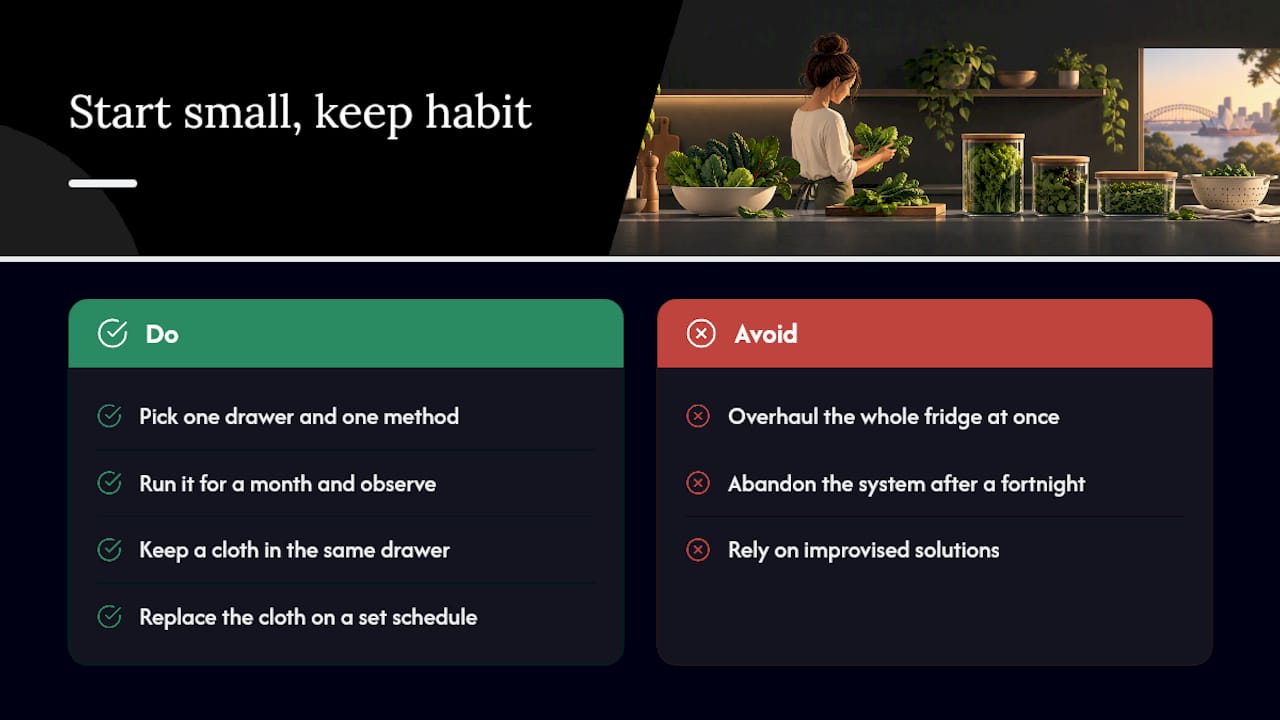
Pick one drawer and one method, run it for a month, and watch what happens rather than what you assume will happen. Are your greens lasting the one to two weeks Sustainability Victoria suggests is achievable, or are you still binning half a bag of rocket on bin day? That gap between what should work and what actually happens in your kitchen is the only feedback that matters.
The barrier to going plastic-free isn’t cost or effort, it’s habit. A cloth that lives in the same drawer every week, replaced on the same schedule, beats an elaborate system you abandon after a fortnight. The Zero Store exists to make the physical side of that habit easier, giving you gear designed for the job rather than a drawer full of improvised solutions.
— Damien
Which products make plastic-free storage easier?
Every method above works with tools most kitchens already have, but the right gear removes the guesswork. The Zero Store’s Plastic Free Produce Bags (2 Pack) are built as the damp, towel-like bag the storage methods above rely on, ideal for rocket, spinach, or a big bunch of silverbeet straight from the market. Dampen them under the tap, wring them out, and they hold humidity the way a good cotton towel does, without ever touching single-use plastic.
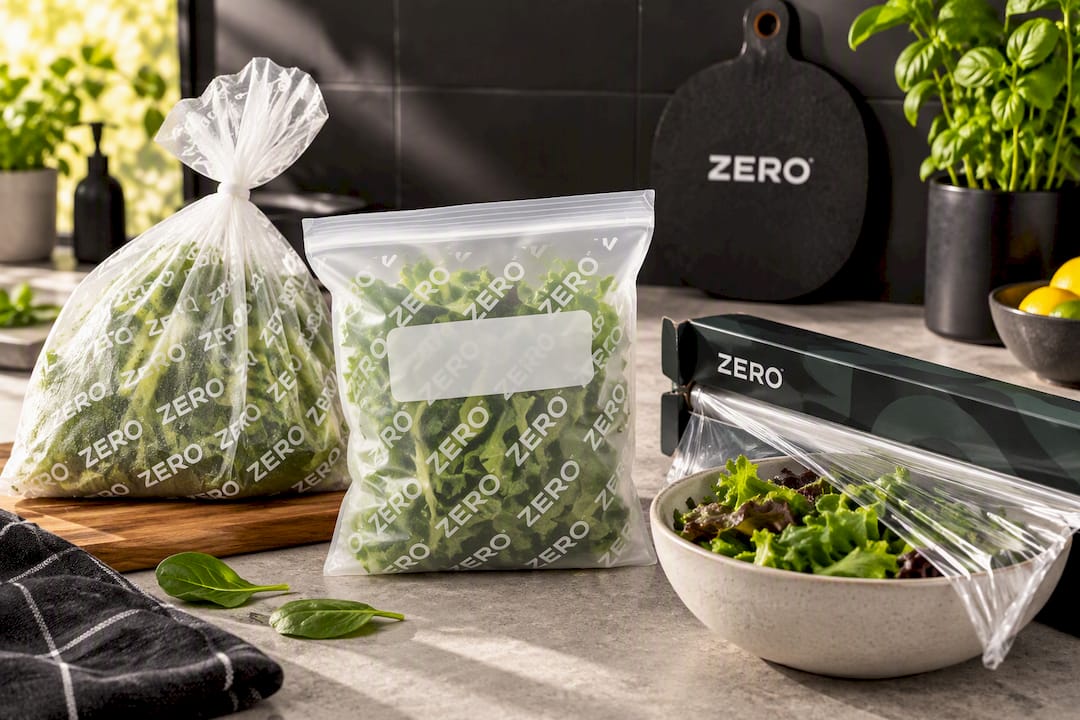
For portioned leftovers and cut vegetables that need an airtight seal, the Plastic Free Resealable Food Storage Bags do the job a zip-lock bag used to, minus the landfill problem. And when you need a quick cover for a half-used bowl of salad, Plastic-Free Cling Wrap gives you the same stretch and cling as ordinary cling film without the plastic waste it leaves behind, made from bio-polymers instead of standard petroleum plastic. Rinse and air dry the bags between uses so they last for repeated storage cycles. If you’d rather browse everything at once, the plastic-free kitchen collection has the full range in one place, ready to send to Australian kitchens looking to cut plastic waste one drawer at a time.
Sources
This article draws on food-storage guidance from Sustainability Victoria, fridge temperature and ethylene advice from NSW Government, hygiene standards from Food Standards Australia New Zealand, and product testing from Wirecutter.
- Guide for storing fresh produce | Sustainability Victoria
- The best reusable produce bags | Wirecutter (NYTimes)
- Safety and storage tips to make food last longer | NSW Government
- Food Standards Australia New Zealand (general guidance)
FAQ
What is the best way to store leafy greens to keep them fresh?
Wrap washed, thoroughly dried leaves in a slightly damp tea towel and seal them inside an airtight glass container in the fridge crisper. Sustainability Victoria puts the typical shelf life at one to two weeks using this method.
What vegetables should not be stored in plastic bags?
Leafy greens generally do poorly in sealed plastic bags because trapped moisture with no airflow speeds up rot and sliminess. A breathable cloth wrap or a damp, towel-like produce bag manages humidity far better than plastic.
What is the best way to store lettuce to keep it fresh?
Keep lettuce loosely wrapped in a barely damp cloth inside a roomy container rather than sealed bone dry or crushed flat. Check the cloth every few days and swap it out the moment it feels wet rather than damp.
How do you store vegetables in the fridge without plastic bags?
Glass or stainless containers lined with a damp cloth or paper are the standard swap for plastic bags, paired with a fridge kept below 5°C. Reusable produce bags work well for transport and short humid storage, but a proper container suits longer fridge storage better.
Can reusable produce bags really replace plastic for storing greens?
Yes, provided you choose a towel-like fabric rather than lightweight mesh. Wirecutter’s testing found a towel-style produce bag kept greens noticeably fresher than ordinary cotton or mesh bags, which tend to dry leaves out instead of protecting them.
Share:
Verify Compostable Bags in Australia: Look for EN 13432
Cut Plastic Fast: Aussie Zero Waste Bathroom Swaps to Start This Week