
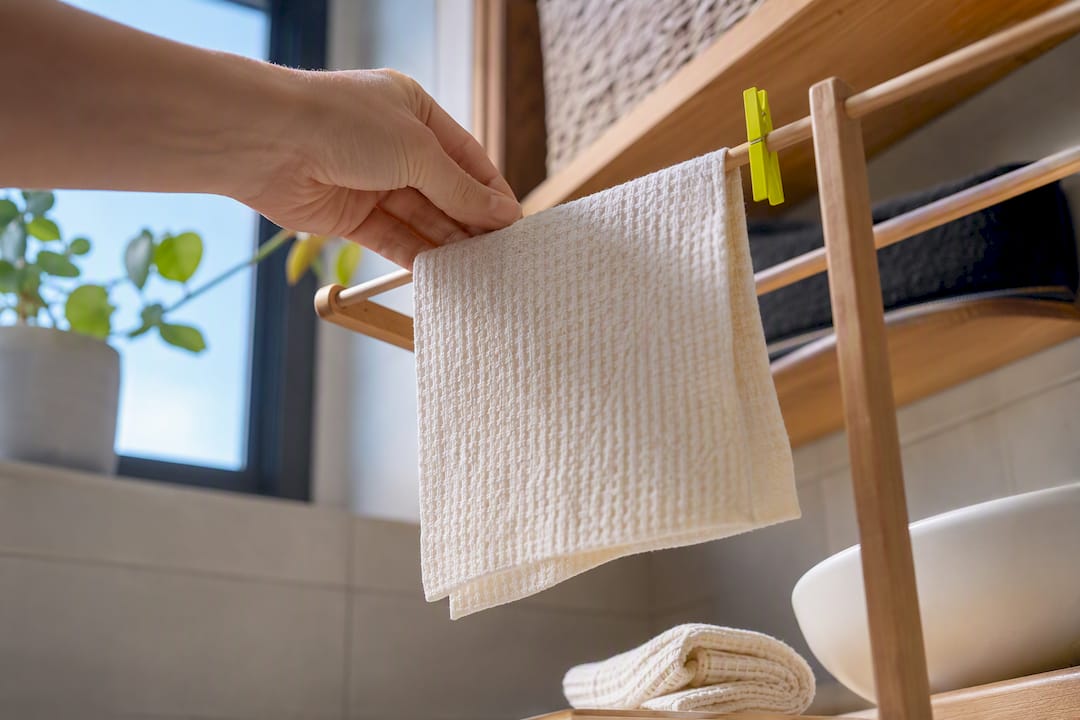
A well-cared-for Swedish dishcloth typically lasts from a few months up to about a year, and the gap between those figures comes down almost entirely to how you dry and sanitise it. Manufacturers quote a conservative three months under daily heavy use, while reviewers testing lighter routines report six to twelve months of usable life. Either way, when the cloth finally gives out, it composts rather than sitting in landfill for centuries.
TL;DR:
- A Swedish dishcloth typically lasts three to twelve months depending on usage, with heavier, daily use reducing lifespan to around three months.
- Proper care, especially drying quickly between uses and sanitizing weekly by boiling or dishwasher, significantly extends the cloth’s life.
- Overuse, abrasive cleaning, and damp storage speed up deterioration, while microplastic shedding is not a concern due to the natural cellulose and cotton blend.
- Replacing the cloth is advisable when it becomes thin, torn, or loses water absorption, not solely based on time.
- Rotating multiple cloths and following simple care routines maximizes lifespan and reduces waste, making them a sustainable alternative to paper towels.
Table of Contents
- Swedish dishcloth lifespan: the ranges and what changes them
- How do you care for a Swedish dishcloth day to day?
- What’s the best way to sanitise a Swedish dishcloth?
- When should you replace a Swedish dishcloth?
- How do you get the most out of a pack of cloths?
- Why choose plastic-free reusable cleaning cloths?
- Simple habits beat fancy claims
- Shop compostable cleaning cloths that go the distance
- Sources
- FAQ
Swedish dishcloth lifespan: the ranges and what changes them
The three-month figure and the twelve-month figure aren’t contradicting each other. They’re describing different households.
Manufacturer care guidance tends to assume a cloth doing the heaviest possible job: wiping benches, mopping spills, and scrubbing dishes every single day without much of a break. Under that workload, Koh’s own guidance puts lifespan at around three months. Independent reviewers testing cloths across lighter, more typical household use report a longer run. Testing across five brands found six to twelve months of usable life when the cloth wasn’t doing every dirty job in the kitchen. Three Bluebirds, another Swedish dishcloth maker, lands in the middle with six to nine months depending on how the cloth is used and dried.
A handful of factors decide where your own cloth will fall on that scale:
- Frequency of use. A cloth doing three jobs a day wears faster than one doing three jobs a week.
- Abrasive cleaning. Scrubbing dried food or grease with force breaks down the cellulose fibres faster than a gentle wipe.
- Chemical exposure. Harsh cleaning sprays and bleach degrade the fibres; gentler detergents extend life.
- Drying habits. A cloth left damp in a heap breaks down far quicker than one hung to dry fully between uses.
One thing that doesn’t factor into lifespan at all: microplastics. Swedish dishcloths are made from a blend of cellulose (wood pulp) and cotton, commonly around 70/30, so there’s no synthetic fibre shedding into your sink the way there is with a sponge or a microfibre cloth.
How do you care for a Swedish dishcloth day to day?
The routine takes under a minute and it’s the single biggest lever on how long your cloth survives.
- Rinse it after every use until the water runs clear, working out food particles and grease rather than leaving them to dry into the fibres.
- Squeeze gently, don’t wring hard. A firm twist can stress the fibres over time; a gentle squeeze gets most of the water out without the damage.
- Hang or lay it flat to dry, ideally somewhere with airflow, rather than folding it while damp or leaving it balled up on the sink edge.
- Skip the fabric softener. Residue clogs the fibres and reduces absorbency, which is the whole point of the cloth.
- Rotate between two or three cloths so each one gets proper time to dry out fully rather than staying perpetually damp.
That last point matters more than people expect. A cloth that never fully dries between uses is the fastest route to both odour and premature breakdown, because manufacturer guidance consistently points to trapped moisture, not dirt, as the real cause of smell. If your cloth is starting to smell no matter how well you rinse it, the fix usually isn’t a better detergent. It’s a drier spot to hang it.
What’s the best way to sanitise a Swedish dishcloth?
Three methods work reliably, and each has a slightly different use case:
- Top-rack dishwasher. The easiest option if you’re already running a load, and it doubles as a decent clean for the dishwasher itself.
- Boiling water. Submerge the cloth for two to three minutes to kill off bacteria and lift stubborn odours that a rinse alone won’t shift.
- Gentle machine wash at 30°C. Good for a batch of cloths at once, as long as you skip the tumble dryer afterwards.
For a cloth in daily use, sanitise weekly to keep bacteria and smell in check without over stressing the fibres.
What to avoid is just as important as what to do. Tumble drying generates enough heat to shrink and stiffen the cloth, and Three Bluebirds specifically warns against it for exactly that reason. Bleach and fabric softener both degrade the cellulose fibres over repeated washes, cutting your cloth’s working life short well before it should be retiring.
When should you replace a Swedish dishcloth?
Look for three signs rather than watching the calendar. A cloth that’s gone visibly thin in patches, developed small tears or holes, or stopped absorbing water the way it used to has done its job and is ready to retire.
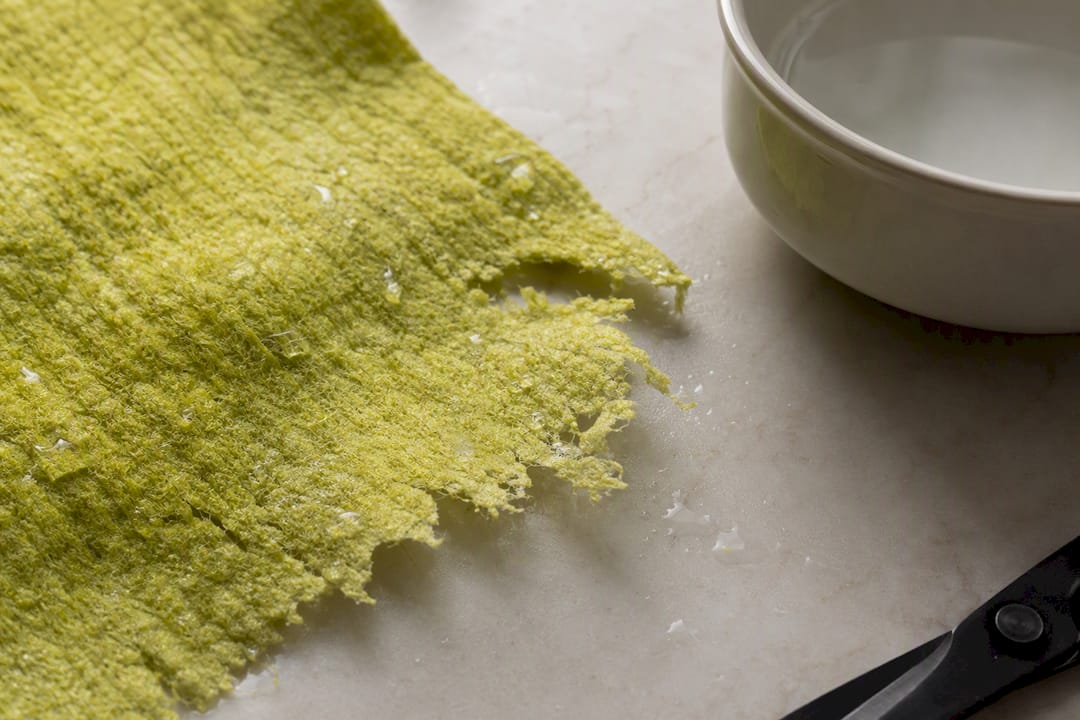
Cadence varies with use. A cloth doing heavy daily kitchen duty might need replacing closer to the three-month mark, while one used lightly a few times a week can stretch toward nine or twelve months.
When it’s done, composting is straightforward:
- Cut the cloth into a few strips to speed up breakdown.
- Remove any printed paper label or plastic tag before it goes in.
- Expect full breakdown in a home compost within a few months, faster in a hot compost system, slower in a cooler garden waste bin.
How do you get the most out of a pack of cloths?
Buying two or three cloths and rotating them properly does more for lifespan than any single care trick. One cloth handling everything, every day, wears out fast no matter how carefully you dry it.
A simple system works well for most households: keep one for benches and general wiping, one for dishes, and retire the oldest, most worn cloth to heavy-duty jobs like grubby stovetops or bin lids once it’s past its best for food contact. Store clean, dry cloths somewhere away from steam and condensation, not draped over a hot tap or stuffed in a cupboard near the dishwasher’s exhaust vent.
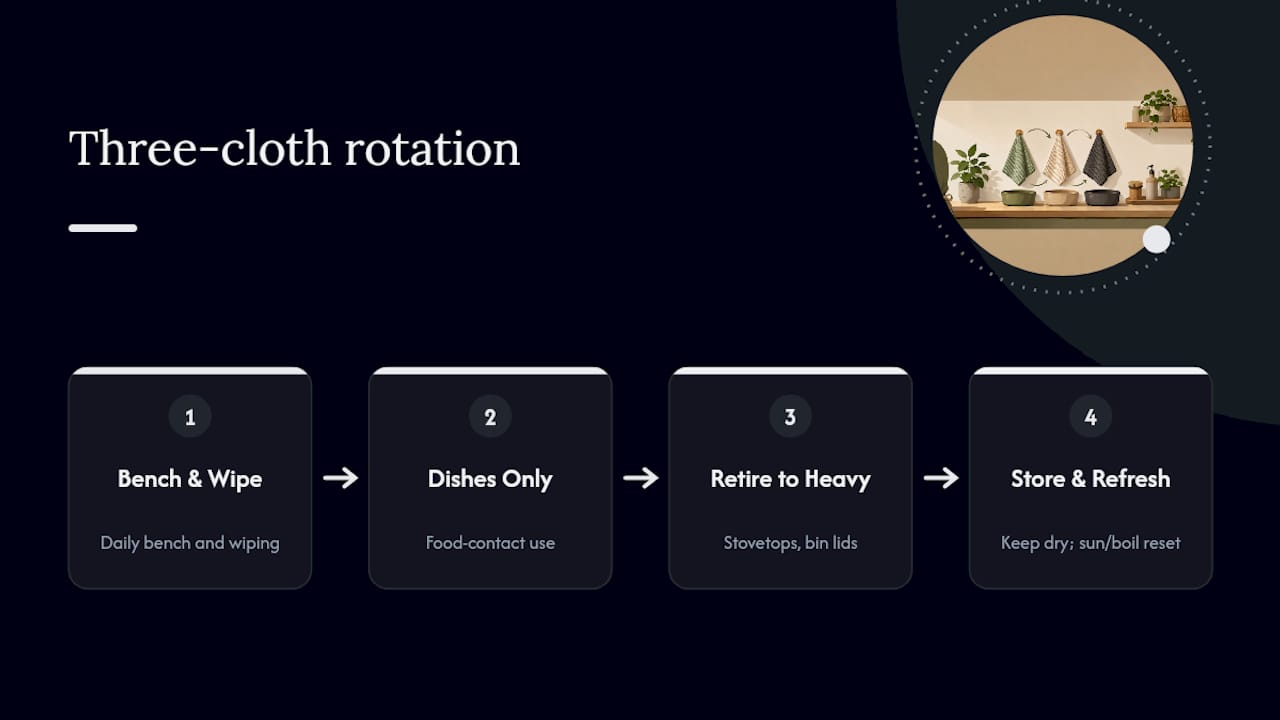
Pro Tip: If a cloth starts smelling musty between full sanitising sessions, a quick five-minute dunk in freshly boiled water or an hour on a sunny windowsill often resets it without needing a full wash cycle.
Why choose plastic-free reusable cleaning cloths?
The Zero Store’s Plastic Free Reusable Cleaning Cloths are built around the same principle this whole guide is based on: a cloth that dries fast, sanitises easily, and breaks down completely once it’s worn out, with no microplastics shed along the way. For lighter, single-use jobs, the Plastic Free Cleaning Wipes cover the gaps a reusable cloth doesn’t suit. Households or small businesses with heavier daily cleaning loads can look at the Commercial Cleaning Cloth, sized for the higher wear a busy kitchen puts a cloth through. Every product is designed to match the care routine already covered here: rinse, dry properly, sanitise weekly, and compost at the end.
Simple habits beat fancy claims
The most striking thing in researching this topic is how little the brand of cloth actually matters compared with what you do with it after you buy it. Two identical cloths, cared for differently, can end up with wildly different lifespans, and that gap is entirely within the reader’s control. Drying properly and sanitising weekly will get more out of a cloth than any premium material claim on the packaging. That’s the boring, unglamorous truth behind most sustainable swaps: the product matters less than the habit.
— Damien
Shop compostable cleaning cloths that go the distance
This approach is a practical route to cutting single-use plastic and paper towel waste from your kitchen without switching to something fiddly or short-lived. The cloths are plastic-free and compostable at the end of their working life, with no microplastics shed along the way, and there’s proven product performance behind them, unlike some “eco” wraps and wipes that fail to hold up in daily use.
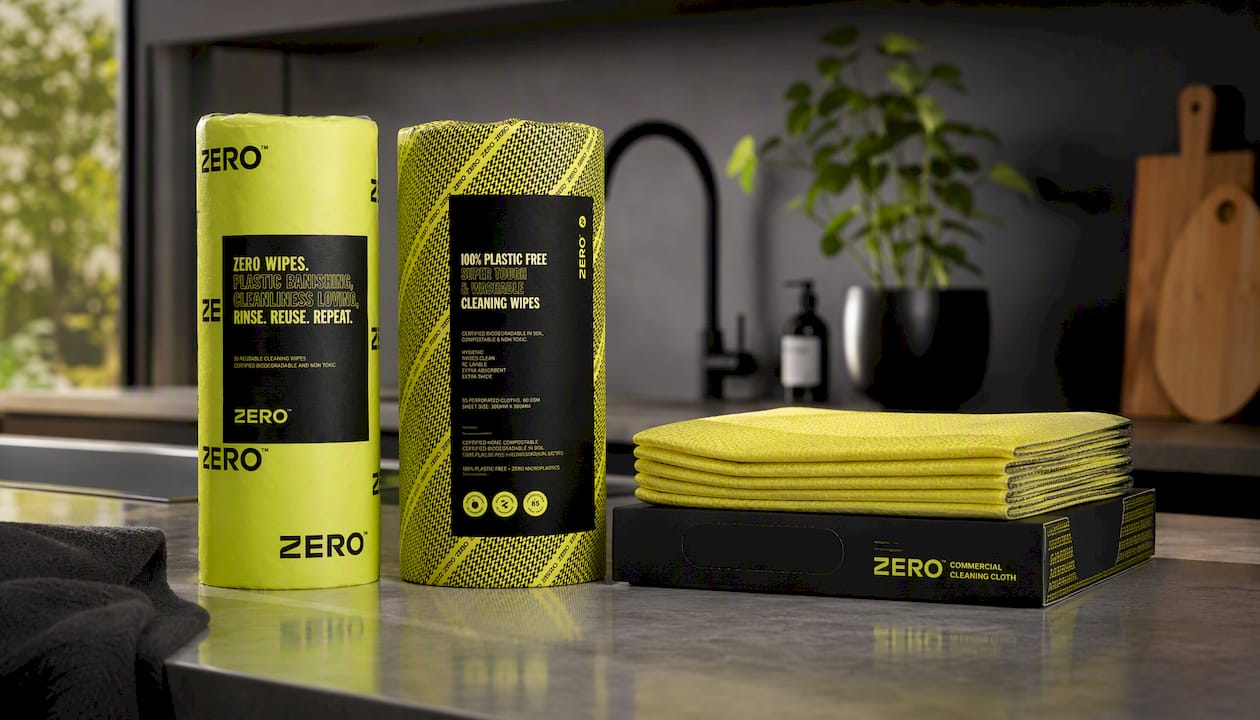
Start with the Plastic Free Reusable Cleaning Cloths for everyday kitchen wiping, add the Plastic Free Cleaning Wipes for quick single-use jobs, or browse the full cleaning collection to build a rotation that suits your household. Heavier-use households and small businesses can check the Commercial Cleaning Cloth for a tougher option that composts the same way. Browse the range and place an order today to get your first plastic-free cloths on their way.
Sources
- How do I care for Koh Swedish Dishcloths?
- Best Swedish Dishcloth Review (2026): 5 Brands Tested by a Scientist
- Use and Care – Three Bluebirds Swedish Dishcloths
- Best Swedish dishcloths - Serious Eats
FAQ
How often should I replace my Swedish dishcloth?
Most cloths need replacing somewhere between three and twelve months, depending on how heavily they’re used and how well they’re dried and sanitised. Watch for thinning, tears, or a drop in absorbency rather than counting weeks.
What are the drawbacks of Swedish dishcloths?
They need more careful drying than a synthetic sponge, since staying damp shortens their life and causes odour, and they can’t be tumble dried without risking shrinkage. They also wear out faster under heavy daily abrasive use than some readers expect.
Do Swedish dishcloths release microplastics?
No. They’re made from a cellulose and cotton blend, commonly around 70/30, so they don’t shed synthetic fibres the way microfibre cloths or sponges can.
What is the big deal with Swedish dishcloths?
One cloth can replace a large number of paper towel rolls over its working life, and it’s compostable once worn out rather than being thrown away. The Zero Store’s reusable cleaning cloths follow the same compostable, plastic-free approach.
Share:
Wipes vs Paper Towels: When 4–8¢ Wipes Beat 5¢ Sheets and Cut Waste
Dishcloths Vs Sponges for Eco Kitchens: Cloths Absorb 15–20× More