
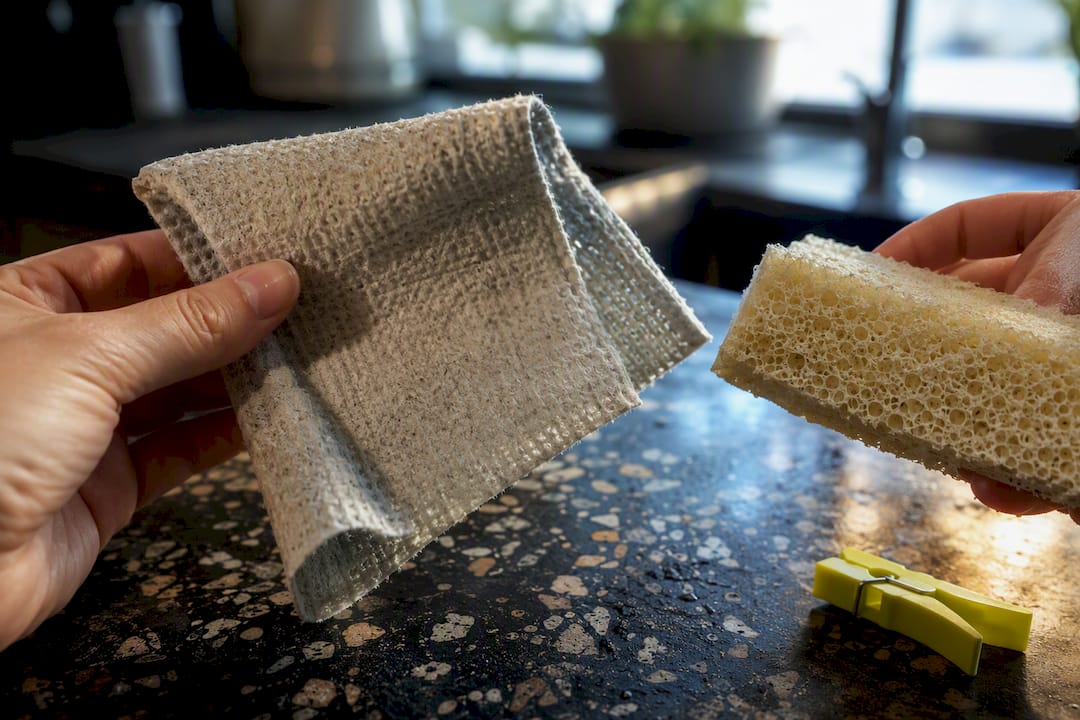
Reusable dishcloths, especially Swedish dishcloths, beat sponges for most household jobs once you weigh up hygiene and environmental cost. Sponges still earn their place for heavy scrubbing on baked-on grime, but for everyday wiping, drying and general kitchen hygiene, a well-cared-for cloth wins. The deciding factor is care: a hot wash or dishwasher cycle, full drying between uses, and timely replacement matter more than which material you start with.
TL;DR:
- Reusable dishcloths absorb more liquid, dry faster, and are easier to sanitize on high heat than sponges, making them more hygienic for daily use.
- Proper care, including hot washes for cloths and boiling or dishwasher cycles for sponges, significantly reduces bacterial growth, with sponges needing replacement every one to two weeks.
- Cellulose dishcloths are compostable and generate far less microplastic waste over their lifespan, unlike synthetic sponges that are difficult to recycle and shed microplastics.
- For effective cleaning, use cloths for wiping and polishing, reserving sponges for heavy scrubbing on baked-on grime and other tough jobs.
- Regular inspection and proper drying of cloths and sponges are essential to prevent bacterial buildup and determine timely replacement.
Table of Contents
- Dishcloth vs sponge: what actually separates them
- What does the evidence say about bacteria on sponges and cloths?
- Which is better for the environment: cloths or sponges?
- Which tool suits which cleaning job?
- How should you care for and replace each tool?
- Which should you actually buy for your kitchen?
- Why we back reusable cloths over sponges
- Try a reusable cloth without overhauling your whole kitchen
- Sources
- FAQ
Dishcloth vs sponge: what actually separates them
The two tools are built from completely different materials, and that shapes everything about how they perform. Swedish dishcloths are made from a blend of cellulose (wood pulp) and cotton, pressed into a thin, semi-rigid sheet that looks almost like paper until it’s wet. Synthetic sponges are typically polyurethane foam, sometimes paired with a plastic scouring layer, built with an open-cell structure designed to trap water and grime deep inside.
That structural difference explains most of the practical gap between them. Cellulose cloths absorb liquid fast and release it fast too, drying within an hour or two on a rack. Foam sponges hold onto moisture for far longer because water gets trapped in pockets throughout the material, which is exactly the damp, dark environment bacteria need to multiply.
Functionally, that split plays out like this:
- Absorbency: Swedish dishcloths can soak up 15 to 20 times their own weight in liquid, which is why one cloth often replaces dozens of paper towel sheets.
- Texture: sponges have a rougher, more abrasive face suited to scraping off dried food; cloths are smooth and better for wiping without scratching.
- Reach: thin, flexible cloths get into narrow gaps around taps and jar rims that a bulky sponge can’t reach.
- Drying speed: cloths dry within hours when hung flat; foam sponges can stay damp at the core for a full day, even after a rinse.
Silicone sponges sit somewhere in between. They dry almost instantly and resist bacterial growth better than foam, but they’re less absorbent and not the best choice for wiping up spills.
What does the evidence say about bacteria on sponges and cloths?
Kitchen sponges have a reputation problem, and it’s largely deserved. Microbiologists studying kitchen sponges under the microscope have found dense, diverse microbial communities thriving in the moist microenvironments created by that spongy foam structure, with different species colonising different pockets within the same sponge. Dishcloths aren’t sterile either. Both tools can turn into breeding grounds for bacteria once left damp on the counter, and the material itself matters less than what you do with it afterwards.
Statistic Callout: Dish rags and Swedish cloths are easier to launder at high heat than sponges, and sponges used heavily should be replaced every one to two weeks to keep bacterial counts manageable.
Sanitising each tool properly comes down to heat exposure and consistency:
- Cloths: run them through a hot machine wash (60°C or above) with your regular laundry, then tumble dry or hang to dry completely.
- Sponges: use a dishwasher’s sanitise cycle, or boil the sponge in water for several minutes. Microwaving is sometimes suggested, but only works on a fully wet sponge and carries a fire risk if it dries out mid cycle, so it’s not a method worth relying on.
- Replace on schedule: cloths every few weeks with proper laundering, sponges every one to two weeks under regular use, sooner if either develops a persistent smell.
Watch for the visual cues too: fraying edges, dark staining that won’t rinse out, or a sour smell that returns within hours of washing all mean it’s time to bin the tool, not sanitise it again.
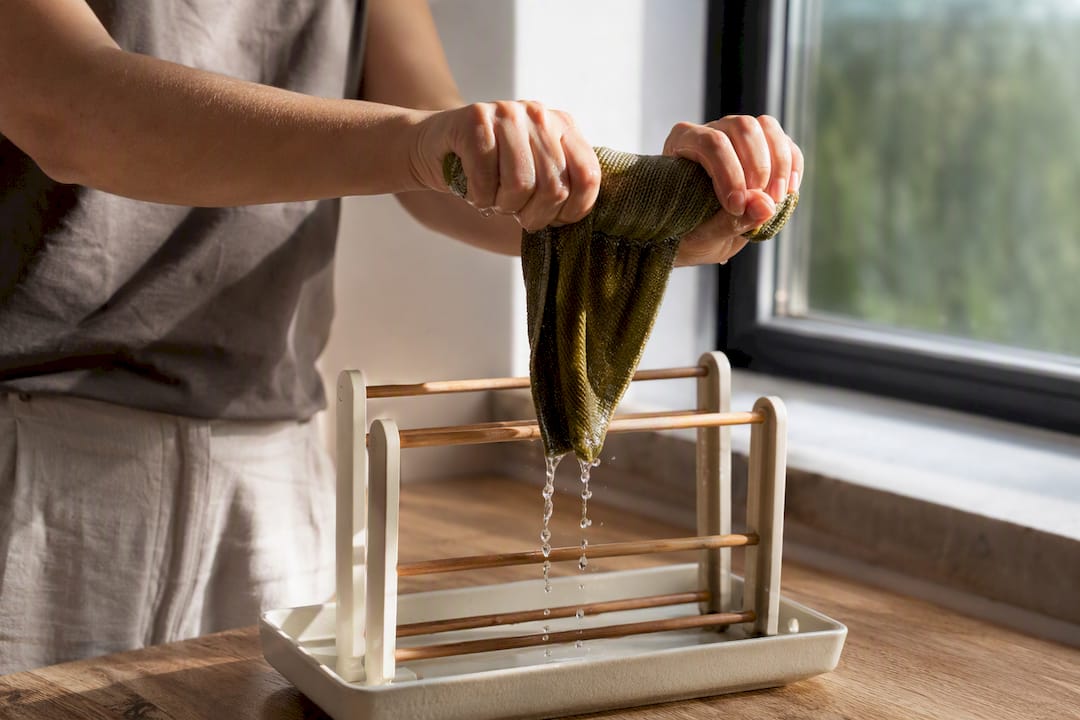
Pro Tip: Wring your cloth or sponge out fully after every use and hang it somewhere with airflow, not flat against the sink basin. A dedicated drying rack away from the tap cuts the time bacteria have to establish themselves by hours.
Which is better for the environment: cloths or sponges?
Cellulose dishcloths are made from wood pulp and cotton, both of which break down through composting rather than sitting in landfill for decades. Synthetic sponges are a different story: polyurethane foam is a petroleum-derived plastic, and environmental chemistry research has flagged synthetic polymers in cleaning tools as a source of persistent waste and potential microplastic shedding as they wear down under scrubbing and rinsing.
Run the maths over a year and the gap widens further:
- A household replacing a sponge frequently throws out dozens of sponges annually, all destined for landfill.
- A cloth replaced every few weeks, laundered rather than binned between uses, generates a fraction of that solid waste.
- Cellulose cloths that carry a genuine compostability certification can go into home or council green waste; check the label before you toss one in, since not every “eco” cloth is certified.
- Worn-out synthetic sponges have essentially no recycling path in most Australian kerbside systems, so they go straight to general waste.
The lifecycle cost isn’t just about what happens at the end. Every wash cycle a sponge survives before falling apart is still shedding microscopic fragments of foam into wastewater, whereas a cellulose cloth degrades into materials that don’t carry that same microplastic burden.
Which tool suits which cleaning job?
Matching the tool to the task saves you both time and unnecessary replacements. A rough guide:
- Everyday wiping and polishing (benches, glass, cutlery): use a dishcloth. Its absorbency and lack of abrasive texture leave surfaces streak-free.
- Baked-on grime (roasting trays, crusted pots): use a sponge, or the scouring side of one. This is the one job where a sponge’s rougher texture earns its keep.
- Narrow items (bottle necks, jar rims, cutlery grooves): a thin, flexible cloth gets in where a bulky sponge can’t.
- Non-stick pans and delicate finishes: avoid abrasive sponge pads entirely. A soft cloth or the smooth side of a sponge protects coatings that scratch permanently under scouring pressure.
The most efficient setup for most kitchens is a hybrid one: a dishcloth for the bulk of daily cleaning, with a single sponge kept back specifically for tough scrubbing jobs and nothing else. Using one tool for everything is usually what drives both hygiene complaints and faster wear.
How should you care for and replace each tool?
A workable routine doesn’t need to be complicated, just consistent.
- Cloths: hot machine wash (60°C+) with your regular laundry load, then tumble dry or air dry fully before reuse.
- Sponges: dishwasher sanitise cycle or a few minutes of boiling water; skip the microwave unless you’re confident it’s fully saturated first.
- Replacement signs: persistent odour that returns within hours of washing, visible staining that won’t lift, fraying or tearing, or a sponge that stays damp at the core for more than a day.
- Storage: keep both tools upright or hanging with airflow on all sides, never balled up in a wet heap at the back of the sink.
Pro Tip: Keep two cloths in rotation rather than one. While a fresh cloth handles today’s washing up, yesterday’s sits in the laundry basket waiting for a hot wash, so you’re never reaching for a tool that hasn’t dried properly.
Which should you actually buy for your kitchen?
The right pick depends on how you cook and what you’re optimising for.
- Eco-first households: go all in on reusable cloths. Fewer replacements, compostable material, no plastic residue in the bin.
- Heavy cooks with lots of baked-on mess: keep one designated sponge for scrubbing, paired with cloths for everything else.
- Health or allergy-conscious households: prioritise whichever tool you’ll actually launder on a hot cycle every few days, since consistent sanitising matters more than the material itself.
Statistic Callout: A cloth that absorbs 15 to 20 times its weight in liquid can realistically replace dozens of paper towel sheets over its working life, which is where most of the lifetime cost saving comes from rather than the purchase price alone.
If you’ve never tried a reusable cloth over a sponge, the switch is low-risk: a handful of cloths in rotation, one hot wash cycle a week, and you’ll notice the smell problem that plagues sponges simply doesn’t turn up.
Why we back reusable cloths over sponges
Writing this comparison didn’t change our starting position so much as sharpen it. The evidence on bacterial load in sponges is consistent enough across independent reporting that we don’t think households need to wait for a definitive verdict before switching most of their cleaning over to cloths. Where we’d push back on common advice is the idea that sponges are simply “dirtier” full stop. They’re not inherently worse when sanitised properly; they’re just harder to sanitise properly at home, week after week, than most people realise. That gap between what’s possible and what actually happens in a busy kitchen is where cloths win on practicality, not just on paper.
— Damien
Try a reusable cloth without overhauling your whole kitchen
Switching from sponges to cloths doesn’t mean buying a drawer full of new gear. The Zero Store’s reusable cleaning cloths are made without added plastics, machine-washable on a hot cycle, and built to outlast the sponges most Australian households are used to replacing fortnightly.
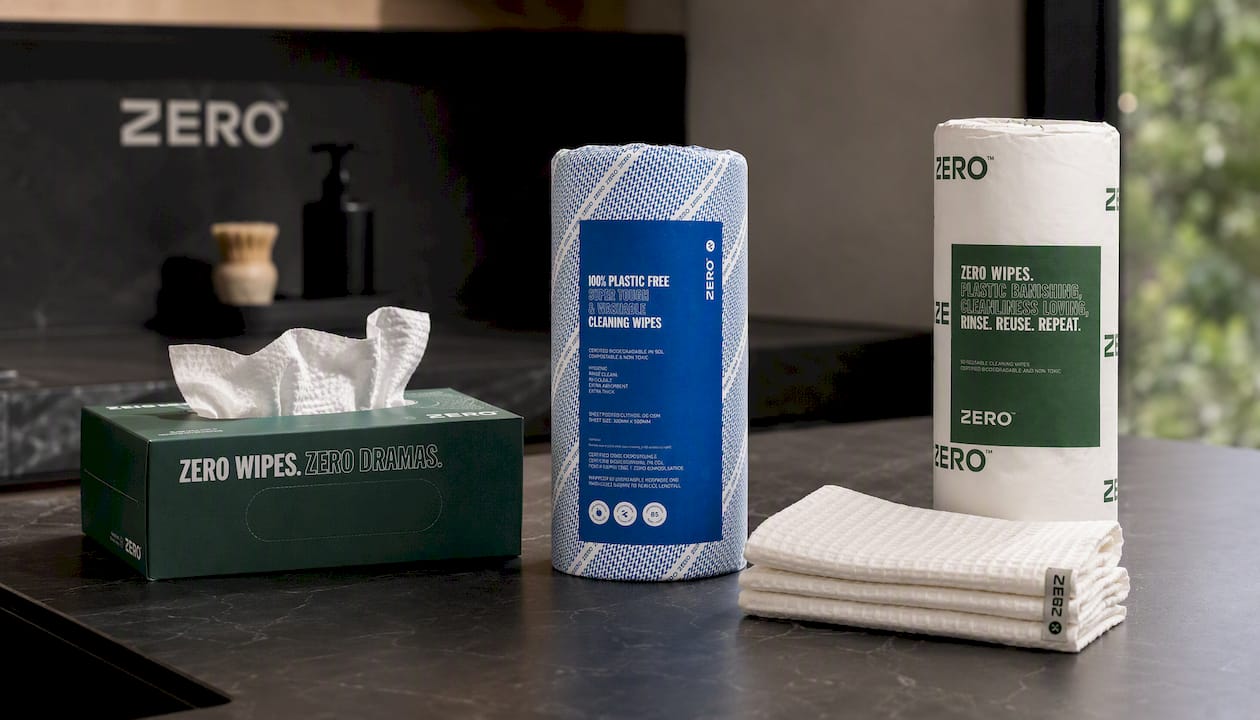
If you’re after something disposable for quick jobs, the plastic-free cleaning wipes work as a low-commitment starting point before you commit to cloths full time. Households doing higher-volume cleaning, or running a small hospitality setup, might prefer the commercial cleaning cloth roll, which gives you the same compostable material in a larger format. Browse the full cleaning cloth range to see which fits your household, and pair it with the kitchen collection if you’re ready to cut plastic out of food storage at the same time.
Sources
- Is It a Bad Idea to Use a Sponge to Clean Your Kitchen? — The Spruce
- Sponge vs. dishcloth: Which one is grosser? — Washington Post
- Sponge kitchen bacteria and microbe diversity — ScienceNews
- ACS environmental research article — relevant to microplastics and polymer persistence
FAQ
Is it better to wash dishes with a sponge or a dishcloth?
A well-laundered dishcloth is generally the more hygienic and sustainable everyday choice, since it dries faster and tolerates a hot wash better than sponges do. Keep a sponge on hand only for scrubbing stubborn, baked-on grime.
What holds more bacteria, a sponge or a dishcloth?
Sponges tend to harbour more bacteria because their foam structure traps moisture deep inside, creating diverse microbial communities that are harder to fully sanitise at home. A cloth washed on a hot cycle clears bacteria far more reliably.
Why is a dishcloth not always best practice in a kitchen?
A dishcloth left damp on the counter without regular hot washing can become just as unhygienic as a neglected sponge, since both tools turn into bacterial breeding grounds once left wet. The tool matters less than whether you’re drying and laundering it consistently.
What is the most hygienic thing to wash dishes with?
The most hygienic option is whichever tool you can reliably sanitise on a hot cycle and dry fully between uses, which for most households is a reusable dishcloth like The Zero Store’s cleaning cloths. Reserve a designated sponge purely for heavy scrubbing tasks.
How often should I replace a dishcloth or sponge?
Sponges under heavy use should be replaced roughly every one to two weeks, while a well-laundered cloth can last several weeks longer before it needs binning or composting. Replace either sooner if you notice persistent odour, staining, or fraying.
Share:
3–12 Months: Make Swedish Dishcloths Last in Eco Homes, Then Compost
3–5× Ecosystem Damage: Bioplastic vs Plastic in Australia