No, you should not flush biodegradable wipes or wipes labelled “flushable,” regardless of what the packaging promises. Put them in the bin. That’s the immediate action every water authority and independent test points to.

An independent flushability study by Urban Water TMU modelled a household-to-sewer system and tested 101 single-use wipes, including 23 marketed as flushable. None dispersed safely enough to avoid potential damage to plumbing or municipal infrastructure. Zero out of 101. That’s not a marginal failure rate, and it’s why the bin-first rule exists in the first place: when in doubt, wipes go in the bin, not the bowl.

Diagram showing flushability test failure rates

Key Takeaways

Independent sewer-modelled testing found that no wipe, flushable-labelled or not, dispersed safely, which is why bin-first disposal remains the only reliable rule.

Point Details
Never flush wipes Independent testing found none of 101 wipes tested, including 23 labelled flushable, dispersed safely in a sewer model.
Labels aren’t proof “Biodegradable” and “flushable” describe different, unverified performance claims, not guaranteed sewer safety.
Fibre blends matter Wipes mixing cellulose with synthetic fibres are less likely to break down in real sewer or environmental conditions.
Certifications have limits Voluntary schemes test against a protocol, not your actual pipes, and some certifications have since been retired.
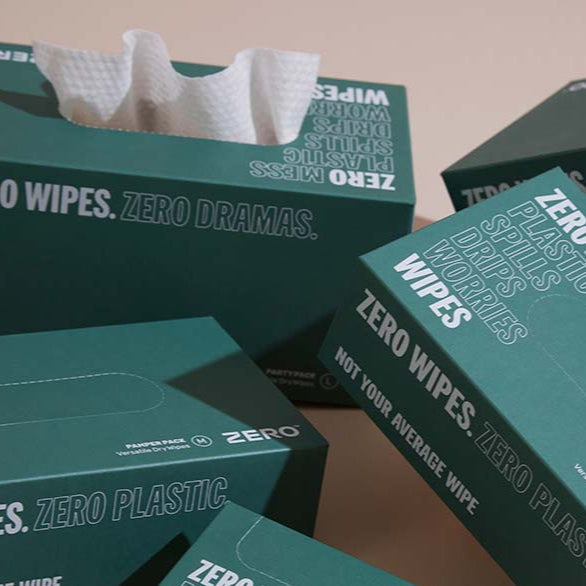
Choose bin-first products The Zero Store’s plastic-free cleaning wipes, cloths, and baby wipes are designed for bin disposal, not flushing.

Table of Contents

Are biodegradable wipes flushable? What the labels actually mean

“Flushable” and “biodegradable” sound like they promise the same thing. They don’t.

In marketing, “flushable” usually means “it will go down the toilet without immediately clogging it.” Engineers who design sewer systems mean something far stricter: the product has to disperse into small fragments within minutes, not hours, and pass through pumps, joints, and treatment screens without snagging. Toilet paper is engineered to lose strength fast in water. Most wet wipes, even the cellulose-based ones, are built to hold together while you’re using them, which is exactly the property that works against them once they’re in the pipe.

“Biodegradable” is a separate claim again. It means microorganisms can eventually break the material down, but that process usually needs specific conditions: warmth, oxygen, time, and the right microbial community. A sewer pipe doesn’t offer any of that. Neither does the ocean.

Watch for these phrases on packaging, because none of them guarantee safe flushing:

  • “Plant-based” or “natural fibres” (says nothing about dispersal speed)
  • “Biodegradable” with no timeframe or testing standard attached
  • “Septic safe” (a different claim to flushable)
  • Certification logos without a named, checkable standard

Pro Tip: Flip the pack over and look for a fibre breakdown. If it lists any polyester, polypropylene, or “PET,” that’s a synthetic blend, and synthetic fibres don’t break down in sewage the way cellulose does.

What independent tests and water authorities say about flushability

The strongest evidence against flushing wipes comes from labs that actually simulate sewer conditions, not just a sink drain.

Urban Water TMU’s testing built a rig that mimics the journey from toilet to treatment plant, including pumps and pipe bends. Every one of the 101 wipes tested failed to disperse adequately, flushable-labelled or not. Separately, Consumer Reports lab testing found that many wipes marketed as flushable or biodegradable simply don’t disintegrate the way toilet paper does, and traced the problem to fibre mixes that blend biodegradable cellulose with low-degradable synthetics.

Australian water authorities put it bluntly: only pee, paper, and poo belong in the toilet. Barwon Water’s guidance states that no wipes, regardless of flushable or biodegradable claims, should go down the loo.

Utilities Kingston echoes the same warning, noting that wipes don’t disintegrate like tissue and put both household plumbing and municipal wastewater systems at risk.

Lab tests have a limitation worth understanding: they run controlled, single-product scenarios. Real sewers deal with grease, hair, tree roots, and thousands of wipes clumping together over months. If a product struggles alone in a lab rig, it’s likely to perform worse in a genuine sewer network, where blockages compound rather than resolve.

Do biodegradable wipes actually break down, and how long does it take?

Breaking apart and biodegrading are two different processes, and mixing them up is where most confusion starts.

Physical fragmentation is what happens when a wipe gets battered by water flow and eventually tears into pieces. Biochemical biodegradation is slower and deeper: microorganisms metabolise the material itself. A wipe can fragment without ever truly biodegrading, especially if it contains synthetic fibres mixed with plant-based ones.

Toilet paper typically disperses within seconds to a few minutes in water. A cellulose-based wet wipe, even a well-made one, can take considerably longer, and a wipe with any synthetic content may persist for months or longer in waterways. A peer-reviewed review of flushed biodegradable wet wipes found that many products blend cellulosic and synthetic fibres with additives, and concluded that most flushed biodegradable wipes don’t meaningfully degrade under typical sewer or environmental conditions.

Several factors decide how a wipe actually performs once it’s flushed:

  • How long the pipe run is between your home and the treatment plant
  • Water temperature and flow speed in the sewer
  • Whether the wipe contains any synthetic or plastic-blended fibres
  • Coatings, lotions, or binding additives used in manufacturing
  • How long the wipe sits in standing water before it moves

Certifications and standards you might see, and their limits

You’ll come across a handful of labels and industry schemes on wipe packaging. Here’s what they typically signal, and where they fall short.

  • Voluntary flushability tests – internal or industry-run tests, often not independently verified against real sewer conditions.
  • “Fine to Flush” style certification – a scheme some manufacturers used to display, though reporting on UK regulatory shifts notes that some such certifications have since been retired as scrutiny increased.
  • Compostable/industrial compost logos – valid only if you have access to industrial composting; home compost bins rarely reach the temperatures required.
  • IWSFG-referenced guidance – industry working group standards that inform product testing but aren’t a legal requirement.

None of these guarantee performance in your specific sewer system. A certification tells you a product met a defined test protocol. It doesn’t tell you what happens in a 40-year-old clay pipe three suburbs from the treatment plant.

How to dispose of wipes safely, right now

You don’t need to overhaul your bathroom to fix this. A few habits make the difference.

  1. Bin every wipe, always, no exceptions for products labelled flushable or biodegradable.
  2. Seal used wipes in a small bag if odour is a concern, especially for baby wipes.
  3. Keep a lidded bin within arm’s reach of the toilet so binning is as easy as flushing.
  4. In public toilets, use provided bins rather than assuming commercial plumbing handles wipes better than yours.
  5. For nappies, always bin them; nappies are never designed for flushing regardless of any wipe used alongside them.

Pro Tip: Put a small, clearly labelled bin next to every toilet in the house, including guest bathrooms, and add a one-line sign for visitors. Most flushing mistakes happen because the bin isn’t visible, not because people don’t know better.

Older homes with narrow or ageing pipework, properties with long sewer runs to treatment, and any shared or strata plumbing all carry higher blockage risk. In those cases, treat every wipe as bin-only, even ones that pass industry flushability tests, because the test rig isn’t your actual plumbing.

Eco-friendlier alternatives to disposable wet wipes

If you’re trying to cut both plastic waste and plumbing risk, the safest route is to stop relying on single-use wipes altogether where you can.

  • Reusable microfibre or plant-fibre cloths for household cleaning, washed and reused rather than binned each time.
  • Certified compostable wipes, but only if you have genuine access to industrial composting; home bins usually can’t process them.
  • Plastic-free, chemical-free dry wipes for surfaces, which sidestep the flushing question entirely since they’re never intended for the toilet.
  • For babies, a plastic-free baby wipe designed for bin disposal removes the guesswork around flushability altogether.

Sustainability Victoria’s guidance on wet wipe alternatives is a useful starting point if you want a broader look at reducing single-use wipe habits at home.

The bin-first habit that actually protects your plumbing

Bin-first isn’t a compromise; it’s the only disposal habit backed by every independent test I’ve reviewed for this piece. I’d rather see households choose genuinely plastic-free, transparently made wipes and bin them properly than chase a flushable label that hasn’t earned it.

Low-waste wipe and cloth options that skip the flushing risk

If bin-first is the rule, the products worth buying are the ones that make binning painless rather than the ones chasing a flushable claim they can’t back up.

Cleaning Wipes

The Zero Store’s Cleaning Wipes are made without plastic fibres and designed for bin disposal, not the sewer, so there’s no ambiguity about where they end up. For households wanting to cut wipe use altogether, the Reusable Cleaning Cloths handle everyday spills without generating single-use waste, and you wash them instead of binning them. Parents dealing with nappy changes can look at the Baby Wipes, formulated without plastic and built for the bin, never the toilet, whether or not your council offers industrial composting. Check the plastic-free wipes collection to compare options and find the pack size that suits your household.

Frequently asked questions

Are biodegradable wipes flushable? No. Biodegradable describes eventual microbial breakdown under the right conditions, not rapid dispersal in a sewer pipe. Independent testing found biodegradable and flushable-labelled wipes both failed to disperse safely.

Why not flush wipes even if they say flushable on the pack? Because “flushable” as a marketing term hasn’t matched real sewer performance in independent tests. Consumer Reports found many labelled products don’t disintegrate like toilet paper does.

How is flushable wipes vs toilet paper different in terms of breakdown speed? Toilet paper is engineered to lose strength within seconds of contact with water. Even cellulose-based wipes are made to stay intact longer for handling, which slows their breakdown considerably.

Are compostable wet wipes a safe flushing alternative? No, compostable and flushable are separate properties. A compostable wipe still needs to go in the bin or an industrial compost stream, never the toilet.

What should I do with baby wipes after use? Bin them, always, including ones marketed as biodegradable flushable baby wipes. No nappy-aisle product has passed independent sewer-dispersal testing.

Frequently asked questions — overview diagram

Does bin-first disposal apply to older homes too? Yes, and it matters more there. Ageing pipework and long sewer runs increase blockage risk, so treat every wipe as bin-only regardless of any flushable claim on the packet.

Sources

Latest Stories

This section doesn’t currently include any content. Add content to this section using the sidebar.