Flushable wipes are not safe to flush, no matter what the pack says. Water utilities the world over stick to one rule, the “Three Ps”: only pee, paper and poo belong in the loo. Everything else, including wipes marked “flushable”, should go in the bin. That label often just means the wipe passes a bowl clearance test, but not that it breaks down once it reaches the sewer. The evidence for why sits in the science below, and the better disposal habits sit further on.
TL;DR:
- Most flushable wipes contain synthetic fibers and binders that prevent them from breaking down in sewer systems, often remaining intact after 48 hours.
- Household and municipal sewer conditions are much less vigorous than lab simulations, meaning wipes persist even longer and can cause blockages.
- Utility guidance consistently recommends binning wipes and only flushing pee, paper, and poo to prevent costly repairs and recurring clogs.
- Biodegradable wipes can last up to 15 weeks in the environment, shedding microfibres and harboring bacteria that threaten waterways and marine life.
- Switching to bin-safe, reusable, or plastic-free wipes is a simple step to reduce waste and avoid contributing to sewer blockages or environmental pollution.
Table of Contents
- Why wipes often don’t break down: materials and test evidence
- What water utilities, plumbers and regulators advise
- Environmental impacts when wipes escape the system
- What to use instead: bin-safe and lower-waste options
- What to do if a wipe blocks your pipes
- Our take on the flushable wipe problem
- Lower-waste wipes that are actually built for the bin
- Sources
Why wipes often don’t break down: materials and test evidence
Most wet wipes are built from a blend of cellulose fibres and synthetic materials such as viscose, rayon, or polyester, held together with a binder that gives the wipe enough strength to survive a wipe and a squeeze without falling apart in your hand. That same strength is the problem once the wipe leaves your bathroom. Toilet paper is engineered to lose its structure the moment it hits water. Wipes, by design, are not.
A peer-reviewed analysis of biodegradable and flushable wipe products found that more than half contained a mixture of cellulose and low-degradable synthetic fibres, which stopped the wipes breaking down the way the labelling implied. The binders that hold fibres together for durability are the same binders that resist the agitation and dilution a sewer pipe provides.
Sewer-simulation testing backs this up in stark numbers. Laboratory trials found that most wipe products remained largely intact after 48 hours under conditions meant to mimic a real sewer. Toilet paper, tested alongside them, disintegrated far faster.
- Cellulose-based fibres degrade fastest, but rarely appear alone in commercial wipes.
- Synthetic fibres such as polyester barely degrade at all within days, let alone hours.
- Kinetic agitation (aggressive shaking) speeds up breakdown enormously compared with the still or slow-moving conditions found in many real sewer sections.
- Binder chemistry, not just fibre type, decides whether a wipe holds together or falls apart.
Statistic callout: Under sewer-like laboratory conditions, most tested wipes stayed largely intact after 48 hours, while toilet paper broke down in a fraction of that time. That gap is the entire reason “flushable” and “safe for sewers” are not the same claim.
Real sewer networks rarely deliver the vigorous mixing a lab tank does. Low-flow stretches, bends, and pump stations all slow things down further, giving wipes even longer to snag on rough pipe surfaces, grease deposits, or each other.
What water utilities, plumbers and regulators advise
Utility guidance is consistent across regions: stick to the Three Ps, pee, paper and poo, and bin everything else. This isn’t a marketing line. Utilities issue it because wipe-related blockages cost real money to clear, from pump damage to full-blown fatbergs that require crews to physically dig material out of pipes.
Legal cases add nuance rather than a clean villain story. An Australian Competition and Consumer Commission court case examined flushable claims made by a major manufacturer, and the court found the company had not misled consumers with its labelling at that time. Certification schemes have also shifted: some flushability standards, such as the UK’s now-discontinued “Fine to Flush” mark, have been wound back or replaced as testing methods evolved and industry consensus moved.
What this means for your household budget:
- Blockages inside your own property boundary are usually your responsibility to clear and pay for.
- Blockages in shared or municipal infrastructure are the utility’s problem, but the cost of repeated wipe-related maintenance still gets passed on through rates over time.
- Repeat callouts for the same blocked pipe can flag your property for closer inspection by a plumber or utility inspector.
Environmental impacts when wipes escape the system
Wipes that dodge the treatment plant screens or get flushed straight into stormwater don’t simply vanish. Field research has recorded biodegradable wet wipes persisting on beaches for up to 15 weeks, undermining the assumption that “biodegradable” means “gone quickly.” That’s roughly the length of an entire school term, sitting on sand as a physical hazard and an eyesore.
Statistic callout: Beach-based studies have tracked biodegradable wet wipes lasting up to 15 weeks in the open environment before breaking down, far longer than most people assume when they see the word “biodegradable” on a packet.
The persistence problem compounds in two ways. First, synthetic and semi-synthetic fibres shed microfibres as they slowly wear down, adding to the microplastic load already accumulating in waterways and marine sediment. Second, wipes act as physical reservoirs for the material they were used to clean up, including faecal bacteria, which can linger on a wipe’s surface long after it has washed ashore or settled in a waterway.
A recent review of the environmental challenges posed by disposable wipes points to fibre bonding and material choice as the core reasons wipes resist breakdown in natural settings as much as in sewers. Manufacturers, the review notes, have generally prioritised tear resistance and wet strength over how quickly a product disperses once discarded.
None of this means every wipe is an ecological disaster waiting to wash up somewhere. It does mean the safest assumption for any wipe, whatever the packaging claims, is that it will outlast a single flush by weeks rather than minutes.

What to use instead: bin-safe and lower-waste options
Cutting flushed wipes out of your routine doesn’t mean giving up convenience. It means redirecting that convenience towards products designed to be binned, reused, or genuinely composted under the right conditions.
- Toilet paper remains the only paper product engineered to disperse in water within seconds, making it the default for anything that needs to go down the pipe.
- Disposable wipes, binned rather than flushed, still work for cleaning, makeup removal, or nappy changes, provided they land in a small lidded bin rather than the bowl.
- Reusable cloths cut waste volume altogether by replacing single-use products with something you wash and use again.
- Home composting, but only for products explicitly certified for it, since a “biodegradable” label alone doesn’t guarantee your compost bin will break the material down.
Checking a pack for genuine claims takes seconds. Look past the front-of-pack word “flushable” and scan the ingredients list for polyester, viscose, or unspecified “synthetic fibres”. A product’s material breakdown tells you more than any single marketing word.
Pro Tip: Keep a small bin with a lid next to the toilet. It sounds trivial, but households that add this one step almost always stop flushing wipes within days, simply because binning becomes as easy as flushing.

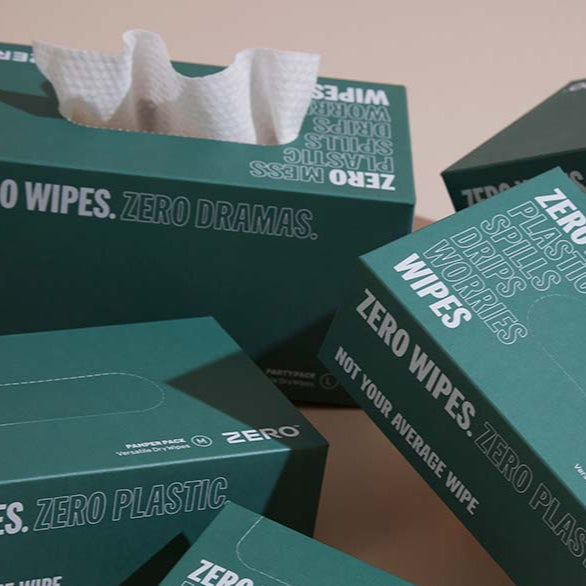
The Zero Store’s Plastic Free Cleaning Wipes, Makeup Wipes and Plastic Free Reusable Cleaning Cloths are built around exactly this distinction: designed for the bin, or designed to be washed and reused, never designed for the sewer.
What to do if a wipe blocks your pipes
Household habits matter more than any single product choice. Keep a lidded bin within reach of the toilet, treat every wipe as bin-only regardless of labelling, and make that the household default rather than an occasional reminder.
If water starts draining slowly or a toilet won’t clear properly, the sequence to follow is straightforward:
- Stop flushing immediately and try a plunger on the affected fixture only.
- If the blockage doesn’t clear within a couple of attempts, avoid chemical drain cleaners on suspected wipe blockages, as they rarely dissolve fibrous material and can complicate a plumber’s job.
- Call a licensed plumber if the blockage sits inside your own property boundary, since clearing wipe-related blockages is a well-documented job plumbers deal with regularly.
- Contact your water utility or building manager if multiple properties or a shared line are affected, since that repair typically falls to them rather than to you.
Costs vary by job, but a private in-home blockage is usually the property owner’s bill, while shared or municipal line blockages are the utility’s responsibility, unless repeated flushing from one property is identified as the direct cause.
Our take on the flushable wipe problem
The wipe industry sells convenience, and convenience sells. But a product tested to survive a wipe-down shouldn’t be marketed as something meant to disintegrate in seconds. The Zero Store exists because that gap between claim and reality is real, and consumers deserve products built honestly for the bin or for reuse, not for a flush that quietly costs everyone downstream.
— Damien
Lower-waste wipes that are actually built for the bin
Swapping flushed wipes for The Zero Store’s range means you’re choosing products designed around how you’ll actually dispose of them, not around a marketing claim that falls apart under lab testing.
The Plastic Free Cleaning Wipes handle household cleaning jobs without the synthetic fibres that make ordinary wipes so persistent once binned or, worse, flushed. The Makeup Wipes cover the personal-care routine that drives so much bathroom wipe use, built from plastic-free materials from the outset rather than retrofitted with a “biodegradable” sticker. For anyone ready to cut wipe use altogether, the Plastic Free Reusable Cleaning Cloths replace the single-use habit entirely, washable and reusable instead of one-and-done.
Even genuinely low-waste products still belong in general waste or, where certified, a compost stream, never in the toilet. Browse the full range of plastic-free wipes and cloths and pick the swap that fits your bathroom routine today.
Sources
The claims in this article rest on named, checkable sources: peer-reviewed material analysis, a NOAA-hosted sewer-simulation study, utility guidance, and reporting from outlets including the BBC and Consumer Reports. None of it relies on marketing copy from wipe manufacturers.
- Reminder on the ‘Three Ps’ — Barwon Water
- PubMed: analysis of biodegradable/flushable wipe materials
- NOAA repository: wipe degradability study
- RSC Sustainability review: environmental challenges of disposable wipes
Damien, who writes this perspective for The Zero Store, draws on the peer-reviewed and utility sources cited throughout rather than personal testing claims.


Share:
Prevent Freezer Burn in Australian Kitchens Without Buying New Gear