For streak-free glass, dust and lifting grease with little or no chemical, reach for microfiber. For heavy soaking, bleach-based sanitising or delicate finishes where scratching is a risk. Cotton wins. The choice comes down to the job, not brand loyalty, and each fabric has a genuine weak spot the other doesn’t share.
TL;DR:
- Microfiber performs best on hard surfaces and delicate finishes, removing up to 99% of bacteria with only water when cared for properly.
- Cotton excels at soaking up liquids, tolerates bleach and high heat, making it suitable for sanitising and rough cleaning tasks.
- Proper maintenance, such as separating laundry loads and avoiding fabric softeners, significantly extends the lifespan and effectiveness of both fabrics.
- Microfiber sheds microplastic fibres during washing, whereas cotton biodegrades but is more resource-intensive to produce; proper care can mitigate environmental impacts.
- A basic cleaning kit should include dedicated microfiber cloths for glass and all-purpose use, along with cotton towels for spills and sanitising tasks.
Table of Contents
- Microfiber vs cotton cloths: a side-by-side comparison
- Why microfiber outperforms cotton on hard surfaces
- Cotton’s real strengths (and its slow start)
- How to wash, dry and store both fabrics properly
- The environmental trade-off nobody mentions on the label
- Building a cleaning kit that actually works
- Balancing performance against plastic in your cleaning cupboard
- A plastic-free option for the jobs that suit it
- Sources
Microfiber vs cotton cloths: a side-by-side comparison
The two fabrics clean in fundamentally different ways. Microfiber is a split synthetic fibre, usually a polyester and polyamide blend, that creates thousands of microscopic hooks and channels per square centimetre. Those hooks grab dirt mechanically and pull it into the cloth through capillary action rather than absorption. Cotton works differently: it’s hydrophilic, so water and grime get pulled inside the fibre itself and held there, which is why a cotton towel typically soaks up more liquid per gram.
That mechanical difference explains most of the practical gap between them:
- Absorbency: cotton holds more water per gram; microfiber holds less but releases it faster on demand.
- Dirt and bacteria pickup: microfiber’s hook structure traps particles cotton’s smoother fibres let slide past.
- Linting: cotton sheds fibres, especially when new; quality microfiber sheds very little.
- Surface safety: cheap or worn microfiber can micro-scratch glossy finishes; cotton is gentler on delicate surfaces.
- Durability: microfiber can survive hundreds of wash cycles if cared for properly; cotton thins at friction points over time.
- Cost: cotton is usually cheaper upfront; good microfiber costs more but lasts longer per wash cycle.
Quick decision rule: if the job involves glass, screens, dust or grease, go microfiber. If it involves bleach, boiling water, raw meat juices or a soft-lacquered surface, go cotton.
Why microfiber outperforms cotton on hard surfaces
Microfiber’s split-fibre construction is the whole story here. Each strand is engineered to fracture into finer filaments, multiplying surface area and creating the hooks that grip dirt rather than just push it around. That’s why quality split-fibre microfiber can remove up to 99% of surface bacteria using only water, no detergent required. That figure depends heavily on cloth quality and correct washing, not every microfiber cloth on the shelf performs the same.
The trade-offs are real:
- Cheap, felt-like microfiber lacks true split fibres and barely outperforms a rag.
- Worn or contaminated microfiber can leave fine scratches on glossy paint, glass, or non-stick coatings.
- Microfiber sheds microplastic fibres in the wash, which matters for anyone trying to reduce plastic in their laundry.
- It needs specific care: no fabric softener, no high heat, and ideally its own wash load.
Pro Tip: Check the blend ratio on the label. A genuine 70/30 or 80/20 polyester/polyamide split-fibre cloth will feel dense and slightly rough between your fingers, not soft and fluffy like a cheap duster.
Cotton’s real strengths (and its slow start)
Cotton’s absorbency comes from cellulose fibres that draw water inside the strand rather than trapping it on the surface. That’s why a cotton tea towel or terry cloth can genuinely out-soak microfiber when the job is mopping up a spill rather than lifting grease. Cotton also tolerates bleach and near-boiling water, making it the preferred choice for sanitising cutting boards, baby bottles or items that come into contact with raw chicken.
Its downsides are practical rather than dramatic:
- It dries slowly, which invites odour and biofilm if a damp cloth sits in a pile too long.
- It lints, particularly in the first few washes.
- New cotton often needs several wash cycles before it reaches full absorbency, because manufacturing residues coat the fibres straight off the shelf.
- Weave matters: terry towelling for soaking, huck towels for glass and windows, flat-weave for general wiping.
Pro Tip: Wash new cotton towels twice before first use. Skip that step and you’ll wonder why your brand-new towel barely dries a bench.
How to wash, dry and store both fabrics properly
Getting the care wrong is the fastest way to ruin either fabric. Follow this routine:
- Separate the loads. Never wash microfiber with cotton. Cotton lint clogs the split fibres and can cut microfiber’s cleaning effectiveness by roughly 20 to 30% per contaminated wash.
- Skip the fabric softener on microfiber. Softener coats the fibres and permanently disables the microscopic hooks that make it work.
- Wash microfiber warm, dry it low or air-dry it. High heat melts the split fibres and flattens their structure for good.
- Wash cotton hot when sanitising, and bleach is fine occasionally, something you should never do to microfiber.
- Test cloth health regularly. Splash water on microfiber: if it beads instead of soaking in, the cloth’s hooks are compromised and it’s due for replacement. For cotton, a lingering sour smell after washing means it’s not drying fully between uses.
The environmental trade-off nobody mentions on the label
Microfiber is plastic, full stop, and it sheds microplastic fibres every time it’s washed. Textiles are a significant contributor to microplastic pollution in waterways. Synthetic cleaning cloths are part of that load. Cotton biodegrades at end of life, but it’s a resource-intensive crop to grow, water, and process.
Neither fabric wins outright on sustainability. A microfiber cloth that lasts many washes tends to have a lower per-use footprint than a cotton one replaced more frequently, but that only holds if it’s cared for properly and doesn’t end up in landfill after six weeks because it was washed with softener. Practical mitigation matters more than the fabric label: a laundry filter bag catches shed fibres before they reach the waterway, washing cleaning cloths less often reduces total shedding, and choosing cotton for tasks near food or skin sidesteps the plastic exposure question entirely.

Building a cleaning kit that actually works
A sensible household kit doesn’t need to be complicated:
- 2 microfiber cloths for glass and mirrors, kept strictly for glass to avoid streaking from grease transfer.
- 3 all-purpose microfiber cloths for benchtops, grease and dusting.
- 2 to 3 cotton tea towels or terry cloths for spills, drying dishes and anything needing bleach.
Colour-code by task, blue for glass, yellow for benches, one distinct colour reserved for bathrooms, so cloths never cross-contaminate. It’s worth paying more for genuine split-fibre microfiber for glass and grease work, where cheap versions noticeably underperform. For basic mopping-up jobs, a mid-range cotton towel does the job just as well as an expensive one. Anyone assembling a larger kit for a busier household can look at a plastic-free commercial cleaning cloth roll for higher-volume use, or check a guide to reusable cleaning cloths suited to Australian homes for further task-matching advice.
Balancing performance against plastic in your cleaning cupboard

The debate over microfiber versus cotton usually gets framed as a straight winner-takes-all contest, and that framing misses the point entirely. Professional cleaners have used a rough rule for years: if the job involves a delicate or glossy surface, needs bleach, or is mostly about soaking up liquid, cotton is the better call; everything else usually favours microfiber. What gets underestimated is how much the care routine determines performance, not the fabric itself. A well-maintained cotton towel and a well-maintained microfiber cloth both outlast a badly maintained version of either by years.
Where I’d push back on conventional advice is the assumption that synthetic always means disposable. Durability is what actually determines environmental impact, and a cloth that survives hundreds of washes without shedding excessively is doing real work, provided it’s washed correctly and doesn’t end up in landfill after a handful of uses. Readers who want to avoid the microplastic question altogether still have legitimate reasons to keep cotton in the cupboard for food prep and sanitising jobs, no fabric alternative changes that.
— Damien
A plastic-free option for the jobs that suit it
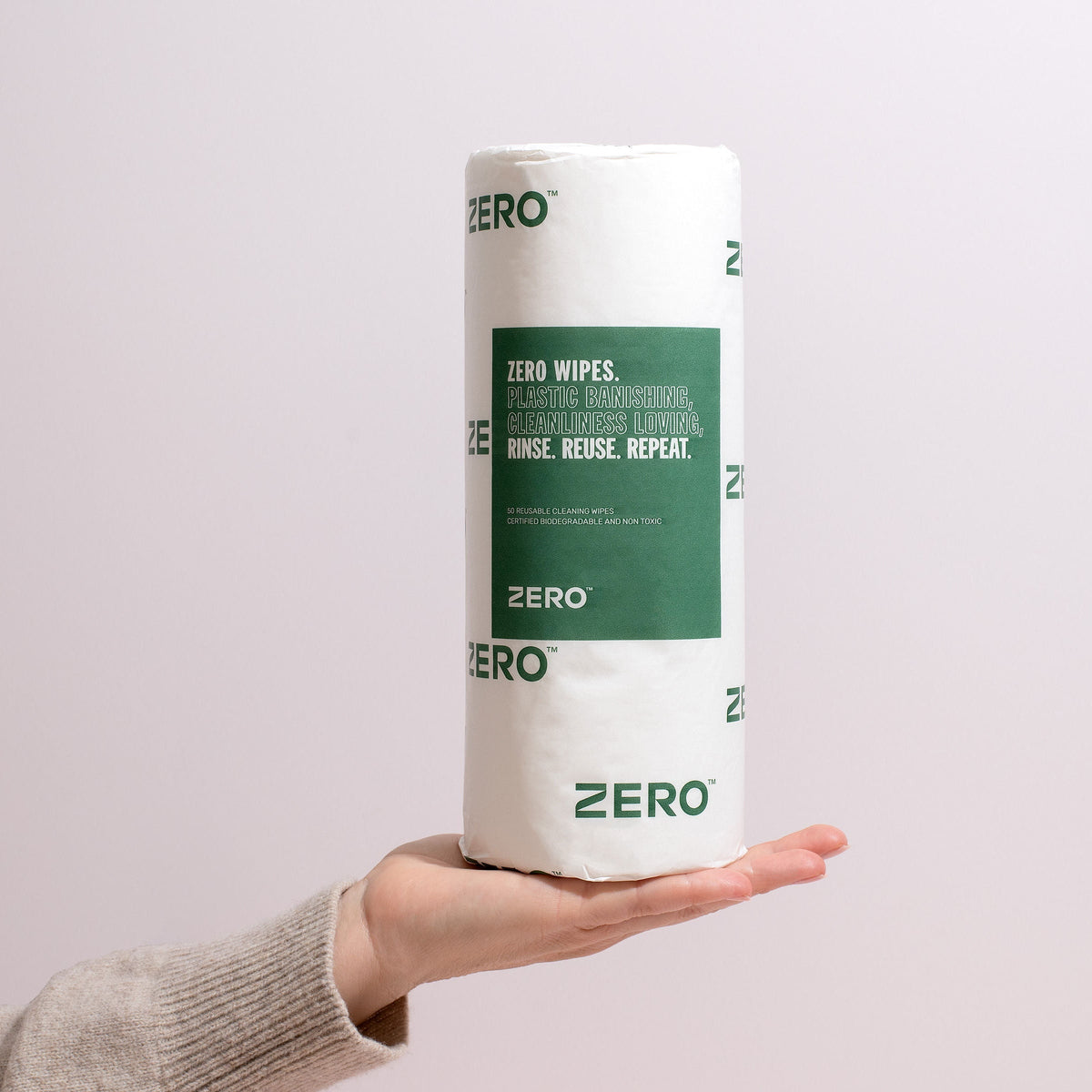
There’s a middle path between “buy more plastic microfiber” and “go back to cotton for everything”: plastic-free reusable cloths designed to handle the everyday jobs, glass, benches, general wiping, without adding synthetic fibres to your wash. The Zero Store’s plastic-free reusable cleaning cloths are biodegradable and free from the harsh chemical finishes some cheap microfibre carries, which matters if you’re trying to cut plastic out of the laundry as well as the kitchen.
They’re not the right pick for every job. Bleach-based sanitising and boiling-water tasks still belong to cotton. That’s worth saying plainly rather than pretending one cloth does everything. Where they do genuinely fit is dusting, glass, benchtops and general household wiping, the bulk of a typical cleaning routine. Households running a heavier cleaning load, a share house, a small business, a busy kitchen, can look at the commercial cleaning cloth roll for a bulkier plastic-free option, or browse the paper towel alternatives guide for what else can come out of the cupboard. Head to the product page to check sizing and pack options before your next cleaning shop.
Sources
Claims in this article draw on cleaning trade testing summaries from CleanLink, fibre science from Microfibre World, cotton fibre research via Science Insights, and microplastic context from Cotton Incorporated. For related surface-cleaning guidance, One Day Doors & Closets covers interior door care in detail.
- Differences Between Microfiber And Cotton - CleanLink
- Microfibre vs Cotton: The science behind better cleaning - Microfibre World
- Is cotton a good material? Pros, cons and best uses - Science Insights
- The case for cotton: a natural alternative to synthetics - Cotton Incorporated


Share:
Flushable wipes in Australia: lab tests show most stay intact 48 hours