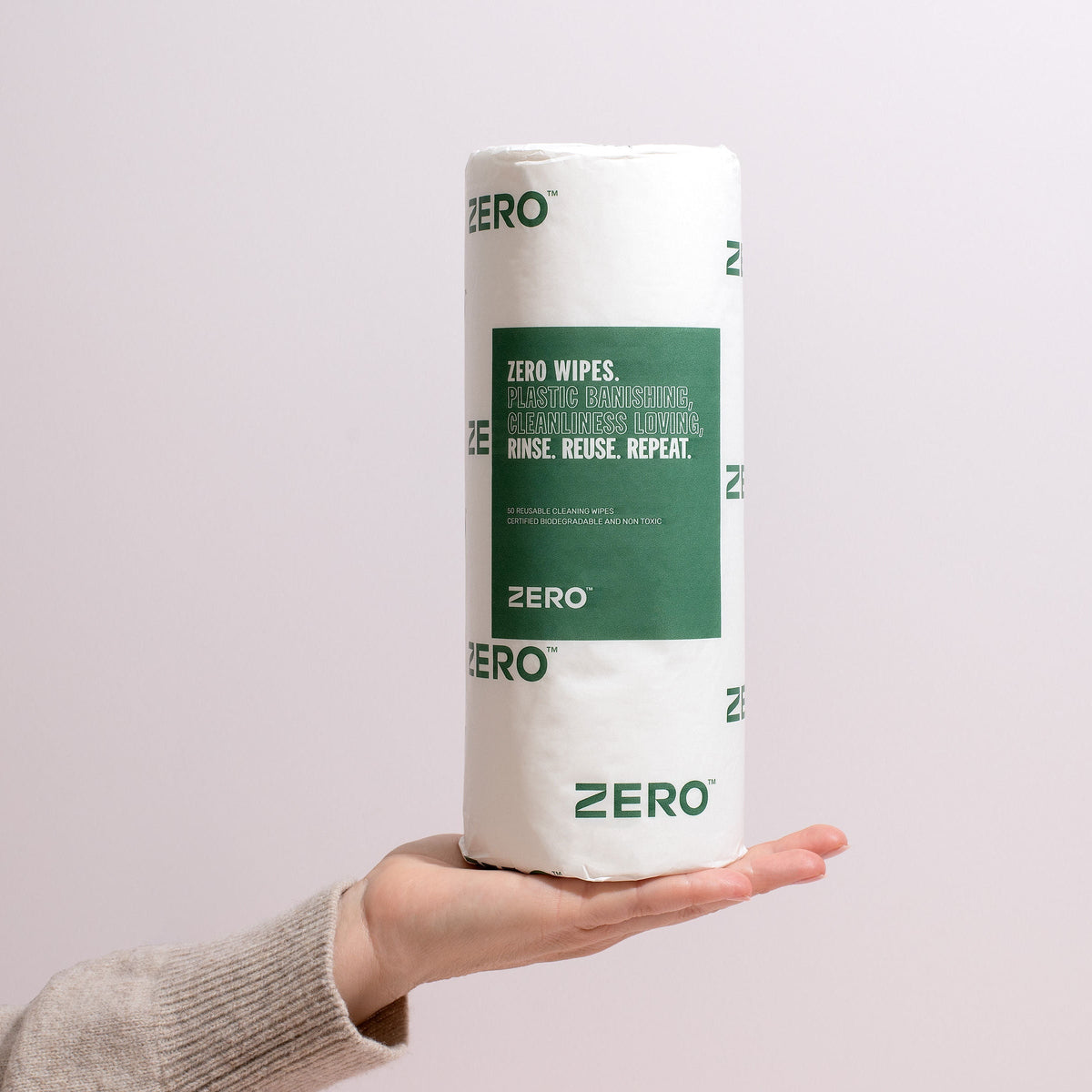
The single best reusable cleaning cloth for most Australian households is a cellulose-cotton Swedish-style dishcloth: it absorbs well, dries fast, and goes straight into your home compost bin at the end of its life. For glass and stainless steel, a quality microfibre cloth still leads on streak-free performance, though it comes with a microplastic trade-off worth knowing about.
Top four picks at a glance:
- Best overall: Cellulose-cotton Swedish dishcloth — absorbent, quick-drying, compostable, and a genuine replacement for dozens of paper towel rolls. Ideal for households cutting single-use waste.
- Best value: Reusable cotton terry cloth — low cost per cloth, widely available, machine-washable at high temperatures. Good for families with heavy spill loads.
- Best for glass and windows: Microfibre cloth (high-pile, 300+ GSM) — microscopic polyester tendrils trap dust and leave streak-free finishes that cotton cannot match. Best for renters who want spotless mirrors and glass-fronted cabinets.
- Best for stainless steel and electronics: Microfibre cloth (ultra-fine, lint-free) — gentle enough for screens and appliances, picks up grease without scratching. Worth the microplastic caveat when performance matters.
The core trade-off: synthetic microfibre wins on streak-free cleaning performance, but sheds microplastic fibres during washing. Plant-based alternatives like cellulose and cotton are compostable and microplastic-free, but need more passes on glass.
Table of Contents
- How do the best reusable cleaning cloths compare?
- How do you choose the right reusable cloth for your home?
- What do the main materials actually do, and what are the trade-offs?
- How do you clean, sanitise, and extend the life of reusable cloths?
- How were these cloths compared and scored?
- Per-pick reviews: what each cloth does best
- Quick shortlist: which cloth fits your situation?
- Key takeaways
- The real reason most households keep buying paper towels
- The Zero Store’s plastic-free cleaning cloths: what makes them worth buying
- Sources and further reading
How do the best reusable cleaning cloths compare?
| Cellulose-cotton dishcloth | Cotton terry cloth | Microfibre (high-pile) | Microfibre (ultra-fine) | |
|---|---|---|---|---|
| Best for | General kitchen, spills, benchtops | Heavy-duty scrubbing, bathrooms | Glass, mirrors, dusting | Stainless steel, screens, electronics |
| Material | Cellulose (wood pulp) + cotton | 100% cotton terry | Polyester + polyamide blend | Ultra-fine polyester + polyamide |
| Absorbency & streak performance | High absorbency; some streaking on glass | Good absorbency; can streak on glass | Excellent; streak-free on glass | Excellent; lint-free on smooth surfaces |
| Lint / residue / scratch risk | Low lint; no scratching | Moderate lint; no scratching | Low lint; safe on most surfaces | Very low lint; safe on delicate surfaces |
| Durability & washability | Machine-wash up to 60°C; 200+ uses | Machine-wash up to 90°C; very durable | Machine-wash up to 60°C; 200 washes | Machine-wash up to 40°C; 200–300 washes |
| Environmental impact | Home-compostable; no microplastics | Biodegradable; no microplastics | Sheds microplastic fibres during washing | Sheds microplastics; not compostable |
| Price & pack sizes (AU) | ~AU$3 per cloth; sold singly or 3-packs | ~AU$1–3 per cloth; sold in 5–10 packs | ~AU$2–5 per cloth; sold in 3–10 packs | ~AU$3–8 per cloth; sold singly or 2-packs |
| Australian availability | Online (The Zero Store, specialty eco retailers); some health food stores | Supermarkets, hardware stores, online | Supermarkets, discount stores, online | Specialty cleaning, online, electronics retailers |

The clearest trade-off sits between the two microfibre options and the plant-based picks: microfibre delivers a streak-free finish that cellulose and cotton struggle to match on glass, but every machine wash releases synthetic fibres into waterways. If your priority is glass and polished surfaces, microfibre earns its place. For everything else, cellulose-cotton or cotton terry does the job without the plastic footprint.
Quick price notes for Australian shoppers:
- Cellulose dishcloths are available online through The Zero Store’s plastic-free cleaning cloths range, with compostability credentials listed on the product page.
- Cotton terry cloths are the easiest to find in Woolworths, Coles, and Bunnings.
- Microfibre packs are stocked widely at supermarkets and discount variety stores across Australia.
How do you choose the right reusable cloth for your home?
The decision comes down to five questions, asked in order.
1. What surfaces and tasks do you clean most? Glass, mirrors, and polished stainless steel favour microfibre. Benchtops, spills, and general kitchen wiping suit cellulose or cotton. Bathrooms and heavy scrubbing call for a thicker cotton terry.
2. How much do microplastics concern you? If you want to avoid synthetic shedding entirely, rule out microfibre and go straight to cellulose-cotton or cotton terry. Both are biodegradable and free of synthetic fibres.
3. How often will you launder? Cotton terry tolerates the hottest machine washes (up to 90°C) and is the most forgiving if laundering slips. Cellulose cloths need frequent washing or quick drying to stay hygienic. Microfibre should be washed at 40–60°C and kept away from fabric softener, which clogs the fibres and kills performance.
4. What is your end-of-life plan? Home compost bin? Choose cellulose-cotton. General textile recycling? Cotton terry. No plan yet? Microfibre is the least convenient to retire responsibly.
5. What certifications does the product carry? Look for OEKO-TEX Standard 100 on microfibre cloths, which confirms the fabric has been tested for harmful substances. For cellulose and plant-based cloths, check for home-compostability certification or a clear statement of material composition. The Zero Store lists material credentials and eco-certifications directly on its product pages, which makes comparison straightforward.
Red flags to avoid:
- Any cloth labelled “single-use” but marketed as reusable without a clear wash-cycle count.
- Cheap low-pile microfibre (under 200 GSM) that sheds heavily and loses grip after a handful of washes.
- Products with vague “eco” claims and no material composition listed.
- Fabric softener in the wash, which coats microfibre tendrils and reduces absorbency within a few cycles.
Pro Tip: Colour-code your cloths by zone: one colour for the kitchen, another for the bathroom, a third for glass. It takes thirty seconds to set up and eliminates cross-contamination without any extra thought.
What do the main materials actually do, and what are the trade-offs?
Microfibre (polyester-polyamide blend)
Microfibre works because of its physical structure. The microscopic polyester tendrils act like tiny hooks, lifting and trapping dust, grease, and bacteria rather than just pushing them around. That is why a dry microfibre cloth on a glass surface leaves almost no streaks. Over many wash cycles, mechanical action gradually blunts those tendrils, reducing grip and eventually requiring replacement.
The environmental problem is real. Synthetic microfibre cloths shed microplastic fibres during both washing and use. Those fibres pass through most wastewater treatment systems and accumulate in waterways. Microfibre cloths are not compostable and have no straightforward end-of-life pathway.
Cellulose-cotton (Swedish-style dishcloth)
Made from wood-pulp cellulose and cotton, these cloths absorb a large volume of liquid relative to their weight and dry quickly. Tests of plant-based reusable paper-towel alternatives found cellulose-based cloths frequently outperform paper towels for liquid spills and can be washed and reused many times. One practical quirk: they stiffen as they dry, which is intentional. The rapid drying inhibits bacterial growth, and a quick re-wet restores pliability immediately.
At end of life, home-compostable cellulose-cotton cloths break down without leaving synthetic residue. For households trying to eliminate plastics entirely, this is the most defensible choice.
Cotton terry
Familiar, affordable, and tough. Cotton terry tolerates the hottest machine washes, making it the best option when hygiene is the priority over everything else. Independent testing shows that for many common household tasks, cotton performs nearly as well as microfibre, though it tends to leave more lint on glass and polished surfaces. Fully biodegradable and widely recyclable through textile collection points.
Bamboo and viscose blends
Bamboo-derived viscose is softer than cotton and marketed as more sustainable, but the production process involves heavy chemical treatment that offsets some of the raw-material advantage. Lyocell (Tencel) is a cleaner alternative in this category, produced in a closed-loop solvent process. Neither bamboo viscose nor lyocell sheds synthetic microplastics, and both are biodegradable under the right conditions.
Pro Tip: Reserve microfibre for glass, mirrors, and stainless steel where streak-free performance genuinely matters. Use cellulose-cotton for everything else, and you get the best of both without over-relying on synthetic cloths.
How do you clean, sanitise, and extend the life of reusable cloths?
Getting the laundering right is what separates a cloth that lasts two years from one that smells after a fortnight.

| Material | Wash temperature | Drying method | Fabric softener | Typical cycle life |
|---|---|---|---|---|
| Cellulose-cotton dishcloth | 40–60°C | Air-dry flat; dishwasher top rack | No | 200+ uses |
| Cotton terry | Up to 90°C | Tumble-dry or air-dry | Yes (optional) | Very high; years of use |
| Microfibre (high-pile) | 40–60°C | Air-dry; avoid high-heat tumble | No | 200 washes |
| Microfibre (ultra-fine) | 30–40°C | Air-dry only | No | 200–300 washes |
Washing rules that actually matter:
- Never use fabric softener on microfibre. It coats the fibres and destroys absorbency within a few cycles, a point confirmed by microfibre maintenance guidance.
- Wash microfibre separately from cotton and terry fabrics. Cotton lint transfers to microfibre and clogs the pile.
- Machine washing at high temperatures is the most reliable sanitisation method for most cloth types. For a quick mid-week refresh, a damp cellulose or cotton cloth can be microwaved for 90 seconds to kill surface bacteria.
- Do not microwave microfibre cloths. The synthetic fibres can melt or ignite.
Drying matters more than most people realise. Research on microbial survival on fabrics shows that rapid drying significantly reduces bacterial persistence. A cellulose dishcloth left damp in a pile will harbour bacteria far faster than one hung vertically to air-dry after each use.
When to retire a cloth:
- Microfibre: when it stops picking up dust without a cleaning spray, or when it leaves streaks it previously avoided.
- Cellulose-cotton: when it develops persistent odour that washing does not clear, or when it starts to fray significantly.
- Cotton terry: when it sheds heavily or loses structural integrity.
Retired cellulose-cotton cloths can go into a home compost bin. Cotton terry can go to textile recycling. Microfibre has no clean disposal route; minimising how many you buy is the most practical step.
How were these cloths compared and scored?
Recommendations here are based on a structured evaluation across five weighted criteria, drawing on published lab tests and manufacturer specifications.
Test steps applied:
- Absorbency: volume of liquid absorbed relative to cloth weight and surface area, cross-referenced with lab-style consumer testing from the Good Housekeeping Institute.
- Streak and lint performance: dry and damp wipe tests on glass and polished surfaces, scored against published microfibre cloth reviews from Wirecutter’s lab testing.
Scoring weights: absorbency (25%), streak-free performance (25%), durability (20%), environmental impact (20%), lint and scratch risk (10%).
Where independent lab measurements were unavailable, manufacturer claims were used and scored conservatively. Products with unverifiable compostability claims were downgraded in the environmental impact column.
Per-pick reviews: what each cloth does best
Cellulose-cotton Swedish dishcloth — best overall
A single cellulose-cotton dishcloth can replace dozens of paper towel rolls over its lifespan. It absorbs quickly, dries fast enough to resist bacterial build-up, and goes into the home compost bin when it is done. The stiffening-when-dry behaviour surprises first-time buyers, but it is a feature: a dry cloth is a hygienic cloth.
Pros:
- Home-compostable; no synthetic shedding
- High absorbency for spills and general wiping
- Machine-washable and dishwasher-safe (top rack)
- Replaces significant paper towel use
Cons:
- Not ideal for streak-free glass cleaning
- Stiffens when dry (re-wet before use)
- Higher upfront cost than a roll of paper towels
Pack sizes in Australia: typically sold singly or in 3-packs. Available through The Zero Store’s eco cleaning cloths range and specialty eco retailers online.
Cotton terry cloth — best value
Hard to beat on price and durability. Cotton terry tolerates 90°C machine washes, which matters in households where hygiene is non-negotiable. It does leave lint on glass, so keep it away from mirrors and windows.
Pros:
- Very low cost per cloth
- Withstands the hottest machine washes
- Biodegradable and textile-recyclable
- Widely available in supermarkets
Cons:
- Leaves lint on glass and polished surfaces
- Less absorbent per gram than cellulose
- Slower to dry than cellulose dishcloths
Pack sizes: 5–10 packs common at Woolworths, Coles, and Bunnings. Price band: AU$5–15 for a multi-pack.
Microfibre cloth (high-pile, 300+ GSM) — best for glass and windows
The microscopic tendrils in high-pile microfibre trap dust and leave glass streak-free in a single pass. For renters who want spotless mirrors without chemical sprays, nothing else comes close. The microplastic trade-off is real, but if glass performance is the priority, this is the cloth for it.
Pros:
- Streak-free glass and mirror finish
- Excellent dust trapping without sprays
- Soft enough for most smooth surfaces
Cons:
- Sheds microplastic fibres during washing
- Cannot use fabric softener
- No compostable end-of-life option
Pack sizes: 3–10 packs. Price band: AU$8–25 depending on GSM and pack count.
Pro Tip: Wash microfibre cloths in a Guppyfriend washing bag to capture shed fibres before they reach the drain. It does not eliminate shedding, but it reduces how much reaches waterways.
Microfibre cloth (ultra-fine, lint-free) — best for stainless steel and electronics
Ultra-fine microfibre is the only cloth that safely cleans screens, camera lenses, and stainless steel appliances without scratching. The pile is finer and the weave tighter than standard microfibre, which is why it leaves no lint on polished metal or glass surfaces.
Pros:
- Safe on screens, lenses, and appliances
- No lint or residue on stainless steel
- Picks up grease and fingerprints cleanly
Cons:
- Sheds microplastics; wash at low temperatures
- Smaller surface area than general-purpose cloths
- Higher cost per cloth
Pack sizes: sold singly or in 2-packs. Price band: AU$5–15 per cloth.
Quick shortlist: which cloth fits your situation?
| Use case | Best pick |
|---|---|
| General kitchen wiping and spills | Cellulose-cotton dishcloth |
| Family household with heavy spill load | Cotton terry |
| Streak-free mirrors and windows | Microfibre (high-pile, 300+ GSM) |
| Stainless steel appliances and screens | Microfibre (ultra-fine, lint-free) |
| Plastic-free household, no synthetic fibres | Cellulose-cotton or cotton terry |
| Commercial or high-frequency cleaning | Cellulose-cotton roll or cotton terry in bulk |
For households that want to eliminate plastics entirely, the choice is straightforward: cellulose-cotton for daily wiping and cotton terry for heavy scrubbing. For households that prioritise performance on glass and polished surfaces, a small number of microfibre cloths alongside a plant-based general-purpose cloth is a practical compromise.
Key takeaways
Cellulose-cotton Swedish dishcloths are the best all-round choice for most Australian households, combining high absorbency, fast drying, and home-compostable end-of-life without shedding a single microplastic fibre.
| Point | Details |
|---|---|
| Microfibre leads on glass performance | High-pile microfibre (300+ GSM) delivers streak-free results on glass and mirrors that plant-based cloths cannot match. |
| Cellulose-cotton is the best plastic-free option | Home-compostable, high-absorbency, and quick-drying; a single cloth replaces dozens of paper towel rolls. |
| Fabric softener ruins microfibre | Even one wash with fabric softener coats the fibres and permanently reduces absorbency and dust-trapping ability. |
| Rapid drying reduces bacterial growth | Air-drying cellulose cloths vertically after each use significantly slows bacterial build-up between washes. |
| The Zero Store for plastic-free cloths | The Zero Store’s reusable cleaning cloths are plastic-free, compostable, and available online for Australian shoppers. |
The real reason most households keep buying paper towels
The switch to reusable cloths is not a performance problem. Microfibre, cellulose-cotton, and cotton terry all clean as well as or better than a paper towel for almost every household task. The actual barrier is habit: paper towels are grab-and-go, and reusable cloths require a small system.
The households that make the switch successfully tend to do one thing differently. They assign cloths before they need them. Two cellulose dishcloths in the kitchen, one cotton terry in the bathroom, one microfibre cloth near the windows. Each has a colour. Each has a place. When one is dirty, it goes straight into a small laundry bag rather than a pile on the bench.
The upfront cost feels higher than a roll of paper towels, but the maths shifts quickly. A pack of three cellulose dishcloths that each last 200-plus uses replaces a significant quantity of disposable rolls. The environmental case is even clearer: no synthetic fibres, no landfill, no ongoing spend on something designed to be thrown away.
My honest advice: start with a 3-pack of cellulose-cotton cloths and use them exclusively for two weeks. Do not buy paper towels in that period. By the end of the fortnight, the habit is usually set.
The Zero Store’s plastic-free cleaning cloths: what makes them worth buying
If you have read this far and want to avoid microplastics entirely, The Zero Store’s reusable cleaning cloths are built around exactly that commitment. They are plastic-free, made without synthetic fibres, and designed to be home-compostable at end of life. Material composition and eco-credentials are listed directly on the product page, so you are not taking a marketing claim on faith.

For Australian households replacing paper towels, the cloths are available online with straightforward delivery. If you are outfitting a kitchen or bathroom from scratch with plastic-free essentials, The Zero Store also stocks resealable food storage bags, produce bags, and plastic-free cling wrap so you can replace multiple single-use items in one order. Commercial and hospitality buyers can find bulk options through the commercial cleaning range.
Head to the product page, check the certifications, and order a starter pack. Two weeks of use will tell you everything you need to know.
Sources and further reading
The claims in this article draw on the following sources. Where microplastics, hygiene, and material performance are discussed, these are the primary references.
- EPA archived article on microfibers
- JPost — sanitisation recommendations for cleaning cloths
- PubMed — study relevant to microbial survival on fabrics
- UCSF factsheet on microfiber
- Wirecutter — for most household cleaning tasks, bring back the rag
- Wirecutter — the best microfiber cleaning cloths
- Good Housekeeping — best microfiber cleaning cloths
- Food & Wine — best reusable paper towels (tests and findings)
On certifications: OEKO-TEX Standard 100 is the most widely recognised certification for microfibre cloths, confirming the fabric has been tested for harmful substances. For plant-based cloths, look for explicit home-compostability certification or a clear material composition statement. The Zero Store lists these credentials on individual product pages.

Share:
Cling wrap alternatives that actually work in the UK
What is PBAT? The biodegradable plastic explained