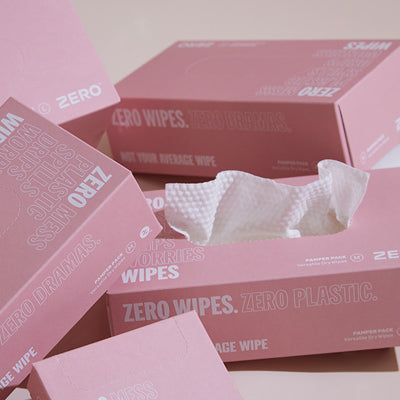
No — you should not flush wipes in the UK. Bin every wipe, regardless of what the packet says. Water UK’s ‘Bin the Wipe’ campaign is unambiguous on this, and the reason is not abstract: UK water companies spend an estimated £200 million per year clearing blockages caused by improper waste disposal, with wipes a central culprit. Put the wipe in the bin. That is the whole answer.

The rule: every wipe goes in the general waste bin. Pee, paper, and poo only go down the toilet.


Table of Contents

The biggest flushable wipes myths, debunked

The confusion is understandable. Packaging is designed to reassure, not to inform. Here are the most persistent misconceptions and what the evidence actually shows.

  • Myth: “Flushable” means safe for sewers. The word describes a wipe’s ability to clear a toilet siphon, not to disintegrate in a sewer network. Consumer Reports testing found that wipes marketed as flushable do not break down sufficiently to avoid sewer problems. They pass the bowl; they do not disappear.

  • Myth: Biodegradable wipes break down like toilet paper. Toilet paper dissolves within seconds of agitation in water. Wipes are engineered to survive wiping, which means the fibres must hold together under stress. That durability directly conflicts with rapid disintegration. A wipe strong enough to be useful is, almost by definition, too strong to vanish in a sewer.

  • Myth: “Fine to Flush” certification was a reliable guarantee. The Fine to Flush scheme existed in the UK but was discontinued in March 2024 because it caused consumer confusion and may have encouraged flushing. Water UK now promotes ‘Bin the Wipe’ instead. The scheme is gone; the habit it encouraged lingers.

  • Myth: If it disappears from the bowl, the problem is solved. Out of sight is not out of the system. Wipes travel intact through household pipes and accumulate in sewer networks, pump stations, and treatment works. The damage happens far downstream, invisibly, until a blockage or pump failure makes it very visible indeed.

The £200 million annual cost to UK water companies is the real-world price of these misconceptions, paid through water bills and, when the fault is on private pipework, directly by homeowners.


What “flushable” actually means on a wipe packet

Manufacturers test for one thing: can this wipe clear a toilet without blocking it immediately? That is a siphon-clearance test, not a sewer-disintegration test. Consumer Reports and water-sector engineers are consistent on this point: passing a toilet test says nothing about what happens over the kilometres of pipe, pump stations, and treatment screens that follow.

Infographic showing key flushable wipes statistics

The gap matters because sewer conditions are nothing like a lab toilet. Flow rates vary, travel times can be hours, and raw sewage is chemically hostile to breakdown. NOAA research found that five out of six wipe types tested were more than 93% intact after 48 hours under sewer-like conditions. Only one degraded comparably to toilet paper.

Pro Tip: When you see “flushable” on a pack, ask one question: does the label carry a current, named certification from a UK water-sector body? Since Fine to Flush ended in March 2024, no such scheme exists. Water UK’s current position is ‘Bin the Wipe’ for all wipes. If the label cannot point to a live UK certification, treat the claim as a marketing term, not a technical guarantee.


How wipes damage UK sewers and the environment

Wipes do not just block pipes on their own. They act as a structural mesh, catching fats, oils, and grease (FOG) that flow through residential sewers. The result is a fatberg: a dense, concrete-like mass that grows until it blocks the sewer entirely or destroys pump machinery. Fatbergs are expensive to remove and create sewage overflow risks that expose waterways to raw waste.

The infrastructure cost is borne unevenly. Water companies absorb much of it through operational budgets, which feeds back into household bills. But when the blockage sits on a private service line (the pipe running from your home to the public sewer connection), the repair bill falls on the homeowner.

Hands clearing wipes from clogged sewer pipe

Beyond sewers, wipes shed microfibres into waterways. Even cellulose-heavy products can release persistent fibres that behave like microplastics in aquatic environments. Wipes removed from screens at treatment works go to landfill, adding solid waste to the environmental toll.

Impact Detail
Sewer blockages Wipes form structural mesh; bind with FOG to create fatbergs
Pump damage Intact wipes wrap around pump impellers, causing failure
Microfibre shedding Fibres persist in waterways; behave like microplastic debris
Treatment-works removal Screened wipes sent to landfill; adds solid waste burden
Annual UK cost ~£200 million to clear blockages across sewer networks

Why “biodegradable” labels can still mislead you

This is where eco-conscious buyers are most likely to be caught out. A wipe labelled biodegradable or plastic-free is not necessarily safe to flush, and the reasons are buried in manufacturing chemistry.

Research published in ScienceDirect found that more than 50% of biodegradable and flushable wipes contain a mix of cellulose and low-degradable synthetic fibres. Chemical binders and performance additives that make wipes soft, strong, and moist-resistant also slow breakdown significantly under sewer conditions.

  • Industrial vs home composting: a wipe certified as compostable may require industrial composting temperatures (typically above 55°C) to break down within a reasonable timeframe. Home compost heaps rarely reach those temperatures. Sewer conditions are cooler still and chemically different.
  • PLA and PBAT limits: bio-polymers like PLA and PBAT biodegrade under the right conditions, but those conditions are not found in a sewer. In cold, anaerobic pipe environments, breakdown is negligible within the travel time of sewage.
  • Additives and binders: the RSC Sustainability review identifies manufacturing choices (binders, fibre geometry, additives) as the key factors limiting in-environment degradation. Better products are technically possible, but they do not yet exist at consumer scale.

“Even cellulose-heavy wipes can shed microfibres and behave like persistent debris in wastewater systems. ‘Biodegradable’ does not guarantee breakdown within sewer travel times.” — ScienceDirect research on flushed biodegradable wipes

The honest read on any “biodegradable” wipe: it may break down eventually, somewhere, under the right conditions. A sewer is not those conditions. Bin it.


What to flush, what to bin, and better product choices

The three P’s are the only things that should go down a UK toilet: pee, paper, and poo. Everything else, including every wipe regardless of labelling, goes in the bin.

For eco-minded households, that creates a practical question: what replaces the convenience of a wet wipe without creating sewer or landfill harm? An important resource on alternatives is Ecosph’R’s eco-friendly sanitary solutions, useful for those seeking sustainable options beyond disposable wipes. A few options that actually work:

  • Dry biodegradable wipes for bin disposal: Thezerostore’s plastic-free dry wipes are designed for bin disposal, not flushing. They sidestep the sewer problem entirely while keeping the convenience of a single-use wipe where you genuinely need one.
  • A bidet or bidet seat: the single most effective swap for reducing wipe use in the bathroom. Widely available in the UK and straightforward to fit on most standard toilets.
  • Lidded bin with a compostable liner: for intimate waste, a small lidded bin next to the toilet removes the temptation to flush. Thezerostore’s nappy waste bags work well as liners for this purpose.
  • Damp reusable cloths: for household cleaning tasks, a damp cloth washes and reuses indefinitely. It also eliminates the chemicals commonly found in wet wipes from your home entirely.

Pro Tip: If you have guests who may not know the three P’s rule, a small printed note above the toilet bin takes thirty seconds to make and prevents a blockage that could cost hundreds of pounds to fix.


What to do if a wipe causes a blockage

Plumbing experts note that wipe-related damage is often invisible until a major backup occurs. When it does, acting quickly limits the cost.

  1. Stop using the affected plumbing immediately. Running more water into a blocked system pushes waste back up into the property.
  2. Try a plunger on the toilet or drain. A basic plunge can dislodge a partial blockage close to the fixture. Do not use chemical drain cleaners as a first step; they rarely dissolve wipes and can damage older pipes.
  3. Call a qualified plumber if the blockage persists. Do not leave it. A partial blockage that clears temporarily will usually return and worsen.
  4. Check whether the fault is on private or public pipework. The pipe from your home to the public sewer connection is your responsibility as a homeowner. Repairs to that section are not covered by your water company. Contact your water company only if the fault is clearly in the public sewer (e.g., multiple properties affected, or the blockage is at or beyond the boundary of your property).
  5. Prevent recurrence. Bin all wipes going forward, avoid pouring cooking fats down drains, and consider an annual drain inspection if your property has older pipework or a history of slow drainage.

Private service line repairs can run to several hundred pounds depending on access and the extent of the blockage. Prevention costs nothing.


Key takeaways

‘Flushable’ is a marketing term describing toilet-siphon clearance, not sewer disintegration; Water UK’s ‘Bin the Wipe’ guidance and the £200 million annual blockage cost make the correct action clear: bin every wipe.

Point Details
Bin every wipe No wipe, regardless of labelling, is safe to flush in UK sewers.
The three P’s rule Only pee, paper, and poo should go down a UK toilet.
“Biodegradable” ≠ sewer-safe Over 50% of biodegradable wipes contain low-degradable synthetics that persist in sewers.
£200 million annual cost UK water companies spend this clearing blockages; private-line repairs fall on homeowners.
Thezerostore dry wipes Plastic-free, bin-disposal wipes that remove the sewer risk without sacrificing convenience.

The labelling gap nobody talks about

There is a version of this debate that focuses entirely on whether truly flushable wipes exist. It misses the point for most buyers. The practical problem is not the narrow category of wipes engineered for sewer dispersal; it is the much larger category of wipes labelled “biodegradable,” “natural,” or “plastic-free” that eco-conscious buyers reasonably assume are safer to flush.

They are not. The materials science is clear: durability and rapid disintegration are in direct conflict. A wipe that holds together during use cannot also dissolve in minutes in a cold, slow-moving sewer. Manufacturers who label products “biodegradable” without specifying the conditions required for that breakdown are, at best, being imprecise. At worst, they are nudging buyers toward a disposal behaviour that damages shared infrastructure.

The more useful question for anyone buying wipes is not “can I flush this?” but “what is this made of, and where does it end up?” Transparent labelling, clear composting conditions, and honest disposal instructions are what separate a genuinely low-impact product from one that simply sounds like one.


Plastic-free wipes that support the ‘bin the wipe’ habit

If you are already buying biodegradable household products, the logical next step is choosing wipes designed for bin disposal from the start, rather than retrofitting a flushing habit onto products that cannot support it.

Thezerostore

Thezerostore’s range of plastic-free dry wipes is built around exactly this principle: no synthetic fibres, no chemical binders that slow breakdown, and no ambiguity about disposal. They go in the bin, they break down under the right composting conditions, and they do not contribute to fatbergs or microfibre pollution in UK waterways. The nappy waste bags pair well for households managing intimate waste disposal, making the bin habit genuinely easy to maintain. Browse the full range at Thezerostore and find the swap that fits your household.


Useful sources

Source What it covers
Water UK / BBC — ‘Bin the Wipe’ UK industry guidance, Fine to Flush discontinuation, £200m cost estimate
Consumer Reports — flushable wipes testing Lab testing showing insufficient disintegration; disposal recommendations
ScienceDirect — biodegradable wipes degradation study Material mix findings; microfibre shedding; sewer breakdown rates
RSC Sustainability — disposable wipes review Manufacturing factors limiting degradation; sustainable solutions
NOAA — sewage transport and wipe degradation Real-time degradation rates; fatberg formation; pump damage evidence
Collierville Public Utilities — homeowner guidance Private service line liability; plumbing steps after a blockage

Latest Stories

This section doesn’t currently include any content. Add content to this section using the sidebar.