The most effective way to store vegetables without plastic is to match each vegetable to its correct microclimate: fridge crisper, cool dark pantry, or countertop. Airtight glass containers for suitable produce can reduce food spoilage by around 60% by preventing oxidation and maintaining stable conditions, while breathable cloth or mesh bags suit anything that needs airflow. The three core freshness factors are temperature, ethylene management, and airflow — get those right and the container material almost picks itself. Right now, you can do three things: move onions and potatoes to a cool, dark spot away from each other; wrap leafy greens in a damp cloth and place them in the high-humidity crisper drawer; and seal any cut produce in a glass jar with a lid. The Zero Store’s compostable cling wrap and resealable bags cover the gaps where glass or cloth alone won’t do.
Table of Contents
- Why does plastic-free storage actually keep vegetables fresh?
- How to prepare vegetables for plastic-free storage
- Vegetable-by-vegetable quick guide: method and shelf life
- Which plastic-free products actually work, and how do you use them?
- How to set up your fridge, pantry, and counter for plastic-free storage
- Why is my produce spoiling so fast? Common mistakes and quick fixes
- How to check if a plastic-free product is genuinely compostable
- Key takeaways
- The case for going further than just swapping the bag
- Plastic-free vegetable storage from The Zero Store
- Useful sources
Why does plastic-free storage actually keep vegetables fresh?
The science comes down to three biological factors, and understanding them means you can adapt any method to any vegetable or season.
Temperature is the most straightforward. Cold slows the enzymes that break down cell walls, which is why leafy greens last days longer in the fridge than on the counter. But cold damages some produce: tomatoes stored below 12°C lose flavour compounds permanently, and potatoes convert starch to sugar when chilled.
Ethylene is the gas that ripening fruit and veg emit, and it triggers the same ripening process in nearby produce. Ethylene from tomatoes, apples, and bananas causes sensitive greens to yellow and decay faster. Keeping ethylene producers physically separate is one of the highest-leverage habits in plastic-free storage.
Airflow and humidity determine whether produce desiccates or rots. The key points:
- Leafy greens need high humidity to stay crisp without wilting.
- Ethylene producers and drier items do better at lower humidity.
- Onions, garlic, and potatoes need ventilation, not moisture.
- Cut produce needs an airtight seal to prevent oxidation.
Plastic wraps manage some of these factors passively, but they trap moisture unevenly and contribute microplastics to food. Plastic-free alternatives work with produce respiration rather than sealing it off entirely.
How to prepare vegetables for plastic-free storage
The correct sequence is: trim first, skip washing until you’re ready to cook, and cure where needed. That single rule prevents most premature spoilage.
Washing before storage introduces moisture into crevices where mould takes hold within 24–48 hours. Skins and rinds are natural preservatives — leave them intact until use. For root vegetables like carrots and beetroot, remove the leafy tops immediately: the greens draw moisture from the root and accelerate wilting. For onions, garlic, and winter squash, curing (leaving them in a warm, dry spot for one to two weeks after harvest) hardens the skin and extends storage by months.
Labelling matters more than most people expect. A strip of masking tape and a marker on each jar or bag takes five seconds and prevents the “mystery container” problem that leads to waste.
Pro Tip: If roots feel soft or slightly dehydrated, trim the ends and soak them in lukewarm water for 10–15 minutes before use — they’ll firm back up.
Vegetable-by-vegetable quick guide: method and shelf life
The table below covers the most common vegetables, the recommended plastic-free storage method, and a rough shelf life under good conditions.

| Vegetable | Method | Location | Rough shelf life |
|---|---|---|---|
| Leafy greens | Damp cloth in open container | High-humidity crisper | up to a week |
| Herbs (soft) | Upright in a glass of water | Counter or fridge door | weeks |
| Carrots/beetroot | Damp cloth, tops removed | High-humidity crisper | months |
| Potatoes | Paper bag or wooden crate | Cool dark pantry | months |
| Onions/garlic | Mesh bag, separated | Cool dark ventilated spot | months |
| Tomatoes | Open bowl or paper bag | Counter (never fridge) | up to a week |
| Mushrooms | Paper bag | Fridge main compartment | up to a week |
| Peppers | Open container | Fridge or cool counter | up to a week |
| Brassicas | Damp cloth, open container | High-humidity crisper | up to a week |
| Cut produce | Airtight glass jar | Fridge main compartment | days |
A few special cases worth noting:
- Asparagus: trim the base by about 1 cm and store upright in a glass with a little water in the bottom, either on the counter or in the fridge, for up to a week.
- Basil: cold damages it quickly. Keep it in an airtight container on a cool counter, loosely packed.
- Cut avocado: press a damp cloth directly onto the cut surface and seal in a glass container to slow oxidation.
Which plastic-free products actually work, and how do you use them?
Mesh bags, glass jars, beeswax wraps, and compostable bags each solve a different storage problem. Matching the product to the factor (temperature, ethylene, airflow) is what makes the difference.
Glass jars with lids are the best option for cut produce and herbs. Glass keeps cut produce visible, dry, and less prone to condensation than plastic containers. Line the jar with a dry paper towel to absorb any residual moisture before sealing.

Beeswax wraps provide a semi-permeable barrier — good for wrapping a half-used pepper or a chunk of cheese, but not airtight enough for cut produce that oxidises quickly. Warm the wrap briefly in your hands to mould it around the item.
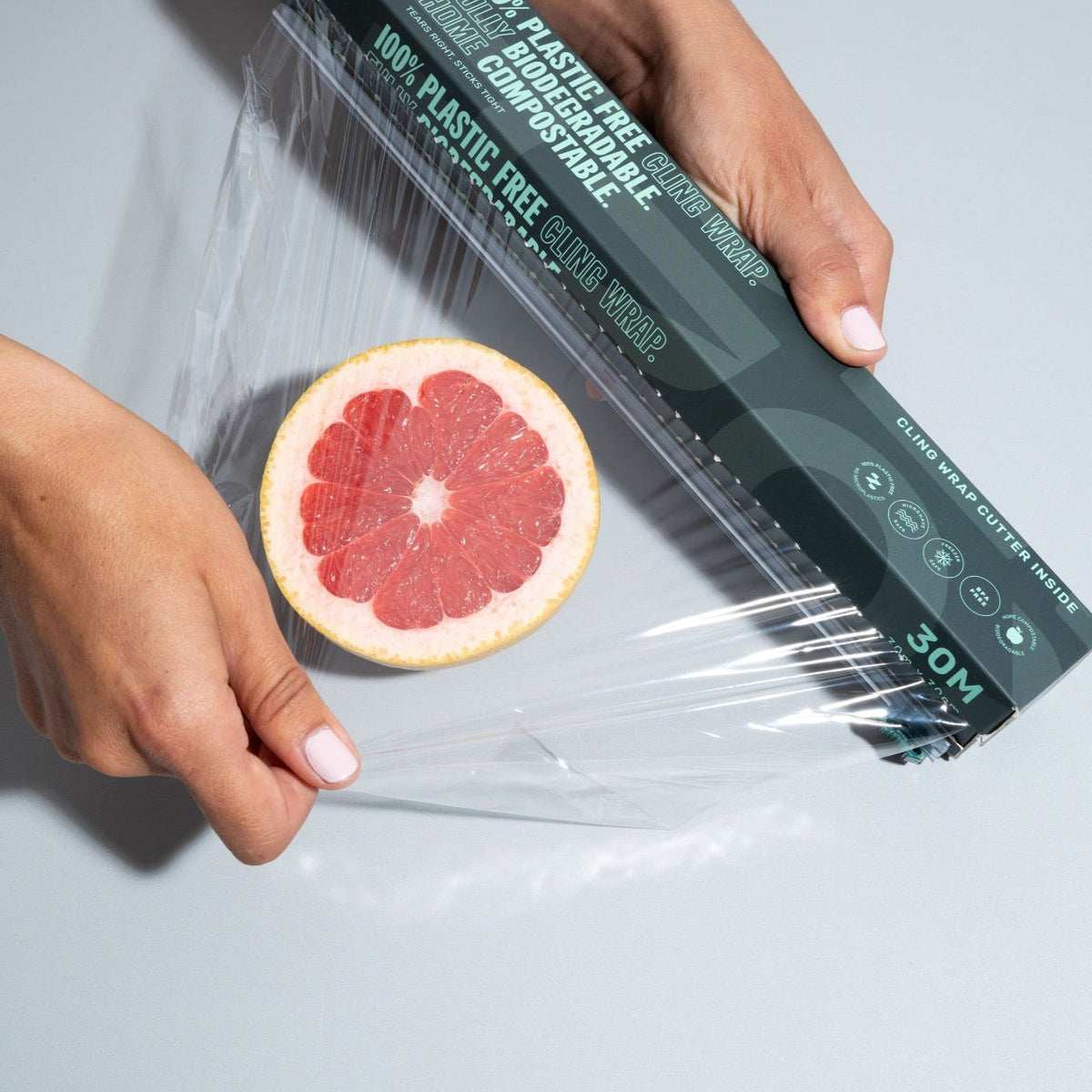
Compostable cling wrap fills the gap where beeswax won’t conform tightly enough: covering a bowl of prepped veg, wrapping a cut melon, or sealing a container that lacks a lid. The Zero Store’s plastic-free cling wrap is made from PLA and PBAT with no microplastics, and it’s home compostable at end of life.
Compostable resealable bags work well for marinating, portioning, or storing small amounts of cut veg. They seal out air without the rigidity of glass.
Cloth and mesh produce bags suit anything that needs airflow: onions, garlic, mushrooms, and loose root veg. The Zero Store’s breathable produce bags are a practical swap for the single-use plastic bags most supermarkets still offer at the loose-produce section.
Pro Tip: Before buying any container, ask which of the three factors matters most for that vegetable. Airtight = oxidation risk. Breathable = airflow need. Damp cloth = humidity need. One question, right product.
How to set up your fridge, pantry, and counter for plastic-free storage
The zone system: high-humidity crisper drawer for leafy greens and brassicas, low-humidity drawer for ethylene producers, main fridge compartment for cut produce in glass, counter for tomatoes and ripening fruit, and a cool dark pantry space for root veg and alliums.
Practical setups for a typical UK kitchen:
- High-humidity drawer: set the vent to closed or near-closed; line with a damp cloth; store leafy greens, herbs, carrots, and brassicas.
- Low-humidity drawer: vent open; store peppers, courgettes, and any fruit that has already ripened.
- Main fridge compartment: glass jars for cut produce and prepped items; paper bags for mushrooms.
- Counter: a wide bowl for tomatoes, avocados ripening, and bananas — kept away from the leafy greens in the fridge.
- Pantry or cool box: for non-refrigerated storage, aim for 7–15°C, dark, and ventilated. A wooden crate or cardboard box lined with damp sand or sawdust works well for carrots, parsnips, and beetroot over winter.
Pro Tip: In a small flat with no pantry, a cool north-facing cupboard or the space under the stairs often sits at 12–16°C in winter — close enough to root-cellar conditions for short-term storage. In summer, the fridge’s main compartment is the only reliable cool zone, so prioritise glass jars and reduce batch sizes.
Why is my produce spoiling so fast? Common mistakes and quick fixes
The most frequent errors are washing too early, overcrowding containers, and storing ethylene producers next to sensitive greens.
Sliminess on leafy greens usually means excess moisture. Fix: remove the damp cloth, pat the leaves dry, replace with a fresh dry cloth, and leave the container slightly open.
Sprouting on potatoes or onions means too much light or warmth. Move them to a darker, cooler spot and separate them from each other — onions and potatoes stored together accelerate each other’s sprouting.
Yellowing greens almost always point to ethylene exposure. Check whether a tomato, apple, or banana is sharing the same drawer or counter space.
Fast ripening of everything suggests the storage area is too warm. In summer, move more produce into the fridge and reduce the quantity you buy at once.
Pro Tip: Spoiled produce doesn’t have to go in the bin. Most vegetable scraps are suitable for a home compost bin or a council food-waste caddy — check your local council’s guidance for what’s accepted.
How to check if a plastic-free product is genuinely compostable
The recommended product categories — compostable cling wrap, resealable compostable bags, and breathable produce bags — all have verifiable specifications and compostability claims. Knowing what to look for protects you from greenwashing.
Key credentials to check before buying:
- Industrial vs home compostable: industrial compostable certification (such as EN 13432 or AS 4736) means the product breaks down in a commercial composting facility, not necessarily in your home bin. Home compostable certification (such as AS 5810) is the higher standard for household use.
- Material composition: look for PLA (polylactic acid) and PBAT (polybutylene adipate terephthalate) — both bio-based polymers with established compostability profiles.
- Microplastic-free: the product should explicitly state it contains no microplastics and no PFAS coatings.
- Food-contact safety: check that the product is certified safe for direct food contact.
The Zero Store publishes material composition and certification details on each product page, which makes it straightforward to verify claims rather than take them on faith.
Pro Tip: In the UK, most council kerbside collections do not accept compostable packaging — even certified home-compostable items. Your best route is a home compost bin or a local community composting scheme. Check your council’s website for current guidance.
Key takeaways
Matching each vegetable to the right microclimate — temperature, ethylene separation, and correct humidity — is the foundation of effective plastic-free storage, and the right container follows from those three factors.
| Point | Details |
|---|---|
| Match microclimate first | Assign each vegetable to fridge, pantry, or counter before choosing a container. |
| Separate ethylene producers | Keep tomatoes, apples, and bananas away from leafy greens to prevent yellowing. |
| Airtight glass containers for suitable produce can reduce spoilage by around 60% compared with open storage. | |
| Leafy greens last several days | Use a damp cloth in a high-humidity crisper drawer; root veg lasts weeks to months in cool dark storage. |
| The Zero Store for plastic-free products | Compostable cling wrap, resealable bags, and breathable produce bags cover the main storage needs without single-use plastic. |
The case for going further than just swapping the bag
Most guides treat plastic-free storage as a product swap: bin the cling film, buy a beeswax wrap, done. That framing misses the point. The real gain comes from understanding why produce deteriorates — and that understanding changes how you shop, not just how you store.
When you know that ethylene is the enemy of leafy greens, you stop buying a week’s worth of salad at once and storing it next to the fruit bowl. When you know that potatoes need darkness and ventilation, you stop cramming them into a sealed container in the fridge. The plastic bag was never the core problem; it was a symptom of not knowing what each vegetable actually needs.
Plastic-free products matter because they remove microplastics from your food chain and reduce landfill waste. But they work best when the biology is right underneath them. A compostable bag used in the wrong microclimate will not outperform a plastic bag used correctly. The biology comes first; the packaging choice comes second.
Plastic-free vegetable storage from The Zero Store
Cutting single-use plastic from your kitchen storage doesn’t mean compromising on freshness or convenience. The Zero Store offers a focused range of compostable and biodegradable products designed specifically for food storage, made from PLA and PBAT with no microplastics and no harmful coatings.

For cut produce and short-term wrapping, the plastic-free cling wrap is a direct replacement for conventional film — it conforms, seals, and composts at end of life. For portioning and marinating, the resealable food storage bags give you an airtight seal without the plastic. For loose produce at the market or in the crisper, the plastic-free produce bags let air circulate while keeping veg contained. Certification details and material specifications are listed on each product page. Browse the full range at The Zero Store and make the switch today.
Useful sources
The table below lists the primary sources used in this guide, the claims they support, and where they are most relevant.
| Source | Key claim supported | Most relevant section |
|---|---|---|
| Storing homegrown vegetables | Airtight glass reduces spoilage significantly; avoid early washing; keep skins intact | BLUF, Preparation, Core Factors |
| Keep your produce fresh (Wirecutter / NYT) | Three core freshness factors: temperature, ethylene, airflow | Core Factors |
| Store produce without plastic wrap | Ethylene management; onion/potato separation; crisper humidity ranges | Core Factors, Quick Guide, Setups |
| Complete guide to storing vegetables without plastic bags | Mesh bags and beeswax wraps for airflow and moderate humidity | Product Options |
| Store produce without plastic (Zero-Waste Chef) | Glass jars for cut produce and herbs | Product Options |
| How to store produce without refrigeration | Non-refrigerated storage range 7–15°C | Practical Setups |
| Storing vegetables over winter (Old Farmer’s Almanac) | Damp sand/sawdust for root veg; wooden crates for airflow | Practical Setups, Quick Guide |
| Plastic-Free Produce Storage Guide (Willy Street Co-op) | Per-vegetable storage methods including asparagus, basil, root veg | Quick Guide, Preparation |
| The Zero Store product pages | PLA/PBAT material composition; compostability certifications; microplastic-free claims | Product Credentials |

Share:
Compostable vs biodegradable: what UK shoppers need to know
Best compostable dog poop bags: UK guide 2026