
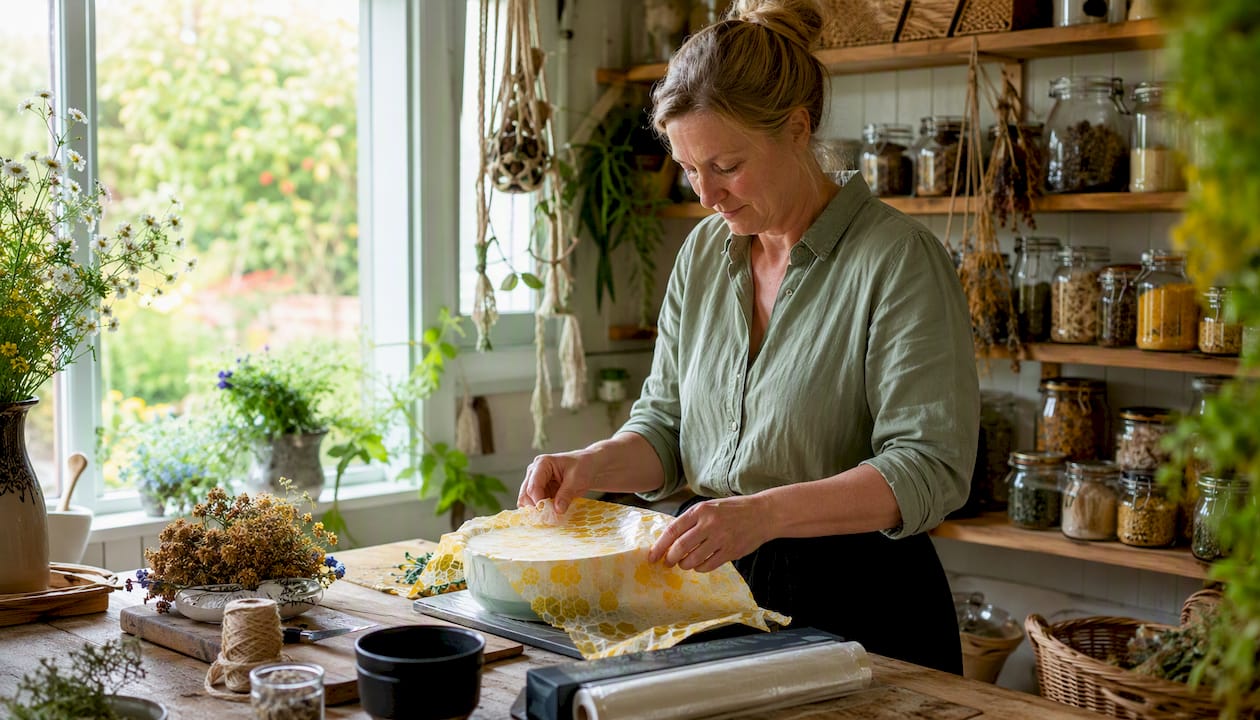
The best cling film alternatives for everyday food storage are beeswax wraps, silicone stretch lids and bags, glass or airtight containers, reusable sandwich wraps, and compostable plant-based cling film for situations where a single-use option is genuinely needed. Most households can eliminate cling film almost entirely within a week using a mix of what they already own and one or two low-cost purchases.
Quick swaps to start with today:
- Beeswax or plant-wax wraps — mould to bowls, cover cheese and bread, compostable at end of life
- Silicone stretch lids — seal any bowl or container, microwave and freezer safe
- Silicone resealable bags — sandwiches, snacks, freezer portions
- Glass jars and airtight containers — leftovers, soups, cut fruit
- A plate over a bowl — free, immediate, works for 90% of fridge-storage jobs
- Cloth sandwich wraps — washable, reusable, ideal for packed lunches
- Compostable cling film (PLA/PBAT-based) — where wrap is genuinely the only option
- Unbleached parchment paper — baking, raw meat prep, wrapping sandwiches
The environmental case for switching is clear: conventional cling film is typically made from PVC or LDPE, neither of which is accepted in UK household recycling collections, and PVC releases harmful substances across its entire lifecycle. Reusable alternatives cut that waste at the source.
Table of Contents
- What can you replace cling film with for free?
- Which reusable products are worth buying?
- How do you choose the right swap for each job?
- What does switching actually cost over a year?
- Is it safe to microwave food covered in cling film?
- Why does switching from cling film actually matter?
- Where can you buy cling film alternatives in the UK?
- How do you keep reusable wraps and bags in good condition?
- Key takeaways
- The case for just getting on with it
- Plastic-free kitchen swaps, ready to order
- Useful sources and further reading
What can you replace cling film with for free?
Before spending anything, look at what is already in your kitchen. A flat plate placed over a bowl seals in moisture almost as well as cling film for overnight fridge storage. A wide-mouthed jar with its original lid stores cut onion, lemon halves, or leftover sauce without any odour transfer. Matching container lids, turned upside down as covers, work for plates of leftovers.
Zero-waste guides consistently recommend using what you already have as the first action, before buying anything new. The logic is simple: a jar you already own has zero additional carbon cost.
For sandwiches and packed lunches, a folded cloth wrap secured with a rubber band or a simple knot works well. The furoshiki folding technique from Japanese cloth-wrapping tradition adapts easily to food: fold a square of cotton or linen around a sandwich or piece of fruit, tuck the ends, and it holds securely. Washable, reusable, and costs nothing if you have a spare tea towel.
For ripening fruit, skip the wrap entirely. Bananas, avocados, and tomatoes ripen better at room temperature without any covering. A cut avocado half keeps well in a small bowl with the stone left in, cut-side down.
Pro Tip: Place a small sticky note on your cling film drawer for one week that reads “jar or plate first?” — it interrupts the automatic reach and builds the habit faster than any reminder app.
Which reusable products are worth buying?
Once you have exhausted the free swaps, a small set of reusable products covers almost every kitchen task. Here is a practical breakdown by category.
Beeswax and plant-wax wraps
Beeswax wraps are breathable, pliable sheets coated in beeswax, tree resin, and oil. The warmth of your hands moulds them around a bowl rim or a wedge of cheese. They are genuinely good for: covering bowls, wrapping bread and cheese, and keeping cut vegetables fresh. With cold-water washing and air drying, a single wrap lasts up to a year.
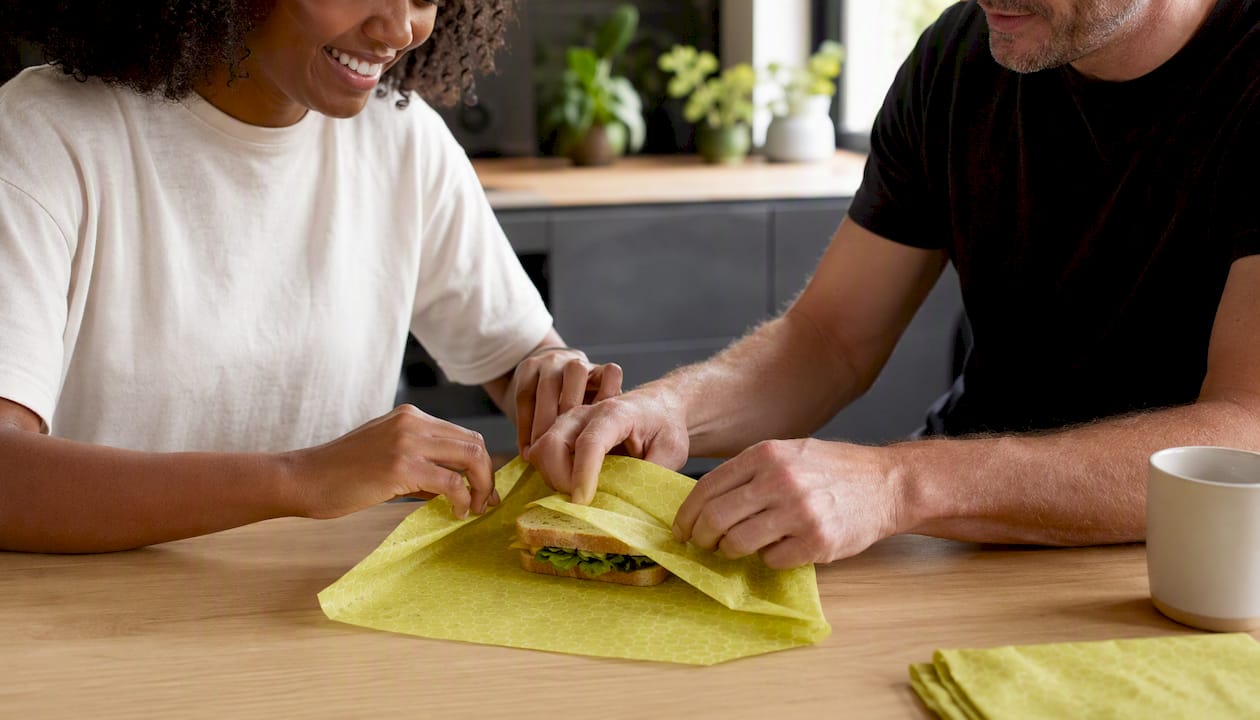
The limits are firm. Never use beeswax wraps with raw meat — the porous surface cannot be sanitised at the temperatures needed. They are not microwave safe, and hot food will melt the wax coating. Vegan alternatives use candelilla or soy wax instead of beeswax; the performance is comparable.
Care: wash in cold water with a small amount of washing-up liquid, rinse, and air dry flat. Keep away from heat sources and direct sunlight.
UK availability: health food shops, zero-waste stores, and online retailers. Look for an organic cotton base certified to GOTS (Global Organic Textile Standard) and a clearly listed wax ingredient — guides recommend avoiding products with unspecified “proprietary coatings.”
Silicone stretch lids and bags
Silicone handles temperatures from -40°F to 450°F, making it the most versatile reusable material in the kitchen. Stretch lids snap over bowls, mugs, and tins of any shape. Silicone bags seal flat for the freezer or stand upright in the fridge. Both are dishwasher safe and microwave safe.
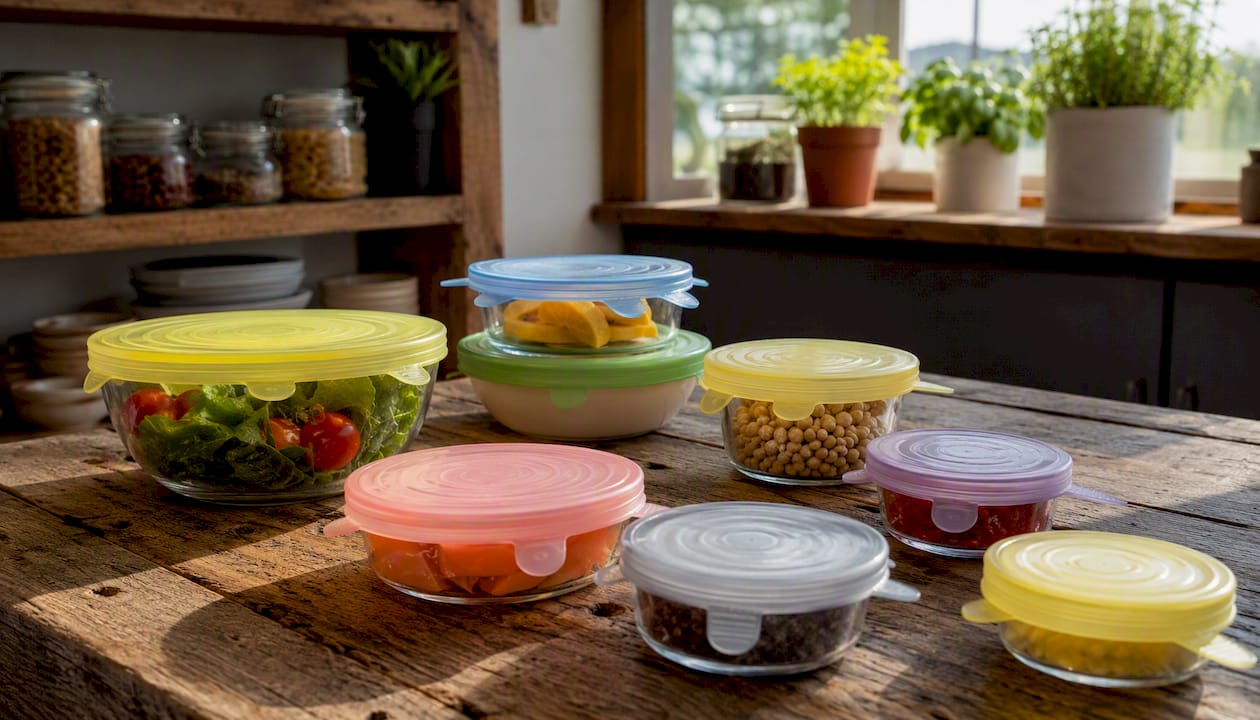
The one limitation: silicone does not mould to irregular shapes the way cling film does. A half-eaten melon or an oddly shaped casserole dish may not seal perfectly with a stretch lid. For those jobs, a beeswax wrap or a compostable film is more practical.
Care: dishwasher safe on the top rack, or hand-wash with hot soapy water. Check seals periodically for cracks.
UK availability: kitchenware shops, supermarket homeware aisles, and online. The Zero Store’s resealable food storage bags are made from bio-polymer materials and are a plastic-free option worth checking.
Glass jars and airtight containers
Glass is the gold standard for food safety. It does not absorb odours, does not leach chemicals, and goes from freezer to oven (with appropriate lids removed). Airtight glass containers with clip-lock lids are particularly good for soups, sauces, and anything with a strong smell. Stainless steel containers are a lighter alternative for lunchboxes and are highly recyclable at end of life.
The downside is weight and breakability. Glass is not ideal for children’s lunchboxes or commuter bags.
Care: dishwasher safe. Check rubber seals on clip-lock lids annually and replace if they crack.
Cloth sandwich wraps and bowl covers
Cloth covers and reusable sandwich wraps are washable cotton or linen squares, sometimes with a food-safe lining. They work well for packed lunches, wrapping baked goods, and covering bowls in the fridge. They are not airtight, so they are better for short-term storage than for keeping cut fruit fresh overnight.
Care: machine wash at 40°C. Air dry or tumble dry on low.
Compostable cling film
Plant-based cling films made from PLA (polylactic acid) and PBAT (a biodegradable co-polymer) behave almost identically to conventional cling film. They cling, stretch, and seal. The key difference is end-of-life: some meet home-compostable standards such as TUV OK Compost HOME, while others require industrial composting facilities.
The Zero Store’s plastic-free cling wrap is made from PLA and PBAT, contains no microplastics, and is home compostable. It is a practical choice for situations where wrap is genuinely the only workable option, such as covering an irregularly shaped dish or wrapping a cut melon.
How do you choose the right swap for each job?
The right alternative depends on what you are actually doing. A quick checklist:
- Sealing a bowl in the fridge overnight — a plate, silicone stretch lid, or beeswax wrap. All work; choose by what is closest to hand.
- Freezing a portion of soup or stew — a glass jar or silicone bag. Leave headspace in glass for expansion.
- Reheating leftovers in the microwave — a silicone lid or a microwave-safe plate on top. Never use beeswax wraps or compostable film in the microwave.
- Packing a sandwich for lunch — a cloth wrap, a silicone bag, or a small airtight container.
- Wrapping raw meat for the fridge — parchment paper or a dedicated airtight container. Never beeswax wraps.
- Covering a half onion — a small glass jar or airtight container. Onion odour penetrates most materials except glass.
- Baking (lining a tin, resting dough) — unbleached parchment paper is the correct swap here; reusable wraps are not suited to oven temperatures.
The airtight-versus-breathable trade-off matters more than most guides acknowledge. Beeswax wraps are breathable, which is ideal for cheese (it needs to breathe) but less good for cut fruit that dries out quickly. Silicone and glass are airtight, which is better for leftovers and anything with a strong smell.
Budget is rarely the deciding factor once you account for lifespan. The real question is: which format fits your actual kitchen habits?
What does switching actually cost over a year?
Single-use cling film costs a few pounds for a standard roll in UK supermarkets, and most households use multiple rolls annually. The table below shows how reusable alternatives compare on upfront cost, expected lifespan, and rough annual cost.
| Alternative | Best for | Microwave safe | Freezer safe | Expected lifespan | Approx. upfront cost (UK) | Rough annual cost |
|---|---|---|---|---|---|---|
| Beeswax/plant-wax wraps | Cheese, bread, bowls | No | No (short-term cold ok) | Up to 1 year | £8 for a set | £8 |
| Silicone stretch lids | Bowls, tins, mugs | Yes | Yes | 5+ years | £15 for a set | £2–£4 |
| Silicone resealable bags | Snacks, freezer, lunch | Yes | Yes | 3–5 years | £8 each | £2–£5 |
| Glass airtight containers | Leftovers, soups, sauces | Yes (lid off) | Yes | several years | £15 for a set | — |
| Compostable cling film | Irregular shapes, wrap jobs | No | Short-term | Single use | a few pounds per roll | a few pounds |
| Cloth sandwich wraps | Packed lunches, baked goods | No | No | 2–3 years | £5 each | £2–£5 |
A set of silicone lids used daily for several years costs just a few pounds per year. A household that previously purchased multiple rolls of cling film annually was spending several pounds a year on something that went straight to landfill. The silicone set quickly pays for itself and produces no single-use waste.
Is it safe to microwave food covered in cling film?
Conventional cling film and heat are a poor combination. PVC-based films can release plasticisers when heated, particularly in contact with fatty or oily foods. Stanford Medicine research and Harvard Medical School have both highlighted microplastic and chemical exposure from heated plastics as an area of genuine concern. The practical rule: never use conventional cling film in the microwave, even if the packaging says “microwave safe” — use a silicone lid or an upturned microwave-safe plate instead.
Safe and unsafe uses by material:
- Silicone lids and bags — microwave safe, freezer safe, safe for direct food contact including fatty foods
- Glass containers — microwave safe (remove metal clips and lids), freezer safe, ideal for raw meat storage
- Beeswax wraps — not microwave safe, not suitable for raw meat, safe for cold storage only
- Compostable cling film (PLA/PBAT) — check manufacturer guidance; most are not microwave safe and have lower heat tolerance than conventional film
- Cloth wraps — not microwave safe, not airtight, suitable for dry foods and short-term fridge storage
- Parchment paper — oven safe up to around 220°C, not microwave safe for extended periods
Care notes: sanitise silicone bags by boiling for 5 minutes or running through a hot dishwasher cycle. For beeswax wraps, cold water only — hot water melts the wax. Store wax wraps flat, away from heat and sunlight, to prevent the wax from cracking or going rancid.
Why does switching from cling film actually matter?
Conventional cling film is not accepted in UK household recycling collections. Most of it goes to landfill, where PVC-based films can release dioxins and chemical additives over time. LDPE-based films are technically recyclable at some supermarket soft-plastics collection points, but the infrastructure is patchy and uptake is low.
The microplastics issue is more immediate. Tiny plastic fragments shed from packaging and storage materials are now found throughout the human body, including in blood, lungs, and placental tissue. Heating plastic in contact with food accelerates that transfer.
Compostable films certified to home-compostable standards decompose in a home compost bin given adequate moisture, heat, and time. Industrial-only certified films require a commercial composting facility, and many UK councils do not yet accept them in food waste collections. Always check the specific certification on the packaging, not just the word “compostable.”
One set of beeswax wraps, used and replaced once a year, replaces the equivalent of multiple rolls of single-use cling film. The cumulative reduction in plastic waste over five years is substantial, even from one household making the switch.
Where can you buy cling film alternatives in the UK?
Good options are more widely stocked than they were five years ago. Places to look:
- Zero-waste and eco shops — the best selection of beeswax wraps, cloth covers, and certified compostable films; staff can usually advise on certifications
- Supermarket homeware aisles — silicone stretch lids and glass containers are now stocked in most major UK supermarkets
- Kitchenware retailers — good for glass container sets and silicone bags in multiple sizes
- Health food shops — often carry beeswax wraps and compostable films alongside food products
- Online — The Zero Store’s plastic-free cling wrap and resealable bags are available directly, with full certification details listed on the product pages
When reading product listings, look for:
- GOTS certification on cotton-based wraps — confirms organic fibre and responsible processing
- TUV OK Compost HOME on compostable films — the only home-compostable standard that matters for most UK buyers
- EN13432 or ASTM D6400 on compostable films — industrial standard; only useful if your council accepts it
- Clearly named wax ingredients (beeswax, candelilla, soy) rather than “natural coating” or “proprietary blend”
- Temperature range stated for silicone products — genuine food-grade silicone specifies a range; vague listings are a warning sign
Pro Tip: When comparing prices online, divide the upfront cost by the expected number of uses rather than comparing sticker prices. A £12 set of silicone lids used daily for five years costs less per use than a £2.50 roll of cling film.
How do you keep reusable wraps and bags in good condition?
The main reason reusable products fail early is poor cleaning or storage. A few simple rules extend their life significantly.
Beeswax wraps: cold water only, always. Use a small drop of washing-up liquid, rinse thoroughly, and air dry flat. Never put them in the dishwasher, microwave, or near a hot hob. Store flat or loosely rolled in a drawer away from direct sunlight. If the wax starts to look patchy after several months, you can re-wax at home: lay the wrap on baking parchment, scatter a few beeswax pellets across it, place another sheet of parchment on top, and run a warm iron over it for a few seconds. The wax melts back into the fabric.
Silicone bags and lids: dishwasher safe on the top rack, or hand-wash in hot soapy water. Turn bags inside out to clean the interior properly. Check the seals every few months; a cracked seal on a bag means it is no longer airtight and should be replaced.
Glass containers: dishwasher safe. Inspect rubber gaskets on clip-lock lids annually and replace if they harden or crack. Glass lids can go in the dishwasher; check that any plastic components on lids are also dishwasher rated.
Cloth wraps: machine wash at 40°C with your regular laundry. Avoid fabric softener, which can leave a residue on food-contact surfaces. Air dry or tumble dry on low.
For odour removal from silicone, fill the bag with a solution of bicarbonate of soda and warm water, seal it, and leave for a few hours before rinsing. Persistent garlic or onion smells in silicone are common; sunlight also helps neutralise them.
Pro Tip: Dedicate one silicone bag specifically to strong-smelling foods like garlic or fish. Keeping it separate prevents odour transfer to bags used for fruit or snacks.
Key takeaways
Reusable alternatives to cling film cost less per year than single-use film, produce no landfill waste, and cover every common kitchen storage job when you match the right material to the task.
| Point | Details |
|---|---|
| Start with what you own | A plate over a bowl or a jar with a lid replaces cling film for most fridge-storage jobs at zero cost. |
| Match material to task | Silicone for microwave and freezer; beeswax for cheese and bread; glass for strong smells and long storage. |
| Check compostable claims | Only TUV OK Compost HOME certification guarantees a film will break down in a home compost bin in the UK. |
| Reusables cost less long-term | A set of silicone lids used for five years costs roughly £2–£4 per year, less than buying cling film annually. |
| The Zero Store option | The Zero Store’s plastic-free cling wrap and resealable bags are home-compostable, microplastic-free, and available online with full certification details. |
The case for just getting on with it
There is a tendency in sustainability writing to make every swap feel like a research project. Read the certifications, compare the lifecycle analyses, weigh the embodied carbon of silicone against the compostability of PLA. All of that is worth knowing. But it can also become a reason to delay.
The honest truth is that the environmental gap between a household using cling film daily and one that has switched to a jar and a silicone lid is enormous compared to the gap between two different eco-certified wraps. The first switch is the one that matters. The second, third, and fourth swaps are refinements.
What the evidence actually supports is a simple hierarchy: use what you already own first, buy one or two durable reusables second, and reach for a compostable film only when nothing else fits the job. The Zero Store’s plastic-free cling wrap sits in that third category: a genuinely useful option for the situations where wrap is the only practical answer, made from materials that do not leave microplastics behind and that break down at home rather than in landfill.
The people who make these swaps stick with them. Not because they are particularly disciplined, but because a jar is easier to grab than a roll of film once the habit is set. The friction disappears within a fortnight.
Plastic-free kitchen swaps, ready to order
If you have read this far and want to skip the sourcing work, The Zero Store has already done it. The plastic-free cling wrap is made from PLA and PBAT, certified home compostable, and contains no microplastics — the direct replacement for conventional cling film in the situations where wrap is genuinely the right tool. The resealable food storage bags cover sandwiches, snacks, and freezer portions without single-use plastic. And the reusable cleaning cloths round out a plastic-free kitchen kit.
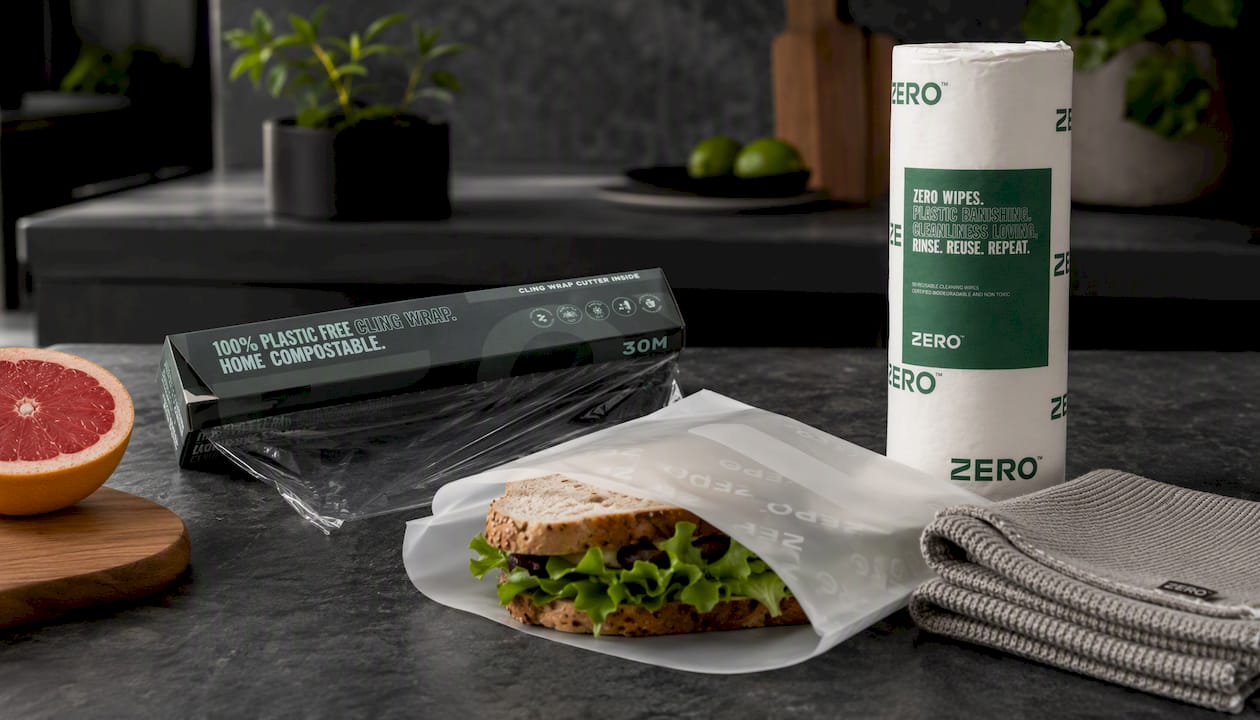
Every product page lists the certifications, materials, and end-of-life instructions in full — no vague “eco-friendly” claims. Browse the full range at The Zero Store and pick the swap that fits your kitchen first.
Useful sources and further reading
These sources informed the recommendations in this article and are worth bookmarking for further reading.
- Skip the Plastic Wrap: 7 Food Wrap Alternatives — Earth911: covers beeswax wraps, silicone, and the environmental case against PVC cling film.
- Eco-Friendly Food Storage: Plastic Wrap Alternatives — Food Unfolded: detailed on silicone properties and temperature ranges.
- Best Non-Toxic Food Wraps — Plasticproof: guidance on GOTS certification and ingredient transparency for wax wraps.
Share:
The best paper towel alternatives for UK homes
Best reusable cleaning cloths for Australian homes