

Swedish dishcloths, cotton tea towels, and repurposed old rags are the three most practical paper towel alternatives for most UK households. Swedish dishcloths can each replace approximately 15–17 rolls of paper towel and last many months depending on usage. Cotton tea towels handle drying and general wiping with zero running cost once you own them. Old T-shirts and worn linens cost nothing and take the grubby jobs nobody wants to ruin a nice cloth with. Between those three, you can cover almost every task a paper towel roll currently handles.
Table of Contents
- 1. Swedish dishcloths replace more rolls than you’d expect
- 2. Cotton tea towels and flour-sack towels are already in your kitchen
- 3. Unpaper towels give you the roll-format habit without the waste
- 4. Microfibre cloths excel at glass and surfaces
- 5. Old T-shirts and cut-up linens cost nothing to start
- 6. Bamboo cloths offer a natural-fibre option with good durability
- 7. Knitted or crocheted dishcloths are a thrifty, long-lasting option
- 8. Beeswax and fabric wraps handle food-contact tasks
- 9. Reusable cleaning wipes for a ready-to-grab option
- Which alternative suits which task?
- How to wash, sanitise, and store reusable cloths
- How to calculate your savings versus disposable rolls
- Environmental benefits and responsible disposal
- Expert-backed tips that make the switch stick
- Where to buy reusable alternatives in the UK
- Key takeaways
- The honest case for switching
- The Zero Store’s plastic-free cleaning cloths
- Useful sources and further reading
1. Swedish dishcloths replace more rolls than you’d expect
Made from a blend of cellulose and cotton, Swedish dishcloths are the closest like-for-like swap for paper towels. They absorb quickly, wipe clean surfaces without leaving lint, and dry fast between uses, which limits bacterial growth. One cloth can replace multiple rolls and last many months depending on usage.
Pro: Highly absorbent, quick-drying, and compostable at end of life. Con: Slightly higher upfront cost than a basic dishcloth. Best for: Wiping benchtops, mopping small spills, cleaning hobs.
2. Cotton tea towels and flour-sack towels are already in your kitchen
Most households already own several tea towels and never use them to their full potential. Flour-sack towels, a thinner, more absorbent weave common in the US but available from UK kitchen shops and online, are particularly good. Both wash well at 60°C and hold their shape through hundreds of wash cycles.
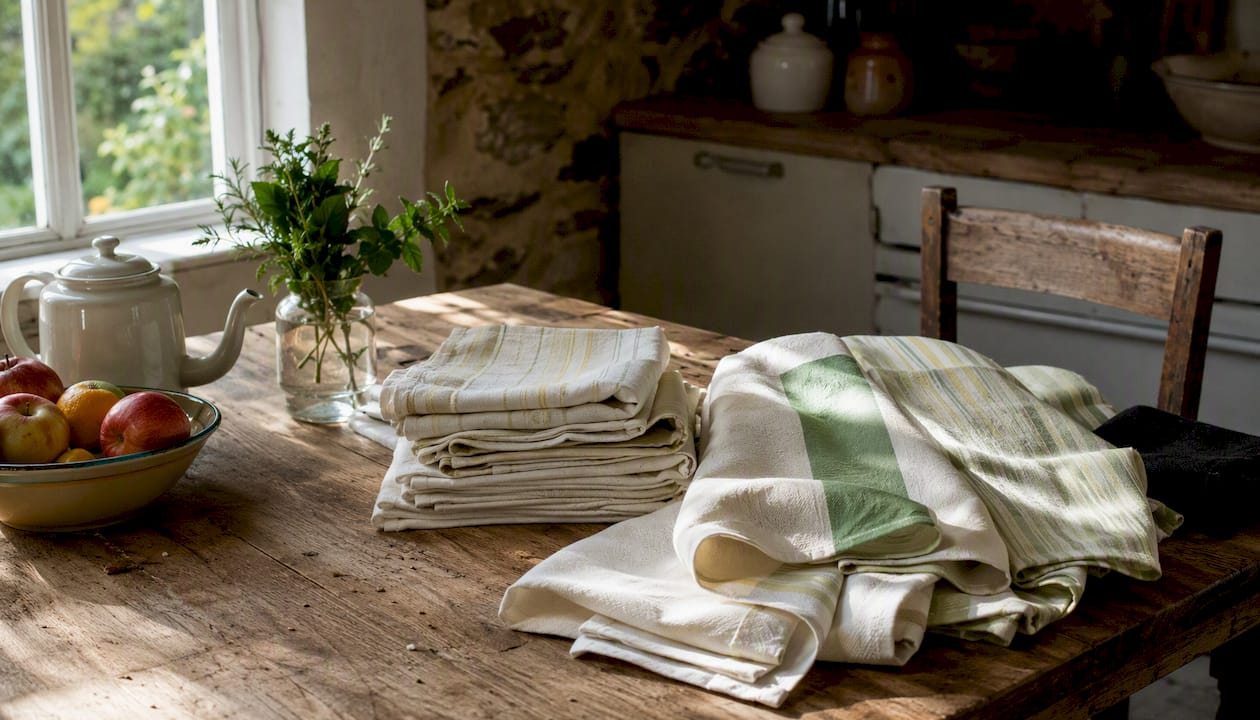
Pro: Durable, widely available, and often already owned. Con: Slower to dry than cellulose cloths; can get musty if left damp. Best for: Drying dishes, hands, and produce; wrapping bread.
3. Unpaper towels give you the roll-format habit without the waste
Unpaper towels are cloth squares, usually cotton or flannel, that snap or roll together to mimic a paper towel roll. Brands such as Marley’s Monsters and Juniper Seed Mercantile sell them; you can also cut up old flannel shirts and hem the edges yourself. The roll format helps people who struggle to break the reach-and-tear habit.
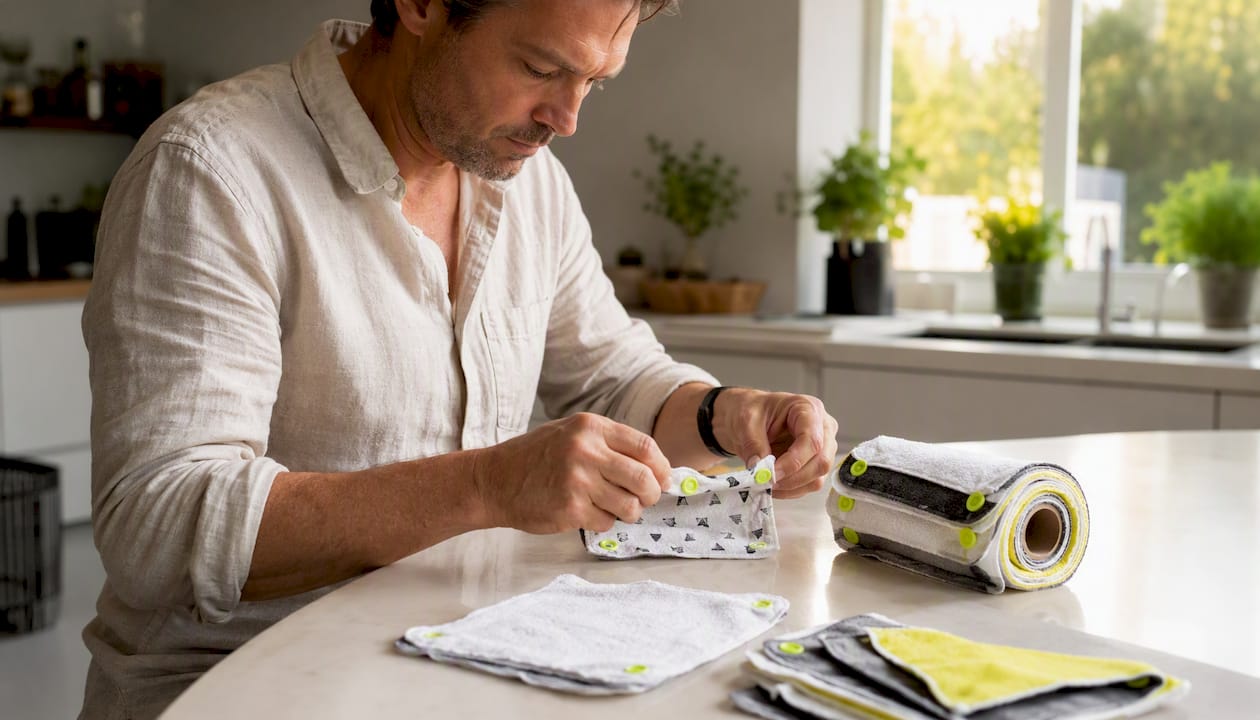
Pro: Familiar format makes the transition easier. Con: Requires a snap or roll system to stay tidy; more fiddly to set up. Best for: General kitchen wiping, hands, light spills.
4. Microfibre cloths excel at glass and surfaces
Microfibre cloths trap dust and grease at a microscopic level, which is why they clean glass streak-free with water alone. Some branded cloths, such as those from E-Cloth, are guaranteed for durability in the range of 100–200 wash cycles and claim to remove over 99% of bacteria using only water. That is a meaningful durability claim when you are calculating cost per use.
Pro: Exceptional on glass, mirrors, and smooth surfaces; no cleaning product needed. Con: Sheds microplastics when washed; requires specific care (no fabric softener). Best for: Windows, mirrors, hobs, stainless steel.
5. Old T-shirts and cut-up linens cost nothing to start
You almost certainly already own suitable replacements: worn tea towels, old T-shirts, and threadbare flannels all make excellent cleaning rags. Cut them into squares, stack them in a basket near the sink, and you have a starter set at zero cost. This is the lowest-barrier entry point, and sustainability practitioners consistently recommend starting here before buying anything new.
Pro: Zero cost, zero embodied impact, uses what already exists. Con: Inconsistent absorbency depending on fabric; can look scrappy. Best for: Greasy messes, wiping down bins, cleaning up after pets.
6. Bamboo cloths offer a natural-fibre option with good durability
Bamboo cloths are typically woven from bamboo-derived viscose, sometimes blended with cotton. They are soft, naturally antibacterial to a degree, and biodegrade more readily than synthetic alternatives. Available widely on Amazon UK and in zero-waste shops, they sit in a similar price bracket to Swedish dishcloths.
Pro: Soft, naturally derived, and biodegradable. Con: Bamboo viscose processing is chemically intensive, so “natural” is relative. Best for: Wiping faces, cleaning baby highchairs, gentle surface work.
7. Knitted or crocheted dishcloths are a thrifty, long-lasting option
Cotton knitted dishcloths, the kind sold in bundles at Wilko, Dunelm, or market stalls, are underrated. They scrub well, last years with basic care, and cost very little. If you or someone you know crochets, a ball of cotton yarn makes a dozen cloths for under £5.
Pro: Cheap, scrubby texture good for stuck-on food, very long-lasting. Con: Slower to dry; can harbour smells if not washed regularly. Best for: Scrubbing pots, wiping hobs, general dishwashing.
8. Beeswax and fabric wraps handle food-contact tasks
For covering food, wrapping sandwiches, or keeping cut vegetables fresh, beeswax wraps made from cotton coated in beeswax, tree resin, and jojoba oil replace both cling film and paper towels used as food covers. They are not suitable for raw meat but handle most other food-storage tasks well. Wash in cool water only; heat melts the wax coating.
Pro: Plastic-free, reusable for up to a year, compostable. Con: Cannot be used with raw meat or in a microwave; hand-wash only. Best for: Covering bowls, wrapping cheese, keeping cut fruit fresh.
9. Reusable cleaning wipes for a ready-to-grab option
Pre-cut cloth wipes, sometimes sold dry in a dispenser box, give you the grab-and-go convenience of a wet wipe or paper towel without the single-use waste. The Zero Store’s cleaning wipes are made from bio-polymer materials, plastic-free, and designed to reduce single-use waste without sacrificing convenience. They suit households that want a transitional product while building a full cloth system.
Pro: Convenient format; plastic-free and biodegradable options available. Con: Still a consumable, so ongoing cost applies. Best for: Quick surface wipes, bathroom cleaning, on-the-go use.
Which alternative suits which task?
Matching the right cloth to the job saves frustration and keeps your nicer items in good condition longer.
| Task | Best alternative | Why it works |
|---|---|---|
| Drying dishes | Cotton tea towel | High absorbency, lint-free with washing |
| Small spills / benchtops | Swedish dishcloth | Fast absorption, quick-dry between uses |
| Greasy pans / oven trays | Old rags or bar-mop towels | Cheap enough to use hard and discard when worn |
| Glass and mirrors | Microfibre cloth | Streak-free finish with water alone |
| Food wrapping / covering | Beeswax wrap | Plastic-free, moulds to shape |
| Hands and faces | Unpaper towels or flannel squares | Soft, washable, familiar format |
| Scrubbing stuck-on food | Knitted cotton dishcloth | Textured surface lifts residue |
Keep a small basket of Swedish dishcloths and a stack of rags within arm’s reach of the sink. That placement alone removes most of the friction that sends people back to the paper roll.
How to wash, sanitise, and store reusable cloths
Getting the care right is what separates a cloth that lasts two years from one that smells after a fortnight.
- Wash cotton cloths and tea towels at 60°C to kill bacteria and remove grease. A 40°C wash works for lightly soiled items; reserve 60°C for anything that has touched raw food or heavy mess.
- Never use fabric softener on microfibre. Softener coats the fibres and kills absorbency, which is the most common reason people conclude that reusable cloths “don’t work.” Wash microfibre separately or with other synthetics, using a plain detergent.
- Air-dry Swedish/cellulose dishcloths rather than tumble-drying them. Hanging them flat or over a rack extends their life significantly and lets them self-sanitise as they dry.
- Sanitise between washes by rinsing in diluted white vinegar, running through the dishwasher on a hot cycle, or boiling cotton cloths briefly if they have been used on raw meat surfaces.
- Store soiled cloths in a dedicated basket, not piled on the draining board. A small lidded bin or mesh bag near the washing machine works well. Without a clear drop-off point, cloths accumulate on surfaces and the system falls apart.
| Cloth type | Wash temperature | Fabric softener | Drying | Typical lifespan |
|---|---|---|---|---|
| Swedish dishcloth | 60°C or dishwasher | No | Air-dry flat | up to 15–17 rolls replaced; 9–12 months or more |
| Cotton tea towel | 40–60°C | Yes | Tumble or air | 3–5 years |
| Microfibre | 30–40°C | No | Air-dry | 100–200 washes |
| Knitted cotton | 40–60°C | Yes | Air-dry | 2–4 years |
| Beeswax wrap | Cool hand-wash | N/A | Air-dry | Up to 1 year |
When to retire a cloth: replace it when it develops persistent odour that washing does not shift, when fibres are visibly breaking down, or when it no longer absorbs properly. Cotton and cellulose items can go in a home compost bin at that point.
How to calculate your savings versus disposable rolls
The maths is straightforward. Here is the formula and a worked example using conservative UK figures.
Cost per use = purchase price ÷ number of uses
A standard paper towel roll costs roughly £1.50–£2.00 in UK supermarkets and contains around 60–80 sheets. At two sheets per use, that is 30–40 uses per roll, giving a cost per use of approximately 4–5p.
Worked example: Swedish dishcloth
- Purchase price: £4.00 (a reasonable mid-range UK price)
- Replaces: 15–17 rolls, each containing roughly 35 usable wipes
- Total equivalent uses: approximately 525–595
- Cost per use: under 1p
| Item | Purchase price | Usable lives | Cost per use |
|---|---|---|---|
| Paper towel roll | — | ~35 wipes | ~5p |
| Swedish dishcloth | ~£4.00 | replaces 15–17 rolls, 525–595 uses | <1p |
| Cotton tea towel | — | — | under 1p |
| Microfibre cloth | — | 100–200 washes | under 1p |
Add a small allowance for laundry cost (roughly 30–50p per wash cycle in the UK, shared across a full load of cloths) and reusables still come out well ahead. The non-monetary savings add up too: less packaging waste, less storage space for bulk rolls, and fewer supermarket trips.
Environmental benefits and responsible disposal
Reusable cloths reduce the volume of material going to landfill with every use. Paper towels cannot be recycled once soiled, and tissue and paper towel production draws heavily on virgin wood pulp, contributing to deforestation pressure. Switching to reusables cuts that recurring demand.
Material choice matters for the environmental picture, though:
- Natural fibres (cotton, cellulose, linen): biodegrade at end of life; compostable in a home bin when unblended. Look for GOTS-certified organic cotton to reduce pesticide impact in production.
- Synthetic microfibre (polyester): does not biodegrade and sheds microplastics with every wash. Useful for specific tasks (glass, streak-free surfaces) but not the best all-purpose choice from a fibre-shedding perspective.
- Bamboo viscose: biodegradable but chemically processed; better than polyester, less clean than organic cotton.
For disposal: compost worn cotton, linen, and cellulose cloths (cut them up to speed decomposition). Take synthetic textiles to a textile recycling point rather than binning them. Never flush any cloth, regardless of what the packaging claims.
Pro Tip: Wash microfibre cloths in a Guppyfriend wash bag or use a washing machine lint filter to catch fibres before they reach the water system. Cold washes also reduce shedding compared with hot cycles.
Expert-backed tips that make the switch stick
The most common reason people revert to paper towels is not preference; it is a missing laundry system. Without a designated spot for soiled cloths and a consistent wash cadence, cloths pile up on surfaces and the whole approach feels messier than the roll it replaced.
A two-tier system works better than a single set of “good” cloths. Reserve your nicer tea towels for hands and drying dishes. Keep a separate pile of cheap bar-mop towels or old rags for greasy, grimy jobs. That way, your nicer items stay presentable and you are not precious about grabbing a rag for a messy task.
Adapted from editorial guidance by Wirecutter
E-Cloth’s kitchen cloths are guaranteed for 100 washes, a useful benchmark when shopping. Cloths with a stated wash-cycle guarantee (typically 100–200 washes for premium products) give you a concrete durability figure to compare against disposable running costs rather than relying on vague “long-lasting” claims.
Choosing darker or patterned cloths for cleaning duties is a practical tip that rarely gets mentioned: stains are less visible, cloths look serviceable for longer, and new users are less likely to feel the cloth is “ruined” after a week of use.
The growing adoption of cloth napkins and reusable kitchen cloths among younger households reflects a broader shift away from single-use convenience. The habit forms faster when the infrastructure is in place: a basket, a wash routine, and cloths within easy reach.
Where to buy reusable alternatives in the UK
Most options are accessible without specialist shopping. Here is where to look and what to check.
What to look for on the label or product page:
- Material composition (natural fibre vs synthetic blend)
- Wash-cycle durability claim (100+ washes is a useful filter for premium cloths)
- Compostable or biodegradable certification for cellulose and bio-polymer products
- GOTS certification for organic cotton items
- FSC certification if the product contains wood-derived cellulose
Where to buy:
- Supermarkets and homewares shops (Dunelm, John Lewis, Wilko): cotton tea towels, knitted dishcloths, basic microfibre packs. Good value, widely available.
- Zero-waste and eco shops (online and high street): Swedish dishcloths, beeswax wraps, unpaper towel rolls. Better certification transparency.
- Charity shops and secondhand marketplaces (Vinted, eBay, local car boot sales): cotton tea towels and linens in excellent condition for under £1. The lowest-impact option by far.
- Your own wardrobe: old T-shirts, worn flannels, and threadbare towels. Cut, hem or leave raw-edged, and you have a free starter set immediately.
For a plastic-free, certified option with clear material transparency, The Zero Store’s reusable cleaning cloths are made without synthetic plastics and designed to reduce single-use waste from the first use. For higher-volume households or anyone wanting a commercial-grade roll format, the commercial cleaning cloth roll offers a bulk option with the same plastic-free credentials.
Key takeaways
Reusable cloths cost under 1p per use compared with roughly 5p per paper towel sheet, making the switch one of the simplest household cost reductions available.
| Point | Details |
|---|---|
| Start with what you own | Cut up old T-shirts or repurpose worn tea towels before buying anything new. |
| Match cloth to task | Use microfibre for glass, Swedish dishcloths for spills, old rags for greasy jobs. |
| Build a laundry system | A dedicated soiled-cloth basket and weekly wash cycle keeps the system running. |
| Check wash-cycle claims | Choose cloths guaranteed for 100–200 washes to minimise cost per use. |
| The Zero Store option | Plastic-free reusable cleaning cloths with clear material credentials, available to order online. |
The honest case for switching
There is a version of this topic that makes switching sound effortless and morally urgent in equal measure. The reality is more ordinary, and more achievable.
The transition works best when it is incremental. Start with one or two cloths in the most obvious spot, usually next to the kitchen sink, and let them replace the paper roll for the tasks they handle well. You will probably keep a small roll somewhere for the jobs that feel too grim for a cloth you plan to wash and reuse: draining bacon, cleaning up after a pet, or dealing with something genuinely unpleasant; for such heavy-duty cleanup, consider the tools professional pooper scoopers use for heavy-duty cleanup. That is fine. A single roll lasting three months instead of three weeks is still a meaningful reduction.
The bigger shift is the laundry habit. Once you have a basket for soiled cloths and a rhythm for washing them, the system runs itself. Without that, even the best cloths end up in a damp pile and the paper roll comes back out of the cupboard.
For readers who want a ready-made starting point rather than cutting up old shirts, The Zero Store’s plastic-free cleaning cloths are a practical first purchase: clear on materials, free from synthetic plastics, and designed to slot into a regular laundry rotation.
The Zero Store’s plastic-free cleaning cloths
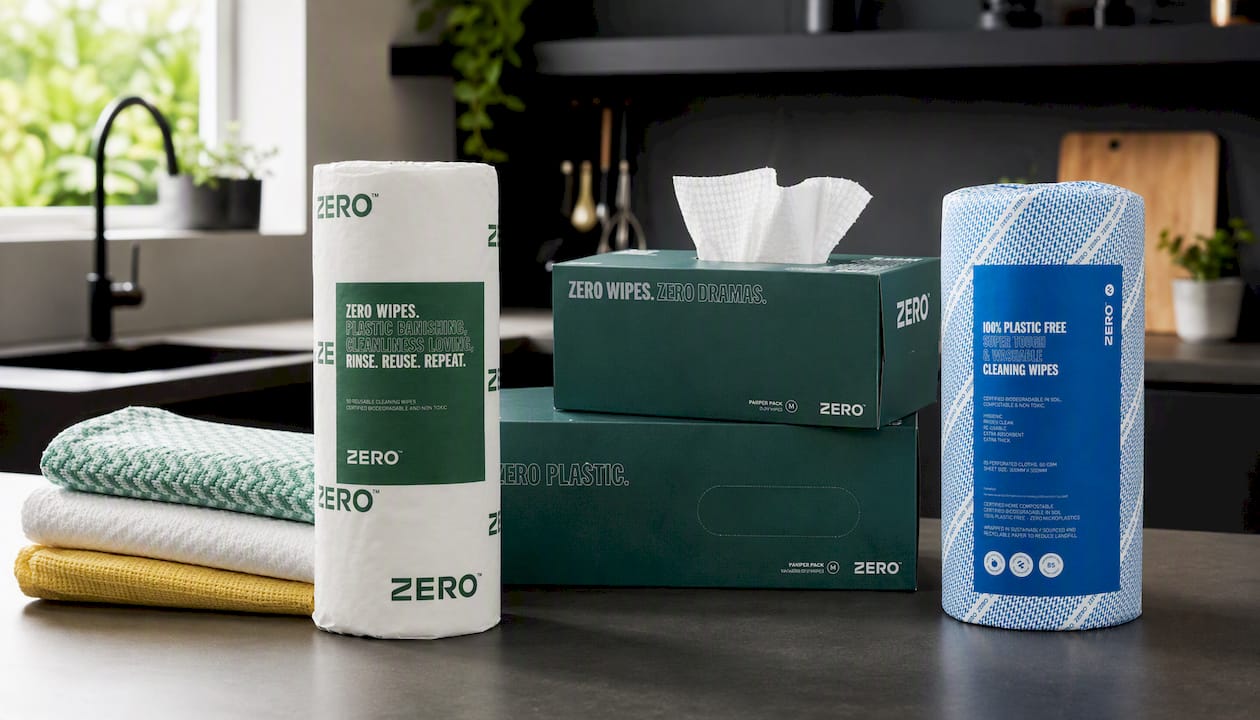
Switching away from disposable paper towels is straightforward once you have the right cloth in the right place. The Zero Store’s reusable cleaning cloths are made without synthetic plastics, free from hidden chemicals, and built to handle everyday kitchen and household tasks without contributing to microplastic pollution. For households that go through higher volumes, the commercial cleaning cloth roll offers the same plastic-free credentials in a bulk format that suits larger families or shared households.
Both products fit directly into the two-tier system described earlier in this guide: use them for everyday wiping and surface cleaning, keep a separate set of old rags for the grubby jobs, and run everything through a regular 60°C wash. Browse the full range at The Zero Store and add a starter pack to your next order.
Useful sources and further reading
- Sustainable in the Suburbs: How to quit using paper towels — Practical, experience-based guide covering repurposing existing linens, durability data for Swedish dishcloths, and habit-change advice. One of the most thorough free resources on the topic.
- Ask Wirecutter: Paper towels and alternatives — Editorial guidance on microfibre care, the two-tier towel system, and common mistakes new switchers make. Useful for care and storage specifics.
- E-Cloth: Product and durability information — Manufacturer data on wash-cycle guarantees and performance claims for premium cleaning cloths. Helpful when comparing durability figures across products.
- Environmental Paper Network: Boreal forests and tissue paper production — Research-backed reporting on the environmental cost of virgin-pulp paper towel production. Useful context for the environmental impact section.
- Consumer Reports: Best paper-towel alternatives — Independent product testing across multiple reusable formats including unpaper towels and Swedish dishcloths.
- All Cotton and Linen: What do millennials use instead of napkins? — Trend piece on the cultural shift toward cloth napkins and reusable kitchen textiles among younger households.
- The Zero Store: What is in your cleaning cloth? — Detailed look at hidden plastics and chemicals in conventional cleaning cloths, with guidance on what to look for when choosing a safer alternative.
Share:
Plastic-free cleaning wipes: what actually works in 2026
Cling wrap alternatives that actually work in the UK