
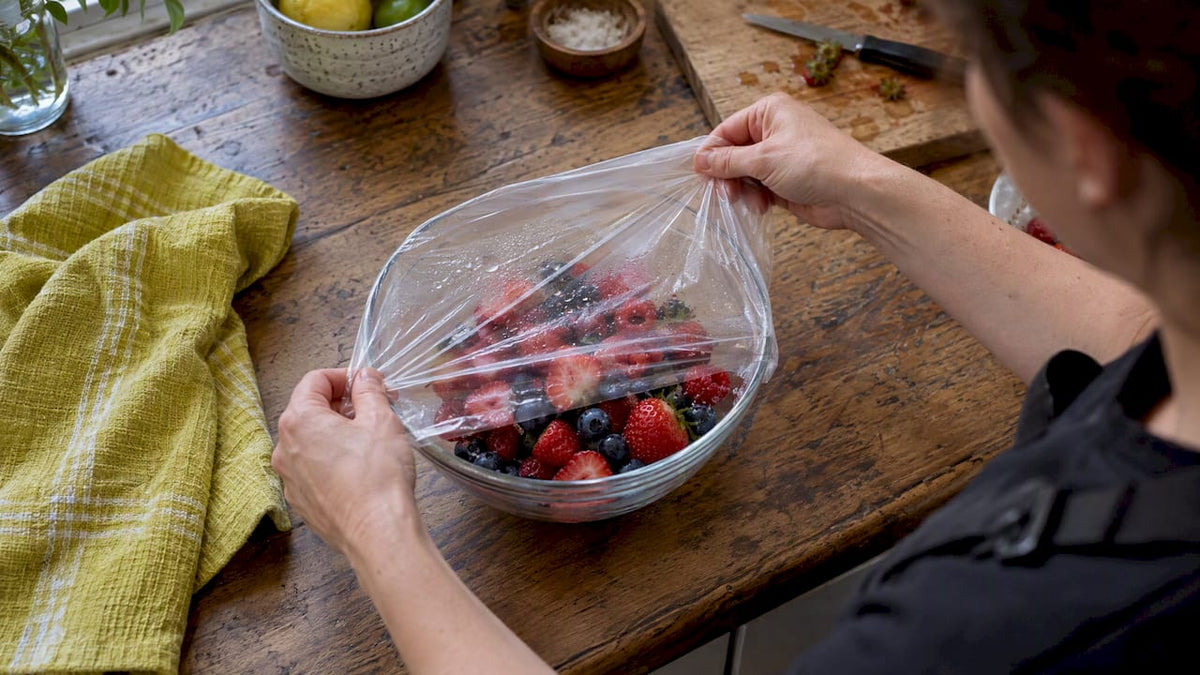
Compostable wrap can help keep food fresh for many everyday kitchen tasks like wrapping sandwiches or covering leftovers, though its performance varies depending on the material blend, food type and usage. Its moisture and gas control come from bio-based films that behave differently to conventional plastic. The real payoff, environmentally speaking, only arrives if you also check its certification and dispose of it correctly. Below is the evidence, the label rules and the practical tips that make the difference.
TL;DR:
- Compostable wraps made from PLA, PBAT, and PHA can extend freshness for produce, but results depend on actual handling and storage conditions.
- Certification standards AS 5810 (home compostable) and AS 4736 (commercial compostable) determine disposal methods and efficacy, requiring correct sorting and infrastructure.
- Proper sealing and pairing with containers improve longevity of compostable films, especially in freezer storage and for oily or hot foods.
- Disposable compostable wrap requires correct disposal practices, as it won’t break down in backyard compost heaps unless properly certified and processed.
- Reusable options like silicone lids and beeswax wraps are better for long-term storage, especially for items stored in freezers or high-odour foods.
Table of Contents
- How compostable wraps actually perform: the evidence on freshness and shelf life
- Certification and disposal: reading labels and what compostable logos actually mean
- Practical use and limits: tips to get the best freshness and when to choose alternatives
- Evidence and publisher expertise: certifications, studies and The Zero Store context
- When compostable wraps are worth it: a concise editorial viewpoint
- Where to start: The Zero Store’s kitchen collection and how to check certifications
- FAQ
- Sources
How compostable wraps actually perform: the evidence on freshness and shelf life
Most compostable food wraps are made from PLA (polylactic acid) or PBAT (polybutylene adipate terephthalate), sometimes blended with PHA, to mimic the stretch and cling of conventional plastic film. PLA alone tends to be stiffer, so manufacturers blend it with PBAT to get a wrap that stretches over a bowl and actually stays put. The result is a film that controls moisture loss and gas exchange in broadly the same way as plastic wrap, though the mechanism is not identical.
One difference worth knowing: bio-based films often have a degree of natural breathability. For some fresh produce, that breathability reduces condensation build-up inside the wrap, which in turn can reduce the conditions that encourage mould and early spoilage, according to peer-reviewed trials on compostable films. Non-breathable plastic wrap traps more moisture against the food surface, which can accelerate softening in items like herbs, berries and leafy greens.

Laboratory trials have shown notable shelf-life extensions for fresh produce when wrapped in specialised compostable films under controlled conditions, according to the same peer-reviewed research. That figure comes from lab conditions with set humidity and temperature, not a typical Australian kitchen bench or fridge, so treat it as an indication of potential rather than a guarantee for every household.
Matched against everyday tasks, performance varies by use case:
- Fresh produce: often matches or slightly outperforms plastic wrap, thanks to reduced condensation and mould risk for items like cucumber, celery and leafy herbs.
- Sandwiches and snacks: performs comparably to plastic wrap for short-term, same-day freshness, provided the seal is tight.
- Refrigerated leftovers: generally fine for a day or two, though a looser cling on some bio-films means a container is more reliable for liquids or sauces.
- Freezer storage: compostable wrap can become brittle at sub-zero temperatures, so it is less forgiving than plastic wrap for anything stored longer than a few weeks.
The gap between lab results and real kitchens is the honest caveat here. A trial that controls humidity and handling will always outperform a fridge that gets opened twenty times a day, so expect solid, not dramatic, improvements in daily use.
Certification and disposal: reading labels and what compostable logos actually mean
Not every wrap labelled “compostable” behaves the same way once it leaves your kitchen, and this is where most buyers get confused. Two standards do the heavy lifting in Australia: AS 5810 and AS 4736.
AS 5810 is the home compostable standard. It verifies that a product will break down in a typical home compost environment, at ambient temperatures, within a year, according to certification documentation from the Australasian Bioplastics Association. AS 4736 is the commercial compostable standard, which requires the higher, sustained temperatures of an industrial composting facility rather than a backyard bin. Products carrying the ABA seedling logo have been independently verified against one of these two standards, but certification alone does not guarantee your council will collect and process the item, as the Australasian Bioplastics Association’s verification programme makes clear.
That local gap matters. A wrap certified to AS 4736 will not break down properly in a suburban compost heap; it needs the heat of a commercial facility, which means kerbside organics collection or industrial processing, not your backyard pile.
Before assuming a product will compost at home, run through this:
- Check the product page for the specific logo: home compostable (AS 5810) or commercial compostable (AS 4736).
- Confirm your council’s organics bin accepts compostable packaging, since rules vary between collection areas.
- If no kerbside option exists, locate a commercial composting facility that takes household compostable packaging.
Pro Tip: Keep the original packaging or product page bookmarked: the certification logo is the fastest way to settle a dispute over whether something belongs in your compost bin or your general waste.
Practical use and limits: tips to get the best freshness and when to choose alternatives
Getting the most out of compostable wrap comes down to technique as much as material choice. These films often need a firmer press to seal than plastic wrap, since the cling can be gentler.
- Press the wrap flush against the bowl or food surface rather than relying on tension alone, especially around rims and corners.
- For freezer storage, double-wrap or pair the film with a container to guard against the brittleness that sets in at low temperatures.
- Avoid direct contact with very hot food straight off the stove, since heat can soften or distort some bio-based films faster than conventional plastic.
- Steer clear of the microwave unless the product specifically states it is microwave-safe, and keep fatty or strongly oiled foods away from prolonged wrap contact, as oils can degrade some compostable films faster than plastic.
- For acidic or oily leftovers kept more than a couple of days, a rigid container will outperform any wrap, compostable or otherwise.
Pro Tip: If a wrap won’t seal tightly around a bowl, it is often faster and more effective to switch to a container than to keep layering more wrap.
Reusable options have their place too. Silicone lids and beeswax wraps suit snacks and short-term fridge storage where you want to avoid single-use products entirely, while a rigid container remains the better choice for anything going in the freezer for more than a few weeks or anything with strong odours, like onion or curry leftovers. The decision is about matching the tool to the task rather than picking one material for everything.
Evidence and publisher expertise: certifications, studies and The Zero Store context
Some kitchen wraps use PLA, PBAT and PHA biopolymers to balance compostability with practical cling and stretch expected from kitchen wraps. Product pages set out certification details and usage guidance so buyers can check the specifics before they buy rather than guessing from a label alone.
The wider evidence base supports this approach on two fronts:
- Food Standards Australia New Zealand states that all food-contact packaging must be fit for purpose and must not contaminate food, which places the burden on manufacturers to manage chemical migration risks and publish clear food-contact safety guidance.
- Peer-reviewed research has recorded shelf-life gains for produce wrapped in certain compostable films under controlled conditions, lending weight to the idea that breathable bio-based materials are not just a lower-impact swap but a genuine performer in some use cases.
Before composting any wrap at home, check it carries the AS 5810 home compostable logo rather than AS 4736, and confirm your council’s organics system actually accepts it.
When compostable wraps are worth it: a concise editorial viewpoint
Compostable wrap earns its place in most kitchens when it is genuinely certified and disposed of correctly. The bigger failure point isn’t the material, it’s the gap between buying something labelled “compostable” and actually getting it into a bin that can process it. Reusable containers still win for long-term freezer storage or hot, oily leftovers. For everyday wrapping, pairing a certified wrap with the right disposal habit is what turns a good product into an actual environmental saving, not just a feel-good label.
— Damien
Where to start: The Zero Store’s kitchen collection and how to check certifications
Swapping out conventional cling film doesn’t need to mean guessing which “eco” product actually performs. The Zero Store’s kitchen collection covers plastic-free cling wrap, resealable food storage bags and produce bags, each built from certified bio-polymers with the home or commercial compostable logo shown clearly on the product page.

Every listing sets out the material blend and composting pathway upfront, so you know before checkout whether a product suits your council’s organics bin or needs a commercial facility. Cling wrap starts from AUD prices in the single digits and resealable bags from low single-digit amounts, both one-off purchases on the kitchen collection page. Check the AS 5810 or AS 4736 logo on each listing before you buy, and match the product to how your household actually disposes of packaging.
FAQ
Is compostable cling wrap actually compostable?
Yes, provided it carries a genuine AS 5810 (home) or AS 4736 (commercial) certification logo, since these standards verify the product will break down under defined conditions. Certification alone does not guarantee your council collects compostable packaging, so check local acceptance before assuming it belongs in your backyard bin, as the Australasian Bioplastics Association notes.
What are the disadvantages of compostable packaging?
Compostable wraps can be less durable than plastic, with weaker cling, more brittleness in freezer conditions and sensitivity to heat and oily foods. They also require correct sorting and access to the right composting infrastructure, home or commercial, to actually break down as intended.
Does plastic food wrap expire?
Plastic wrap does not spoil food on contact, but its performance as a moisture and gas barrier can degrade over very long storage periods or extreme temperatures. The bigger freshness issue is almost always how tightly it seals around food rather than the wrap itself ageing.
Does cling wrap release microplastics?
Conventional plastic cling film is a petrochemical product, and concerns about microplastic shedding have driven interest in compostable alternatives made from plant-based polymers like PLA and PBAT. Compostable wraps are designed to break down into organic matter under composting conditions rather than persist as plastic fragments, provided they are disposed of correctly rather than sent to landfill.
Sources
- Peer-reviewed article on compostable films and shelf-life effects (PMC)
- Australasian Bioplastics Association — Commercial Compostable Verification Programme
- Home and commercial compostable verification (Australasian Bioplastics Association / government document excerpt)
- Food Standards Australia New Zealand — food packaging chemicals guidance
Share:
Dispose Nappies Without Plastic in Australia: Check AS 4736/5810
4 months to compost: AS 4736/5810 and compostable packaging myths in Australia