
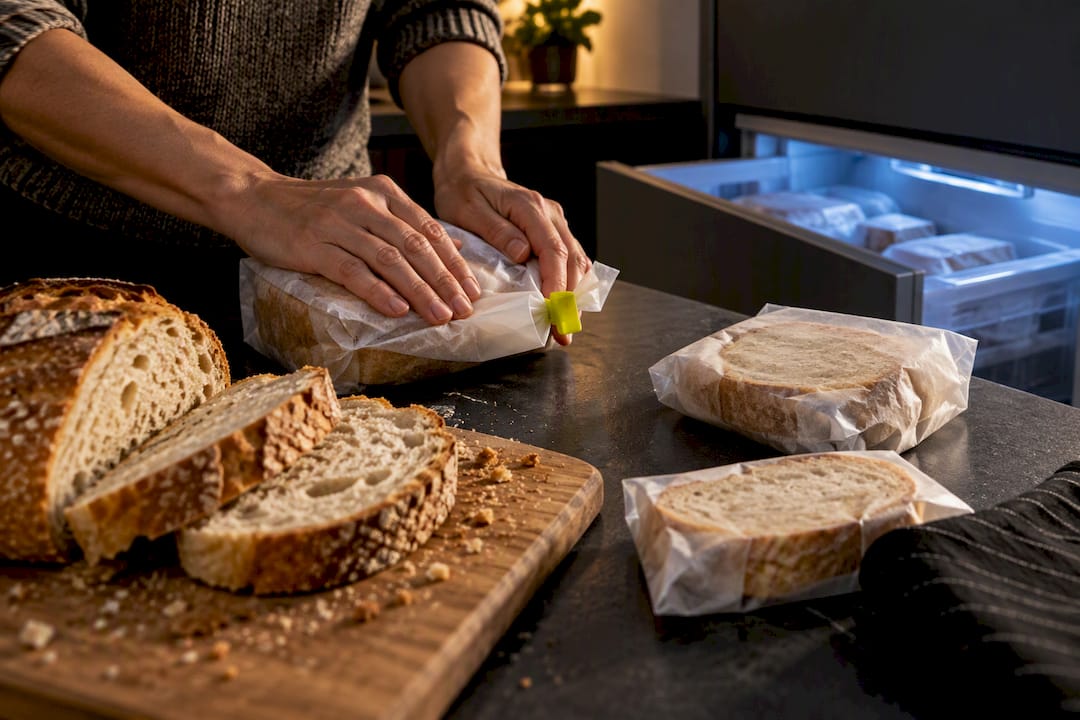
Yes, you can freeze bread without plastic: cool it fully, slice or portion it, wrap it in a tight non-plastic barrier such as beeswax wrap, a reusable silicone bag, or a glass container, then freeze it hard. Food Standards Australia New Zealand recommends keeping ready-to-eat food hard-frozen in clean, dry, food-safe containers, and that single rule underpins everything else in this guide.
TL;DR:
- Reusable silicone bags and parchment paper combined with foil provide the best plastic-free options for long-term bread storage, minimizing moisture transfer and freezer burn.
- Slicing bread before freezing, then separating slices with parchment, allows convenient thawing and helps prevent bread from freezing into one dense block.
- Freezing bread in warm condition causes condensation, which can lead to sogginess upon thawing, so bread must be fully cooled before wrapping.
- For quick use within two to three months, a combination of breathable outer layers and airtight inner wraps maintains quality and prevents freezer burn.
- Thaw bread slices by toasting directly from frozen for best texture or reheating whole loaves in a hot oven, avoiding microwave use to prevent sogginess.
Table of Contents
- Quick methods shortlist: practical plastic-free options
- How to prepare bread for freezing: cooling, slicing and portioning
- Detailed look at plastic-free wraps and containers
- Preventing freezer burn and maintaining bread quality
- Thawing and reheating: restoring texture without plastic
- Common mistakes to avoid when freezing bread without plastic
- How The Zero Store’s plastic-free products fit the workflow
- Author perspective: balancing zero-waste with practicality
- Where to buy the recommended plastic-free supplies
- Sources
- FAQ
Quick methods shortlist: practical plastic-free options
Freezing halts the staling process, and freezing is the most reliable way to extend bread quality when you won’t eat a loaf within a few days. The question is which barrier keeps air and moisture out without a single-use bag.
- Beeswax wrap: good for short trips to the freezer or wrapping a whole loaf for a few days, but it softens at room temperature and needs a firm fold to seal properly.
- Reusable silicone bags: the closest plastic-free swap for a zip freezer bag, ideal for sliced bread and reusable for years once you get the sealing technique right.
- Cotton or linen bread bags: breathable and great for pantry storage, but they need a denser inner layer such as foil or glass if you’re freezing for more than a few weeks.
- Glass containers: excellent for portioned rolls or halved loaves, though bulky if freezer space is tight.
- Parchment paper plus foil: a low-cost combination for layering between slices and creating an outer seal.
For a couple of days in the freezer, beeswax or a cloth bag will do the job. For anything longer, pair a breathable outer layer with an airtight inner one.
How to prepare bread for freezing: cooling, slicing and portioning
Preparation decides how well bread survives the freezer, and a few small steps prevent most quality problems.
- Cool the loaf completely before wrapping. Warm bread releases steam that condenses inside your wrap and turns to ice, which then melts into the crumb on thawing.
- Slice before freezing if you eat bread gradually, so you can pull out one or two pieces rather than thawing the whole loaf.
- Separate slices with parchment paper. Parchment between slices stops them freezing into one block and makes grabbing a single slice easy.
- Portion for your household, freezing half loaves or four-slice bundles rather than one giant block you’ll need to fully thaw each time.
- Label with the freeze date so older portions get used first.
Pro Tip: Freeze bread in the portion size you’d actually reach for on a weekday morning, not the size that looked convenient at the counter.
Detailed look at plastic-free wraps and containers
Different barriers suit different bread types and freezer habits, so it helps to know their strengths.
- Beeswax wraps mould well around a loaf shape and reseal easily, but waxed wraps can allow moisture transfer over long periods in a very dry freezer, so they suit shorter freezer stays rather than months of storage.
- Silicone bags seal with a genuine zip or fold closure and tolerate sub-zero temperatures without cracking, and they wash and reuse indefinitely once bread crumbs are rinsed out.
- Cotton or linen bags are breathable enough for the pantry but need a foil or glass companion for freezer use, since fabric alone lets air and moisture through.
- Parchment paper with a foil outer layer gives you a dense, low-permeability barrier that a technical note on packaging links to reduced freezer burn, since gaps and permeable materials are what let quality slip.
- Glass or stainless containers suit portioned rolls, bread rolls or halved loaves where a rigid shape protects against crushing in a crowded freezer.
Pro Tip: Combine a breathable outer layer, such as a cotton bag, with a tight foil or parchment inner wrap for the best balance of practicality and protection.
Preventing freezer burn and maintaining bread quality
Freezer burn happens when moisture inside the bread sublimates and escapes through gaps in the wrap, leaving dry, discoloured patches. Removing as much air as possible before sealing is the single biggest factor in avoiding it.
A simple household trick works well with reusable bags: seal the bag most of the way, insert a straw through the gap, suck out the excess air, then finish the seal. Double-wrapping, first in parchment, then in a tight foil layer, gives a similar effect without any single-use plastic. Consistent freezer temperature also matters.

FSANZ guidance states that frozen ready-to-eat food should remain hard-frozen throughout storage, in clean, dry, food-safe containers, since fluctuating temperatures let ice crystals grow and damage the crumb.
Bakery practice generally favours using frozen bread within a practical window of two to three months for best quality, after which texture starts to suffer even with a good seal. Label each parcel with the freeze date and work through older portions first.

Thawing and reheating: restoring texture without plastic
How you bring bread back to life matters as much as how you froze it.
- Toast slices straight from frozen. Toasting from frozen is often the best option for individual slices, since it restores crust and crumb in one step without a soggy thaw stage.
- Refresh whole loaves in a hot oven, around 180°C for roughly 10 to 15 minutes, to revive the crust while warming the centre through.
- Thaw at room temperature for an hour or two for slices, longer for a whole loaf, if you don’t need it hot.
- Avoid the microwave where you can. The microwave tends to leave bread gummy rather than crisp, though it’s a reasonable shortcut when speed matters more than texture.
Common mistakes to avoid when freezing bread without plastic
Small errors undo even a good plastic-free routine.
- Freezing warm bread traps steam that turns to ice and then to sogginess on thawing.
- Storing bread in the fridge rather than the freezer actually speeds up staling instead of slowing it.
- Refreezing thawed bread repeatedly breaks down the crumb structure with each cycle.
- Relying on a biodegradable wrap alone for long stints risks moisture creeping in, since some plant-based wraps aren’t built for extended airtight freezer duty without a firmer outer layer.
How The Zero Store’s plastic-free products fit the workflow
Once you’ve settled on a method, the right gear makes it repeatable rather than a one-off effort.
- Plastic Free Resealable Food Storage Bags work well for sliced portions, giving you a reusable, sealable layer suited to the straw-suction technique described above.
- Plastic-Free Cling Wrap adds a secondary protective layer over a cut loaf face when you need a tighter seal than a bag alone provides.
- Plastic Free Produce Bags suit short-term loaf transport home from the bakery, or holding a loaf in the pantry before it goes into the freezer.
All three are made from bio-polymers rather than conventional plastic.
Author perspective: balancing zero-waste with practicality
Cutting single-use plastic matters, but so does not wasting food because a wrap failed halfway through winter. Most households do best with a hybrid routine: slice, layer with parchment, seal in a reusable bag, and reach for a tight foil wrap only for anything staying frozen more than a few weeks. Try one method for a month before deciding it’s the one you’ll stick with.
— Damien
Where to buy the recommended plastic-free supplies
Building this routine is easier with gear designed for the job rather than borrowed from the pantry drawer. The Plastic Free Resealable Food Storage Bags suit sliced bread portions and reseal for repeated use, while the Plastic-Free Cling Wrap adds a tighter secondary seal for longer freezer stays. For getting a fresh loaf home before it even reaches the freezer, the Plastic Free Produce Bags do the job without a plastic liner.

- Resealable bags: best for sliced portions and reuse cycle after cycle.
- Cling wrap: best as a secondary airtight layer for longer freezer storage.
- Produce bags: best for transporting or holding a loaf before you freeze it.
The Zero Store is Australian owned, and its wraps and bags are made from bio-polymers such as PLA and PBAT rather than conventional plastic. Browse the full kitchen collection to put the whole workflow together.
Sources
These sources back the food-safety and technique points covered above.
- Storing food safely | Food Standards Australia New Zealand
- How to keep bread fresh — freezer, pantry and storage | BakeFinder
- How to freeze bread (King Arthur Baking)
- Freezing without plastic – alternatives for zero waste | FreshMAG by Liebherr
FAQ
What to freeze food in to avoid microplastics?
Reusable silicone bags, beeswax wraps, parchment paper and glass containers all avoid the microplastic shedding linked to some conventional plastic freezer bags. For bread specifically, a parchment layer between slices plus a reusable resealable bag or a tight foil wrap gives a solid microplastic-free seal.
What are common mistakes when freezing bread?
The most frequent errors are freezing bread while it’s still warm, which causes condensation and ice crystals, and storing bread in the fridge, which actually speeds up staling rather than slowing it. Refreezing bread that’s already thawed also breaks down the crumb with each cycle.
What is the best container to freeze bread in?
For whole loaves or halves, a glass or stainless container gives rigid protection against crushing, while reusable resealable bags suit sliced portions you’ll pull out one at a time. The right choice depends more on your bread’s shape and how long it will sit in the freezer than on any single “best” option.
Can I freeze bread in cling film?
You can freeze bread in a wrap, but a plastic-free cling wrap made from bio-polymers avoids the microplastic and chemical concerns tied to conventional cling film. Wrap tightly to remove air pockets, since the seal quality matters more than the material for preventing freezer burn.
Share:
Avoid Bin Rejection in Australia: AS 4736 vs AS 5810, 12 Weeks
Australians: Keep Hot, Fatty Food Safe with Phthalate Free Storage