
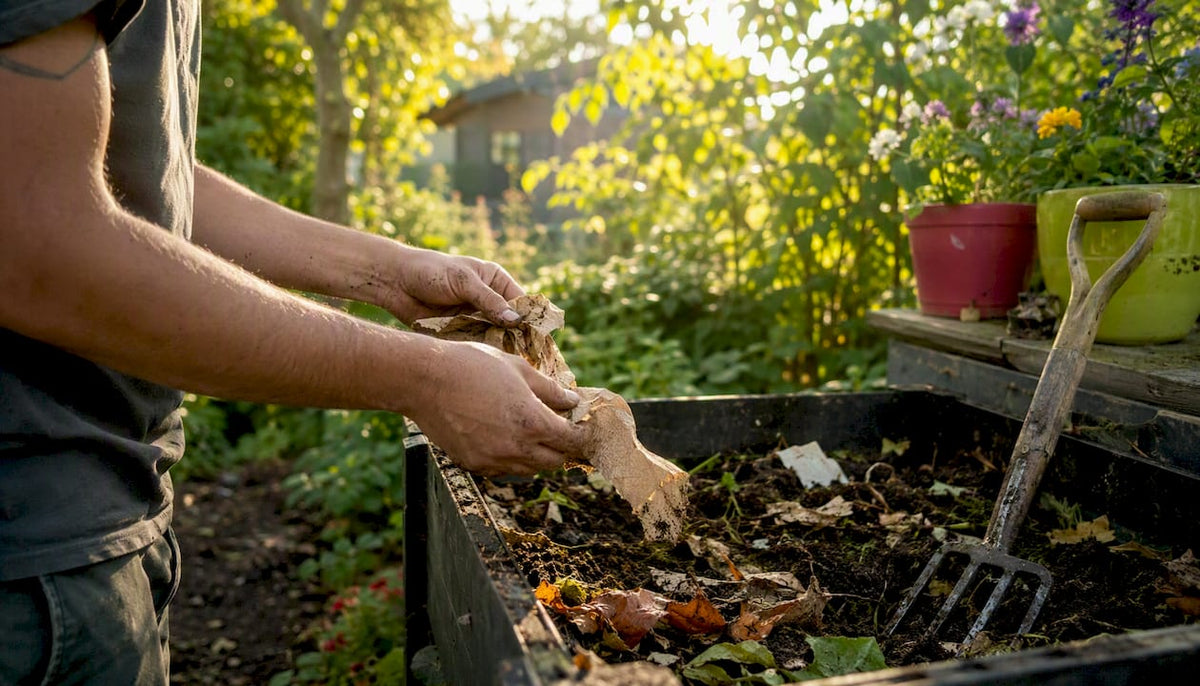
Home compostable means a product is tested to break down in a garden composter at ambient temperatures, typically around 25°C. Industrial compostable means it requires a high-temperature commercial facility, typically sustained high temperatures found in commercial composting facilities, to biodegrade properly. The practical difference matters enormously for Australian households: check your packaging for AS 5810 (home compostable) or AS 4736 (industrial compostable) before deciding where to put it. If the label shows AS 5810 or OK compost HOME, it can go straight into your garden composter. If it shows AS 4736 or EN 13432 only, keep it separate and check your council’s kerbside organics rules or look for a retailer drop-off programme.
Key takeaways
Home-compostable and industrial-compostable are not interchangeable terms: the certification mark and standard number on the pack determine which disposal route is safe and effective.
| Point | Details |
|---|---|
| Check the standard number | Look for AS 5810 (home) or AS 4736 (industrial) — a logo without a number is an unverified claim. |
| Home compost if certified | AS 5810 or OK compost HOME items can go into a garden composter; shred first to speed breakdown. |
| Store industrial-only items | AS 4736-only items do not break down at home; keep for council FOGO (if accepted) or retailer drop-off. |
| PLA needs industrial heat | PLA products typically require 55–60°C to biodegrade; never assume a PLA item is home-compostable. |
| The Zero Store | Offers bio-polymer cling film, resealable bags, and cleaning cloths with certifications printed on the pack. |
Table of Contents
- What does ‘compostable’ actually mean — and how does it differ from ‘biodegradable’?
- How does home composting compare with industrial composting?
- Which certifications and standards should you trust in Australia?
- Which materials are usually home-compostable, and which need industrial conditions?
- How to dispose of compostable items correctly in Australia
- Practical tips for composting certified home-compostable items at home
- What do certification tests actually measure?
- What are the risks of getting this wrong?
- An editorial perspective on what actually matters here
- The label is the product — not the material
- The Zero Store’s home-compostable alternatives worth knowing about
- Sources
What does ‘compostable’ actually mean — and how does it differ from ‘biodegradable’?
Compostable means a material undergoes controlled organic recycling, breaking down into carbon dioxide, water, and humus under specific conditions within a defined timeframe. That last part is what separates it from ‘biodegradable’, which simply means something will eventually break down, with no time limit, no conditions specified, and no requirement to leave behind anything useful.
The distinction matters because a product labelled ‘biodegradable’ could take decades to fragment and may leave behind harmful residues. Compostable products, by contrast, are tested against specific standards. The City of West Torrens makes this point directly: vague biodegradable claims often mislead consumers and can cause environmental harm when items are mis-disposed.
Home compostable vs industrial compostable — the core distinction:
- Home compostable: tested to biodegrade in a garden or backyard composter at ambient temperatures (around 20–30°C), over a longer timeframe, without mechanical turning or controlled aeration
- Industrial compostable: tested to biodegrade only under sustained high temperatures (above 58°C), controlled moisture, and mechanical aeration in a commercial composting facility
- Biodegradable (no certification): no standard conditions, no timeframe, no compost-quality requirement — the term alone tells you almost nothing useful
The word ‘compostable’ on its own is not enough. Without a standard number and a certification mark, it is a marketing claim, not a verified fact.
How does home composting compare with industrial composting?
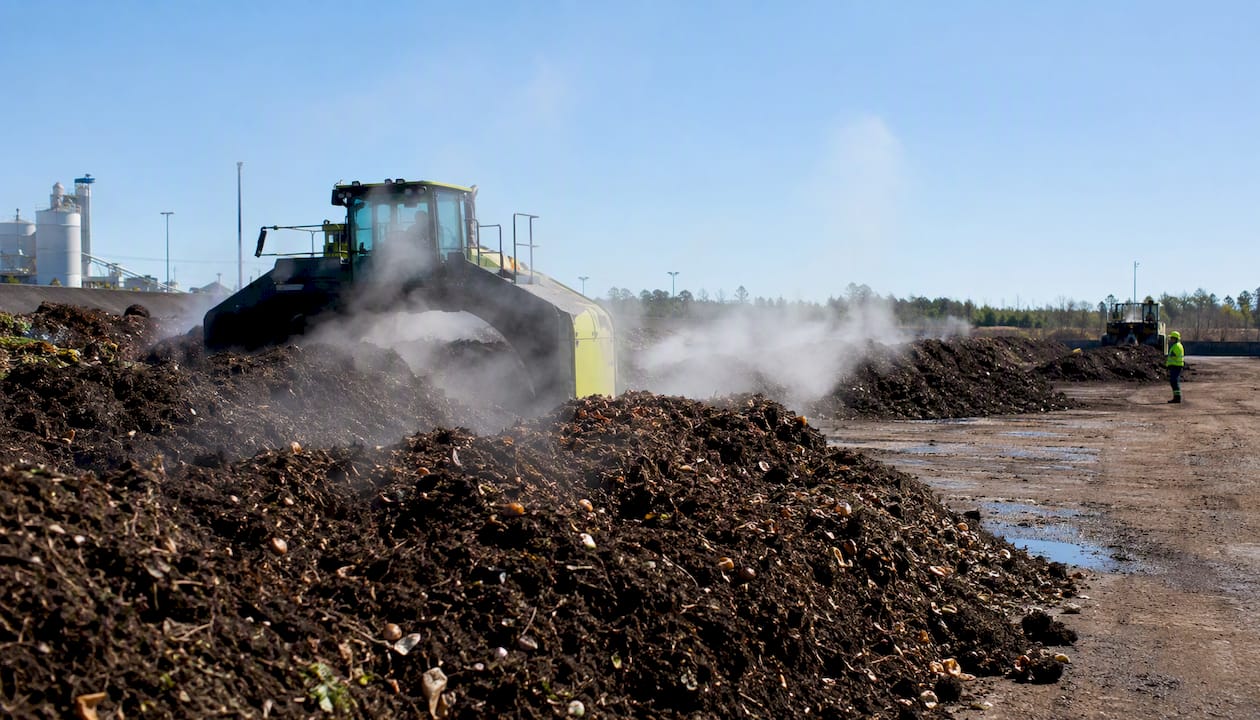
The gap between a backyard heap and an industrial composting facility is wider than most people expect. Home composting operates at roughly 25°C, varying with the seasons, with no mechanical aeration and no controlled moisture regime. Industrial facilities run at sustained elevated temperatures found in commercial composting with active turning, monitored moisture, and consistent oxygen supply. That combination of heat and management is what allows them to process a broader range of materials far faster.
| Factor | Home composting | Industrial composting |
|---|---|---|
| Temperature | 20–30°C (variable, seasonal) | 55°C+ (sustained, controlled) |
| Typical timescale | Months to over a year | Weeks to a few months |
| Aeration | Passive or occasional turning | Mechanical, monitored |
| Moisture control | Manual, weather-dependent | Actively managed |
| Materials accepted | Certified home-compostable items only | Broader range, including industrial-certified items |
The temperature difference is the critical factor. PLA, one of the most common bio-plastics used in packaging, needs sustained heat above 55°C to break down. In a backyard heap, it simply does not get there. Industrial composting facilities are specifically designed to reach and hold those temperatures, which is why they can accept materials a home heap cannot.
Which certifications and standards should you trust in Australia?
The marks that matter for Australian consumers are AS 5810 for home compostable and AS 4736 for industrial compostable. These are the Australian Standards that align with international frameworks and give you a verified, jurisdiction-relevant guarantee. Here is what each mark actually tells you:
- AS 5810 / OK compost HOME: tested at ambient temperatures representing home composting conditions; covers disintegration, aerobic biodegradation, ecotoxicity, and control of constituents including inks and additives
- AS 4736 / Seedling logo / EN 13432: tested at elevated temperatures relevant to industrial composting; the same four test dimensions apply, but conditions are far more demanding on the material
- OK compost HOME (TÜV Austria): one of the most rigorous home-compostable marks globally; TÜV Austria’s specification requires testing of all constituents and specifies maximum tested thicknesses for disintegration claims
- BPI Certified: a North American mark based on ASTM D6400; less common in Australia but occasionally seen on imported products
Certification trumps any general ‘compostable’ claim because it means an independent body has verified the product’s performance under the conditions named on the label. ISO 74994 sets out the four test dimensions used globally: disintegration during composting, ultimate aerobic biodegradation, no adverse effects on terrestrial organisms, and control of constituents. A product carrying a mark based on that framework has been through all four.
Pro Tip: Look for the standard number printed on the packaging, not just the logo. A certification mark without a number or issuing body (TÜV Austria, DIN CERTCO, BPI) is a red flag. Check the issuing body’s online certificate directory if you want to verify the claim independently.
Which materials are usually home-compostable, and which need industrial conditions?
The short answer: uncoated paper, cellulose film, and some PBAT blends tend to be home-compostable when certified. PLA, many PLA-coated papers, and standard PLA cups and mailers are almost always industrial-only.
Uncoated paper and cardboard break down readily in a well-managed home heap. Cellulose-based films (derived from wood pulp) can also be home-compostable, though thickness and any coatings matter. PBAT (polybutylene adipate terephthalate) is a flexible bio-polymer that, in thin films and when certified, can meet home-compostable standards. The Zero Store’s plastic-free cling film and resealable food storage bags use bio-polymer formulations including PBAT, with certifications printed on the pack.
PLA (polylactic acid) is the tricky one. It looks and feels like conventional plastic, and it is widely used in packaging. But PLA commonly requires sustained elevated temperatures to biodegrade fully. Put it in a backyard heap and it will likely sit there, possibly fragmenting into persistent particles rather than composting. Always check the label before assuming any PLA item is home-compostable.
PHA (polyhydroxyalkanoate) is a notable exception among bio-polymers. PHA-based products can biodegrade at lower temperatures and in a wider range of environments, making some PHA items genuinely home-compostable when certified.
For a deeper look at how these terms interact, The Zero Store’s guide on compostable vs biodegradable explains the material science in plain language.
How to dispose of compostable items correctly in Australia
The right disposal route depends entirely on what the label says. Follow these steps:
- Check the packaging for a certification mark and standard number. Look for AS 5810, OK compost HOME, AS 4736, EN 13432, or the Seedling logo. If there is no standard number, treat the item as general waste.
- If it carries AS 5810 or OK compost HOME, it can go into your home garden composter. Shred or cut it first to speed breakdown.
- If it carries AS 4736 or EN 13432 only, do not put it in your home heap. Check whether your council’s kerbside organics (FOGO) collection accepts compostable packaging — many do not. The City of Greater Geelong explicitly advises checking local rules before placing compostable packaging in kerbside organics.
- If your council’s FOGO excludes compostable packaging, store industrial-only items in a dry bag and look for a retailer take-back programme or a local drop-off point. Some councils and retailers run periodic collection events.
- If no drop-off is available, general waste is the responsible choice over contaminating your home heap or kerbside organics stream.
To find your council’s specific rules, search “[your council name] + FOGO + compostable packaging” or call the council’s waste services line directly. For retailer take-back options, check the product brand’s website or ask at the point of purchase. A practical waste-reduction guide from The Holistic Science Co. also covers broader disposal strategies worth reading alongside this guidance.
Practical tips for composting certified home-compostable items at home
Certified home-compostable items will break down in a well-managed garden composter. The certification guarantees it under the right conditions, so the question is whether your heap provides those conditions.
Shred or cut large items before adding them. Surface area is the single biggest lever you have. A whole cling film sheet takes far longer to break down than the same sheet torn into small pieces. The same applies to bags and wrappers.
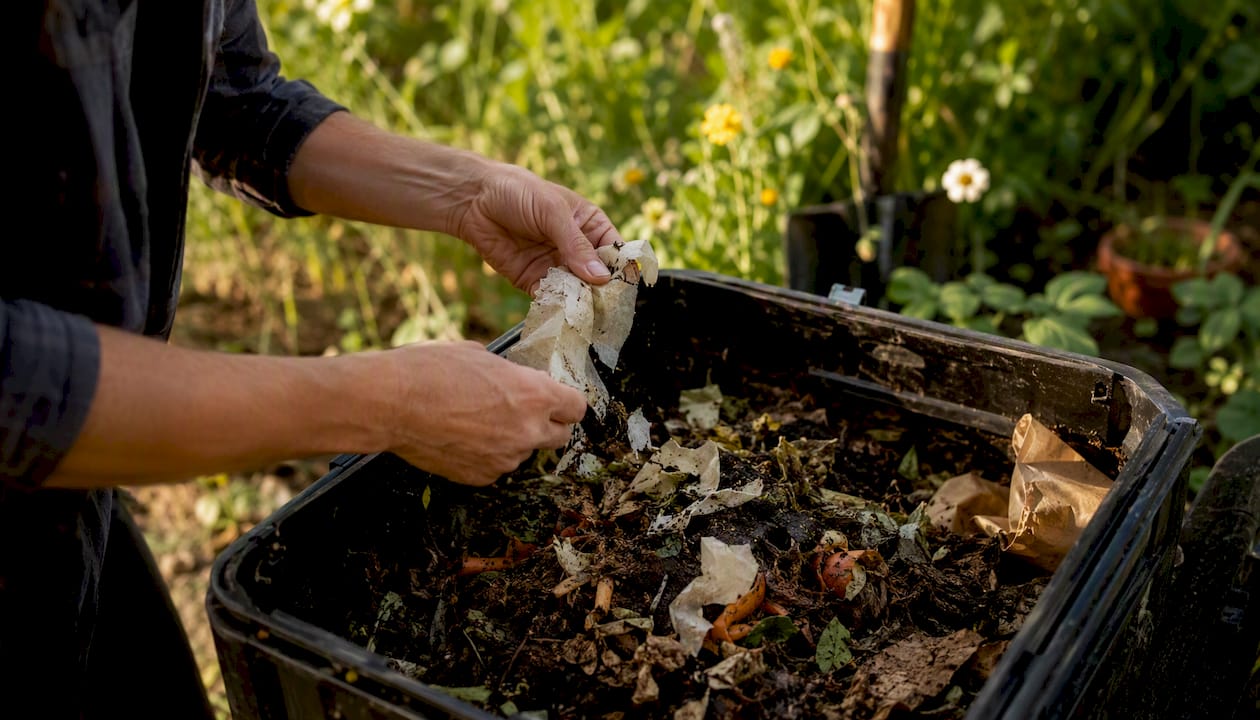
Balance your greens (food scraps, fresh garden waste) with browns (dry leaves, cardboard, paper). A heap that is too wet and nitrogen-heavy will slow the breakdown of bio-polymer films. Aim for a consistency that feels like a wrung-out sponge.
Turn or rotate the heap every few weeks. Home composting does not reach industrial temperatures, but a well-aerated heap will run warmer than a neglected one, which speeds disintegration of certified films and bags.
Pro Tip: Check the maximum tested thickness printed on the certification label or product packaging. TÜV Austria’s OK compost HOME specification ties disintegration guarantees to the thickness tested — a product thicker than the certified maximum may not break down as represented, even in a well-managed heap.
What do certification tests actually measure?
Certification is not a single test — it is four distinct measurements applied under specific conditions. ISO 74994 defines the framework used globally:
Disintegration: the physical breakdown of the material into small fragments during composting.
Aerobic biodegradation: the conversion of carbon in the material into carbon dioxide by microorganisms.
Ecotoxicity: a plant-germination and earthworm test on the finished compost to confirm no harmful residues remain. This is what separates a certified compostable product from one that merely fragments.
Control of constituents: limits on heavy metals and other regulated substances in the product and its inks, dyes, and additives.
The critical limit of these tests: they certify performance under controlled laboratory or facility conditions, not in the open environment. A certified compostable product that ends up in a waterway or on the ground is not guaranteed to biodegrade safely. Certification is a disposal-route guarantee, not a littering licence.
What are the risks of getting this wrong?
Putting an industrial-only item into a home heap is the most common mistake, and the consequences are not trivial. Australian municipal guidance warns that industrial-only items, particularly PLA products, will not break down in typical backyard heaps and can fragment into persistent residues. Those fragments can end up in your garden soil and, potentially, in food crops.
Contamination of kerbside organics is a separate problem. If compostable packaging that is not accepted by a facility enters the organics stream, it can contaminate entire batches of compost, reducing its quality and commercial value. Some facilities reject entire loads when contamination is detected.
Greenwashing is the upstream risk. Watch for these red flags on packaging:
- The word ‘compostable’ with no standard number or certification mark
- A logo that resembles a certification mark but carries no issuing body name
- ‘Biodegradable’ used interchangeably with ‘compostable’ on the same label
- No mention of whether the product is home or industrial compostable
- No maximum tested thickness stated
If a product cannot tell you which standard it meets and who certified it, the claim is unverified. Check the issuing body’s certificate directory before trusting it.
An editorial perspective on what actually matters here
The label is the product — not the material
The composting conversation in Australia tends to focus on materials: PLA bad, PBAT good, paper fine. That framing misses the point. The material is secondary to the certification, and the certification is only as useful as the disposal route you actually have access to.
A PHA-based bag certified to AS 5810 is genuinely useful for an Australian household with a garden composter. The same bag, certified only to AS 4736 and living in a council area that excludes compostable packaging from FOGO, is functionally no better than conventional plastic for that household — it will end up in general waste. The environmental benefit is real only when the disposal route matches the certification.
The Zero Store’s approach of printing certifications and material details on the pack is the right instinct. It puts the decision in the consumer’s hands rather than hiding it behind a generic logo. Australian consumers are increasingly capable of reading those labels — the gap is in knowing what to do with the information, which is exactly what this guide addresses.
The Zero Store’s home-compostable alternatives worth knowing about
If you want products that are suited for home composting, starting with items that carry verified certifications and transparent material disclosures is the practical move.
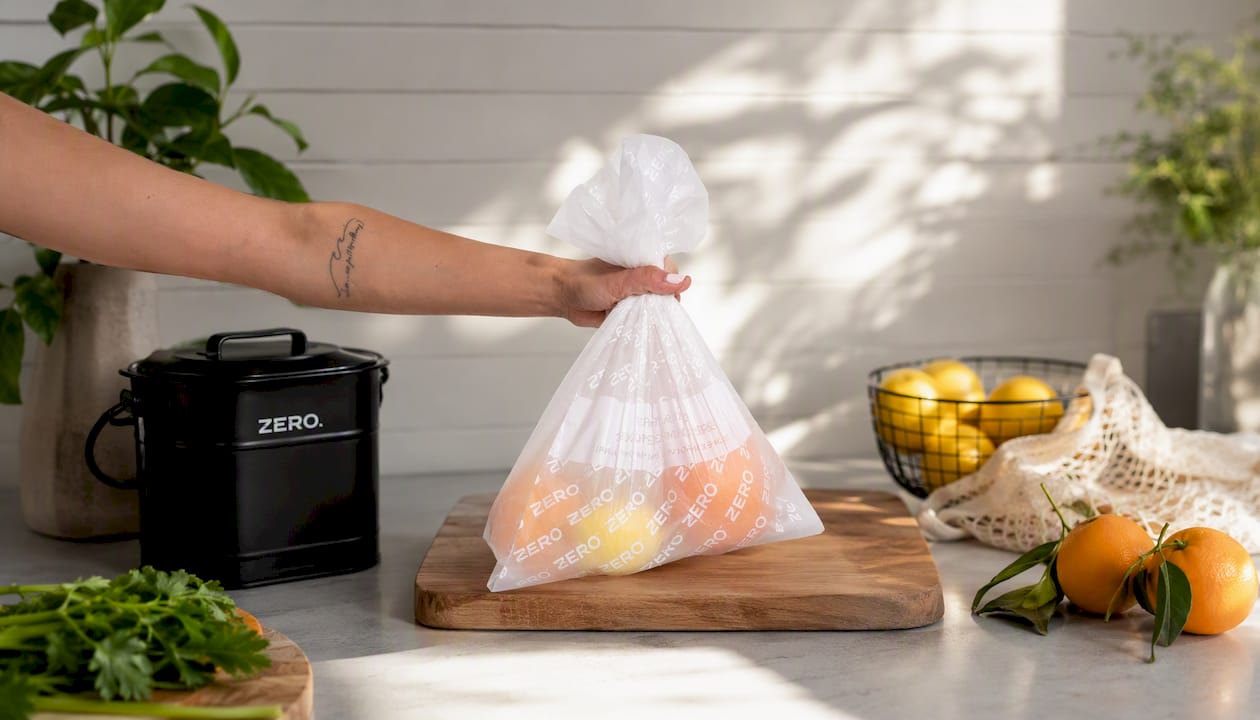
The Zero Store’s plastic-free cling film and resealable food storage bags are made from bio-polymers including PBAT, with certifications printed directly on the packaging. The reusable cleaning cloths sidestep the composting question entirely by replacing single-use disposables with a washable, durable alternative. All products ship across Australia. Check the certification mark and standard number on the pack when your order arrives — that is the single most useful thing you can do before deciding where the packaging goes at end of life. Browse the full range at The Zero Store.
Sources
Verify any compostable claim against these authoritative sources before disposal:
- ISO 74994
- Home and Industrial Compostability: Differences and Testing
- What Is Industrial Composting?
When in doubt, check the issuing body’s online certificate directory (TÜV Austria, DIN CERTCO, or BPI) using the certificate number printed on the packaging. If no number is printed, the claim has not been independently verified.
Share:
Plastic-free freezer storage for Australian homes
Cling film in the oven: the safe rules for home cooks