
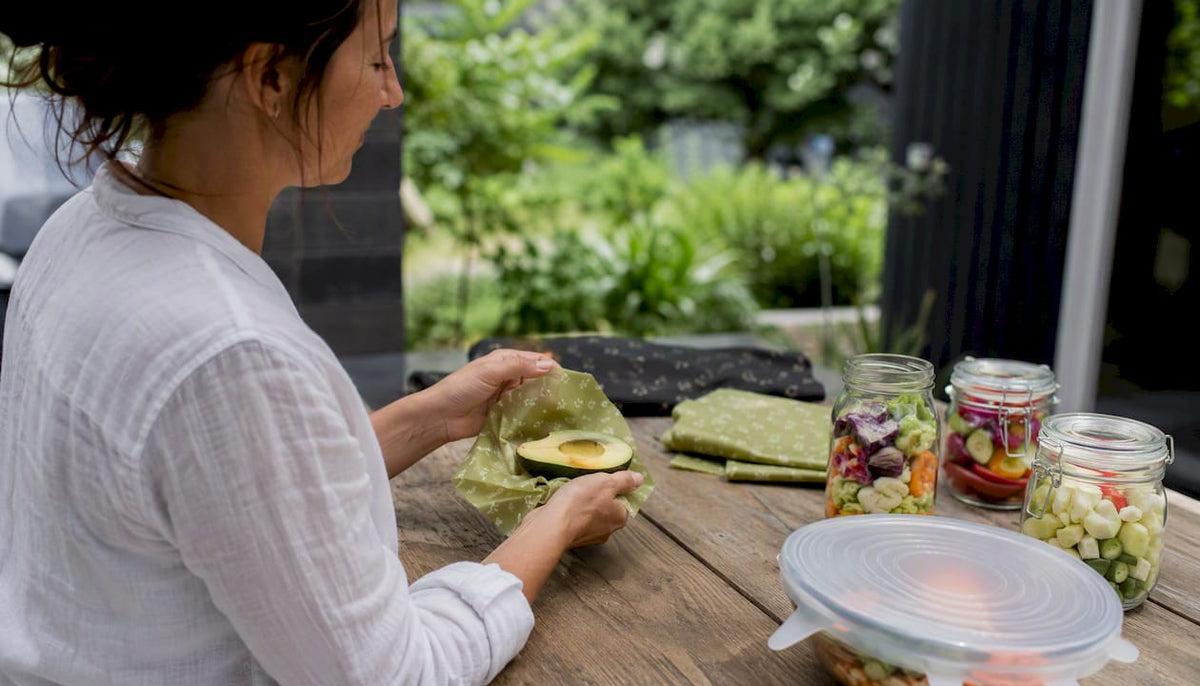
The five quickest swaps away from single-use cling film are beeswax wraps, silicone stretch lids, airtight glass containers, reusable silicone bags, and cloth bowl covers. Each one handles the tasks cling film gets used for most, lasts years rather than days, and costs less per use over time. Glass containers and jars are the most effective zero-waste option: airtight, non-reactive, and often free if you repurpose what you already own. For moments when a disposable film is genuinely the only practical option, a certified compostable cling wrap is a better choice than conventional plastic.
Key takeaways
Reusable alternatives to cling film cost less per use, last years, and handle every common kitchen task that single-use film is typically used for.
| Point | Details |
|---|---|
| Best swap for covering bowls | A silicone stretch lid or a repurposed glass jar lid creates a proper seal with no ongoing cost. |
| Best swap for lunchboxes | A reusable silicone bag or beeswax wrap handles sandwiches and snacks without single-use waste. |
| Best swap for freezing | Glass jars or silicone bags seal airtight and tolerate freezer temperatures; beeswax wraps do not. |
| Compostable film caveat | Check for OK Compost HOME or DIN CERTCO certification — many films labelled “compostable” require industrial facilities. |
| The Zero Store option | Plastic-free cling wrap and resealable bags are available directly from The Zero Store for tasks where a reusable is not practical. |
Table of Contents
- Why should you ditch single-use cling film?
- What are the best reusable alternatives to cling film?
- How do you choose the right alternative for each kitchen task?
- How do you care for each alternative so it lasts?
- What do Australian shoppers need to check about compostable cling film?
- Quick cost, lifespan and footprint comparison
- The honest case for starting small
- The Zero Store’s plastic-free cling wrap: a practical option for specific tasks
- Sources
Why should you ditch single-use cling film?
Single-use cling film creates problems that go well beyond the bin. Here is why the switch matters.
- Climate footprint. Food loss and waste account for 8–10% of annual global greenhouse-gas emissions, and single-use packaging that ends up in landfill contributes directly to that figure.
- It escapes recycling. Conventional cling film is typically made from LDPE or PVDC. Most Australian kerbside bins reject it because it tangles in sorting machinery. Soft-plastic drop-off schemes exist, but participation is patchy.
- Microplastics. Research documents microplastics throughout the human body, with growing concern about plastic fragments entering food and water. Wrapping food directly in plastic film is one household exposure pathway that is easy to remove.
- Chemical leaching. Some older cling film formulations contain plasticisers that can migrate into fatty foods, particularly under heat. Even modern LDPE films are best kept away from the microwave.
- Practical limits. Cling film does not seal well over irregular shapes, tears frustratingly mid-pull, and does nothing useful for bread, which goes stale faster inside a non-porous wrap.
Stat to know: The UNFCCC puts the economic cost of food loss and waste at around USD 1 trillion annually. Packaging that contributes to waste streams rather than preventing them is a poor trade-off.
What are the best reusable alternatives to cling film?
Beeswax and plant-wax wraps, silicone lids and reusable containers each bring distinct advantages depending on what you are storing. Here is a clear-eyed look at each option.
Beeswax and plant-wax wraps
Beeswax wraps are coated cotton sheets that mould to a bowl or piece of food using the warmth of your hands. The wax blend creates a light, breathable seal. Culinary professionals favour them for bread precisely because that breathability keeps crusts crisp rather than soggy. They work well for cheese, cut fruit, vegetables, and covering bowls in the fridge.
Vegan versions use plant waxes (carnauba or candelilla) in place of beeswax and perform similarly. Look for GOTS-certified organic cotton in the base fabric and a clear ingredient list for the wax blend.
What they cannot do: beeswax wraps cannot be sanitised at high temperatures, so they must never touch raw meat or fish. Hot water melts the wax coating. End of life, they are compostable.
Pro Tip: Never use beeswax wraps for raw meat or fish. The wax cannot withstand the temperatures needed to sanitise the wrap, which means bacteria can linger. Use an airtight glass container for raw proteins instead.
Silicone stretch lids and bags
Food-grade silicone lids stretch over bowls, pots, tins, and cut produce. They create a firm seal, tolerate fridge and freezer temperatures, and most are dishwasher-safe. Silicone bags handle liquids, soups, and freezer portions well. Look for BPA-free certification and confirm the product is food-grade rather than general-purpose silicone.
The limitation is heat: silicone lids are not universally microwave-safe, so check the manufacturer’s rating before using one in the microwave. They also do not wrap irregularly shaped items the way a flexible sheet does.
Glass jars and airtight containers
Glass is the most durable and food-safe option on this list. It is non-reactive, odour-resistant, and handles fridge, freezer, and microwave use (lids off for microwave). A collection of glass jars in mixed sizes covers almost every storage task: leftover soup, half an onion, marinating meat, storing cut herbs.
The upfront cost can be zero if you repurpose pasta sauce jars, jam jars, or pickle jars. Bought new, a set of four glass containers with locking lids typically costs tens of Australian dollars and lasts indefinitely with normal care.
Reusable sandwich bags and silicone pouches
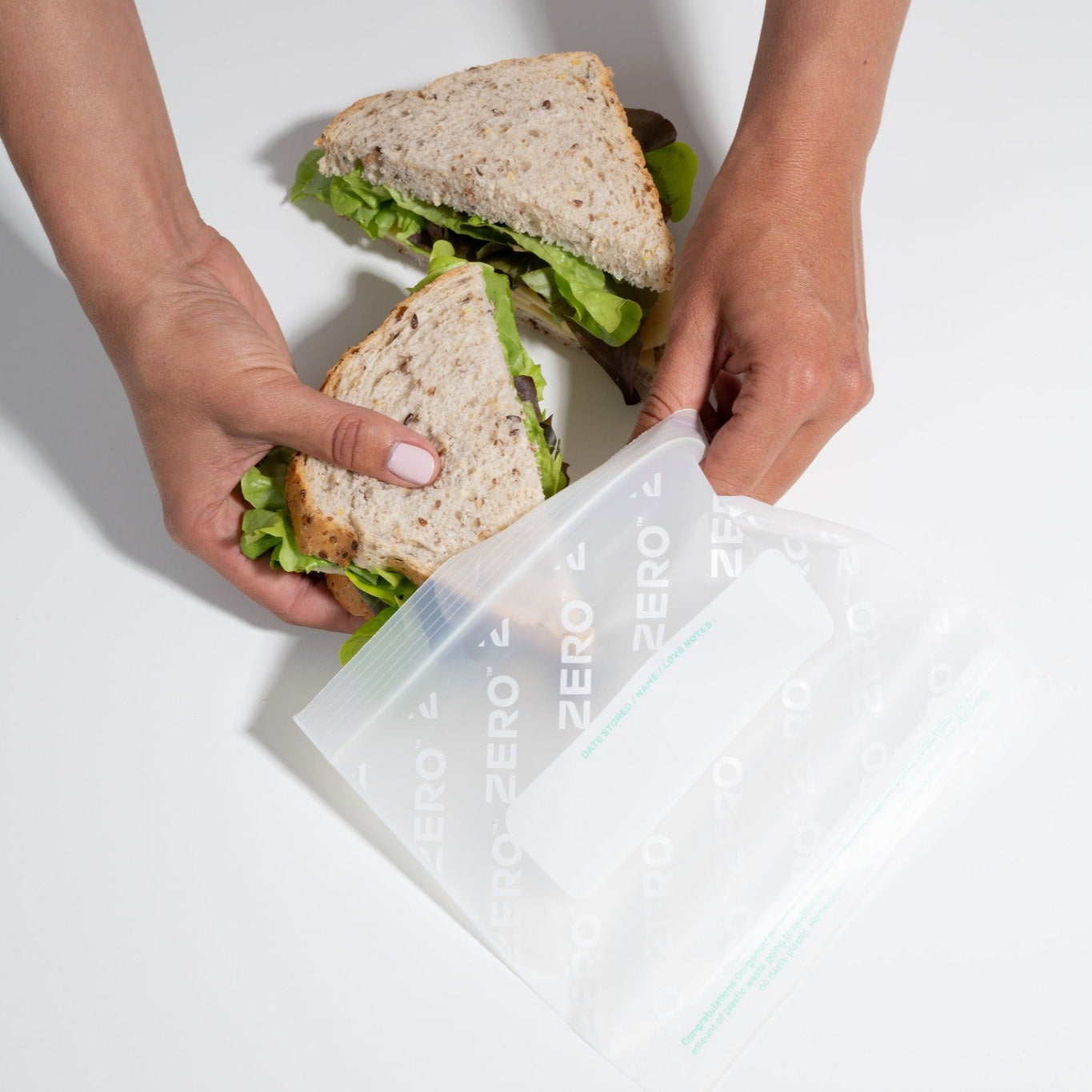
Reusable bags made from food-grade silicone or PEVA handle lunchbox sandwiches, snacks, and freezer portions. They zip or roll-seal shut, clean easily in the dishwasher, and last for years. The Zero Store’s resealable food storage bags are a plastic-free option for snacks and lunches.
Cloth covers and furoshiki
Elastic-edged fabric bowl covers fit over plates and shallow bowls in the fridge. Furoshiki (Japanese wrapping cloths) handle oddly shaped items, packed lunches, and produce. Neither is airtight, so they suit short-term fridge storage rather than freezing or long-term sealing.
Comparison at a glance
How do you choose the right alternative for each kitchen task?
The right swap depends on what you are storing, for how long, and at what temperature. Run through these criteria quickly before buying.
- Airtightness needed? Leftovers with strong odours, cut onion, or anything going in the freezer needs a proper seal. Glass containers or silicone bags win here. Beeswax wraps and cloth covers do not seal airtight.
- Temperature tolerance. Freezer use rules out beeswax wraps (the wax can crack). Microwave use rules out silicone lids unless the product is rated for it. Glass handles both with no issues.
- Raw proteins. Always use glass or a silicone bag. Beeswax wraps cannot be sanitised and must stay away from raw meat and fish.
- Budget. If cost is the main concern, repurposed glass jars cost nothing. A set of silicone lids is a one-off purchase that pays back within weeks compared to buying cling film rolls.
- Space. Silicone lids nest and fold flat. Glass jars stack but take up more room. Beeswax wraps roll or fold into a drawer.
Common scenarios:
- Covering leftover stew overnight: glass container with a lid, or a silicone stretch lid over the pot.
- Half an onion: glass jar (the lid contains the smell). Beeswax wrap works but the smell lingers in the wax.
- Sandwich to go: reusable silicone bag or a beeswax wrap folded around it.
- Freezing soup portions: glass jar (leave headspace for expansion) or a silicone bag laid flat.
- Covering proving dough: a damp cloth or a large silicone lid over the bowl.
For produce storage specifically, The Zero Store has a practical guide on storing vegetables without plastic that covers container choices in more detail.
How do you care for each alternative so it lasts?
Getting years out of reusable alternatives comes down to cleaning correctly and storing them properly between uses.
- Beeswax wraps: wash in cool or lukewarm water with a small amount of dish soap. Never use hot water — it melts the wax. Air-dry flat or hang. Store folded in a drawer away from direct sunlight, which can soften the wax over time. Expect 1–2 years of regular use before the wax loses its tack.
- Silicone lids and bags: dishwasher-safe on the top rack. For bags, turn them inside out to clean thoroughly. Avoid sharp utensils that can nick the silicone. A well-maintained silicone lid lasts five years or more.
- Glass containers: dishwasher-safe. Avoid placing a cold glass jar directly into boiling water or a very hot oven — thermal shock can crack it. Lids with rubber seals may need replacing every few years as the seal degrades.
- Cloth covers and furoshiki: machine wash on a warm cycle. Check for fraying elastic on bowl covers and replace when the fit loosens. Natural-fibre cloths last 2–4 years with regular washing.
- When to replace: beeswax wraps that no longer cling or have developed persistent odours are past their useful life and can go in the home compost. Silicone that has deep cuts or tears should be retired. Glass with chips or cracks around the rim should be recycled.
Pro Tip: Re-wax a beeswax wrap that has lost its grip by placing it on a baking tray lined with baking paper, scattering a few beeswax pellets over the surface, and warming it in a low oven (around 70°C) for two to three minutes. The wax redistributes and the wrap is good for another season.
What do Australian shoppers need to check about compostable cling film?
Compostable cling film sounds like the obvious answer, but the label alone tells you very little. The critical distinction is between home compostable and industrially compostable.
- Home compostable means the film breaks down in a standard backyard compost bin within a defined timeframe, typically 6–12 months. Look for OK Compost HOME certification (issued by TÜV Austria) or a DIN CERTCO home-compostable listing. Some compostable cling wraps carry this certification; many do not.
- Industrially compostable means the film requires the high temperatures of a commercial composting facility to break down. If it goes into your home bin or kerbside organics bin, it may not break down at all, or it may contaminate the compost stream.
- PLA and PBAT films are common in eco-friendly wraps. PLA (polylactic acid) is typically industrially compostable only. PBAT (polybutylene adipate terephthalate) blends can be certified for home composting depending on formulation. The material name alone does not confirm home compostability.
What to do in practice:
- Read the certification mark, not just the word “compostable” on the packaging.
- Check your local council’s accepted materials list before putting any compostable film in the organics bin.
- Soft-plastic drop-off schemes (where available) may accept some certified compostable films, but confirm with the scheme operator first.
The bottom line: certified compostable cling film is a sensible choice for short-term convenience tasks, such as wrapping a sandwich for a few hours or covering a bowl for transport. For everyday fridge storage, a reusable option is still the lower-footprint choice.
The plastic wrap education page at The Zero Store explains the materials and certifications behind its plastic-free cling wrap range in plain language, which is useful if you want to compare claims before buying.
Quick cost, lifespan and footprint comparison
One set of beeswax wraps can replace a significant length of plastic cling film over its lifespan, making reusables the clear winner on cost-per-use once the upfront spend is recovered. Glass has the longest service life with negligible environmental downside when reused consistently.
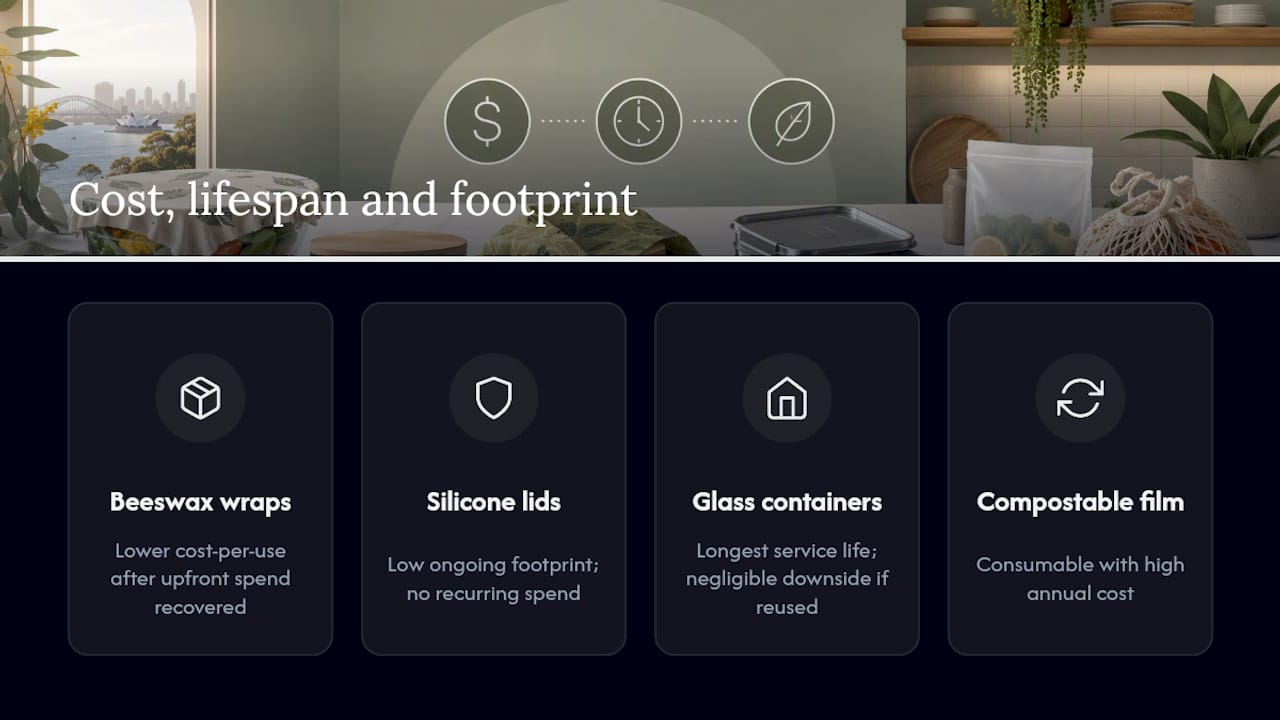
For budget-conscious households, glass jars repurposed from the pantry cost nothing and last indefinitely. For readers prioritising the lowest ongoing footprint, silicone lids and glass together cover almost every storage task with no recurring spend. Compostable film sits at the high end of annual cost because it is a consumable, which is why reusables make more financial sense for daily use.
For more on plastic-free bag options, The Zero Store’s guide to Ziploc alternatives covers the reusable bag category in detail.
The honest case for starting small
Most people who try to overhaul their kitchen all at once end up with a drawer full of products they do not use. The swap that actually sticks is the one that solves an immediate, specific problem.
Start with glass. If you already have pasta sauce jars or jam jars, you have everything you need to stop using cling film for leftovers this week. No purchase required. Once that habit is set, add a set of silicone stretch lids for bowls and pots, which handles the “cover this and put it in the fridge” reflex that cling film usually satisfies. Beeswax wraps come third, specifically for cheese and bread, where their breathability genuinely outperforms any plastic alternative.
The 30-day approach that works: week one, replace cling film in the fridge with glass and silicone lids. Week two, swap out sandwich bags for a reusable silicone pouch or beeswax wrap. Week three, sort the freezer with labelled glass jars or silicone bags. By week four, the roll of cling film is still in the drawer and you have not missed it.
Keep a small, curated set within easy reach: one glass jar on the bench, two silicone lids by the hob, a beeswax wrap folded in the cheese drawer. Accessibility is what makes the habit automatic. A certified compostable cling wrap is worth having for the occasional task where a flexible film is genuinely the only practical option, but it should be the exception, not the default.
The Zero Store’s plastic-free cling wrap: a practical option for specific tasks
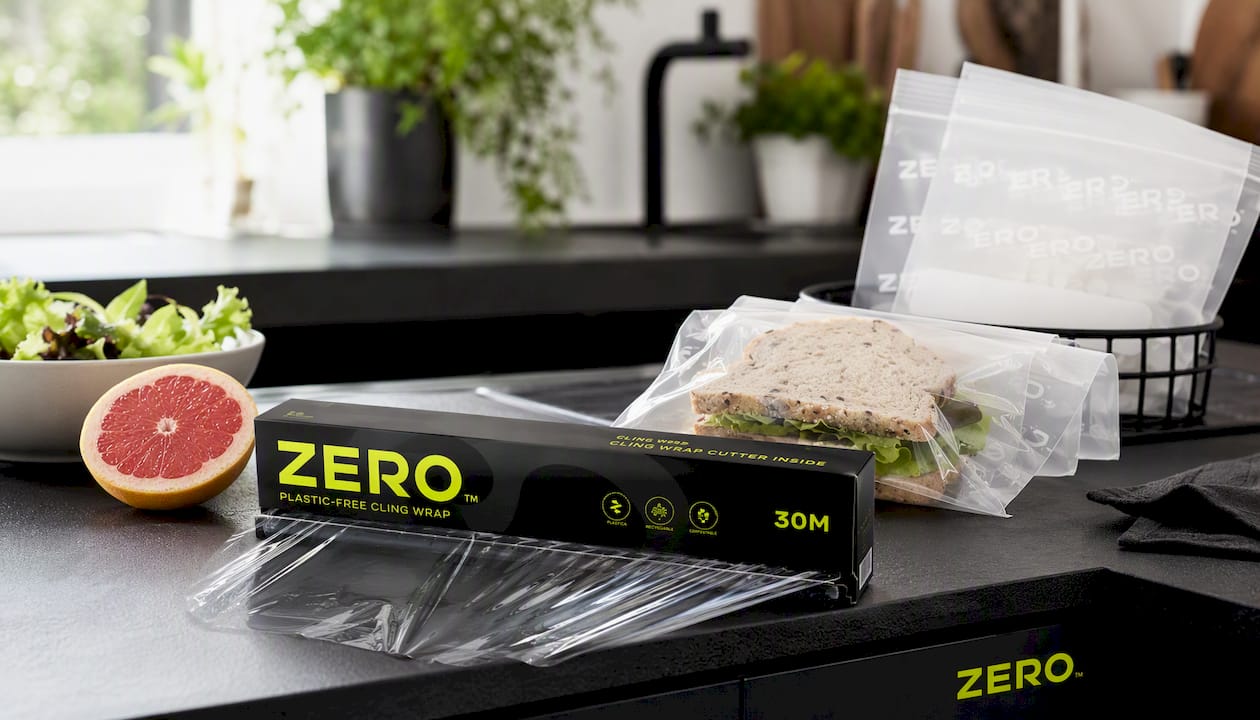
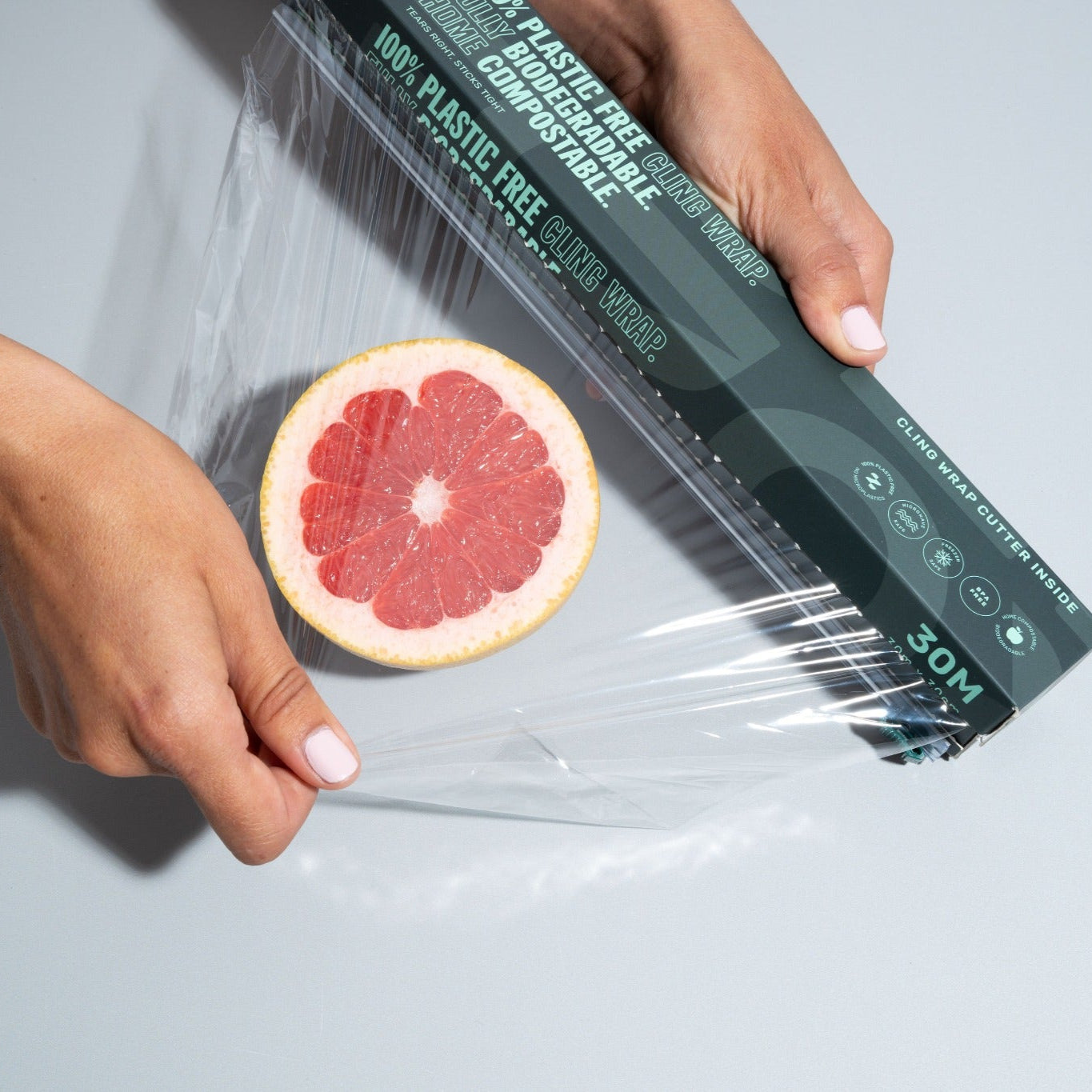
Reusables cover most kitchen tasks well, but there are moments when a flexible film is the only practical solution: wrapping an awkwardly shaped item, covering a dish for transport, or handling a short-term task where washing up a container is not feasible. The Zero Store’s plastic-free cling wrap is made from bio-polymers rather than conventional plastic, and the product page details the materials and certifications so you know exactly what you are buying.
For lunchboxes and snacks, the resealable food storage bags are a direct swap for single-use zip-lock bags. Both products are available directly from The Zero Store’s website. If you are making your first switch, starting with one roll of the cling wrap alongside a set of reusable containers gives you a practical safety net while you build the habit. Browse the full range at The Zero Store shop.
Sources
- 5 reusable plastic wrap alternatives for our kitchen - FoodPrint
- Bees‑wax wrap insight (Food & Wine)
- UNFCCC: food loss and waste greenhouse gas stat
- Microplastics in the body (Stanford Medicine, 2025)
- Skip the Plastic Wrap: 7 Food Wrap Alternatives - Earth911
Share:
How to spot greenwashing on compostable products
Plastic-free freezer storage for Australian homes