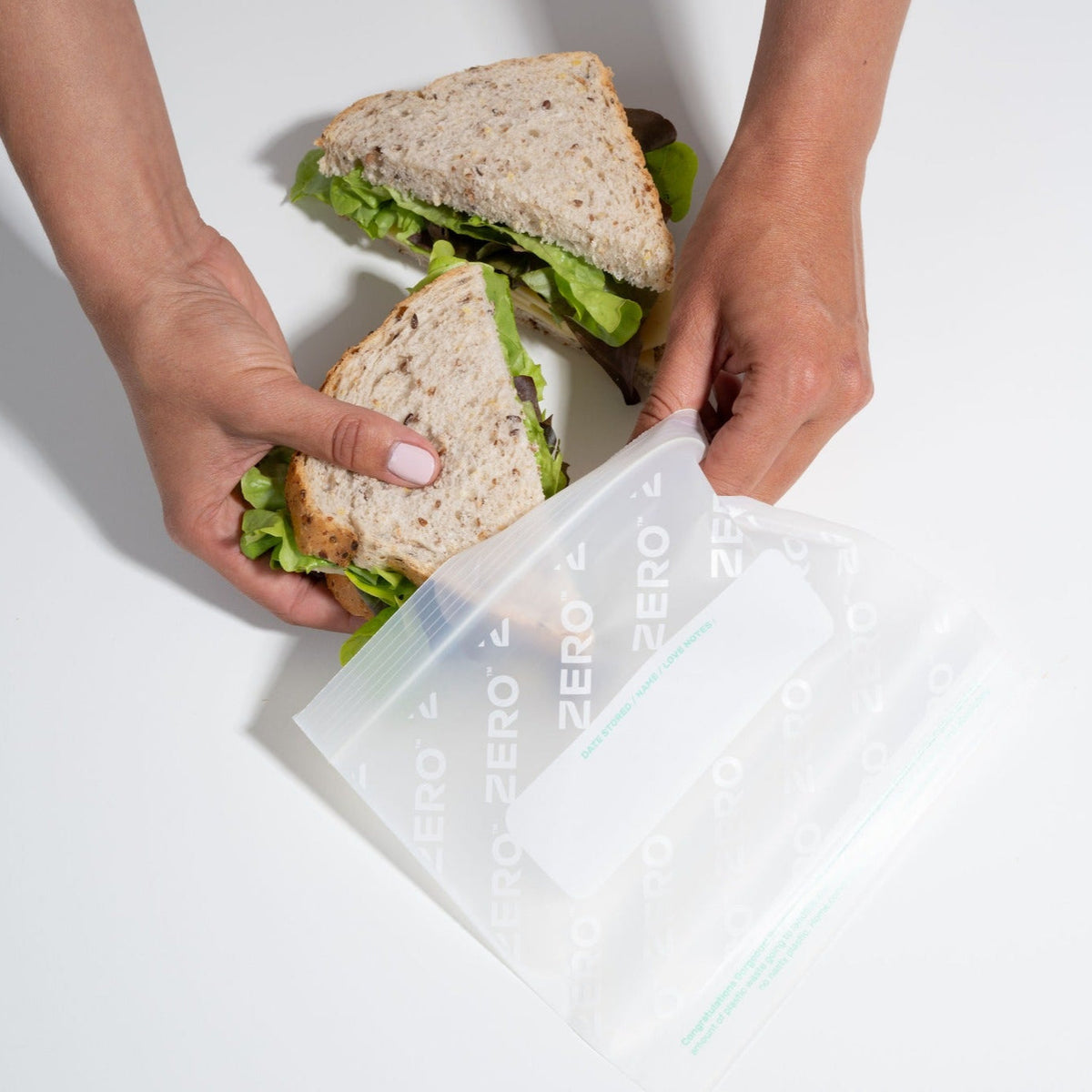
A compostable claim is likely genuine only when it carries a named third-party certification with a verifiable certificate ID, a clear disposal route (home or industrial), and evidence your local council or processor can actually handle the material. Without all three, treat the label with scepticism.

Use this quick checklist before you buy:

  • Certification present? Look for a named certifying body (not a logo the brand designed itself) and a certificate ID you can type into that body’s online registry.
  • Disposal route stated? “Home compostable” and “industrially compostable” are not the same thing. The label must say which.
  • Lab reports available? A credible manufacturer links to or provides third-party test reports, not just a marketing claim.
  • Materials disclosed? Bio-polymers such as PLA, PBAT, or PHA should be named. Vague references to “plant-based materials” are a red flag.
  • Local acceptance confirmed? Check your council’s organics or food-waste collection page to see whether compostable plastics are accepted.
  • Cert ID verified? Paste the certificate ID into the issuing body’s database (e.g. TÜV Austria’s OK Compost registry) and confirm it is current and in scope.

Products such as The Zero Store’s Plastic-Free Cling Wrap, Resealable Food Storage Bags, Reusable Cleaning Cloths, and Plastic Free Produce Bags (2 Pack) are examples of products where you can apply this checklist directly. In under five minutes: scan the packaging for a cert ID, search the cert body’s database, and check your council’s recycling guidance page.


Key takeaways

A compostable claim is only trustworthy when it carries a verifiable third-party certificate ID, names the disposal route (home or industrial), and is backed by a local processing option you can actually use.

Point Details
Check the cert ID Find the certificate number and verify it in the issuing body’s online registry before buying.
Home vs industrial matters “Compostable” without a route specified almost always means industrial only, which most kerbside collections do not accept.
Lab reports are the real proof A brand that cannot provide a third-party lab report has not substantiated its claim.
Local acceptance is the final test Even a certified product is wasted if your council or processor does not accept it.
The Zero Store Offers plastic-free household essentials with named bio-polymers, third-party certifications, and clear disposal guidance.

Table of Contents

What greenwashing really means for compostable claims

Greenwashing is when a company presents a product as more environmentally friendly than it actually is, through misleading language, selective disclosure, or unverifiable claims.

“Compostable” is one of the most misused terms in sustainable packaging because the gap between what the word implies and what it requires in practice is enormous. A shopper reading “compostable” on a bag reasonably assumes it will break down harmlessly. What the label often omits is that the product may only compost at temperatures above 55°C in a managed industrial facility, not in a home bin, and not in landfill.

Two common tactics illustrate the problem. First, a brand might print a leaf logo it designed in-house alongside the word “eco” with no reference to any standard or certifying body. Second, a company might truthfully state that its product meets a composting standard, while burying in the small print that no kerbside collection in the country accepts it. Both are forms of misleading communication, even when the underlying chemistry is real.

Regulators are paying attention. The UK’s Advertising Standards Authority (ASA), Competition and Markets Authority (CMA), and local trading standards offices all have jurisdiction over misleading environmental claims. The CMA’s Green Claims Code sets out what businesses must substantiate before making environmental claims. If you encounter a claim that fails the checklist above, those are the bodies to contact.


Compostable vs biodegradable: what the difference means in practice

“Biodegradable” means a material will break down through biological processes, but it sets no timeframe, no temperature requirement, and no end-product standard. A conventional plastic bag is technically biodegradable over centuries. The term is almost meaningless without qualification.

“Compostable” is a narrower, more demanding claim. A compostable material must break down within a defined timeframe, at a specified temperature, into water, CO₂, and biomass, leaving no toxic residue and no visible fragments above a set size. The catch is that those conditions vary significantly between home composting and industrial composting.

Parameter Home composting Industrial composting
Temperature Typically around 30°C 55–60°C or above
Timeframe 6–12 months (or longer) 12 weeks or less
Disintegration requirement No formal standard <10% fragments >2mm (EN 13432)
Microbial conditions Variable, uncontrolled Managed, consistent
Accepted by most UK kerbside? Rarely Depends on local authority

For Australian shoppers, the compostable vs biodegradable distinction is directly relevant to how you sort your waste. Most Australian councils that accept food-organics and garden-organics (FOGO) collections specify whether compostable packaging is permitted. Many do not accept compostable plastics even in FOGO bins, because contamination at the processing facility is a real operational problem.

WRAP (the UK’s Waste and Resources Action Programme) and the Environment Agency both note that the absence of consistent kerbside collection for compostable packaging means many certified compostable products end up in general waste or landfill regardless of their certification. The same infrastructure gap exists in Australia.

On standards: EN 13432 is the European standard for industrially compostable packaging. OK Compost INDUSTRIAL and OK Compost HOME (issued by TÜV Austria) are the most widely recognised certification marks in Europe and Australia. In Australia, the ABA (Australasian Bioplastics Association) Seedling logo certifies compliance with AS 4736 for commercial compostability, requiring independent laboratory testing including minimum 90% biodegradation and disintegration to fragments smaller than 2mm. These are concrete, verifiable criteria, not marketing language.


Compostable vs biodegradable: what the difference means in practice — overview diagram

The most common greenwashing tactics on compostable packaging

Knowing what to look for makes the difference between a five-second check and missing a misleading claim entirely. These are the tactics used most often:

  • Vague language with no standard attached. Terms like “eco,” “green,” “natural,” “earth-friendly,” or “planet-conscious” carry no legal definition and no verification requirement. Consumer Reports recommends preferring labels that reference a named standard or link to a published registry.
  • Nature imagery as a substitute for evidence. Leaves, bees, brown kraft paper, and earthy colour palettes are design choices, not certifications. The Rainforest Alliance notes that visual imagery implying sustainability without verifiable claims is one of the most common red flags. A product wrapped in green packaging with a hand-drawn seedling is not certified unless a named body says so.
  • Fake or industry-created seals. Some brands create their own logos that resemble third-party certification marks. A logo without an issuing body name, a certificate ID, or a website link is almost certainly self-awarded.
  • Selective disclosure. A product might truthfully state that its packaging is compostable while the product inside contains synthetic ingredients, or the compostable claim applies only to one component of a multi-part product. Forbes notes that a brand’s willingness to publish full supply-chain details is a stronger trust signal than any single logo.
  • Misleading disposal instructions. “Dispose of in compost” printed on packaging that only meets industrial composting standards is technically accurate but practically misleading for anyone without access to a managed facility.
  • Greenwashing by omission. A company might not lie outright but simply not tell you that the product requires industrial composting, that no local facility accepts it, or that the certification expired two years ago.

Statistic callout: The NRDC advises consumers to read beyond the labels and treat imagery and buzzwords as prompts to investigate further, not as evidence of sustainability. Independent verification is the consumer’s best defence.

For a deeper look at how these tactics play out across product categories, The Zero Store’s breakdown of the 7 sins of greenwashing is worth reading alongside this guide.


Which certifications actually matter, and how to verify them

The most reliable compostability certifications share three features: they reference a published technical standard, they are issued by an independent third-party body, and they carry a certificate ID you can check online.

Certifications worth trusting:

  • OK Compost INDUSTRIAL (TÜV Austria): certifies compliance with EN 13432 for industrial composting. Certificate IDs are searchable on the TÜV Austria database.
  • OK Compost HOME (TÜV Austria): a more demanding standard than industrial, because home composting conditions are less controlled. Fewer products qualify.
  • BPI Certified Compostable (Biodegradable Products Institute, North America): widely recognised in the US and sometimes seen on products sold in Australia.
  • ABA Seedling logo (Australasian Bioplastics Association): the Australian equivalent, certifying compliance with AS 4736 for commercial compostability. Requires independent lab testing including 90% biodegradation and disintegration to <2mm.
  • EN 13432: the European standard itself, not a logo, but the benchmark that OK Compost INDUSTRIAL and similar marks test against.
Standard Issuing body Key test criteria Composting route
EN 13432 CEN (European Committee for Standardisation) 90% biodegradation in 6 months, disintegration to <10% fragments >2mm Industrial
OK Compost HOME TÜV Austria Biodegradation at ambient temperature, longer timeframe Home
AS 4736 Standards Australia / ABA 90% biodegradation, disintegration to <2mm Commercial (industrial)

How to verify a certification in three steps:

  1. Find the certificate ID on the packaging (usually a small alphanumeric code near the logo).
  2. Go to the certifying body’s website (e.g. tuv-austria.com for OK Compost, bioplastics.org.au for ABA).
  3. Enter the certificate ID in the product or certificate search. Confirm the scope covers the specific product, and check the expiry date.

If a logo has no ID, no website link, and no named issuing body, it is almost certainly self-awarded. Walk away or contact the manufacturer directly and ask for the certificate number and issuing body before buying.

Pro Tip: When a product claims “certified compostable” without specifying home or industrial, assume industrial. Home compostable certification is harder to achieve and manufacturers who have it almost always say so explicitly.


A step-by-step verification workflow you can use before buying

This process takes under five minutes online, or about 60 seconds in-store if you have a smartphone.

In-store:

  1. Read the packaging copy carefully. Look for the exact words “home compostable” or “industrially compostable.” “Compostable” alone is insufficient.
  2. Locate a certification logo. Check whether it names an issuing body (TÜV Austria, ABA, BPI) and carries an alphanumeric certificate ID.
  3. If you have a phone, photograph the cert ID and search “[cert body name] certificate search” to pull up the registry.
  4. Check the disposal instructions. They should specify whether the product goes in a home compost bin, a council food-organics bin, or a commercial composting facility.

Online:

  1. Go to the product page and look for a “certifications” or “sustainability” section. A credible brand links to the actual certificate document or the cert body’s registry entry, not just an image of a logo.
  2. Search the cert body’s database directly. For TÜV Austria OK Compost: visit tuv-austria.com and use the product search. For ABA: visit bioplastics.org.au.
  3. Search for lab reports. Try: site:[brandwebsite.com] lab report or site:[brandwebsite.com] test report. If nothing appears, email the brand and ask.
  4. Check your local council’s website. Search “[your council name] compostable packaging” or “[your council name] FOGO accepted materials.” WRAP’s guidance and the Environment Agency’s published advice are useful reference points for UK-based readers.

Red flags during the process:

  • Certificate expired or not found in the registry.
  • Scope of certification covers only the packaging film, not the full product including seals or closures.
  • No lab reports available and the brand does not respond to requests.
  • Disposal instructions say “compost” without specifying home or industrial.

For guidance specific to compostable sandwich bags and similar food-storage products, The Zero Store’s buyer guides walk through these checks for individual product categories.


Why UK waste infrastructure limits compostable claims

A product can be genuinely certified compostable and still end up in landfill. That is not a hypothetical: it is the default outcome for most compostable packaging in the UK today.

The core problem is that industrial composting requires a managed facility operating at sustained high temperatures, and access to those facilities through kerbside collection is patchy. Most UK local authorities do not accept compostable plastics in food-waste or garden-waste bins, because the sorting and processing infrastructure was not designed for them. Compostable packaging that enters the general waste stream goes to landfill or energy-from-waste, where it provides no composting benefit.

WRAP’s guidance on compostable packaging acknowledges this directly: the environmental benefit of a compostable product depends entirely on whether the end-of-life route is available to the consumer. The Environment Agency has similarly noted that “compostable” claims can mislead when local collection does not exist for those materials.

Practical dos and don’ts:

  • Do check your council’s accepted materials list before buying compostable packaging.
  • Do home compost certified home-compostable items if you have an active hot compost system.
  • Don’t put industrially compostable packaging in your home compost bin. It will not break down properly.
  • Don’t put compostable packaging in the recycling bin. It contaminates the plastics stream.
  • Do prefer products with a clear, verifiable industrial-composting route if home composting is not an option for you.

The same infrastructure gap applies in Australia. FOGO collections vary by council, and many explicitly exclude compostable packaging. Check before you assume.


What the evidence says about home-compostable plastics

Academic research and NGO investigations consistently find a gap between the claims on packaging and real-world performance. A study published in Frontiers in Sustainability found that many items labelled “home compostable” fail to disintegrate under real-world conditions, particularly at the lower temperatures typical of domestic compost heaps. The practical implication is that “home compostable” on a label does not guarantee breakdown in your bin.

Home compost heap with breaking down scraps

NGO brand audits reinforce the pattern. Break Free From Plastic’s 2023 global brand audit documented frequent mismatches between marketing claims and actual material flows across supply chains, showing the problem is systemic rather than isolated to individual bad actors.

On the enforcement side, regulators are beginning to act. Italy’s competition authority fined Shein €1 million for misleading environmental claims, a case that signals increasing willingness across Europe to treat greenwashing as a consumer protection issue rather than a reputational one. For shoppers, the implication is clear: if a brand cannot produce a certificate ID and a verifiable lab report, the claim is not substantiated.

Key finding: Research and NGO investigations show that real-world composting outcomes for labelled “home compostable” plastics frequently fall short of what the label implies, particularly outside managed industrial facilities.

Organisations like Changing Markets publish ongoing investigative reports on packaging claims and polymer performance. Their work is worth consulting if you want to understand industry-wide patterns rather than individual product failures.


A simple home test and why it is only a starting point

If you want to test a product yourself, a basic home compost trial can give you indicative information. It will not replace third-party certification, but it can reveal obvious failures.

  1. Cut a small sample (roughly 5cm × 5cm) from the product.
  2. Label it with the product name, date, and the claim on the packaging.
  3. Bury it in an active hot compost heap at a depth of 10–15cm, where microbial activity is highest.
  4. Check at 6 weeks and 12 weeks. Note whether it has visibly fragmented, partially broken down, or remained intact.
  5. At 12 weeks, sieve the area around the sample and look for visible fragments.

Safety notes: Do not test products that contain synthetic dyes, adhesives, or unknown additives in a compost heap you use on food crops. Handle any partially degraded material with gloves.

Why this is not definitive: Your home compost heap almost certainly does not reach the sustained temperatures (55°C+) required by industrial composting standards, and microbial populations vary. A product that fails your home test may still meet industrial composting criteria. A product that passes your home test may have done so because of conditions specific to your heap, not because it meets any published standard.

Pro Tip: If a product claims “home compostable” and shows no visible breakdown after 12 weeks in an active heap, photograph the result and contact both the manufacturer and the certifying body. That is exactly the kind of evidence that supports a formal complaint.


What to do if you suspect greenwashing

Suspecting greenwashing is not enough on its own. Here is how to act on it.

Step-by-step:

  1. Save the evidence. Keep the packaging, photograph the claims, and note the date of purchase and retailer.
  2. Contact the manufacturer. Ask directly for the certificate number, the issuing body, and a link to the lab report. A legitimate brand will provide this within a few days.
  3. Check the certification database. If the cert ID does not appear in the issuing body’s registry, or the scope does not cover the product you bought, that is a substantiated discrepancy.
  4. Escalate to the ASA. The Advertising Standards Authority handles misleading marketing claims in the UK. File a complaint at asa.org.uk with your evidence.
  5. Contact the CMA. The Competition and Markets Authority’s Green Claims Code covers environmental claims broadly. Report at gov.uk/cma.
  6. Contact local trading standards. For products sold in physical retail, your local trading standards office can investigate under consumer protection law.

Social and market actions:

  • Leave a factual, evidence-based review on the retailer’s product page, noting the specific claim and what you found when you checked.
  • Contact the supermarket or retailer’s procurement team. Large retailers respond to supplier pressure when consumers flag specific, documented issues.
  • Choose verified alternatives. Products with a named cert body, a current certificate ID, and clear disposal instructions are available. The Zero Store’s approach to greenwashing and its product range are built around exactly this kind of transparency.

UK reporting contacts:

  • Advertising Standards Authority (ASA): handles misleading advertising claims, including environmental ones. asa.org.uk
  • Competition and Markets Authority (CMA): enforces the Green Claims Code and investigates systemic misleading practices. gov.uk/cma
  • Local trading standards: handles consumer protection complaints about products sold in your area. Find yours via gov.uk/find-local-trading-standards-office

For legal context on how complaint documentation works, the Truth in Advertising complaint archive provides a useful example of what a well-evidenced filing looks like.


Research-backed tips for verifying claims without being misled

The strongest verification cues, drawn from research and expert commentary, come down to three things: a verifiable certificate ID from a named independent body, an independent lab report (not a brand-authored summary), and transparency about the supply chain and processing route.

Consumer Reports emphasises that many ecolabels vary significantly in rigour. The ones worth trusting share a common structure: an explicit standard (EN 13432, AS 4736), a certificate ID, and an issuing body whose database you can search.

Two-minute verification workflow:

  1. Find the cert logo and ID on the packaging or product page (30 seconds).
  2. Open the cert body’s website and search the ID (60 seconds).
  3. Check your council’s accepted materials list for compostable packaging (30 seconds).

That is it. If any step fails, the claim is unverified.

Spotting lookalike seals: Genuine certification marks from TÜV Austria, ABA, or BPI all carry a certificate number in small print near the logo. They also include the name of the certifying body in text, not just a graphic. A seal that uses similar colours and leaf imagery but has no text, no ID, and no website link is almost certainly self-awarded. Compare the logo against the official version on the cert body’s website. Even a small difference in wording or layout is worth investigating.

For a methodical approach to comparing sustainability claims across brands, the guide on comparing sustainable brands from CITI-ZEN-THEORY offers a useful framework that transfers well beyond fashion.


The Zero Store’s commitment to transparency

At The Zero Store, we believe a compostable claim is only worth making if you can back it up with a certificate ID, a named issuing body, and clear disposal instructions tied to real processing infrastructure. Our products, including the Plastic-Free Cling Wrap, Resealable Food Storage Bags, Reusable Cleaning Cloths, and Plastic Free Produce Bags, are made from named bio-polymers (PLA, PBAT, PHA) and carry third-party certifications we are happy to share on request. We publish our certifications and material disclosures because we think that is the minimum standard, not a marketing advantage.

Ask any retailer for the same. If they cannot provide a certificate number and an issuing body, that is your answer.


The Zero Store: verified plastic-free products with nothing to hide

Cutting through misleading compostable claims is exactly why The Zero Store publishes its certifications, material disclosures, and disposal guidance openly. Every product in the range, from the Plastic-Free Cling Wrap to the Resealable Food Storage Bags, is made from named bio-polymers and backed by third-party certification you can check yourself. No self-awarded logos, no vague “eco” language, no disposal instructions that assume a processing facility you do not have access to.

Plastic Free Produce Bags (2 Pack)

If you have spent time working through the verification steps in this guide and want products that pass them without the effort, The Zero Store’s full range is the place to start. Browse the Plastic Free Produce Bags and Reusable Cleaning Cloths alongside the cling wrap and storage bags, all with the same commitment to transparency. Visit Thezerostore to see the full range and check the certifications for yourself.

Sources


Latest Stories

This section doesn’t currently include any content. Add content to this section using the sidebar.