Most single-use plastic items — straws, stirrers, cutlery, plates, unenclosed bowls, expanded polystyrene (EPS) food containers, plastic-stemmed cotton buds, lightweight shopping bags and microbeads — are now banned across many Australian states and territories, with coffee cups, lids and selected produce bags following in several jurisdictions. The bans differ by state and territory, and most regulations capture items made in whole or in part from plastic, which means bioplastic blends and compostable plastics are often included unless the product carries an explicit certification exemption.
What’s banned in most jurisdictions right now:
- Single-use plastic straws, stirrers and cutlery
- Single-use plastic plates, bowls and food containers (including EPS)
- Plastic-stemmed cotton buds
- Lightweight plastic shopping bags (below thickness thresholds that vary by state)
- Plastic microbeads in personal care products
- EPS loose-fill packaging (“packing peanuts”)
- Selected coffee cups, lids and produce bags (jurisdiction-dependent)
If you supply or sell any of these items, your immediate next step is to check your state or territory regulator’s webpage and begin an inventory audit. The rules are not uniform, and products that are exempt in one jurisdiction may be prohibited in another.
Key takeaways
Australia’s single-use plastic bans now cover the majority of common disposable plastic items across all states and territories, with the definition broad enough to capture bioplastic and compostable materials unless explicitly certified and exempted.
| Point | Details |
|---|---|
| Bans are jurisdiction-specific | Each state and territory sets its own banned item list, enforcement dates and exemptions — always check the official regulator page for your jurisdiction. |
| ‘In whole or in part’ is the key phrase | Items with any plastic component, including plastic-lined paper cups and uncertified compostable plastics, are typically caught by the ban. |
| No grandfathering for supply | Businesses cannot supply banned items to customers even if the stock was purchased before the ban commenced. |
| Demand certificates, not labels | Ask suppliers for AS 4736 or AS 5810 certificate numbers from an accredited body; a “compostable” label alone is not proof of compliance. |
| The Zero Store for compliant alternatives | The Zero Store stocks certified plastic-free cling film, resealable bags, produce bags and cleaning cloths with downloadable certification documents on each product page. |
Table of Contents
- How the single-use plastic ban applies across Australia: state by state
- What regulators actually mean by ‘single-use plastic’
- Exemptions and special cases you need to know
- Practical compliance checklist for businesses and suppliers
- Acceptable alternatives, Australian Standards and greenwashing traps
- How regulators enforce the bans and what penalties look like
- How to check whether a specific product is banned in your jurisdiction
- Where to buy compliant alternatives and what to look for
- The bans matter, but the transition needs to be honest about its limits
- Sources
How the single-use plastic ban applies across Australia: state by state
Every jurisdiction has moved at its own pace. The table below gives a snapshot of where each state and territory stands, the key enforcement dates and where to go for the authoritative source. Always verify current dates directly with the regulator, as staged rollouts mean some items have later commencement dates than others.
| Jurisdiction | Key banned items (current) | Notable enforcement dates | Official source |
|---|---|---|---|
| NSW | Straws, stirrers, cutlery, plates, bowls, EPS containers, cotton buds, lightweight bags, microbeads; some coffee cups/lids in staged rollout | Staged rollout; further items added through 2025 | NSW EPA Bans guidance |
| VIC | Straws, drink stirrers, plastic-stemmed cotton buds, cutlery, plates, EPS containers, lightweight bags | Staged rollout; further items added through 2025 | EPA Victoria |
| QLD | Straws, stirrers, cutlery, plates, unenclosed bowls, EPS takeaway containers and cups, cotton buds, EPS loose-fill, microbeads | Staged rollout; further items added through 2025 | Business Queensland |
| SA | Straws, stirrers, cutlery, plates, EPS containers, cotton buds, lightweight bags, microbeads; phased additions over time | Initial prohibitions enacted; further items phased through 2025 | Replace the Waste SA |
| WA | Stage 1 items (bags, straws, stirrers, cutlery, plates, EPS containers, cotton buds, microbeads); Stage 2 additions (coffee cups, lids, produce bags) | Stage 1 and Stage 2 bans enacted with subsequent enforcement through 2025 | WA Plan for Plastics FAQ |
| TAS | Staged approach following public consultation; lightweight bags, straws, stirrers, EPS containers among items targeted | Phased commencement; check NRE Tasmania for current dates | NRE Tasmania consultation |
| ACT | Straws, stirrers, cutlery, plates, EPS containers, cotton buds, lightweight bags; no supply of banned items even if purchased before ban | Staged rollout; further items added through 2025 | ACT City Services |
| NT | Phased approach; lightweight bags and selected items prohibited; further consultation on additional items | Check NT EPA for current commencement dates | NT EPA |
A few items worth watching closely. Coffee cups and lids are among the most variable: WA’s Stage 2 ban covers them, but the timing and scope differ from NSW’s staged approach. Moulded EPS containers are broadly banned, yet some jurisdictions have allowed run-down periods for pre-ordered stock. Produce and barrier bags (the thin bags on a roll in the fresh produce aisle) are caught in several jurisdictions but with different timing and thickness thresholds. If your business operates across multiple states, the National Retail Association’s April 2025 SUPs summary is a useful cross-check, though the official regulator page for each jurisdiction always takes precedence.
What regulators actually mean by ‘single-use plastic’
The phrase sounds straightforward. In practice, the definitional edges catch businesses off guard more often than the obvious items do.
‘Single-use’ means the item is designed or intended to be used once or for a short period before being discarded. It does not matter whether a customer could reuse it; what matters is the design intent. A flimsy plastic fork is single-use even if someone washes it twice.
‘Supply’ is broader than ‘sell’. Giving an item away free, providing it as part of a service, or including it in a meal kit all count as supply. The ban applies at the point of supply to the end customer, not just at the point of sale.
‘In whole or in part’ is the clause that trips up the most businesses. A paper cup with a plastic lining is partly plastic. A paperboard container with a thin plastic coating is partly plastic. NSW EPA guidance explicitly notes that bans include compostable and biodegradable plastics unless they are specifically exempted, so a straw labelled “compostable” is still caught unless the relevant jurisdiction has carved out a certified exemption for it.
Common edge cases to know:
- Pre-attached straws on juice boxes: Most jurisdictions exempt straws that are machine-attached or integrated into pre-packaged food or drink at the point of manufacture. A straw taped to a juice box by hand at the counter is a different matter.
- Plastic-lined paper cups: Caught in jurisdictions where coffee cups and lids are banned, because the cup is partly plastic. Fibre-based cups with no plastic lining are typically acceptable.
- Certified compostable film vs uncertified ‘biodegradable’ claims: A product certified to AS 4736 (industrial composting) or AS 5810 (home composting) may qualify for an exemption where the jurisdiction explicitly allows certified compostable alternatives. A product that merely says “biodegradable” on the label does not.
- Thickness thresholds for shopping bags: Several jurisdictions set a threshold (commonly 35 or 36 microns) below which a bag is classified as lightweight and therefore banned. Bags above the threshold, or those meeting recycled-content or reusability criteria, may be permitted.
The safest working rule: if an item contains any plastic component and is designed for single use, assume it is caught unless you have confirmed otherwise with the relevant regulator.
Exemptions and special cases you need to know
Exemptions exist, but they are narrower than many businesses assume. The most common ones across jurisdictions are:
Medical and disability needs. Straws are the clearest example. A person with a disability or medical condition that requires a straw to drink safely can be provided one on request. The key word is request: most regulators require that banned items not be displayed or offered proactively. Staff should keep exempt items out of sight and supply them only when a customer asks.
Scientific, forensic and medical use. Cotton buds with plastic stems are banned for general consumer use in most jurisdictions, but their use in medical, scientific and forensic contexts is typically exempt. The exemption applies to the specific professional use, not to general retail supply.
Machine-attached and integrated items. Straws sealed to juice cartons by machine at the factory, or plastic components that form an integral part of pre-packaged food, are generally exempt. This exemption does not extend to items attached manually after packaging.
Business-to-business supply chains. Some jurisdictions allow limited B2B supply of items that would otherwise be banned, particularly where the item is used in a manufacturing or processing context rather than supplied to an end consumer. Check the specific jurisdiction’s guidance before relying on this.
Run-down stock. This is where businesses most often make mistakes. ACT City Services guidance is explicit: businesses cannot supply banned items to customers even if those items were purchased before the ban commenced. Some jurisdictions have published specific run-down or transition windows, but once that window closes, existing stock cannot be supplied regardless of when it was bought.
Pro Tip: For straws and other items with a medical exemption, brief front-line staff to keep them behind the counter and supply only on request. Post a short internal note near the storage point so the process is consistent across shifts. This satisfies both the display rules and the accessibility obligation without putting staff in an awkward position.
Practical compliance checklist for businesses and suppliers
Getting compliant is not complicated, but it does require working through your supply chain methodically before enforcement dates arrive.
-
Audit your current inventory. List every single-use item your business supplies to customers — including items given away free, included in meal kits or used in service delivery. Note the material composition of each.
-
Map each item to your jurisdictions. If you operate in multiple states, check each jurisdiction’s banned item list separately. The National Retail Association’s SUPs summary is a useful starting point, but always verify against the official regulator page.
-
Check supplier certificates, not just labels. Ask suppliers for material specifications and, where relevant, AS 4736 or AS 5810 certificates. A product labelled “eco-friendly” or “plant-based” is not automatically compliant. Request a written declaration confirming whether the product contains oxo-degradable additives or plastic liners.
-
Identify items caught by each jurisdiction and plan removal. For items with a transition window, plan to exhaust stock before the window closes. Do not assume you can continue supplying after the deadline because stock was pre-purchased.
-
Update procurement specifications. Revise your standard order templates to exclude banned items and specify compliant alternatives. Include a requirement for supplier certification documentation as a condition of supply.
-
Train staff. Front-line staff need to know which items are no longer available, how to handle exemption requests (medical/disability), and who to escalate to if a customer disputes the policy.
-
Keep records. Retain supplier declarations, certificates and correspondence confirming compliance. If a regulator queries your supply chain, written records are your first line of defence.
Where to get official guidance. Each state and territory regulator operates a compliance helpline or email contact for business queries. Queensland’s Business Queensland page includes a dedicated business helpline. NSW EPA, EPA Victoria and SA’s Replace the Waste site all publish industry guidance documents. Contact details are listed on each regulator’s single-use plastics page.
Pro Tip: When asking a supplier to evidence compliance, request the specific AS 4736 or AS 5810 certificate number and the certifying body’s name, not just a claim that the product “meets Australian Standards.” A certificate number can be verified; a marketing claim cannot. Suppliers who cannot provide a certificate number are not certified.
Acceptable alternatives, Australian Standards and greenwashing traps
The ban creates a genuine procurement challenge: finding alternatives that are compliant, practical and not just a different form of greenwashing.
Reusable options are the clearest path. A reusable stainless steel straw, a durable cutlery set, or a fabric produce bag sidesteps the ban entirely and reduces waste over its lifetime. For businesses, reusable options require a system for return, washing and redistribution, which adds operational complexity but eliminates ongoing procurement risk.
Certified industrially compostable products (AS 4736) are accepted as alternatives in some jurisdictions where the regulation explicitly permits them. AS 4736 covers industrial composting conditions; a product certified to this standard will break down in a commercial composting facility within a defined timeframe. The certification must come from an accredited body, not from the manufacturer’s own testing.
Certified home-compostable products (AS 5810) go further: they are designed to break down in a home compost bin. AS 5810 is a higher bar than AS 5810 because home composting operates at lower temperatures. Not all jurisdictions accept AS 5810 certification as an exemption, so check the specific state guidance before specifying these products.
Fibre-based substitutes (paper straws, cardboard cutlery, uncoated paperboard containers) are broadly accepted where they contain no plastic lining or coating. The practical limitation is performance: paper straws in cold drinks can degrade quickly, and uncoated paperboard containers are not suitable for wet or oily food without a lining.
The greenwashing trap most businesses fall into is accepting “biodegradable” or “compostable” claims on packaging without asking for the certificate. In several jurisdictions, the definition of plastic expressly captures compostable and bioplastic materials unless they are specifically certified and listed as exempt. Product labelling is not proof of compliance.
| Item category | Typical acceptable alternative | Australian Standard usually required? |
|---|---|---|
| Straws | Paper (unlined), stainless steel, bamboo, certified compostable (AS 4736 where accepted) | AS 4736 if claiming compostable exemption |
| Cutlery | Wood, bamboo, stainless steel, certified compostable (AS 4736 where accepted) | AS 4736 if claiming compostable exemption |
| Food containers | Uncoated paperboard, aluminium, certified compostable (AS 4736 where accepted) | AS 4736 if claiming compostable exemption |
| Shopping bags | Reusable fabric, woven polypropylene above thickness threshold, recycled-content bags meeting reusability criteria | Check jurisdiction threshold and recycled-content rules |
| Produce bags | Reusable mesh or fabric bags, certified compostable bags (AS 4736 where accepted) | AS 4736 if claiming compostable exemption |
| Cling film | Certified compostable or bio-polymer cling film (PLA/PBAT), beeswax wraps, silicone covers | AS 4736 or AS 5810 where compostable claim is made |
How regulators enforce the bans and what penalties look like
Enforcement across Australian jurisdictions has generally followed an education-first model during the initial rollout period. Regulators publish guidance, run business briefings and issue warnings before moving to financial penalties. Western Australia’s staged approach is a clear example: WA’s Plan for Plastics set staggered enforcement dates with transition windows, giving businesses time to work through stock and find alternatives before penalties applied.
That transitional tolerance is narrowing. Most jurisdictions are now past their initial education phases, and penalties are actively applied. Penalty ranges vary by jurisdiction and by the nature of the offence (individual versus corporation, single offence versus continuing breach). Regulators publish maximum penalty amounts on their official pages; the figures change as legislation is updated, so always check the current penalty schedule directly rather than relying on a secondary source.

What enforcement looks like in practice. Compliance checks typically begin with a complaint or a routine inspection. Inspectors from the relevant state or territory environment agency (EPA or equivalent) have powers to enter business premises, examine stock and request documentation. Local councils play a supporting role in some jurisdictions, particularly for food businesses, but primary enforcement authority sits with the state or territory regulator.
Reporting non-compliance. If you observe a business supplying banned items, most regulators provide an online reporting form or a phone line. In Queensland, the Environment Department handles complaints. NSW EPA, EPA Victoria and SA’s EPA all have online reporting mechanisms. Complaints from the public have been a meaningful source of enforcement referrals in the early stages of each ban.
Penalty note: Maximum fines for corporations supplying banned items run into tens of thousands of dollars in several jurisdictions. Check the exact current figure on your state or territory regulator’s page — the number is updated as legislation changes and secondary sources frequently lag behind.
How to check whether a specific product is banned in your jurisdiction
When you have a specific SKU or product sample and need a quick answer, work through these steps.
-
Identify your jurisdiction(s). If you supply across multiple states, you need to check each one separately. Start with the state where you have the highest volume or the earliest enforcement date.
-
Go to the official regulator page. Use the links in the state-by-state table above. Do not rely on a retailer’s website, a supplier’s claim or a news article — go directly to the EPA or equivalent agency.
-
Check the banned item list and exemptions. Most regulators publish a plain-language list of banned items alongside a list of exemptions. Read both before drawing a conclusion.
-
Search for your product description. Look for the material composition (not just the product name), the intended use and whether the item is designed for single use. If the product contains any plastic component, check whether it falls within the ‘in whole or in part’ scope.
-
Check integrated and attached item rules. If the item is pre-attached to packaging by machine, look for the integrated/attached item exemption in your jurisdiction’s guidance. NSW EPA’s bans guidance includes specific notes on integrated packaging.
-
Ask your supplier for certification or contact the state helpline. If the product is claimed to be compostable or biodegradable, ask for the AS 4736 or AS 5810 certificate number. If you are still unsure after checking the official page, call or email the regulator’s business helpline. Keep a written record of the response.
What to request from suppliers: material specification sheet, AS 4736 or AS 5810 certificate (where applicable), a declaration confirming the absence of oxo-degradable additives and a statement on whether the product contains any plastic lining or coating.
Where to buy compliant alternatives and what to look for
Sourcing compliant alternatives is straightforward once you know what to check on a product page. The attributes that matter are material composition (named bio-polymers such as PLA, PBAT or PHA rather than generic “plant-based”), a downloadable certification document (AS 4736 or AS 5810 certificate number from an accredited body) and a clear statement of reuse count or recycled-content percentage where relevant.
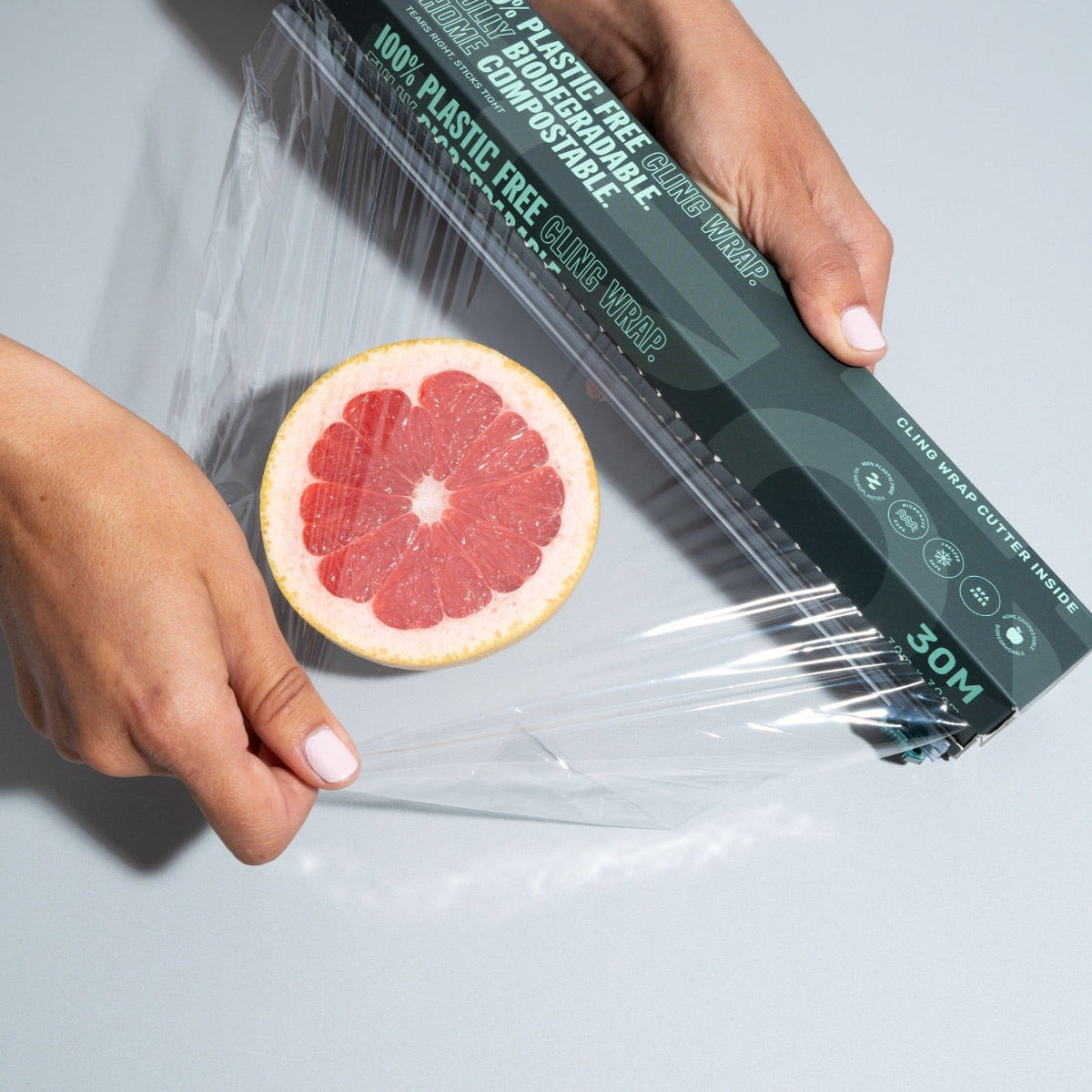
Plastic-free cling film is one of the more searched-for alternatives since conventional cling film is partly plastic. Look for cling film made from certified bio-polymers with a compostability certificate rather than a product that simply claims to be “natural.” The Zero Store’s plastic-free cling wrap lists its material composition and certification details on the product page, which is the kind of transparency that speeds up a compliance check.
Resealable food storage bags made from bio-polymers (PLA/PBAT blends) replace single-use zip-lock bags. The key check is whether the bag is genuinely resealable and designed for multiple uses, or whether it is a single-use compostable bag in disguise. The Zero Store’s resealable food storage bags are designed for repeated use, which sidesteps the single-use classification entirely.
Plastic-free produce bags replace the thin single-use bags on a roll in the fresh produce section. Reusable mesh or fabric options are the cleanest solution; certified compostable options are acceptable in jurisdictions that permit them. The Zero Store stocks plastic-free produce bags in a two-pack format suitable for household and small business use.
Reusable cleaning cloths replace disposable wipes and single-use cleaning products. For businesses replacing disposable cloths in hospitality or food service, the relevant check is durability and wash-cycle rating rather than compostability. The Zero Store’s reusable cleaning cloths are a practical swap for single-use alternatives.
When reviewing any product page, look for downloadable certification documents rather than badge graphics. A badge that says “certified compostable” without a certificate number is a marketing claim, not evidence of compliance. For a deeper look at how to distinguish genuine compostability from marketing language, The Zero Store’s guide on compostable vs biodegradable is worth reading before you place a procurement order.
The bans matter, but the transition needs to be honest about its limits
The single-use plastic bans are one of the more consequential pieces of environmental regulation Australia has introduced in recent years. The intent is sound: reduce the volume of plastic that ends up in landfill, waterways and the ocean by eliminating the items most likely to escape the waste stream. For that goal, the bans are a blunt but effective instrument.
What concerns me is the gap between the policy’s ambition and the support available to businesses navigating the transition. Small hospitality operators, in particular, face a genuine cost burden when switching from cheap single-use plastics to certified compostable or reusable alternatives. The price differential is real, and for a café operating on thin margins, it is not trivial. Policymakers have generally adopted an education-first enforcement approach, which is sensible, but education alone does not offset the cost of switching.
The more productive framing for businesses is outcomes-based: the goal is to reduce waste, not to tick a compliance box. That means prioritising reuse over certified compostable alternatives where operationally feasible, because a reusable item that does its job for two years produces less waste than a certified compostable item that ends up in general waste because the customer has no access to industrial composting. The certification matters for procurement decisions; the actual end-of-life pathway matters for environmental outcomes.
For policymakers, the next logical step is targeted transition support: grants or rebates for small businesses replacing high-volume single-use items, and clearer guidance on which certified alternatives are genuinely accessible in each jurisdiction’s waste infrastructure. Several states have moved in this direction, but the coverage is patchy. The bans are the right policy. The support framework around them still needs work.
Compliant plastic-free alternatives, available now from The Zero Store
Switching away from single-use plastics does not have to mean a procurement headache. The Zero Store is an Australian-owned platform built specifically for this transition, stocking plastic-free cling film, resealable food storage bags, plastic-free produce bags and reusable cleaning cloths, all made from certified bio-polymers (PLA, PBAT, PHA) with material specifications and certification documents available on each product page.
For businesses, the commercial and hospitality range covers bulk quantities with the documentation you need for a supplier compliance file. For households, the product pages include certification details so you can confirm compliance with your state’s rules before you buy. Browse the full range at The Zero Store and check the certification tab on any product page before placing your order.
Sources
For the authoritative, up-to-date position in your jurisdiction, go directly to the regulator:
Penalty amounts and formal exemption processes change as legislation is updated. For the exact current penalty schedule and any new exemption categories, always use the regulator’s own page rather than a secondary summary. If a product’s compliance status is genuinely unclear, the business helplines operated by each state EPA are the fastest route to a definitive answer.


Share:
Glad Wrap alternatives for eco-conscious Aussie kitchens
How to freeze meat without plastic at home