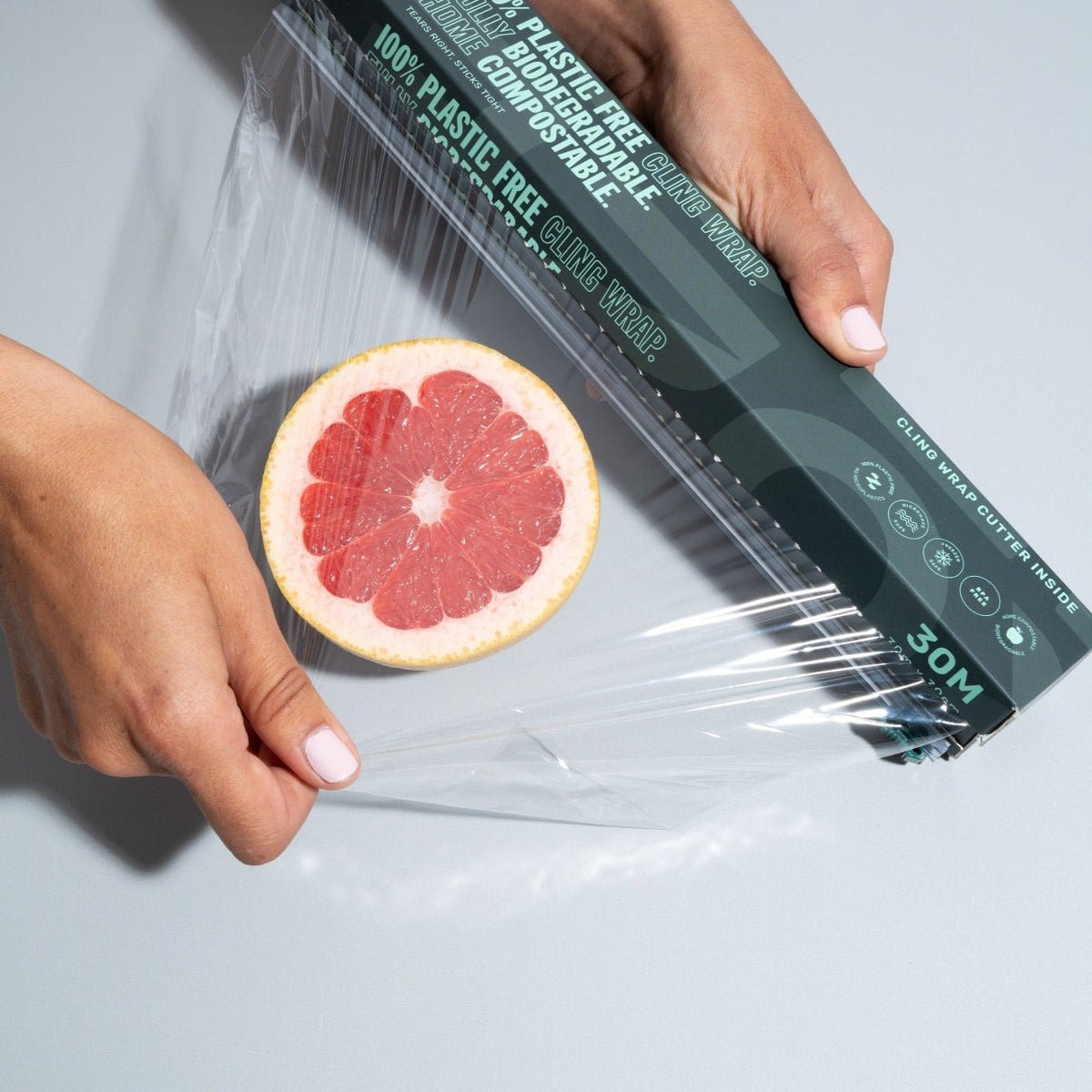
The best Glad Wrap alternatives are beeswax or vegan wax wraps, silicone stretch lids and reusable bags, glass and stainless steel containers, and cloth or furoshiki covers. For single-use situations where a film is genuinely needed, compostable plant-based cling film made from PLA or PBAT is a far better choice than conventional plastic, though it comes with composting caveats worth knowing. As CHOICE testing confirms, Australian consumers have access to a solid range of options across all these categories.
Quick picks for common kitchen tasks:
- Sandwiches and lunchboxes: beeswax or vegan wax wrap, or a reusable zip bag
- Bread: linen cloth or a breathable wax wrap (never airtight plastic)
- Leftovers in a bowl: silicone stretch lid or a plate placed on top
- Freezer meals: glass container with a locking lid, or a silicone bag
- Microwave reheating: glass container with a vented lid (never wax wrap or most silicone bags)
Key takeaways
Reusable options cover most cling film use cases at lower long-term cost; compostable film fills the gaps where a film format is genuinely needed.
| Point | Details |
|---|---|
| Reusables first | Beeswax wraps, silicone lids, glass containers and cloth covers handle the majority of everyday food storage tasks. |
| Match tool to task | Silicone for liquid-tight needs, glass for reheating, wax wraps for sandwiches and cheese, linen for bread. |
| Check compostability labels | Look for AS5810 (home compostable) rather than EN13432 (industrial only); without certification, claims are unverified. |
| Avoid fossil-plastic “eco” films | CHOICE testing found some products contain roughly 45–50% conventional plastic despite eco marketing. |
| The Zero Store option | The Zero Store’s plastic-free cling wrap (PLA/PBAT, zero microplastics) is a certified local choice for single-use film situations. |
Table of Contents
- Which Glad Wrap alternative works best for each kitchen job?
- How do beeswax and vegan wax wraps actually work?
- When should you choose silicone stretch lids or silicone bags?
- Why glass and stainless steel containers outlast everything else
- Reusable zip bags and cloth wraps for sandwiches and produce
- Compostable cling film: useful, but read the label carefully
- How to choose the right replacement for your kitchen
- Care, cleaning and getting the most from reusable wraps
- Microwave, freezer and health notes for Australian households
- Where to buy these alternatives in Australia
- How compostable bio-polymers actually work in Australia
- Why reusables should come first
- The Zero Store’s plastic-free cling wrap: when you need a film
- Sources
Which Glad Wrap alternative works best for each kitchen job?
There is no single perfect substitute for cling film. The right choice depends entirely on the food, the storage duration, and whether you need heat tolerance. A silicone lid is brilliant for a bowl of leftover soup; it would be overkill for wrapping half an avocado. That said, most households can cover the majority of their cling film use with just two or three reusable options.
| Alternative | Best for | Reusable / lifespan | Microwave safe | Freezer safe | Airtight / liquid-tight |
|---|---|---|---|---|---|
| Beeswax / vegan wax wrap | Sandwiches, cheese, half fruit, bowl covers | Yes / 1–2 years | No | No | Breathable seal only |
| Silicone stretch lids | Bowls, tubs, irregular containers | Yes / 5+ years | Check label | Yes | Good airtight seal |
| Reusable silicone bags | Liquids, soups, marinating, freezer | Yes / 3–5 years | Check label | Yes | Liquid-tight with zip |
| Glass containers | Leftovers, acidic foods, reheating | Yes / indefinite | Yes (tempered) | Yes (leave headspace) | Excellent with locking lid |
| Stainless steel containers | Portable lunches, dry goods, freezer | Yes / indefinite | No | Yes | Good with clip lid |
| Cloth / furoshiki wraps | Bread, produce, dry snacks | Yes / 1–3 years | No | No | Breathable, not liquid-tight |
| Compostable cling film (PLA/PBAT) | Single-use situations, irregular shapes | No / single use | Check label | Yes | Similar to conventional film |

One label distinction matters before you buy anything: “home compostable” means the product breaks down in a backyard compost bin, while “industrially compostable” requires the high temperatures of a commercial composting facility. Many products labelled simply “compostable” need the industrial route. More on this below.
How do beeswax and vegan wax wraps actually work?
Beeswax wraps are cotton fabric coated in a blend of beeswax, tree resin and jojoba oil. Vegan versions swap the beeswax for plant-based wax, usually candelilla or carnauba. Both work the same way: the warmth of your hands softens the coating so the wrap moulds around a bowl rim, a wedge of cheese, or a cut piece of fruit, then holds its shape as it cools.
Earth911 notes that beeswax wraps are breathable; this is actually an advantage for certain foods. Cheese, for instance, needs to breathe to avoid sweating and developing off-flavours. The same breathability helps keep produce fresher than a sealed plastic wrap would.
Where they shine:
- Wrapping sandwiches, rolls and wraps for lunchboxes
- Covering half a lemon, avocado or onion in the fridge
- Draping over a bowl of leftovers as a loose cover
- Wrapping a block of cheese for short-term fridge storage
Where they fall short:
- They cannot go near heat: no microwave, no hot pans, no dishwasher
- They are not liquid-tight, so skip them for soups or wet marinades
- Bee-allergic households should choose vegan wax wraps to avoid any residual allergen risk
Care and lifespan: Wash in cool water with a small amount of mild soap, then air-dry flat. Never use hot water; it melts the wax coating. Stored properly and washed gently, a good-quality wrap lasts one to two years. Zero Waste Scotland’s guidance recommends cool-water washing as standard practice. When the wrap no longer sticks or the fabric frays, it can go into a home compost bin.
Keep wax wraps away from direct sunlight when storing; prolonged heat softens the coating and reduces its lifespan.
When should you choose silicone stretch lids or silicone bags?
Silicone is the go-to when you need a genuinely airtight or liquid-tight seal. It is non-reactive, odour-resistant, and handles temperature extremes that wax wraps cannot.
Stretch lids come in sets of graduated sizes and stretch over the rim of almost any bowl, pot or container, including irregular shapes. They create a firm seal that holds liquids without spilling, which makes them ideal for leftover soups, stews and anything saucy. Most are dishwasher-safe on the top rack.
Reusable silicone bags with a zip or press-seal closure are the closest functional equivalent to a disposable zip bag. They handle marinating, freezer storage, and even sous vide cooking. Check the manufacturer’s guidance before microwaving; some are rated for it, others are not. For more options in this category, The Zero Store’s resealable bags collection covers both silicone and bio-polymer formats.
Both formats are durable. A set of silicone lids used daily can last five years or more with basic care. Wash in warm soapy water or the dishwasher; turn bags inside out to clean thoroughly and dry completely before storing.
Pro Tip: Stack silicone stretch lids nested inside each other by size and store them in a single drawer slot. They take up far less space than the containers they cover, and you can grab the right size at a glance.
Why glass and stainless steel containers outlast everything else
For long-term storage, acidic foods and anything you want to reheat, glass and stainless steel are the most reliable options. Neither absorbs smells, neither leaches chemicals into food, and both last indefinitely with normal care. CHOICE’s testing confirms these non-reactive materials are the premier choice for airtight, long-lasting food storage.
Glass is the better choice for reheating: tempered glass containers go straight from fridge to microwave or oven. Stainless steel cannot go in the microwave but is lighter, shatterproof, and ideal for packed lunches and outdoor use.
Checklist before buying a container:
- Check the lid mechanism: a locking clip or silicone gasket seal is far more reliable than a simple push-on lid for liquid-tight storage.
- Confirm the glass is tempered (borosilicate or toughened soda-lime) before putting it in the oven or under a grill.
- Leave at least 2–3 cm of headspace when freezing liquids or soups; liquid expands as it freezes and can crack glass or warp lids.
- Check whether the lid is dishwasher-safe separately from the container; many plastic lids degrade faster in a dishwasher than the glass body does.
- For stainless steel, look for food-grade 304 stainless steel (sometimes labelled 18/8) to avoid lower-grade alloys that can corrode.
One practical note on breakage: glass containers chip and crack if dropped on hard tiles. Buying tempered glass and storing containers stacked with a cloth between them reduces the risk considerably.
Reusable zip bags and cloth wraps for sandwiches and produce
These are the lightest, most packable options and often the cheapest entry point into plastic-free food storage.

Reusable zip bags made from food-safe materials work exactly like disposable zip bags but wash and reuse. They suit sandwiches, cut fruit, dry snacks and small portions for the freezer. For a broader look at what is available locally, The Zero Store’s guide to Ziploc alternatives covers the main formats and materials.
Cloth wraps and furoshiki are the oldest food-storage method going. As NRDC points out, traditional materials like linen and cotton have been used for centuries and carry no microplastic risk. A square of linen cloth wrapped around a sourdough loaf keeps the crust crisp far better than any plastic film, because it allows moisture to escape while keeping the bread from drying out entirely. EcoSnippets recommends damp linen specifically for leafy greens and artisan bread, and it genuinely works.
Furoshiki, the Japanese cloth-wrapping technique, uses a single square of fabric tied around almost any shape. It is particularly useful for bento-style lunchboxes or wrapping a whole fruit for a bag.
Care: Wash cloth wraps in the machine on a cool cycle. Avoid fabric softener, which can leave residues. Most last 2–3 years of regular use before the fabric thins noticeably. For very saucy fillings in a cloth wrap, use a small inner liner of beeswax wrap or a silicone bag to contain any liquid.
Pro Tip: Keep a stack of linen squares near the bread bin. Wrapping a loaf takes ten seconds and the bread stays fresh for two to three days without any plastic at all.
Compostable cling film: useful, but read the label carefully
Compostable plant-based cling film is the closest functional replacement for conventional Glad Wrap. It stretches, clings, and handles irregular shapes that a rigid container cannot. For Australian households that genuinely need a film format, it is a meaningful step up from petroleum-based plastic.
These films are typically made from PLA (polylactic acid, derived from corn or sugarcane starch) or PBAT (polybutylene adipate terephthalate, a biodegradable synthetic polymer), or a blend of both. PLA provides rigidity and clarity; PBAT adds flexibility and stretch. Together they produce a film that behaves similarly to conventional cling film in the fridge and freezer.
The critical caveat: CHOICE testing found that several ‘eco’ cling wraps marketed as biodegradable still contain a significant percentage of conventional fossil-plastic. A product that is half petroleum-derived plastic cannot be composted in any meaningful sense, regardless of what the packaging claims. Always check the material disclosure and look for a recognised certification, as marketing language can be misleading.
Performance notes:
- Cling and seal quality is generally comparable to conventional film for short-term fridge storage
- Most compostable films are freezer-safe; check the label for temperature ratings
- Microwave suitability varies by formulation; look for explicit microwave-safe labelling
- Shelf life before use is shorter than conventional film; store in a cool, dry place
Pro Tip: Look for the AS5810 certification mark for home compostability in Australia, or EN13432 for industrial composting. If neither mark appears on the packaging, treat the product as non-compostable regardless of the claims on the front.
For more detail on what certifications mean in practice, The Zero Store’s guide to compostable cling wrap explains the difference between home and industrial composting standards in plain language.
How to choose the right replacement for your kitchen
Run through these questions before buying anything:
- What is the primary job? Covering a bowl of leftovers, wrapping a sandwich, storing soup in the freezer, and reheating all have different requirements. Match the tool to the task.
- Do you need a liquid-tight seal? If yes, silicone bags or glass containers with locking lids are your options. Wax wraps and cloth covers will not hold liquids.
- Will it go in the microwave? Glass containers with vented lids are the safest choice. Wax wraps, stainless steel and most silicone bags cannot be microwaved.
- Will it go in the freezer? Glass (with headspace), silicone bags and stainless steel all handle freezer temperatures. Wax wraps do not.
- How often will you use it? For daily use, invest in durable silicone or glass. For occasional use, a cloth wrap or a simple plate-on-bowl method costs nothing.
- What is your cleaning preference? Dishwasher-safe silicone and glass are the lowest-effort options. Wax wraps need hand-washing in cool water.
- What is the real cost per use? A $15 set of silicone lids used daily for five years costs a fraction of a cent per use. A roll of single-use film used once and discarded costs far more over the same period.
- Is home or industrial composting available to you? If your council does not collect food organics (FOGO), a product certified only for industrial composting will end up in landfill regardless of its certification.
As FoodPrint observes, the biggest shift is often a mindset one: a plate placed over a bowl of leftovers costs nothing and eliminates the need for any wrap at all for short-term fridge storage.
Care, cleaning and getting the most from reusable wraps
Beeswax and vegan wax wraps: Always cool water, always mild soap, always air-dried flat. Heat is the enemy. Fold and store away from direct sunlight or near the stove. A wrap that no longer holds its shape after warming in your hands has reached end of life; it can go straight into a home compost bin.
Silicone lids and bags: Dishwasher-safe in most cases, though the top rack is gentler on the silicone over time. Turn bags inside out to wash the interior properly. Check for any persistent odours after washing fish or strong spices; a soak in a diluted white vinegar solution usually resolves this. Replace a silicone bag if the zip seal no longer closes cleanly or if the silicone develops visible tears.
Glass containers: Dishwasher-safe, but inspect lids separately. Silicone gaskets on lids can harbour mould if not dried thoroughly; remove the gasket and wash it separately every few weeks. Discard any container with a chip or crack along the rim, as these weaken the seal and can cause breakage.
Cloth and linen wraps: Machine-wash on a cool cycle, no fabric softener. Dry fully before storing; a damp cloth wrap stored in a drawer will develop mildew quickly. Replace when the fabric becomes thin or develops persistent staining that affects hygiene.
- Signs a reusable has reached end of life: wax wrap no longer adheres; silicone bag zip fails; glass lid gasket tears; cloth wrap develops holes or persistent odour
- Repurposing options: worn wax wraps can be composted at home; old linen cloths make excellent cleaning rags before final disposal
Microwave, freezer and health notes for Australian households
Getting the safety basics right matters more than any product choice.
Key safety points:
- Never microwave food in conventional plastic wrap or any wrap not explicitly labelled microwave-safe. The heat can cause plasticisers to migrate into food.
- Toxicology resources from the US National Library of Medicine flag health concerns associated with PVC and certain plasticisers. Many older or budget cling films contain PVC; avoid these for any heated food contact.
- Always leave headspace in glass or rigid containers before freezing liquids. A full container with no room to expand can crack.
- Stainless steel and aluminium must never go in the microwave.
- For compostable films, check the specific product’s temperature rating; PLA softens at lower temperatures than PBAT blends, which can affect microwave performance.
Where to buy these alternatives in Australia
Most of these products are now widely available across Australia, both in physical stores and online.
- Supermarkets (Woolworths, Coles): silicone stretch lids, glass containers and some beeswax wrap brands are stocked in the kitchen section. Availability varies by store size.
- Zero-waste and specialty stores: the widest range of wax wraps, cloth covers and certified compostable films. Staff can usually advise on certifications.
- Online specialist retailers: the best source for certified compostable cling film and less common formats. The Zero Store’s plastic-free cling wrap is available directly online, with clear material disclosures and certification information on the product page.
- Farmers’ markets and co-ops: often stock locally made beeswax wraps and linen produce bags.
Label checklist when buying:
- AS5810: Australian standard for home compostability. This is the mark to look for if you want to compost at home.
- EN13432: European standard for industrial composting. Products with only this mark need a commercial composting facility.
- “Home compostable” in plain text: only meaningful if backed by AS5810 or an equivalent certification. Without it, the claim is unverified.
- Material disclosure: the product should state exactly what it is made from. If it lists only “bio-based” or “eco-friendly” without naming the polymer, treat it with scepticism.
- Fossil-plastic content: as CHOICE testing found, some products contain up to 45–50% conventional plastic. A full material breakdown should be on the packaging or the product page.
How compostable bio-polymers actually work in Australia
PLA (polylactic acid) is made by fermenting plant sugars, typically from corn or sugarcane, into lactic acid and then polymerising it. The result is a clear, rigid-to-flexible plastic-like material that breaks down under the right conditions. PBAT is a synthetic biodegradable polymer that adds flexibility and stretch to PLA blends. Together, they form the basis of most compostable cling films on the Australian market.
The catch is the phrase “under the right conditions.” PLA requires sustained temperatures above 55–60°C to break down within a reasonable timeframe. A home compost bin that sits at ambient temperature will not achieve this consistently, which is why many PLA products are certified only for industrial composting. PBAT degrades more readily at lower temperatures, which is why blends often carry home compostability certification where pure PLA products cannot.
Australian disposal reality: most Australian councils that run a FOGO (Food Organics and Garden Organics) bin service accept certified compostable packaging, but acceptance varies by council and by the specific certification on the product. Check your local council’s accepted materials list before putting any compostable film in the green bin. Products certified only to EN13432 (industrial) are not accepted in home compost and may not be accepted in FOGO bins depending on your area. When in doubt, the product goes in general waste, which is why choosing a home-compostable certified product matters.
Earth911 confirms that compostable films vary significantly in whether they require industrial composting temperatures, and that checking the label is the only reliable way to know. Sustainable packaging guidance also clarifies that “compostable” and “recyclable” are not interchangeable terms; compostable films cannot go into the recycling bin.
The Zero Store’s plastic-free cling wrap is made from PLA and PBAT with zero microplastics and carries compostability certification. The product page lists the full material breakdown and certification details, which is the transparency standard worth looking for in any product you buy.
Why reusables should come first
The reusable-first recommendation in this article is not a marketing position. It reflects a straightforward environmental and economic reality: a beeswax wrap used 200 times has a fraction of the lifecycle impact of 200 individual sheets of cling film, compostable or otherwise.
Compostable films are a genuine improvement on conventional plastic for single-use situations, but they are still single-use. The composting infrastructure to handle them at scale does not yet exist uniformly across Australia. Buying a reusable silicone lid or a set of glass containers removes the disposal question entirely.
FoodPrint’s research makes the point plainly: many households stop needing cling film almost entirely once they combine a few low-cost swaps with a small shift in habit. A plate on a bowl. A linen cloth around the bread. A silicone lid on the soup pot. None of these require a significant purchase or a complicated routine.
The Zero Store’s mission is to make plastic-free living practical for Australian households, not aspirational. The products available at Thezerostore are chosen with that in mind: certified materials, clear disposal guidance, and formats that actually work in a real kitchen.
The Zero Store’s plastic-free cling wrap: when you need a film
Sometimes a film is genuinely the right tool. Covering an irregularly shaped cut of meat, wrapping a half-eaten mango, or sealing a bowl with an awkward rim are all situations where a rigid container does not help. For those moments, The Zero Store’s plastic-free cling wrap is the local alternative worth having in the drawer.
Made from PLA and PBAT with zero microplastics, it performs like conventional cling film without the fossil-plastic content. It carries compostability certification and full material disclosure on the product page, so you know exactly what you are buying and how to dispose of it. The 30-metre roll is available directly from The Zero Store online, with bulk options for households that use film regularly. Browse the full cling film range to see current sizes and formats, and check the product page for the latest certification details before buying.
Sources
- Best and worst eco-friendly cling wraps
- Skip the Plastic Wrap: 7 Food Wrap Alternatives - Earth911
- What are the best alternatives to cling film? | Zero Waste Scotland
- 5 reusable plastic wrap alternatives for our kitchen - FoodPrint
- Single-use plastics 101 - NRDC
- Eco Friendly Alternatives To Plastic Food Wrap - EcoSnippets


Share:
What is PBAT? The biodegradable plastic explained
Australia's single-use plastic ban: 2026 guide for businesses and residents