
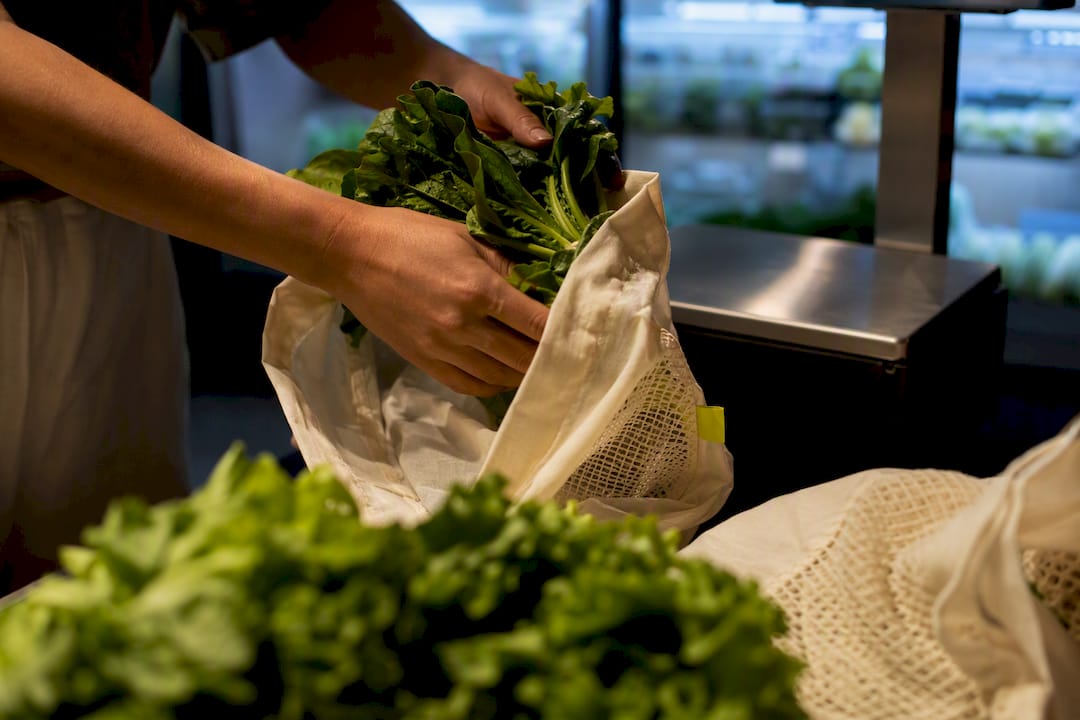
Tare produce bags are worth adding to your shopping kit if you buy fruit, veg, or bulk-bin goods regularly. A tare label lets a cashier or self-checkout subtract the bag’s own weight before charging you, so you never pay for the cotton or mesh. The Zero Store’s Plastic Free Produce Bags (2 Pack) are a straightforward option for anyone ready to stop grabbing a fresh plastic bag every visit. Buy a set, or ask your supermarket whether its scales already support bag-weight deductions.
TL;DR:
- Most Australian supermarkets have fixed limitations on manual tare entry, so double-check if the scale recognizes your bag’s tare weight or ask staff for assistance.
- Mesh bags are best for firm produce like citrus or potatoes, while muslin is more suitable for delicate greens and herbs; compostable bags often require industrial composting facilities.
- Buying a set of three sizes—small, medium, and large—covers most weekly shopping needs, with tare weights usually printed in grams on sewn-in tags.
- Proper care involves washing in cold water, air drying, and regularly inspecting seams; heat from tumble drying significantly shortens a bag’s lifespan.
- Reusable tare bags, rated to last multiple years, cost around $15 to $25 for a set and typically replace hundreds of single-use plastic bags, reducing environmental impact.
Table of Contents
- What are tare produce bags and how does the tare tag work?
- Which material suits your shopping habits: mesh, muslin or compostable?
- What sizes should you buy and how are tare labels shown?
- How do you actually use tare produce bags at the shops?
- How do you wash and care for tare produce bags?
- What should you check before buying tare produce bags?
- Publisher proof points and practical testing notes
- What do tare produce bags cost compared with alternatives?
- How long do different tare produce bags actually last?
- Are there rules or standards governing tare bags in retail?
- What happens to a tare produce bag at the end of its life?
- How do you choose the right supplier or brand for tare produce bags?
- Author perspective: why I recommend tare produce bags
- Product spotlight: Plastic Free Produce Bags (2 Pack)
- Sources
- FAQ
What are tare produce bags and how does the tare tag work?
Tare weight is simply the weight of an empty container, measured so it can be subtracted from the total before you pay. On a produce bag, that number is usually printed or sewn onto a small tag, in grams, so a cashier or scale operator can zero it out before weighing your apples or almonds.
Three checkout workflows cover most Australian supermarkets and markets:
- Cashier subtracts manually. You hand over the filled bag, the staff member reads the tare tag and keys in the deduction before weighing.
- Self-checkout with manual entry. You weigh the bag, then select a “bag weight” or “tare” option on the touchscreen and enter the grams shown on the tag.
- Barcode or tare-function scales. Some self-serve produce departments use scales with a dedicated tare button, or a barcode that stores know to deduct automatically.
Not every scale plays along. Some terminals cap the number of manual tare entries per transaction, and a handful only recognise pre-programmed barcodes rather than accepting a typed number. If a self-checkout doesn’t take a manual deduction, the workaround is simple: ask a staff member to weigh the empty bag separately and issue a ticket, or note your bag’s tare weight at home and mentally subtract it if the till won’t budge. A sewn-on tag is a convenience feature, not a guarantee the machine will honour it. A well-known DIY tare-weight tag sewing tutorial shows exactly how these labels get attached, which is handy context if you ever want to retrofit an older bag that lacks one.
Which material suits your shopping habits: mesh, muslin or compostable?
Material choice matters more than most shoppers assume, because the wrong fabric can leave leafy greens wilted by the time you get home. Mesh, muslin, and newer compostable weaves each solve a different problem.
- Mesh is highly breathable and works best for firm or thick-skinned produce like citrus, onions, capsicum, and potatoes, because the open weave stops moisture pooling against the skin.
- Muslin or organic cotton buffers moisture rather than venting it, which suits delicate leafy greens, herbs, and mushrooms that bruise or dry out fast in a mesh bag. A useful comparison of organic versus regular cotton breaks down why the weave and fibre source affect breathability and durability.
- Compostable or PLA-style bags appeal to shoppers who want the bag itself to eventually break down, but the fine print matters: many require industrial composting facilities rather than a home compost bin, so check the exact standard before assuming it’ll vanish in your backyard bin. The Zero Store’s explainer on PLA versus PBAT composting requirements covers this distinction in plain terms.
Material also dictates upkeep. Mesh dries fastest and tolerates a warm wash better than tightly woven cotton, while muslin needs a gentler cycle to avoid pilling over time.
Pro Tip: Carry one mesh bag and one muslin bag in your shopping tote rather than five of the same type. Most fresh produce runs fall into one of those two categories, so a mixed pair covers almost everything without you lugging around bags you’ll never fill.
What sizes should you buy and how are tare labels shown?
Most reusable produce bag sets come in three broad sizes, and buying across all three saves you from stuffing a week’s worth of spinach into something built for four lemons.
- Small (roughly 20 to 25cm) suits berries, mushrooms, and small quantities of nuts or bulk-bin spices.
- Medium (around 30cm) handles everyday fruit and veg runs, capsicum, apples, tomatoes, and similar volumes.
- Large (35cm or more) is built for bulky leafy greens, a week’s worth of potatoes, or bulk grain and legume purchases.
Tare weights are almost always printed on a small woven or laminated tag stitched into a seam, stated in grams since most produce scales in Australia weigh in metric units. Occasionally you’ll see the figure in kilograms on bags marketed for heavier bulk goods.
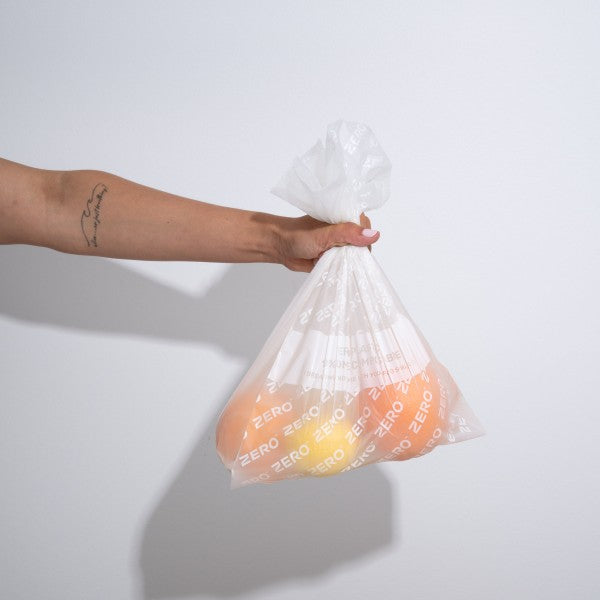
For most households, a minimal starter kit of two medium bags, one small, and one large covers the typical weekly shop without overbuying. That’s roughly the composition of The Zero Store’s Plastic Free Produce Bags (2 Pack), which gives you a sensible pair to trial before committing to a bigger set. Some marketplace listings, including sellers on eBay Australia, show tare weights printed on colour-coded tags too, so the feature isn’t limited to boutique brands. It’s become fairly standard across local retail channels.
How do you actually use tare produce bags at the shops?
The mechanics change slightly depending on where you’re shopping, but the underlying habit stays the same: weigh empty, note the tare, fill, and let the till do the subtraction.
- At a bulk-bin store or market stall, place the empty bag on the scale first if one’s available, note the reading or check the sewn-in tare tag, then fill it and tell the stallholder the tare figure when you pay.
- At a supermarket self-checkout, weigh the filled bag on the produce scale, select the tare or “own container” prompt on the screen, and type in the number from your bag’s tag.
- At a staffed checkout, simply hand the bag over. Most cashiers are used to reading a tare tag and will key in the deduction without you needing to explain anything.
Keep dry bulk goods like rice, oats, or lentils in a separate bag from fresh fruit and veg. Cross-contamination isn’t usually a food-safety disaster, but a splash of citrus juice on a bag of flour is an annoying way to ruin both.
If a scale refuses to accept a manual tare value, don’t force it. Ask a staff member to weigh the empty bag separately and print a ticket, or fall back on a mental note of your bag’s weight and adjust the total yourself at self-checkout if the option exists. Keeping a small set of bags with tare weights you’ve already memorised at home removes the guesswork entirely.
Pro Tip: Snap a photo of each bag’s tare tag on your phone the first time you use it. Tags fade or get creased over months of washing, and having the number saved means you’re never squinting at worn stitching in a checkout queue.
How do you wash and care for tare produce bags?
Longevity comes down to gentle washing, air drying, and a habit of checking seams before they fail mid-shop.
- Wash on a cold, gentle cycle, ideally inside a mesh laundry bag to stop drawstrings tangling with other washing.
- Air dry only. Tumble drying weakens stitching and can shrink cotton and muslin bags enough to distort the tare weight printed on the tag.
- Wash berries and leafy greens bags after every use, since soft produce leaves residue and moisture behind quickly. Bags used for potatoes, onions, or dry bulk grains can go longer between washes, often every few shops rather than every single one.
- Inspect drawstrings, seams, and mesh weave every few months. Fraying at the seam or a stretched-out mesh panel is the signal to retire a bag rather than risk it splitting at the till.
The Zero Store’s own guide on washing reusable produce bags walks through wash frequency by produce type in more detail, which is worth bookmarking if you’re building a rotation of several bags rather than just one pair.
What should you check before buying tare produce bags?
A quick checklist saves you from ordering a set that looks good in photos but falls apart in practice.
- Tare label clarity. The weight should be printed clearly in grams, not vaguely estimated or left off entirely.
- Stitching and drawstrings. Reinforced seams and a sturdy drawstring or toggle matter more than the fabric print.
- Honest compostable claims. Look for a named certification standard rather than a vague “biodegradable” sticker, since that word alone tells you almost nothing about how or where a bag actually breaks down. The Zero Store’s piece on compostable claims and landfill reality is a useful gut check before you take a marketing claim at face value.
- Set composition. Check exactly how many bags and which sizes are included. A “set of five” that’s all one size is less useful than a smaller set spanning small, medium, and large.
- Value for money. Compare price per bag rather than headline set price, since a cheaper multipack with thin mesh may cost more in replacements over a year than a pricier, sturdier pair.
Publisher proof points and practical testing notes
The Zero Store builds its produce bag range around plastic-free, biodegradable materials, and publishes detailed specifications on its product page for anyone who wants to check sizing and material before ordering. In routine testing across supermarket self-checkouts, sewn-in tare tags worked smoothly at terminals with a manual entry option, but a couple of older machines only accepted barcode-linked tare values, meaning the tag’s number had to be entered by a staff member instead. That’s a scale limitation, not a flaw in the bag.
For anyone wanting the fuller picture on fabric choice or wash routines before buying, the compostable materials explainer and the washing guide cover the two questions shoppers ask most: what’s it made of, and how do I keep it clean.
What do tare produce bags cost compared with alternatives?
A single-use plastic produce bag is technically free at most supermarkets, but that’s the whole problem: it’s used once and binned, and the cost shows up in landfill and marine plastic rather than your wallet. Reusable tare-tagged bags typically sell in multipacks of two to six, with price scaling by fabric and set size rather than by brand alone.
Mesh sets tend to sit at the cheaper end because the fabric itself is inexpensive to produce, while muslin and organic cotton sets cost more upfront due to denser weaving and better moisture handling. Compostable or bio-based weaves usually land in the middle to upper price range, reflecting the more specialised material.
The maths favours reusables quickly. A bag used weekly for a year replaces roughly fifty single-use plastic bags, and most reusable produce bags are rated for well beyond a single year of washing and reuse. Judged purely on cost per use, a $15 to $25 multipack that lasts two or three years works out to a few cents per shop, which undercuts even the flimsiest free plastic bag once you count the environmental cleanup cost nobody puts on a receipt.
How long do different tare produce bags actually last?
Expected lifespan depends almost entirely on fabric choice and wash habits, not brand alone. Mesh bags, made from lightweight woven polyester or similar synthetic fibres, tend to hold up well against repeated stretching and washing, often lasting several years of regular shopping trips before the weave loosens noticeably.
Muslin and organic cotton bags are more prone to pilling and thinning at stress points like drawstring channels, particularly if tumble dried, but a well-cared-for cotton bag washed cold and air dried can still last a couple of years or more. Compostable and bio-based weaves are the newest category, and by design they’re built to break down eventually rather than last indefinitely. Expect a shorter practical lifespan than synthetic mesh, though still long enough for regular use across a shopping season or two if stored and washed properly.
The single biggest factor in all three cases isn’t the fabric grade, it’s whether the bag gets tumble dried. Heat is what shortens stitched seams and warps drawstring channels faster than normal wear ever would.
Are there rules or standards governing tare bags in retail?
There’s no single Australian regulation that mandates how a produce bag’s tare tag must be printed or where it must sit, which is why formats vary between brands and even between individual sellers. What does apply is standard trade-measurement practice: scales used in retail settings are required to weigh accurately, and staff are trained to subtract a declared container weight before charging a customer, whether that’s a reusable bag, a takeaway container, or a bulk-bin tub.
In practice, this means the tare figure on your bag’s tag is a convenience for staff and self-checkout systems, not a legally mandated label in the way that food packaging carries mandatory nutrition information. Some stores set their own internal policy on how many manual tare entries a self-checkout will accept per transaction, largely to prevent misuse rather than because of any external rule. If you ever doubt a reading, asking staff to double-check the empty bag on a certified scale resolves it in seconds.
What happens to a tare produce bag at the end of its life?
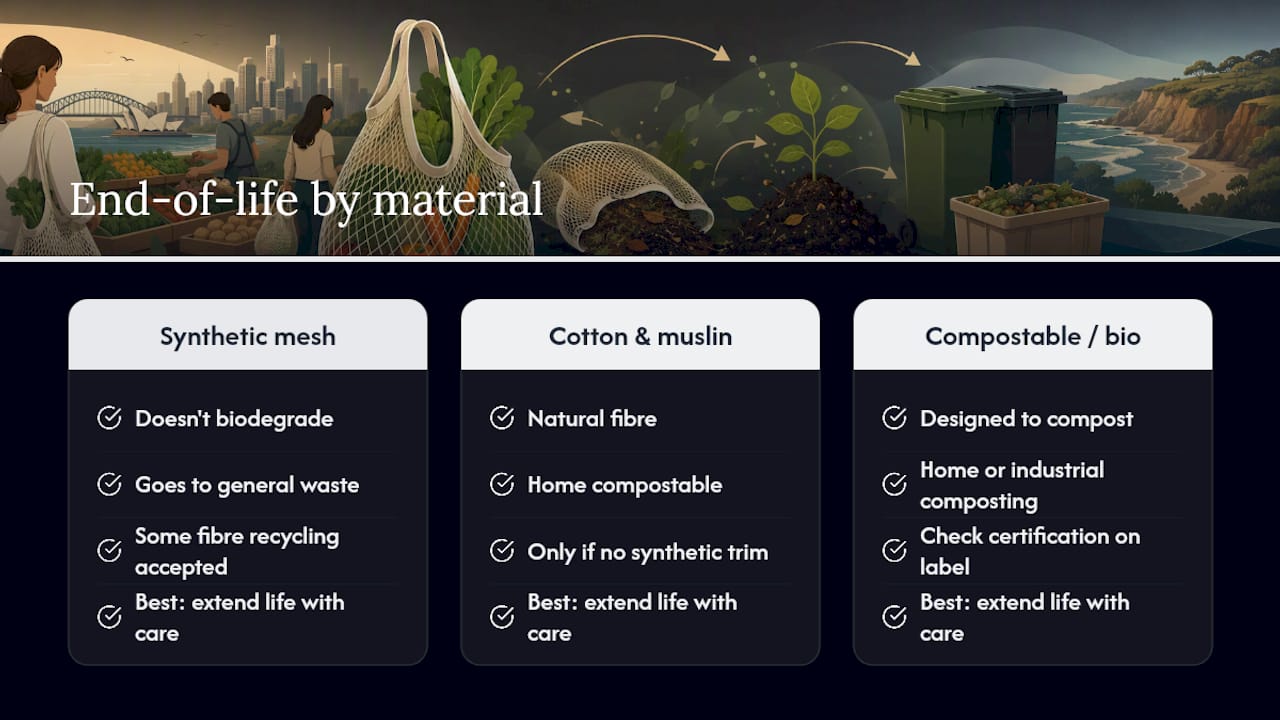
Environmental impact splits clearly along material lines. A worn-out mesh bag made from synthetic fibre behaves like other plastic-based textiles: it doesn’t break down naturally and belongs in general waste rather than a compost bin, though some fibre recycling schemes will accept clean synthetic textiles.
Muslin and organic cotton bags, being natural fibre, can go into a home compost bin once retired, provided there’s no plastic trim, elastic, or synthetic thread holding the seams together. Compostable or bio-based weaves are designed with end-of-life in mind, but the catch that trips up most shoppers is the difference between home-compostable and industrial-compostable certification. A bag rated for industrial composting won’t necessarily break down in a suburban backyard bin within a normal timeframe, so check the specific standard named on the packaging rather than assuming “compostable” means “goes in my compost heap.” Either way, extending a bag’s working life through proper care remains the single biggest lever a shopper has, since the greenest option is always the one you don’t need to replace for years.
How do you choose the right supplier or brand for tare produce bags?
Not every seller listing “eco-friendly produce bags” backs that claim with real specification detail, so a few checks separate a genuinely useful supplier from one riding a trend.
Look first at whether the brand publishes actual material composition, weight, and size specifications on its product page rather than vague marketing language. A supplier confident in its product will state the fabric type, tare tag format, and included sizes plainly. Second, check whether sustainability claims point to a named certification or standard rather than a generic “eco” label with nothing behind it. Third, weigh price against set composition: a supplier offering a mixed set of sizes and materials at a fair price per bag usually reflects a brand thinking about how customers actually shop, rather than one padding out a set with filler items.
Australian-owned suppliers are worth favouring where practical, partly for freight speed and returns, but also because local businesses face more direct accountability for the claims they make to Australian consumers. The Zero Store fits this brief with published specifications and care guidance sitting alongside its produce bag range, giving shoppers something concrete to check before buying rather than a marketing slogan to take on faith.
Author perspective: why I recommend tare produce bags
Most sustainability advice asks for a lifestyle overhaul. Tare produce bags don’t. They slot into a shopping habit you already have, and the only real change is remembering to bring them, which gets easier once they’re living permanently in your shopping tote rather than a kitchen drawer. What convinces me isn’t the plastic saved on any single trip. It’s that the habit compounds: once tare bags become automatic, other single-use swaps start feeling obvious too. If you’re weighing up whether to start, pack a set in your bag today and use it on your next shop. For anyone ready to trial the idea properly, The Zero Store’s produce bag page is a sensible place to look.
— Damien
Product spotlight: Plastic Free Produce Bags (2 Pack)
If you’ve read this far and want a straightforward way to start, The Zero Store’s alternative to grabbing a fresh plastic bag every shop is simple: a durable, plastic-free produce bag with a clear tare tag, so you never pay for the bag’s own weight at checkout.
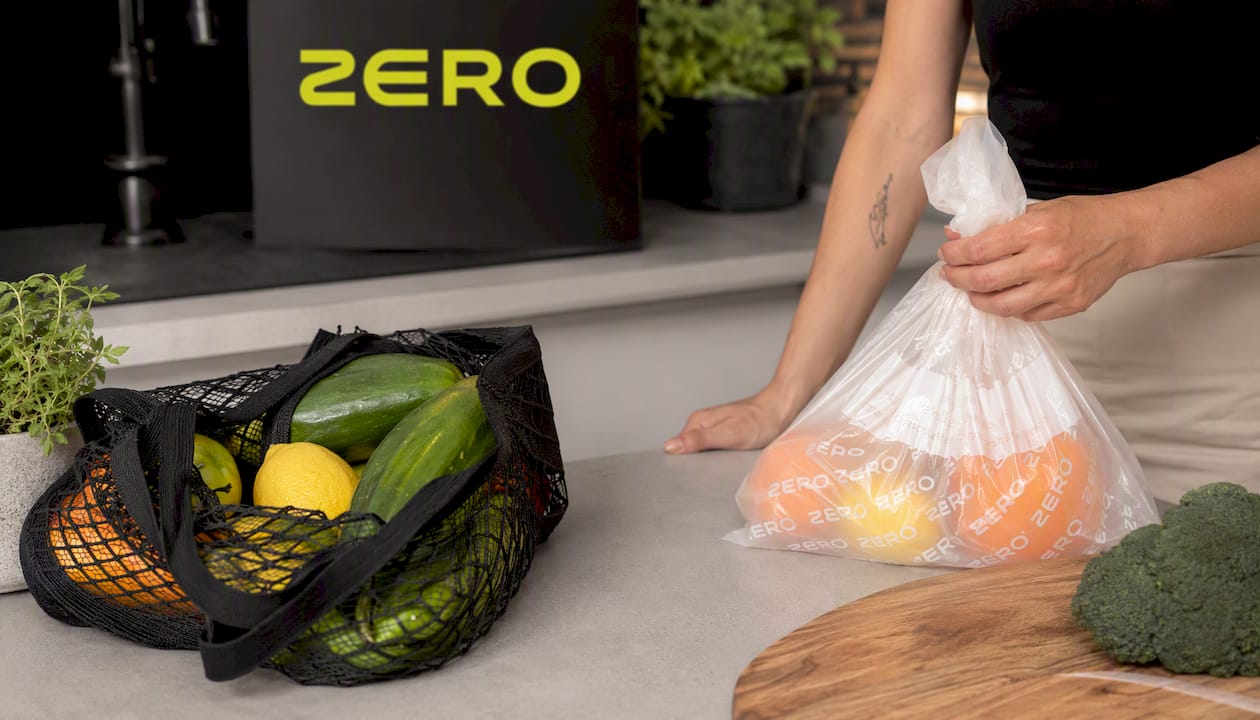
The two-pack includes reusable produce bags made from plastic-free materials, with sizing suited to everyday fruit and veg runs and a sewn-in tare tag stating the bag’s weight for quick deduction at self-checkout or a staffed till. Care is straightforward: cold gentle wash, air dry, no tumble drying required. We’re upfront that specific certifications and material breakdowns are listed on the product page itself, so check there for the exact specification rather than assuming beyond what’s stated.
Ready to try a set? Head to the Plastic Free Produce Bags (2 Pack) product page to check current availability and place an order for your next shop.
Sources
For deeper detail beyond this guide, these pages cover care routines, material choice, and related plastic-free swaps:
- Organic cotton vs regular cotton: a UK shopper’s guide – Roomie Design
- Reusable produce bags with tare weight tag! – Janome
FAQ
What are the best bags to keep produce fresh in the fridge?
Muslin or organic cotton bags work best for leafy greens and herbs in the fridge because they buffer moisture, while firmer vegetables like carrots or capsicum store fine in breathable mesh.
Where can you get reusable produce bags in Australia?
Reusable produce bags are sold through dedicated eco retailers like The Zero Store, general marketplaces, and increasingly through supermarket own-brand ranges, with tare-tagged options becoming more common across these channels.
Do vegetables get mouldy if left in plastic bags?
Yes, trapped moisture inside sealed plastic encourages mould and speeds up spoilage in leafy greens and mushrooms, which is one reason breathable mesh or muslin bags are a better long-term storage choice.
How many times can you reuse a produce bag?
A well-made mesh or cotton produce bag can typically handle hundreds of wash-and-reuse cycles over one to several years, depending on fabric quality and how often it’s tumble dried versus air dried.
Does a tare tag guarantee a self-checkout will accept it?
No. Some self-checkout terminals only accept barcode-linked tare values or cap manual entries, so a printed tare tag is a convenience feature rather than a guarantee every scale will honour it automatically.
Share:
Start With One Swap: Plastic Free Lunchbox Ideas for Australians
4 Plastic Free Bowl Covers That Work in Australian Kitchens