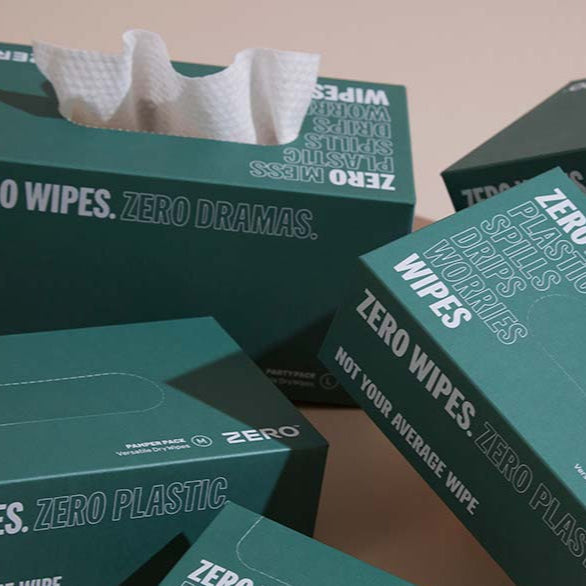
Compostable cleaning wipes are typically made from plant-based fibres such as viscose or cellulose, or from certified compostable biopolymers like PLA and PBAT, soaked in a cleaning solution of water, a mild surfactant, a humectant, and a small dose of preservative. Whether that combination is genuinely compostable, and whether it will break down in your backyard bin or only at an industrial facility, depends entirely on the substrate and any active ingredients layered on top. A wipe with a plant-based fibre and no disinfectant can often go straight into home compost. Add ethanol or benzalkonium chloride at disinfecting strength, and you’re usually looking at general waste or, at best, industrial composting.

The full ingredient story on a typical pack breaks down into eight categories worth knowing before you buy:

  • Solvent — almost always water
  • Surfactant — the cleaning agent, often plant-derived
  • Preservative — keeps the wipe solution stable on the shelf
  • Humectant — stops the wipe drying out
  • pH adjuster — balances acidity for cleaning power
  • Fragrance — cosmetic, not functional
  • Active disinfectant — kills bacteria, not always present
  • Substrate — the physical wipe material itself

Compostable cleaning wipes ingredients vary more between brands than most shoppers expect, and standards such as EN 13432 exist precisely because “biodegradable” and “compostable” get used interchangeably on packaging when they mean very different things.

Key Takeaways

Compostable cleaning wipes are only genuinely compostable when both the substrate and every active ingredient are certified and disclosed, not just the marketing copy on the front of the pack.

Point Details
Check the substrate first Plant fibres like viscose usually compost at home; PLA and PBAT blends often need industrial facilities.
Disinfectants block home composting Ethanol, benzalkonium chloride and citric acid at disinfecting strength can suppress compost microbes.
Certifications aren’t interchangeable OK Compost HOME, OK Compost INDUSTRIAL, EN 13432 and AS 4736 each certify different composting conditions.
Never flush wipes Wipe fibres don’t break down fast enough in sewer systems, compostable or not.
The Zero Store discloses full ingredients Its cleaning wipes use a plant-based substrate with a stated ingredient list rather than vague “natural” claims.

Table of Contents

Compostable cleaning wipes ingredients: the full breakdown

Every wipe on the shelf is built from the same handful of ingredient categories, even when the brand names differ wildly.

Solvent. Water makes up the bulk of almost every wipe solution, often the majority by weight. It carries the other ingredients and evaporates or biodegrades without a trace, so it never affects a compostability claim one way or another.

Surfactants. These are the actual cleaning agents, breaking the surface tension of water so it can lift grease and grime. Plant-derived non-ionic surfactants, particularly alkyl polyglucosides made from corn or coconut sugars, appear on most “natural” wipe labels and biodegrade readily. Some formulas still use anionic surfactants derived from petrochemicals, which can biodegrade more slowly and are worth checking on an ingredient list if a fully plant-based formula matters to you.

Preservatives. Wipes stay damp for months in the packet, so they need something to stop mould and bacteria growing. Benzyl alcohol and dehydroacetic acid are common and generally considered low-risk. Methylisothiazolinone is more contentious. It’s an effective preservative but a recognised skin sensitiser, and it can persist in compost longer than the rest of the formula breaks down.

Humectants and emollients. Glycerin and propanediol keep the wipe from drying out between the packet and your hand. Both are plant-derived in most compostable ranges and biodegrade without disrupting the composting process.

pH adjusters and acids. Citric acid and lactic acid do double duty. They help lift mineral deposits and soap scum, and they lower pH enough to have mild disinfecting properties. Both compost without issue at typical cleaning concentrations.

  • Fragrance and allergens: an unspecified “fragrance” on a label can hide dozens of compounds, including d-limonene, a common allergen.
  • Active disinfectants: ethanol above roughly 60% concentration, or benzalkonium chloride, are effective against bacteria but can suppress the microbial activity a home compost pile depends on.

What’s the wipe actually made of? Substrate materials explained

The solution soaked into a wipe matters, but the sheet itself is the bigger compostability question. Retail listings for compostable cleaning wipes commonly list ingredients built around one of two substrate families.

Plant fibres. Viscose, cellulose, and cotton fibres are the traditional base for compostable wipes. They’re derived from wood pulp or cotton plants and typically break down in a home compost within a few months under normal conditions, faster in a hot, actively managed pile.

Compostable biopolymers. PLA (polylactic acid) and PBAT blends are newer entrants, often used where a plant fibre alone isn’t durable enough. These materials frequently need industrial composting conditions, sustained heat above 55°C and specific microbial populations, to break down fully. A pack that says “compostable” without specifying home or industrial almost always means industrial only.

The catch is that some wipe substrates blend plant fibres with small amounts of polyester or polypropylene for strength, which quietly reintroduces microplastics into a product marketed as plastic-free. Reading the substrate line properly, not just the front-of-pack claim, is the only way to catch this.

Biodegradable or compostable: what’s the actual difference?

These two words get used as synonyms in marketing copy, but they mean genuinely different things, and the gap matters when you’re deciding what goes in your compost bin.

Biodegradable simply means a material will eventually break down through microbial action. There’s no timeframe, no requirement that it leaves no toxic residue, and no independent verification needed to put the word on a pack.

Compostable is a narrower, testable claim: the material breaks down into water, carbon dioxide, and biomass within a defined period, under defined conditions, without leaving anything toxic behind.

  • OK Compost HOME — certifies breakdown in a home compost bin at ambient temperature
  • OK Compost INDUSTRIAL and EN 13432 — certify breakdown only under industrial composting conditions (high heat, controlled humidity)
  • AS 4736 — the Australian standard for industrial compostability, the one to look for on locally sold products

A wipe can be genuinely biodegradable and still fail every compostability test, because “eventually” and “within 12 weeks with no toxic residue” are different bars entirely. Even a certified-compostable substrate can be knocked off the home-composting list by a single ingredient. Concentrated disinfectants are the usual culprit, since they’re designed to kill the same microbes your compost pile relies on.

Health and environmental flags to watch on the label

A handful of ingredient categories deserve extra scrutiny beyond the compostability question, because they carry their own health or environmental baggage.

Preservatives. Methylisothiazolinone and its close relative octylisothiazolinone are both recognised skin sensitisers, and repeated exposure can trigger allergic contact dermatitis in people who weren’t previously sensitive. They’re also slow to break down once they enter waterways.

Fragrance. The word “fragrance” on an ingredient list can legally cover dozens of undisclosed compounds. D-limonene, a citrus-derived fragrance and solvent, sits on the EU’s Annex III list of allergens that must be declared above certain concentrations, precisely because it’s a common trigger for skin reactions.

Disinfectants. Benzalkonium chloride and high-strength ethanol do their job by disrupting cell membranes, which is exactly why they’re hostile to compost microbes. Citric acid at disinfectant-grade concentration behaves the same way, even though it sounds harmless.

The clearest way to check any of this is to pull the safety data sheet rather than trust the front label. An SDS lists concentration ranges, hazard classifications, and any regulatory flags attached to each ingredient, information that never makes it onto packaging.

Third-party ingredient audits of mainstream compostable wipes routinely flag one or two ingredients against fragrance-allergen or regulatory watchlists, even on products marketed as gentle or natural.

How to check the label and dispose of wipes correctly

Verifying a compostability claim takes about thirty seconds once you know what to look for.

  1. Check for a full ingredient list. If a pack only says “plant-based cleaning solution” with no breakdown, treat that as a red flag rather than reassurance.
  2. Find the substrate disclosure. Look for the specific fibre or biopolymer named, not just “eco-friendly material.”
  3. Look for a certification mark. OK Compost HOME, OK Compost INDUSTRIAL, EN 13432, or AS 4736 for the Australian market. No mark usually means no independent testing.
  4. Scan for disinfectant actives. If ethanol, benzalkonium chloride, or a high concentration of citric acid appears, assume industrial composting or general waste, not your backyard bin.

Never flush wipes, compostable or not. Sewer systems aren’t designed to break down wipe fibres fast enough, and even certified-compostable products can contribute to blockages known as fatbergs.

Pro Tip: Before buying, ask the supplier three things: which certification applies, whether it’s home or industrial only, and whether the wipe contains any active disinfectant. A brand confident in its claims will answer all three without hesitation.

Disposal guidance: why you should never flush a wipe

The single most important disposal rule is also the most commonly ignored: no wipe, however it’s marketed, belongs in the toilet. Wipe fibres, plant-based or otherwise, don’t disintegrate at the speed toilet paper does, and water utilities across Australia routinely deal with blockages caused by wipes that consumers assumed were flushable.

Hand discarding wipe into compost bin

If a wipe carries the OK Compost HOME mark and contains no disinfectant actives, it can go straight into a home compost bin alongside food scraps and garden waste. Cut or tear larger wipes to speed up breakdown, and expect full disintegration within a few months in an actively turned pile.

Wipes marked OK Compost INDUSTRIAL or certified only to EN 13432 or AS 4736 need council or commercial composting facilities that most households don’t have access to. If your area doesn’t offer green waste collection that accepts these materials, general waste is the more honest disposal route than aspirational bin sorting that just contaminates the compost stream.

Wipes containing disinfectant actives at cleaning strength, regardless of what the substrate is made from, should go in general waste. Putting a benzalkonium chloride wipe in a home compost pile doesn’t just fail to break it down. It can suppress the microbial activity your whole compost system depends on for weeks afterwards.

What happens to these ingredients as they break down

Composting isn’t a single process. It’s a cascade of microbial digestion, and different ingredients behave very differently as they move through it.

Water and plant fibres disappear cleanly, converting to carbon dioxide, water, and biomass with nothing left behind. This is the ideal outcome and the entire point of a compostability certification.

Surfactants tell a more mixed story. Plant-derived alkyl polyglucosides typically break down within days to a couple of weeks in active compost. Petrochemical-derived anionic surfactants biodegrade too, but more slowly, and can temporarily alter the pH of a small home compost pile if used in high concentration.

Preservatives are the ingredient category most likely to outlast everything else in the wipe. Methylisothiazolinone in particular has been shown to persist in some environmental conditions well beyond the timeframe the rest of the wipe takes to vanish, which is part of why it draws regulatory attention in leave-on cosmetic products across several markets.

Fragrance compounds like d-limonene generally biodegrade readily in soil and compost, but they can be volatile in their undegraded state, meaning some of it evaporates rather than composting at all. That’s not necessarily a problem for your compost bin, but it does mean the “natural fragrance” story is more about scent than substance once you follow the chemistry.

Which additives raise the biggest long-term concerns?

Not every ingredient that blocks a home-compostable claim is equally worrying once it’s in the environment. Some just need a hotter, longer composting process. Others raise real questions about where they end up.

Benzalkonium chloride is the ingredient worth the most caution. Investigative reporting on single-use plastics and disposable products has repeatedly highlighted how compounds designed for antimicrobial persistence don’t stop being persistent once they’re in soil or waterways. It’s effective precisely because it resists breakdown, and that same property makes it a poor fit for any composting system, home or industrial.

Isothiazolinone preservatives sit in a similar category. They’re used at low concentrations specifically because they’re potent, and aquatic toxicity studies have flagged them as harmful to fish and invertebrates at concentrations well below what a household would consider significant.

Non-compostable plastic fibres blended into a substrate for strength don’t degrade at all under normal conditions. They persist as microplastics indefinitely, breaking into smaller fragments rather than disappearing, which is the core problem with any wipe that mixes viscose or cellulose with polyester reinforcement.

Fragrance compounds and citric acid, by contrast, are lower-concern. Both are broadly accepted as biodegrading without leaving persistent residues, which is why they rarely block a compostability certification on their own. The additives to actually worry about are the ones doing an antimicrobial job. If an ingredient’s purpose is to kill living organisms, assume it will resist a compost pile’s living organisms too.

Which additives raise the biggest long-term concerns? — overview diagram

Publisher perspective: balancing performance, safety and honesty about compostability

Most “eco” wipe marketing leans on vague biodegradability language rather than naming ingredients, and that’s backwards. Full disclosure, ingredient lists and SDS sheets, matters more than any leaf logo on the front of a pack. Performance, safety and compostability aren’t in conflict: a plant-derived surfactant and a mild preservative clean just as well as harsher alternatives, and they let you compost with confidence rather than guesswork.

Why The Zero Store’s cleaning wipes are a straightforward compostable choice

If you’ve read this far, you already know what to look for: a disclosed substrate, a transparent ingredient list, and a certification that matches how you actually intend to dispose of the wipe. The Zero Store’s cleaning wipes are built around exactly that standard, a plant-based substrate with no hidden plastic reinforcement, and every ingredient stated rather than folded into a vague “cleaning solution” line.

Cleaning Wipes

Beyond wipes, The Zero Store’s wipes collection covers baby wipes and makeup wipes built to the same disclosure standard, and the broader dry wipe range extends into reusable cleaning cloths for households wanting to skip single-use altogether. If you’re building out a fuller plastic-free kitchen, the plastic-free cling wrap follows the same PBAT-based approach. Before you buy anything, check the product specifications and safety data sheet yourself. That habit is the whole point of this article.

Sources

Latest Stories

This section doesn’t currently include any content. Add content to this section using the sidebar.