Industrial composting in Australia turns source-separated food and garden organics into a certified soil product through licensed, temperature-controlled processing. It is a regulated activity, not a dumping ground for anything labelled “compostable.” Facilities operate under environmental authority conditions, follow AS 4454 pasteurisation benchmarks and reject contaminated loads outright. For any Australian business supplying feedstock or packaging, the takeaway is simple: confirm what your local processor will actually accept before you commit to a product or a waste stream.


TL;DR:

  • Processors prefer segregated, certified food, garden, and untreated timber waste and reject plastic films, non-certified packaging, glass, and metals.
  • In-vessel systems provide rapid pasteurization in five to seven days, while windrow and static pile setups are slower, cheaper, and produce more odorous emissions.
  • Each facility adheres to AS 4454 for pasteurization and regulatory thresholds vary by state, requiring proper licensing for larger volumes.
  • Businesses must verify packaging certifications, educate staff on segregation, and keep detailed records to prevent rejection and ensure compliance.
  • Relying solely on generic “eco-friendly” claims is insufficient; certification details and proper product trials are essential for successful composting relationships.

Table of Contents

What types of industrial composting are used in Australia?

Australian processors typically choose between three core technologies, and the right one depends on feedstock, footprint and how fast the operator needs pasteurised output.

In-vessel or tunnel systems dominate food-waste processing because they seal the reaction inside a controlled chamber. Operators can manage airflow, moisture and temperature precisely, which is why high-efficiency in-vessel setups can hit pasteurisation in as little as five to seven days in many operations. That speed matters when a facility is turning over hundreds of tonnes a week and needs the throughput to match.

Aerated static piles and windrows suit sites with more land than budget. They cost less to build and run but need bigger buffer zones from neighbours, since odour control is harder to contain in open air. Rural and regional facilities lean towards windrows for garden organics and manure blends where speed matters less than cost per tonne.

Drum and modular compact systems fill the gap for councils or regional operators that don’t have the volume to justify a full tunnel plant. There’s a genuine spectrum here, from small modular units built for regional throughput up to full bio-cell plants sized for metropolitan waste streams.

  • In-vessel/tunnel: fastest pasteurisation, the best odour control, highest capital cost
  • Static pile/windrow: lower cost, larger footprint, more exposure to community complaints
  • Modular/drum: fits regional councils and smaller commercial operators
  • Choice ultimately hinges on feedstock consistency and available land

Pro Tip: If you’re a hospitality group generating consistent food waste volumes, ask your waste contractor which technology their processor uses. In-vessel facilities are far less likely to bounce a load for minor moisture or particle-size issues than open windrow sites.

How does an industrial composting facility actually process waste?

Feedstock moves through a fairly consistent sequence regardless of technology, though the timing and equipment vary by scale.

  1. Receival and inspection — trucks tip loads onto a hard-standing pad where staff visually check for obvious contamination before it enters the line.
  2. Screening and depackaging — mechanical depackagers strip film, bags and rigid plastic from organics; automated systems handle bulk separation while operators still combine this with manual picking to catch what machines miss.
  3. Shredding — material is reduced in size to speed up microbial breakdown and even out moisture distribution.
  4. Controlled bioreaction — the thermophilic phase, where temperature and oxygen are actively managed to drive rapid decomposition.
  5. Pasteurisation — the batch must sustain a set temperature for a defined period. Industry practice built around AS 4454 commonly targets sustained high temperatures for extended hours, and Australian operators design plants specifically to hold those thresholds long enough to kill pathogens and weed seeds.
  6. Maturation — the compost rests and stabilises before it’s ready for final use.
  7. Final screening and dispatch — oversized material and residual contaminants are removed, then the finished product is graded and sold.

Odour and leachate management run alongside every stage. Biofilters and scrubbers treat exhaust air before release, while leachate collection systems capture runoff for treatment rather than letting it reach stormwater. This isn’t optional polish. Community complaints about smell are one of the most common triggers for regulatory scrutiny, so plant design and daily monitoring records are treated as core compliance work, not paperwork for its own sake.

What licences and environmental rules apply to composting facilities?

Every commercial composting operation in Australia sits under a “general environmental duty,” meaning operators must eliminate or minimise the risk of harm to human health and the environment so far as reasonably practicable. That duty applies regardless of scale, but the licensing burden scales up sharply with tonnage.

  • Facilities processing above certain thresholds need a formal environmental authority or licence, with classifications and cut-offs varying by state.
  • Queensland businesses can check specific application requirements through the Business Queensland licensing portal, and equivalent state bodies (EPA Victoria, EPA SA, NSW EPA) publish their own thresholds.
  • AS 4454 sets the national benchmark for compost product quality, including the pasteurisation parameters that separate a compliant product from an unfinished or unsafe one.
  • PFAS and other emerging contaminants are now a genuine regulatory priority, with federal guidance under the PFAS National Environmental Management Plan shaping how processors test and manage incoming feedstock.

For any business supplying organics at commercial volume, the practical implication is this: don’t assume a “compost” claim on packaging equals regulatory approval to send it to a specific facility. Each processor operates under its own conditions, and what one accepts, another may reject outright.

What can businesses send to industrial composters without risking rejection?

Processors generally accept source-separated food organics, garden waste, and untreated timber offcuts. What they reject is longer and less forgiving: plastic film, glass, metal, and packaging that claims to be compostable but carries no certification.

Contamination isn’t a minor inconvenience for a processor, it’s a manufacturing problem; readers can learn about effective eco-friendly dog waste disposal methods to avoid introducing contaminants into organic waste streams. Because composting at scale is treated as a manufacturing process rather than waste disposal, incoming organics function as raw material that must be verified before it enters the line. A batch contaminated with shredded plastic film can render an entire load unsellable to sensitive markets like viticulture or certified organic farms, since even trace fragments show up in the finished product.

  • Accepted: source-separated food organics (FOGO), garden and green waste, untreated wood
  • Commonly rejected: plastic film and bags, glass, metal, treated timber, non-certified “compostable” packaging
  • Certification to check: AS 4736 for industrially compostable packaging, plus supplier documentation confirming the claim
  • Practical steps: staff training on bin segregation, clear signage, supplier specification sheets, and pre-acceptance sampling before scaling volume

Pro Tip: Before switching your kitchen or front-of-house to a new “eco” product line, ask the supplier for their AS 4736 certificate directly, not just a marketing claim. Processors will ask for exactly this if a load gets flagged, and you don’t want to be scrambling for paperwork after the fact.

Choosing products your local processor will actually accept

Home compostable and industrially compostable are not interchangeable claims, and mixing them up is one of the most common reasons loads get flagged. A product certified for home composting may never break down properly inside a commercial tunnel system running a shorter, hotter cycle, while true industrial-grade material is engineered to disappear within that window. The Zero Store’s own breakdown of the difference between home compostable and industrial compostable claims is worth a read before you switch suppliers.

For source separation, resealable bags that carry proper certification reduce the risk of film contamination reaching the organics stream. For foodservice operators wrapping produce or prepared food, compostable cling wrap alternatives avoid sending conventional plastic film into a bin destined for composting. Before scaling any new packaging line, request certification documentation from your supplier, run a small trial batch, and confirm acceptance with your actual processor rather than assuming a label is enough. The Zero Store’s commercial and hospitality range is built around exactly this brief.

Choosing products your local processor will actually accept — overview diagram

What should businesses do next?

Four things separate a smooth relationship with your composting processor from a rejected load and an awkward phone call.

Check packaging certification against AS 4736 before you order stock, not after. Confirm directly with your processor what they accept, since thresholds and rules vary between EPA Victoria, NSW EPA, and other state bodies. Train front-line staff on segregation so contamination doesn’t start at the bin. And keep records of what you’re sending, since documentation is what protects you if a batch is ever queried.

That’s the whole practical answer: industrial composting is regulated, contamination is the enemy, and certification paperwork is your evidence trail.

Why the “just make it compostable” advice misses the point

Most guidance aimed at businesses stops at “choose compostable packaging” and calls it done.

Why the "just make it compostable" advice misses the point — overview diagram

I’d argue the conventional advice has the priority order backwards. Certification is necessary, but it’s not sufficient. A product can carry a legitimate compostable certification and still get rejected if the processor runs a shorter cycle or a different technology than the standard assumes. The businesses that get this right treat their processor relationship as an ongoing conversation, not a one-off supplier switch. They ask questions, they trial small batches, and they keep paperwork.

What gets underestimated most is contamination culture. One untrained staff member tossing a coffee cup lid into the food scraps bin can undo months of good supplier decisions. Fix the certification question first, but fix the training question just as fast. Neither works alone.

— Damien

Get packaging and consumables your composting processor will actually accept

The Zero Store exists for exactly the problem this article has walked through: businesses need packaging that processors accept, not just packaging that sounds green. Where a generic “eco-friendly” product might carry vague claims with no documentation behind them, The Zero Store publishes the certification detail processors actually ask for, so you’re not scrambling for paperwork when a load gets checked.

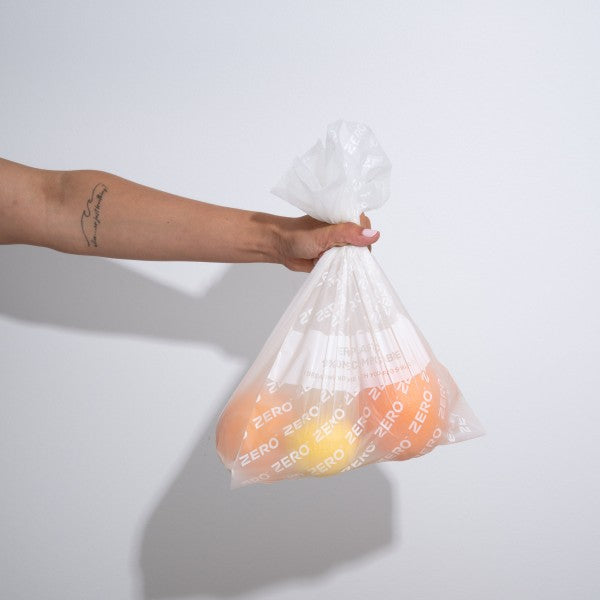
Plastic Free Produce Bags (2 Pack)

If you’re running a café, restaurant or retail operation switching away from conventional plastic film, the plastic-free cling wrap is built specifically for industrial composting end-of-life, not just landfill breakdown. For source separation in commercial kitchens, resealable food storage bags keep organics clean of film contamination before they ever reach the bin. And for cleaning stations where paper towel waste often ends up mixed with food scraps, the reusable cleaning cloths cut down on what you’re sending to any waste stream at all. Trial a small order, check the certification against what your processor asks for, and scale from there.

Sources

Latest Stories

This section doesn’t currently include any content. Add content to this section using the sidebar.