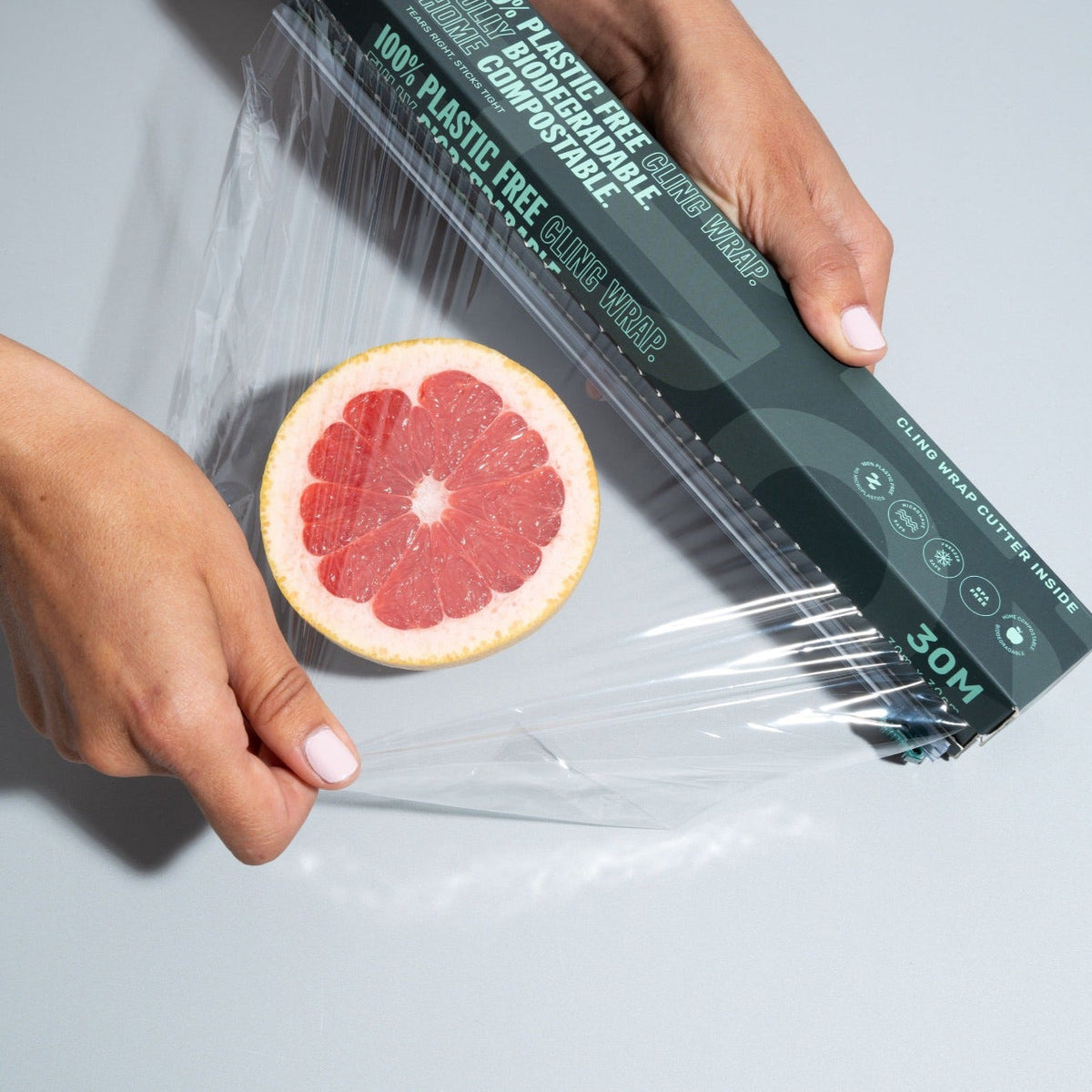
Start with three swaps: ditch cling film for beeswax wraps or glass jars, retire flaking nonstick pans for cast iron or stainless steel, and swap synthetic sponges for plant-based scrubbers. Those three categories, storage, cookware, and cleaning, account for most of the plastic passing through a typical kitchen. You don’t need to replace everything this weekend. There are plastic-free alternatives available for the items you’ll wear out first.


TL;DR:

  • Replace cling film with beeswax wraps for about a year of reuse before re-waxing becomes necessary.
  • When a nonstick pan starts scratching or flaking, switch to cast iron or stainless steel to avoid PFAS and PTFE exposure.
  • Use glass jars and stainless steel containers for storage to prevent plastic microplastic shedding and improve food preservation.
  • Opt for bamboo or stainless steel utensils, and avoid plastic tools that shed microplastics during cooking.
  • Choose loose-leaf tea and stainless steel or glass brewing methods over plastic-lined tea bags and pods to prevent microplastic contamination.

Table of Contents

Plastic free kitchen swaps for food storage: cling film, zip bags and containers

Cling film and zip-lock bags are usually the easiest place to start because they’re single-use by design, so every roll or box you buy becomes rubbish within weeks. Beeswax wraps are the obvious first swap: pliable when warmed by your hands, washable in cool water, and reusable for roughly a year before they need re-waxing. For freezer and oven work, reach for tempered borosilicate glass jars rather than standard glass, since ordinary glass can crack under rapid temperature shifts. Leave a centimetre of headspace in any jar going into the freezer, otherwise expanding food will crack the glass from the inside.

Silicone lids and stainless steel containers cover the jobs beeswax can’t, like storing liquids or acidic leftovers such as tomato sauce. For snack-sized portions, resealable fabric or silicone bags replace the zip-lock habit without the weekly restock.

  • Beeswax wraps: bread, cheese, cut vegetables, bowl covers
  • Borosilicate glass jars: freezer storage, oven reheating, pantry staples
  • Stainless steel containers: lunches, acidic foods, anything going in a bag
  • Silicone lids: covering bowls and pans of any shape

Avoid microwaving or oven-heating anything in plastic containers, even ones labelled “microwave safe.” Heat and mechanical stress are exactly the conditions under which plastics shed microplastic particles into food, so a five-minute reheat can matter more than you’d think. When you’re ready to make the jump properly, this guide to eco-friendly food storage walks through the reuse habits that make these swaps stick.

Pro Tip: Keep every glass jar that comes through your kitchen, from passata to peanut butter, and you’ll have a free storage set within a month without buying anything new.

Cookware without PTFE and PFAS: what to buy instead of nonstick

Worn nonstick pans are one of the least talked-about sources of kitchen plastic exposure. PTFE coatings degrade with scratching and overheating, and chemistry research has linked PFAS compounds in some nonstick coatings to long-term exposure concerns, particularly once the coating starts flaking. You don’t need to throw out a working pan today, but when one starts scratching or peeling, replace it with something that doesn’t rely on a coating at all.

Cast iron and carbon steel both develop a natural nonstick surface once seasoned, and they last decades rather than years. Stainless steel handles searing and sauces well, while ceramic-coated pans offer a lighter-weight, PTFE-free middle ground, though the coating still wears eventually.

  • Cast iron: high-heat searing, oven-to-stove dishes, decades of use with re-seasoning
  • Carbon steel: lighter than cast iron, similar nonstick behaviour once seasoned
  • Stainless steel: sauces, deglazing, anything acidic
  • Ceramic-coated: lighter cooking, no PTFE, but finite coating life

Season cast iron and carbon steel with a thin layer of oil after each wash, dry immediately, and avoid soaking them. Keep heat moderate rather than maxed out, since scorching is what shortens the life of any pan, coated or not.

Utensils and prep tools that don’t shed microplastics

Plastic spatulas and spoons soften and scratch with heat, shedding tiny fragments into whatever you’re cooking. Stainless steel and wooden utensils don’t have that problem, and both outlast plastic equivalents by years rather than months. Bamboo is a solid middle ground, lightweight and gentle on cookware surfaces.

Silicone has its place, particularly for scraping bowls or handling nonstick pans, but it’s still a synthetic polymer, so limit it to jobs where metal or wood genuinely won’t work rather than defaulting to it everywhere.

  • Stainless steel or wooden spoons and spatulas for daily cooking
  • Bamboo chopping boards, replaced when deeply grooved rather than routinely
  • Stainless steel measuring cups and metal or bamboo colanders
  • Silicone reserved for nonstick pan use and bowl scraping only

Wash wooden and bamboo tools by hand, dry them straight away, and oil chopping boards occasionally to stop cracking. A board left wet on the draining rack will warp within months; one dried immediately can last a decade.

Cleaning swaps: sponges, brushes and soap that skip the plastic

Synthetic sponges shed microplastic fibres every time you scrub, and environmental health guidance points to plant-based alternatives as a straightforward fix. Cellulose sponges, knitted cotton scrubbers, and coconut-fibre brushes all do the job without leaving synthetic fragments in your dishwater.

  • Cellulose sponges for everyday wiping and washing up
  • Coconut-fibre brushes for pots, pans, and anything stubborn
  • Knitted cotton scrubbers, washable and reusable for months
  • Solid dish soap bars or bulk refills instead of plastic bottles

Natural scrubbers need a quick boil or hot soak weekly to stay sanitary, since they hold moisture longer than synthetic foam. Reusable cleaning cloths are worth adding here too, since they replace the disposable wipes most households go through fastest.

Pro Tip: Hang natural sponges and cloths to dry fully between uses; a damp sponge left balled up in the sink is what breeds odour and bacteria, not the material itself.

Tea, coffee and drinks: cutting plastic from your daily brew

Plenty of tea bags are sealed with a plastic mesh, and a lab study found that steeping one bag can release billions of micro and nanoplastic particles into a single cup. Loose-leaf tea with a stainless steel or ceramic infuser sidesteps that entirely, and it usually tastes better too.

  • Loose-leaf tea with stainless or ceramic infusers instead of bagged tea
  • French press or pour-over instead of plastic-lined pods
  • Stainless steel or glass drink bottles over single-use plastic
  • A reusable flask for takeaway coffee runs, since most lids and cups are lined with plastic

Coffee pods carry a similar issue, and if you’re weighing up alternatives, this rundown of non-pod brewing options covers the practical trade-offs between French press, pour-over, and stovetop methods.

Shopping and pantry habits that stop plastic at the door

Reducing what enters your kitchen matters as much as swapping what’s already inside it.

  1. Bring your own jars and cloth produce bags to bulk stores, and weigh containers beforehand if the shop needs a tare weight for pricing.
  2. Where packaging choice is limited, prioritise paper, cardboard, or glass over multi-layer plastic pouches, which are rarely recyclable anyway.
  3. Buy pantry staples like rice, oats, and nuts from bulk bins rather than pre-packaged bags whenever your local shop offers them.
  4. Reuse sturdy flexible packaging, bread bags, freezer bags, as a bin liner or storage pouch rather than binning it after one use.

A refill habit takes a couple of shopping trips to feel normal, and once it does, the refill approach tends to spread from the kitchen into bathroom products too.

Building the habit without creating more waste

The biggest mistake in going plastic-free is binning perfectly usable plastic items the day you decide to change. That just adds waste now for a saving later. Use up what you already own, then replace it with a non-plastic version once it wears out or breaks.

  • Pick one category a month: storage first, then cookware, then cleaning tools
  • Retire cracked, scratched, or flaking items first, not the ones still doing their job fine
  • Dry wooden and metal tools immediately after washing to extend their life
  • Track what you’d have spent on disposables over a year against one reusable purchase

A $15 set of beeswax wraps replacing a $6 roll of cling film bought every fortnight pays for itself within a couple of months, and it keeps paying after that.

Pro Tip: Don’t buy a full plastic-free kitchen kit in one order. Replace what you actually use daily first, everything else can wait until it wears out.

The evidence behind plastic-free kitchen swaps

Peer-reviewed research backs most of the swaps above rather than just general environmental sentiment. Studies have detected microplastics in cooked food and packaging, with heat and scraping both accelerating particle release from plastic surfaces. Separate environmental chemistry work has raised concerns about chemical exposure from plastic-derived compounds more broadly, reinforcing why material choice in the kitchen isn’t purely an aesthetic decision.

The clearest finding across this research isn’t that plastic is dangerous in every use. It’s that heat, scratching, and repeated single-use cycles are the specific conditions under which particles migrate into food, which is exactly what happens with cling film, worn nonstick pans, and steeped tea bags.

Steeped tea bags alone can shed billions of micro and nanoplastic particles per cup, a figure worth sitting with if you drink several cups a day.

The Zero Store’s range maps directly onto these findings: resealable food storage bags made from bio-polymers like PLA and PBAT replace zip-lock bags, reusable cleaning cloths replace synthetic wipes, and biodegradable cling wrap alternatives replace the plastic film linked to particle migration under heat. Before buying any plastic-free product, check for compostability certification, a clear breakdown timeframe, and confirmation the material is free from PFAS and added microplastics, not just labelled “eco-friendly.”

The evidence behind plastic-free kitchen swaps — overview diagram

Choosing plastic-free storage for dry goods like grains and nuts

Dry pantry staples, rice, oats, lentils, nuts, are usually sold in plastic bags that end up as landfill the moment they’re empty. Glass jars with airtight lids are the standard fix, and they’re genuinely better for freshness too, since glass doesn’t absorb odours the way some plastics do over time.

For larger quantities, stainless steel canisters with gasket-sealed lids keep pantry moths and moisture out better than most plastic containers, and they don’t degrade or discolour with age. Ceramic canisters work well for smaller staples like tea, coffee, or spices, though they’re heavier and less practical for bulk rice or flour.

Label jars with a wipeable marker or reusable chalk label rather than sticky tape, since tape residue is one of the more annoying reasons people give up on reusing jars. A consistent labelling system, front-facing labels, largest jars at the back, also makes it far easier to spot when something’s running low, which cuts down on the pantry moths that thrive in forgotten, half-full bags of flour.

Buying dry goods from bulk bins and refilling the same jars each time keeps this loop closed. It’s the single easiest way to stop new plastic packaging entering the pantry altogether, and it usually works out cheaper per kilogram than pre-packaged equivalents too.

Plastic-free kitchen linens and towels worth switching to

Most dish towels and cleaning cloths sold at supermarkets contain polyester or microfibre blends, meaning every wash sheds synthetic fibres into wastewater. Cotton, linen, and hemp towels don’t carry that problem, and they’re more absorbent than synthetic microfibre once broken in.

Unpaper towels, reusable cotton sheets that replace a paper towel roll, are worth trying if your household goes through kitchen roll fast. They wash and dry like any other cloth and typically last a couple of years with regular use.

Look for tea towels and cleaning cloths woven from organic cotton or linen rather than blended fabrics, since a 100% natural fibre breaks down properly at end of life instead of leaving microplastic residue behind. Reusable cleaning cloths designed specifically for kitchen wipe-downs are a practical starting point, since they replace the disposable wipes that get thrown out daily in most households.

Wash linen and cotton kitchen textiles in cool water and air dry where possible, since high heat drying is what wears natural fibres out fastest. Rotate a small stack of four or five cloths rather than one, so nothing’s overused between washes.

Sustainable composting options for food scraps

Composting is the other half of a plastic-free kitchen, since it deals with what’s left after packaging is sorted. A simple benchtop caddy with a compostable liner keeps scraps contained until they reach a garden compost bin, worm farm, or council green waste collection, depending on what your local area offers.

Worm farms suit smaller households and apartments well, since they’re compact, low-odour when maintained properly, and turn scraps into usable liquid fertiliser within weeks. Backyard compost bins handle larger volumes and suit gardens where the finished compost can go straight back into vegetable beds.

Check that any compostable caddy liner is certified rather than just labelled “biodegradable,” since that word alone carries no legal standard in Australia and some products marketed that way don’t break down in home compost conditions at all. Look for recognised compostability certification on the packaging before assuming a liner is genuinely low-impact.

Bokashi systems are worth a mention for anyone dealing with meat or dairy scraps, which standard compost bins and worm farms generally can’t process. It’s a fermentation-based method rather than traditional decomposition, and it works well alongside a regular compost setup rather than replacing it.

Spotting hidden plastics in kitchen gadgets and appliances

Plastic hides in places you wouldn’t expect: blender gaskets, kettle interiors, the internal seals of slow cookers, and the mesh filters inside some coffee machines. Even appliances marketed as stainless steel often use plastic internally for insulation, gaskets, or housing around heating elements.

Kitchen appliance locations where plastic may hide

Check product specifications before buying, not just the exterior material description, since “stainless steel body” says nothing about what’s touching your food or water internally. Kettles are a common culprit, look specifically for models with stainless steel or glass interiors rather than a plastic-lined chamber, since boiling water sitting against plastic daily is a meaningful exposure point.

Blender jugs are often plastic even when the base is metal, so glass jugs are worth seeking out if you blend hot liquids regularly, since heat is again the condition under which plastic sheds the most. Food processor bowls, kettle lids, and the internal tubing of some coffee machines are worth checking too, particularly on lower-cost models where plastic components cut manufacturing costs.

When in doubt, contact the manufacturer directly and ask what touches food or water inside the appliance. It’s a five-minute email that often reveals more than the product listing ever will.

A few honest notes from three months of doing this myself

Three habits stuck for me: swapping cling film for glass jars first, since it needed zero behaviour change beyond reaching for a different container; drying wooden tools immediately rather than leaving them on the rack; and keeping a boil-and-soak routine for natural sponges once a week.

What didn’t stick was silicone food bags for freezing. They’re fiddly to seal properly and I went back to glass within a month. The lesson wasn’t that silicone fails, it’s that you should test one product before buying a full set.

Start with the swap that needs the least new behaviour from you, not the one that sounds most impressive.

— Damien

Where to buy plastic-free kitchen essentials

The swaps above work whether you make them yourself or buy them ready-made, and The Zero Store’s range exists specifically to close that gap without asking you to hunt through multiple suppliers. Its resealable food storage bags are made from bio-polymers such as PLA and PBAT rather than conventional plastic, so they cover the zip-lock replacement job while still breaking down at end of life instead of sitting in landfill for centuries.

The reusable cleaning cloths suit anyone replacing disposable wipes on kitchen benches, and they hold up to repeat washing far better than synthetic alternatives. For households managing nappies, the nappy waste bag range extends the same plastic-free approach beyond the kitchen bin.

Before buying, check the product specification pages for certification details and material breakdown, which often include bio-polymer sourcing and ownership credentials. Start with whichever product replaces the item you throw out most often at home, then visit the product range to see what fits your household next.

Sources

Latest Stories

This section doesn’t currently include any content. Add content to this section using the sidebar.