Short answer: yes. PLA can produce microplastics, but whether those fragments hang around or disappear depends entirely on where they end up. The controlling mechanism is hydrolysis, the chemical breakdown of ester bonds in the polymer backbone by water. Industrial composting accelerates this into full mineralisation within weeks. Left in a home compost bin, soil, or open water, the same plastic can fragment first and finish degrading far more slowly, sometimes not at all within any practical timeframe.
A few figures anchor this:
- PLA-lined paper cups released roughly 3.6 times more microplastic particles per litre than polyethylene-lined cups under hot-beverage conditions in one experimental test.
- Under anaerobic waste treatment, PLA has shown low biodegradability and persistent fragment formation compared with other biodegradable polymers.
- Environmental hydrolysis rates vary considerably by temperature and moisture, causing fragment lifetimes to range broadly depending on conditions.
Statistic to remember: PLA microplastics are best described as transient under the right conditions rather than universally short-lived. The environment does the deciding, not the material label.
Key Takeaways
PLA can fragment into microplastics through hydrolysis, but persistence ranges from weeks in industrial composting to years in soil, freshwater, or marine settings.
| Point | Details |
|---|---|
| Hydrolysis drives degradation | Water attacks ester bonds, causing chain scission; heat and moisture accelerate the process. |
| Environment decides persistence | Industrial composting mineralises PLA in weeks; marine and soil settings can take years. |
| Sublethal risks matter | Amphipod studies found low acute toxicity but reduced growth and reproductive fitness. |
| Common exposure sources | PLA-lined cups, tea bags, films and wipes shed particles under heat or abrasion. |
| Choose certified, compostable products | The Zero Store’s makeup wipes, baby wipes, and reusable cleaning cloths list material specs and composting standards to support correct disposal. |
Table of Contents
- How PLA breaks down: hydrolysis, enzymatic action and the environmental controls
- What do studies say about how long PLA microplastics persist?
- Are PLA microplastics harmful to organisms and ecosystems?
- Where do PLA microplastics actually come from in daily life?
- What should consumers and researchers do about it?
- Why the “biodegradable means harmless” assumption falls short
- A practical next step for reducing plastic waste at home
- Sources
How PLA breaks down: hydrolysis, enzymatic action and the environmental controls
PLA degrades through a two-stage process. First, water molecules attack the ester bonds linking the polymer’s lactic acid units, a process called hydrolysis. This cuts long polymer chains into shorter ones through chain scission, and as the average chain length drops, the material loses mechanical integrity and starts to crumble. That crumbling is the microplastic-formation stage. Only once the fragments are small enough, and the right microbial communities are present, does enzymatic action finish the job, converting the remaining oligomers into carbon dioxide, water, and biomass. Fragmentation, in other words, is not the end state. It is the middle step. Whether it stays the end state for years depends on what happens next.
Four variables decide how fast that middle step resolves:
- Temperature — hydrolysis accelerates sharply above PLA’s glass transition point (around 55 to 60°C), which is why industrial composting facilities, running at 55 to 70°C, mineralise PLA in weeks.
- Moisture — consistent water contact drives hydrolysis; dry environments (some soils, arid landfill layers) can leave PLA fragments essentially frozen in place.
- pH and microbial community — acidic or alkaline conditions can catalyse ester hydrolysis, but final mineralisation still needs microbes capable of metabolising the breakdown products, which are far less abundant in marine sediment or freshwater than in compost.
- UV exposure — outdoor sunlight causes photodegradation that embrittles PLA surfaces, encouraging fragmentation even where moisture and heat are otherwise limiting.
Compare the settings side by side and the gap is stark. Industrial composting delivers the heat and humidity to finish the job in four to eight weeks. Home composting, running at ambient or only mildly elevated temperatures, can take many months and sometimes never gets hot enough to complete the process, leaving visible fragments in the finished compost. Soil burial without composting infrastructure slows things further again. Freshwater and marine environments are the slowest of all: cooler, often has a low or moderate microbial load, and the polymer has to survive constant mechanical abrasion from waves and currents that generates fragments faster than any microbe can consume them.
Product design changes this picture again. Pure PLA is relatively brittle and fragments readily once hydrolysis weakens it. Blending it with PBAT (polybutylene adipate terephthalate) improves flexibility and impact resistance, which can actually slow initial fragmentation, but it also increases the chemical complexity of what eventually leaches or migrates out, a point worth remembering when you see “PLA/PBAT blend” on packaging. Composite constructions, such as paper cups with a thin PLA liner, introduce a different problem entirely: the cellulose fibres in the paper base can shed alongside the polymer coating, and the liner itself is thin enough to fragment quickly under hot, wet conditions.
Pro Tip: If a product lists a composting standard such as AS 4736 (industrial) rather than AS 5810 (home compostable), assume it needs commercial composting infrastructure to fully break down. Putting it in a backyard bin risks leaving microplastic fragments behind indefinitely.
What do studies say about how long PLA microplastics persist?
Meta-analyses of PLA degradation converge on one consistent message: persistence is a function of environment, not an intrinsic property of the polymer. The PeToPLA technical summary reviewing multiple degradation studies found that fragment lifetimes in open environments can range from a few months under favourable hydrolysis conditions to potentially decades where temperature and moisture stay low. That is a wide range, and it reflects genuine scientific uncertainty rather than sloppy measurement. Field hydrolysis rates are simply harder to pin down than controlled lab conditions.
Individual studies fill in specifics that the meta-analyses summarise:
- The paper-cup study found PLA-lined cups shed measurably more microparticles under hot-liquid conditions than polyethylene-lined equivalents, with cellulose fibres compounding the particle count.
- Anaerobic sludge experiments found PLA exhibited low biodegradability percentages and generated persistent microplastic fragments under mesophilic digestion conditions, the kind used in many municipal wastewater treatment plants.
- Simulated marine environments in various studies show PLA fragmenting under mechanical and UV stress well before microbial mineralisation can keep pace, producing a standing population of microplastics even while total mass slowly declines.
Key figure: in that anaerobic digestion research, PLA’s biodegradability lagged noticeably behind other biodegradable polymers tested under the same mesophilic conditions, a reminder that “biodegradable” does not mean “biodegrades quickly everywhere.”
Measuring all this accurately is its own challenge. Detecting PLA-derived nanoplastics, particles below one micrometre, pushes past the resolution of many standard microplastic surveys, which is likely to understate real particle counts. Polymer-specific identification is another hurdle: PLA fragments are chemically similar enough to natural organic matter that they can be missed or misclassified without techniques like FTIR mapping or pyrolysis gas chromatography mass spectrometry. Matrix interference, sediment, biofilm, and organic debris masking the polymer signal, compounds the problem further.
Put together, the honest summary is this: under industrial composting, PLA fragments and mineralises within weeks and microplastic persistence is genuinely brief. In soil, freshwater, or marine settings without that infrastructure, persistence can stretch into months or years, and in cold or anaerobic conditions, potentially longer still. The material’s biodegradable chemistry is real. Whether it expresses itself quickly is an environmental question, not a material one.

Are PLA microplastics harmful to organisms and ecosystems?
The evidence so far paints a specific picture: low acute toxicity, but measurable sublethal costs. A 2025 study on the marine amphipod Gammarus aequicauda exposed to PLA microplastics found low acute lethality but reduced growth and reproductive fitness at concentrations relevant to real-world exposure. That distinction matters for how you read headlines about microplastic toxicity generally. A substance can fail to kill test organisms outright while still eroding the traits that determine whether a population thrives over generations.
Several patterns run through the current research:
- Acute lethality tests, the kind measuring short-term survival, tend to show PLA microplastics are not immediately toxic at typical environmental concentrations.
- Chronic and sublethal exposures tell a different story, with slowed growth rates and lower reproductive output turning up in amphipod trials.
- Chemical migrants matter alongside the particles themselves. PBAT-PLA blends used in some food-contact articles have been found to contain multiple volatile organic compounds and oligomers that can migrate independently of particle shedding.
- Mixture effects, what happens when organisms encounter PLA fragments alongside conventional microplastics and other pollutants, remain almost entirely unstudied.
Sublethal effects are the quiet risk in microplastic research. An organism that survives exposure but reproduces less successfully still represents a population-level cost that acute toxicity tests are not designed to catch.
The gaps in this evidence base are as important as the findings themselves. Long-term field studies tracking PLA-specific exposure over multiple generations barely exist. Human exposure quantification, how much PLA-derived material or its chemical migrants people actually ingest through food contact, is still an open question with no robust dataset behind it. Anyone claiming certainty in either direction, that PLA microplastics are harmless or that they pose a serious health threat, is going beyond what the current science supports.
Where do PLA microplastics actually come from in daily life?
Exposure to PLA fragments is less exotic than it sounds. It happens through ordinary products most environmentally conscious households already use or are trying to replace.
The most common sources include:
- PLA-lined paper cups and takeaway containers, particularly under hot-liquid conditions that soften the liner
- Certain plant-based tea bags marketed as biodegradable, which can shed microfibres during steeping
- Food-contact films and wraps, especially when exposed to heat, oil, or repeated flexing
- Wipes and textile-adjacent products where mechanical abrasion during use or washing sheds fibres
Two release conditions do most of the work here: heat and abrasion. Hot liquids soften PLA linings enough that particles detach into the beverage, which is exactly what the paper-cup research demonstrated. Mechanical wear, whether from folding a wrap, washing a cloth, or the physical friction of composting, breaks fragments loose faster than static storage ever would.
It is worth separating two distinct exposure pathways that often get conflated. Migration refers to chemical compounds, oligomers, monomers, or additives, moving out of the plastic into food or liquid without any solid particle involved. Particulate shedding is the physical release of solid microplastic fragments. Both can happen simultaneously from the same product, but they carry different risk profiles and require different testing methods to detect.

For anyone checking a product label, look for the composting standard cited (AS 4736 for industrial, AS 5810 for home compostable), whether the material is described as a blend (PLA/PBAT combinations behave differently to pure PLA), and whether the product has been tested for particle release under realistic use conditions rather than only for compostability in a lab.
What should consumers and researchers do about it?
Correct end-of-life routing is the single biggest lever available to reduce PLA microplastic persistence, and it is also the step most consumers get wrong. Industrial composting facilities provide the sustained heat and humidity PLA needs to mineralise within weeks. Home composting can work for certified home-compostable products, but uncertified PLA items may sit only partially degraded for a long stretch, shedding fragments the whole time. Sending PLA to landfill or general recycling defeats the purpose entirely. It is not recyclable through standard plastic recycling streams and, without oxygen and moisture, can persist for years.
Practical steps worth adopting:
- Check for a certified compostability standard on the packaging before assuming a product is home-compostable.
- Match disposal to your local organics collection. Many Australian councils accept industrially compostable packaging in kerbside green bins; others do not, so check first.
- Avoid littering PLA items on the assumption they will “just biodegrade.” Outdoors, without the heat of a composting facility, that assumption often fails.
- Favour products explicitly certified rather than vaguely labelled “biodegradable,” a term with no enforced standard behind it.
The Zero Store’s own product range reflects this same logic in its material choices. Its makeup wipes and baby wipes are built from bio-polymer materials designed to break down through certified composting pathways rather than shedding indefinitely, with full material specifications listed on each product page. For households wanting to cut disposable use altogether, reusable cleaning cloths sidestep the degradation question by avoiding single-use plastic in the first place.
Pro Tip: For researchers separating PLA-derived particles from soil, sediment, or sludge samples, polymer-specific identification is essential before quantifying anything. FTIR mapping combined with pyrolysis-GC-MS resolves polymer identity and can flag oligomer presence that simple visual sorting misses entirely, and always report your recovery rate alongside particle counts, since detection limits vary widely between methods.
Why the “biodegradable means harmless” assumption falls short
The evidence here supports a more demanding conclusion than most marketing implies: PLA’s biodegradability is a genuine advantage, but only when the disposal system matches the material. Treating “compostable” as a synonym for “no consequences” is the mistake I see most often, both in casual conversation and in how some products get marketed.
Where the conventional advice usually falls down is in stopping at the word “compostable” without asking which kind. Industrial and home composting are not interchangeable, and the gap between them is exactly where persistent microplastics slip through. The amphipod toxicity data reinforces this: low acute harm does not mean zero cost, and sublethal effects compound quietly over time in ways that a “PLA is safe” headline glosses over.
If you take one thing from the research, prioritise correct disposal routing over material choice alone. A well-designed bioplastic sent to the wrong bin behaves like ordinary plastic waste. That is the gap worth closing first, before debating which polymer is theoretically best.
— Damien
A practical next step for reducing plastic waste at home
Reading about PLA degradation chemistry is one thing. Actually cutting the plastic volume moving through your household is another, and that is where The Zero Store’s product range earns its keep. Unlike generic “eco” wipes that bury their material composition in fine print, every product lists its polymer blend, composting standard, and certification upfront, so you are never guessing whether something belongs in your green bin or the general waste.
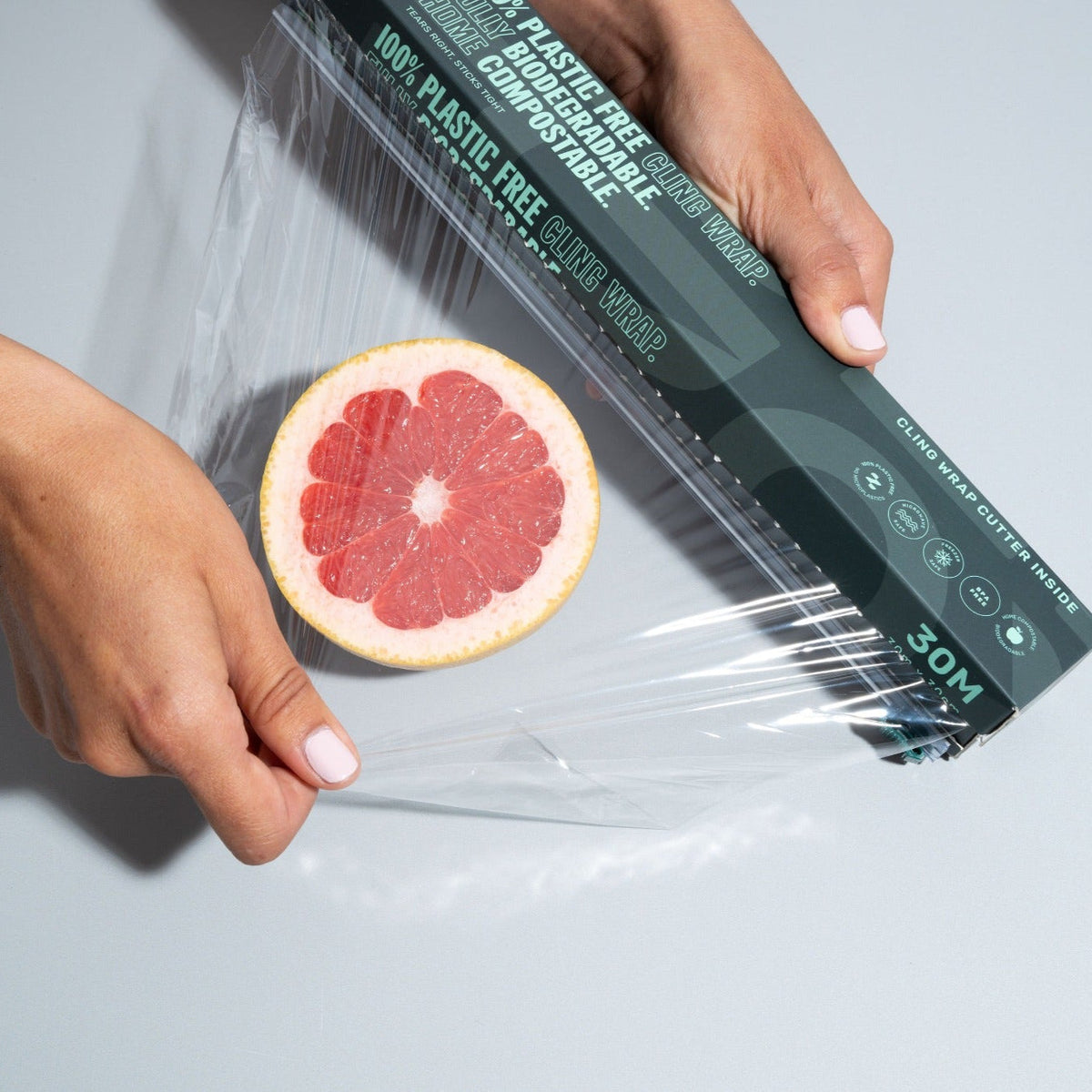
The makeup wipes and baby wipes use bio-polymer materials selected specifically to avoid the fragmentation issues described in the anaerobic-digestion research above, and full specifications sit on each product page rather than behind vague sustainability claims. For anything you would rather stop buying disposable altogether, the reusable cleaning cloths remove the degradation question entirely by lasting for years instead of one use. If you are also rethinking food storage, The Zero Store’s plastic-free cling wrap is home compostable and built to the same transparency standard. Browse the full range and check which certification matches your council’s organics collection before you order.
Sources
- Microplastic generation and persistence of biodegradable plastics under anaerobic conditions — Environmental Science & Technology
- High levels of microparticles release from biodegradable polylactic acid paper cups compared with polyethylene-lined cups — Science of the Total Environment
- Are polylactic acid (PLA) microplastics a risk to marine organisms? Acute and chronic effects on the amphipods Gammarus aequicauda — Aquatic Toxicology


Share:
Endocrine disruptors: what they are and how to reduce exposure
Compostable bags in landfill: do they actually break down?