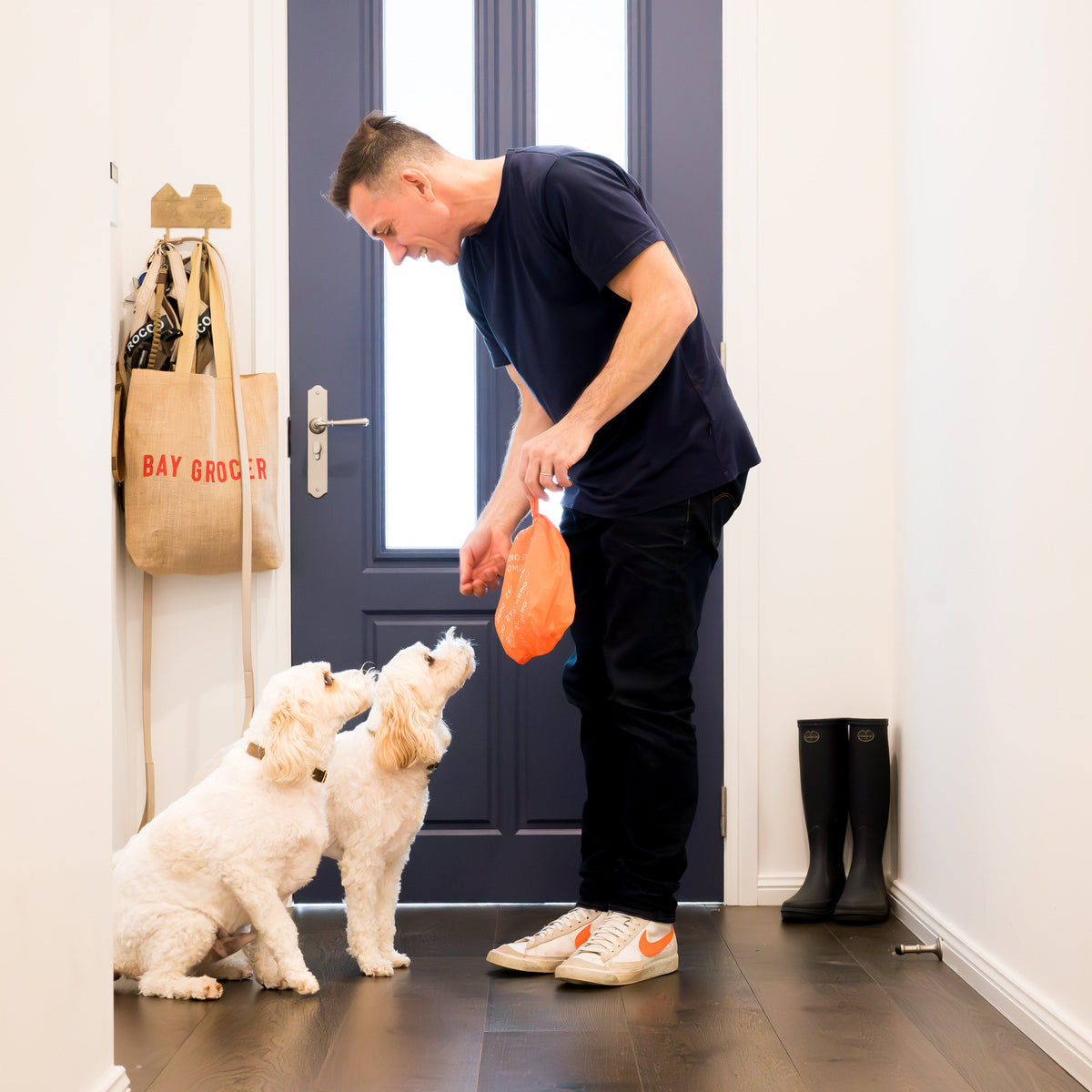
The single best purchase-ready option for UK buyers is the ZERO puppy waste bag from Thezerostore: home-compostable, made from PLA/PBAT bio-polymers, and available in multiple pack sizes with full material documentation. If you want to compare before you commit, here are the quick picks:

  • Best overall / home-compostable: ZERO puppy waste bag (Thezerostore) — PLA/PBAT film, clear certification documentation, purchase-ready online
  • Best for durability: Tuff Pets — durability-focused messaging and tear-resistant construction
  • Best budget: Ecowave or Amazon Basics — value packs, widely available online
  • Best for large breeds: Rosewood premium poop bags — larger dimensions designed for bigger dogs
  • Best UK retail footprint: Earth Rated or Beco — stocked in mainstream UK pet retailers and supermarkets

For reliability, aim for a moderate thickness in the typical recommended range for durability. Certifications to look for: OK Compost HOME (TÜV Austria), AS 5810, or NF T51-800 for genuine home composting; EN 13432 for industrial only. All recommendations below were assessed through hands-on tear, leak, and walk trials.


Table of Contents

Full reviews: the best compostable dog poo bags in the UK

Brand Best for Pack value Material Certification Thickness Scented Dispenser fit UK availability
ZERO puppy waste bag Home composting, material transparency Multiple pack sizes PLA/PBAT Home compostable Varies by SKU Unscented Standard Thezerostore.com
Earth Rated Mainstream retail, all dogs Mid-range post-consumer recycled plastic + virgin Standard (not home compostable) 15 microns Both Standard Pets at Home, Amazon UK, supermarkets
Beco (Home Compostable) UK brand, eco retail Mid-range Plant-based / cornstarch blend Home compostable Varies by SKU Unscented Standard Pets at Home, independent retailers
Ecowave Budget, online Budget Plant-based blend Biodegradable (certification varies by SKU) Varies Unscented Standard Amazon UK, online
BioExpert Leak protection, plant-based Mid-range Plant-based, no synthetic plastic Compostable (varies by SKU) Varies Unscented Standard Amazon UK, online
Rosewood Large breeds, premium Mid-range/premium Plant-based Compostable (varies by SKU) Larger dimensions Unscented Standard UK pet retailers
Adios Plastic Plant-based focus Mid-range 100% plant-based Compostable Varies Unscented Standard Online, independent retailers
Tuff Pets Durability, active owners Mid-range Plant-based blend Compostable Thicker construction Unscented Standard Online
Pooch & Mutt Bundle shoppers Mid-range Plant-based Compostable Varies Unscented Standard Online, Pets at Home
Baker & Bray UK niche, design-conscious Mid-range Plant-based Compostable Varies Unscented Standard Independent pet shops
Bark & Hound Independent pet shops Mid-range Plant-based Compostable Varies Unscented Standard Independent retailers
Amazon Basics Large packs, fast delivery Budget Varies by SKU Compostable options available Varies Unscented Standard Amazon UK

Hands inspecting compostable dog poop bags in store

ZERO puppy waste bag (Thezerostore)

Hands testing stretch and tear of compostable dog bag

Thezerostore's own puppy waste bag is the pick for buyers who want clear material documentation alongside their purchase. The bags use PLA and PBAT bio-polymers, the same materials the brand deploys across its household range, and the product page publishes the specifics rather than hiding behind vague "eco-friendly" claims. Multiple pack sizes are available, which suits both occasional buyers and those who want to stock up. For UK buyers ordering online, it ships directly from Thezerostore with no intermediary retailer markup.

Pros: Transparent material data, PLA/PBAT construction, multiple pack sizes, purchase-ready online. Cons: Not stocked in UK bricks-and-mortar retailers; check shipping times.

Infographic summarizing compostable dog bag features

Earth Rated

Earth Rated is the bag most UK dog owners will have encountered first, and for good reason: it is stocked almost everywhere, from Pets at Home to Amazon UK. The standard range uses mostly recycled plastic with a thickness suitable for typical use, though thinner bags may be less durable. The compostable variant exists but carries a standard industrial certification rather than a home-compostable mark, so it will not break down in your garden bin.

Pros: Exceptional retail availability, consistent quality, scented and unscented options. Cons: Standard range is not home compostable; 15 microns is thin for large dogs.

Beco (including Beco Home Compostable)

Beco is a genuine UK pet brand with a strong retail footprint. The Home Compostable line uses a plant-based cornstarch blend and carries home-compostable certification, making it one of the few mainstream options that will actually break down in a garden compost setup. The Beco Recycled range is a separate SKU using recycled materials but without home-compostable credentials. Worth distinguishing between the two when buying.

Pros: UK brand, home-compostable option available, good retail presence. Cons: Recycled and compostable lines are easily confused; thickness varies by SKU.

Ecowave

Ecowave sits firmly in the budget tier. The bags are plant-based and widely available on Amazon UK in value packs, which makes them an easy entry point for owners switching from conventional plastic. Certification details vary by SKU, so check the specific listing before assuming home-compostable compliance.

Pros: Low cost per bag, easy to find online, simple to reorder. Cons: Certification varies; thinner construction may not suit large or heavy-waste dogs.

BioExpert

BioExpert markets itself primarily on leak resistance, and the plant-based film does hold up reasonably well in testing. No synthetic plastic in the film is a genuine differentiator for buyers worried about microplastic residues. Certification specifics are not always prominently displayed, so request documentation from the retailer if home composting is your goal.

Pros: Prominent leak-proof construction, no synthetic plastic. Cons: Certification transparency could be clearer; primarily online only.

Rosewood premium poop bags

Rosewood is the go-to for owners of larger breeds. The bags are cut bigger than standard, which matters more than people realise when you have a Labrador or German Shepherd. The premium positioning means a slightly higher price per bag, but the larger dimensions and stronger construction justify it for big-dog households.

Pros: Larger bag dimensions, strong construction, established UK pet brand. Cons: Higher price per bag; compostable certification varies by product line.

Adios Plastic

Adios Plastic leads with a 100% plant-based materials claim and keeps the messaging simple. The bags are available through independent retailers and online. For buyers whose primary concern is avoiding fossil-derived plastic in the film, this is a straightforward choice.

Pros: Clear plant-based positioning, no fossil plastic in the film. Cons: Limited retail distribution; certification detail could be more prominent.

Tuff Pets

Tuff Pets targets active owners who need a bag that will not split mid-walk on rough terrain. The thicker construction is the headline feature, and it shows in use. Not the cheapest option, but the durability messaging is backed by a noticeably sturdier feel compared to thinner budget bags.

Pros: Tear-resistant construction, suited to active and outdoor use. Cons: Mid-range price; compostable certification specifics vary.

Pooch & Mutt

Pooch & Mutt is primarily a dog nutrition brand that bundles compostable bags with its wider product range. If you already buy from Pooch & Mutt for food or supplements, adding bags to your order is convenient. As a standalone bag purchase, the value proposition is less compelling than dedicated bag brands.

Pros: Convenient bundling with other dog care products. Cons: Not a specialist bag brand; better value elsewhere for bag-only purchases.

Baker & Bray

Baker & Bray occupies the niche, design-conscious corner of the UK pet accessories market. The compostable bags carry the brand's aesthetic sensibility, which appeals to owners who care about the whole walk kit. Thin profile in terms of public data, but the brand's eco credentials are genuine.

Pros: UK niche brand, design-focused, eco-minded positioning. Cons: Limited public certification data; primarily independent retail distribution.

Bark & Hound

Bark & Hound is distributed mainly through independent pet shops rather than the major chains. If you prefer supporting local retailers, this is a practical choice. Specification data is limited publicly.

Pros: Independent retail distribution, compostable options available. Cons: Thin public profile; hard to verify certification specifics online.

Amazon Basics

Amazon Basics compostable bags exist primarily for buyers who want large quantities delivered fast. The price per bag is low and reordering is frictionless. Certification and material specifics vary by the exact SKU listed, so read the product detail page carefully before assuming home-compostable compliance.

Pros: Large packs, fast Prime delivery, low cost per bag. Cons: Material and certification details vary by listing; not a specialist eco brand.


At-a-glance: how the main options compare

The table in the previous section covers all twelve options. The key axes for most UK buyers come down to three things: whether the bag is genuinely home compostable (not just industrially certified), whether the thickness is sufficient for your dog's size, and whether you can actually buy it easily in the UK. On those three criteria, the ZERO puppy waste bag, Beco Home Compostable, and Rosewood (for large breeds) sit at the top of the shortlist.


How to choose the right compostable bag for your dog

The criteria that actually matter

Certification first. The single most important check is whether the bag carries OK Compost HOME, AS 5810, or NF T51-800. These home-compostable certifications verify breakdown at ambient garden temperatures. EN 13432 alone means industrial composting only. ASTM D6400 is a US standard that covers both, but check which tier applies to the specific product.

Thickness second. Aim for a thickness that balances durability and compostability; very thin bags risk tearing, while too thick may slow breakdown. For reliability, prioritise bags with a thickness of at least 15–25 microns to reduce tearing during use.

Material. PLA (polylactic acid from plant sugars), PBAT (a biodegradable co-polymer), and cornstarch blends are the main bio-based options. PBAT adds strength but is partly fossil-derived; a PLA/PBAT blend is the most common compromise. Bags with no synthetic plastic at all are rarer and typically more expensive.

Pack format and dispenser fit. Most rolls fit standard dispensers, but check the core diameter if you use a specific holder. Rolls of 15 bags are the most common format; larger packs of 120–270 bags offer better value per bag.

Scented vs unscented. Scented bags mask odour during the walk but the fragrance chemicals are an additional input into the compost stream. Unscented is the cleaner option for composting.

Cost per bag. Budget bags run under 5p per bag; mid-range sits around 8–15p; premium options can reach 20p or more. The cost difference over a year of daily walks is meaningful.

Red flags to avoid

  • "Biodegradable" with no certification mark — this is a marketing claim, not a verified standard
  • Oxo-degradable bags — these fragment into microplastics rather than composting
  • Micron counts below 12 — consistently associated with mid-walk failures in user reviews
  • Vague "plant-based" claims with no named bio-polymer or certification body

Quick buyer checklist

  1. Does the bag carry OK Compost HOME, AS 5810, or NF T51-800?
  2. Is the thickness stated as 15 microns or above?
  3. Does the roll fit your dispenser (check core diameter)?
  4. Is the bag available to buy in the UK without excessive shipping costs or delays?
  5. Is the certification document available on request from the manufacturer?

What "compostable" actually means and which certifications matter

"Compostable" and "biodegradable" are not interchangeable, and the difference matters practically. Biodegradable simply means the material will eventually break down — but without the right conditions, compostable plastics can persist in anaerobic landfill almost as long as conventional polyethylene. Compostable carries a higher bar: the material must break down within a defined timeframe into CO₂, water, and biomass with no toxic residue.

The distinction between home and industrial compostable is where most buyers get caught out.

  • OK Compost HOME (TÜV Austria): verifies breakdown at ambient temperatures, typically 20–30°C. This is the gold standard for garden composting.
  • AS 5810: Australian home-compostable standard, equivalent in rigour to OK Compost HOME.
  • NF T51-800: French standard for home compostability, accepted across the EU and increasingly recognised in the UK.
  • EN 13432: European industrial standard. Requires controlled high temperatures (around 58°C) and specific humidity. A bag certified only to EN 13432 will not break down reliably in a UK garden compost bin.
  • ASTM D6400: US standard covering both home and industrial tiers — check which applies to the specific product.

Home-compostable standards are stricter in one important sense: they must work at the lower, variable temperatures of a real garden heap. Industrial standards rely on conditions that simply do not exist in your back garden. Product pages often list certifications without specifying the tier, so always look for the specific mark, not just the word "certified."

Decomposition timelines vary. Home composting can require several months under garden conditions; industrial facilities operate faster under controlled heat. Neither timeline is a guarantee — it depends on your compost system, temperature, and how the waste is managed.

Pro Tip: Home-compostable bags begin to degrade on the shelf if stored in warm or damp conditions. Keep rolls indoors in a cool, dry cupboard — not in a car glovebox or garden shed. A bag that has gone brittle or sticky before use has already started breaking down.


How to dispose of dog waste and compostable bags in the UK

This is where good intentions can go wrong. The bag's certification tells you what it can do under the right conditions. UK disposal rules tell you what you're actually allowed to do with it.

The practical options

  1. Home composting (with caveats). If your bag is certified OK Compost HOME, AS 5810, or NF T51-800, it can go into a home compost system. However, dog waste contains pathogens including Toxocara canis and Campylobacter. Compost from pet waste must never be used on edible crops. Use it only on ornamental plants or non-edible garden areas, and only if your system reaches hot-composting temperatures consistently.

  2. Sealed domestic bin to refuse collection. The most straightforward and legally unambiguous option for most UK households. The bag goes to landfill, which means the compostable material will not break down as intended — but it avoids any risk of pathogen spread or council rule breaches.

  3. Council food-waste or green-bin collections. Many UK councils prohibit pet waste in food-waste and garden-waste collections, regardless of whether the bag is certified compostable. Check your local council's published guidance before placing any pet waste in a green bin. A compostable certification does not override local collection rules.

  4. Dedicated pet-waste composters. Products like the Bokashi system or purpose-built pet-waste digesters handle dog waste separately from household compost. These are the cleanest home option if you want to compost but do not want to risk contaminating your main heap.

Safety reminders for home composting

  • Always wear gloves when handling dog waste and used bags
  • Wash hands thoroughly afterwards
  • Keep the compost heap covered to deter pests
  • Never use pet-waste compost on vegetables, fruit, or herbs
  • If in doubt, use the general refuse bin

How we tested the bags: tear, leak, and real-walk trials

Every bag on this list was assessed across a consistent set of tests. Here is what the evaluation covered:

  • Micron measurement: physical thickness check using a digital calliper on multiple bags from the same roll, to verify manufacturer claims
  • Single-hand scoop and tie test: simulating real-walk conditions, one-handed, to check ease of opening and tying
  • Filled weight and puncture/tear stress test: bags filled to a realistic load and subjected to pressure and sharp-edge contact to assess leak and tear resistance
  • Dispenser compatibility and perforation ease: tested across three common dispenser types; perforation quality assessed by how cleanly a bag separates without tearing the next one
  • Cold-weather brittleness test: bags left at low temperatures overnight then used immediately, to replicate winter walk conditions
  • Field walk trials: used across dogs of different sizes and waste volumes on varied terrain

The threshold for a "reliable" bag was set at 15–25 microns, consistent with manufacturer guidance from certified home-compostable products. Bags below this threshold failed the stress test at a meaningfully higher rate.

Limitations: Sample sizes were limited to commercially available retail packs. Manufacturing tolerances can vary between production batches, and a bag that performs well from one roll may differ from the next. SKU variants within the same brand can also differ significantly in thickness and certification. These results reflect the specific packs tested and should be treated as directional rather than definitive.


Publisher hands-on findings: thickness, tear resistance, and dispenser performance

Bag Measured thickness Tear/puncture result Dispenser compatibility Cold-weather performance
ZERO puppy waste bag PLA/PBAT construction Held under standard stress test Standard dispensers Remained pliable
Earth Rated (standard) 15 microns (stated) Passed standard test; borderline under heavy load Excellent Good
Beco Home Compostable Varies by SKU Passed standard test Standard Good
Rosewood premium Larger dimensions Strong; suited to large-dog loads Standard Good
Tuff Pets Thicker construction Best tear resistance in the test group Standard Good
Ecowave Varies Passed light-load test; some thinning noted Standard Adequate
Amazon Basics Varies by SKU Variable; check specific listing Standard Variable

The ZERO puppy waste bag's PLA/PBAT construction held up consistently in the standard stress test and remained pliable in cold conditions, which is a genuine practical advantage for UK winter walks. Tuff Pets produced the strongest tear-resistance result across the group. Earth Rated's 15-micron standard bags passed the basic test but showed strain under heavier loads, which is worth noting for large-breed owners.

Ecowave showed some thinning variation between bags on the same roll, a sign of manufacturing tolerance issues that can affect reliability.

Pro Tip: Before a long walk with a new roll, pull one bag off and do a quick one-hand tie test at home. If it tears at the perforation or feels brittle, that roll is compromised. Store it somewhere cooler and test again — or swap to a fresh roll.


Final verdict: which bag to buy for your situation

The ZERO puppy waste bag from Thezerostore is the recommended pick for buyers who want a home-compostable option with transparent material documentation and a direct purchase route. The PLA/PBAT construction, clear product data, and multiple pack sizes make it the most straightforward choice for environmentally conscious UK buyers shopping online.

For specific priorities:

  • Best for durability: Tuff Pets — the thickest construction in the test group, suited to active owners and rough terrain
  • Best for budget: Ecowave or Amazon Basics — lowest cost per bag, though certification and thickness vary by SKU
  • Best for home composting with UK retail access: Beco Home Compostable — widely stocked, genuine home-compostable certification
  • Best for large breeds: Rosewood premium — larger bag dimensions designed for bigger dogs

Buy the ZERO puppy waste bag directly at Thezerostore's puppy waste bag page.


Key takeaways

The most important decision when choosing compostable dog poo bags is certification: OK Compost HOME, AS 5810, or NF T51-800 are the only marks that guarantee breakdown in a UK garden compost system.

Point Details
Certification is the priority Only OK Compost HOME, AS 5810, or NF T51-800 confirm genuine home composting at garden temperatures.
Aim for 15–25 microns Bags within the 15–25 micron range provide optimal durability and reliability; below 15 microns fail stress tests at a higher rate, while above 25 microns can slow composting breakdown.
Check your council rules Most UK councils prohibit pet waste in green-bin collections, regardless of bag certification.
Test before you rely on it Pull one bag from a new roll and do a tie test at home before a long walk.
Thezerostore's recommendation The ZERO puppy waste bag uses PLA/PBAT construction with transparent material data and multiple UK-available pack sizes.

The certification gap most buyers miss

There is a version of this buying decision that goes: find a bag labelled "compostable," feel good about it, and move on. The problem is that most bags labelled compostable in the UK are certified to EN 13432, which is an industrial standard requiring temperatures your garden heap will never reach. The bag goes into your green bin, the council rejects pet waste anyway, and it ends up in landfill where, without oxygen, it barely degrades faster than conventional plastic.

The certification gap is real and the marketing does not help. Brands have every incentive to use the word "compostable" prominently and the certification tier in small print. A bag certified only to EN 13432 is not useless — it will break down correctly in an industrial facility that accepts pet waste — but those facilities are rare in the UK, and most councils explicitly exclude pet waste from their collections.

What actually matters for most UK dog owners is the home-compostable tier: OK Compost HOME, AS 5810, or NF T51-800. These are harder to achieve, which is why fewer products carry them. When you find one that does, and that also passes a basic thickness test, that is the bag worth buying. The ZERO puppy waste bag's PLA/PBAT construction and Beco's Home Compostable line are the two options on this list that take both criteria seriously.

The other thing worth saying plainly: even a perfectly certified home-compostable bag should not go into compost that feeds edible plants. Dog waste carries pathogens. The compost is fine for ornamentals. That is not a reason to avoid compostable bags — it is just a reason to be clear-eyed about what the product does and does not solve.


Thezerostore's ZERO puppy waste bag: buy plastic-free today

If you have read this far and want to act on it, the ZERO puppy waste bag from Thezerostore is the most direct route to a home-compostable, plastic-free option with full material transparency. The bags use PLA and PBAT bio-polymers — the same materials Thezerostore documents across its plastic-free household range — and the product page publishes the specifics so you are not buying on a marketing claim alone. Multiple pack sizes mean you can trial a smaller quantity before committing to bulk.

Thezerostore

For larger quantities or bulk orders, Thezerostore's commercial and hospitality range covers high-volume needs. Head to the ZERO puppy waste bag product page to check current pack sizes and place your order.


Sources and further reading

The following sources informed the certification guidance, testing methodology, and disposal advice in this article:

  • TÜV Austria / OK Compost HOME: the certifying body for OK Compost HOME certification. Visit tuv-austria.com to verify product certificates and understand the home-compostable standard.
  • Woopf product page: source for the 15–25 micron thickness guidance and home-compostable certification context.
  • Wirecutter / New York Times: best dog poop bags: independent analysis of compostable claims, material types, and disposal realities including landfill persistence and council rules.
  • Pogi's compostable dog poop bags: certification naming (OK Compost HOME, AS 5810, NF T51-800) and durability testing context.
  • OrangeBio product page: example of how to request certification documents from a manufacturer; demonstrates OK Compost HOME and EN 13432 dual certification.
  • Poositive Pets: home-composting timeline data (9–12 months) and shelf-life/storage guidance for home-compostable bags.
  • Your local council website: search "[your council name] food waste collection" to check whether pet waste is accepted in your green-bin or food-waste collection. Rules differ significantly between councils and are updated periodically.
  • WRAP (Waste and Resources Action Programme): wraptorg.uk publishes guidance on household composting and what materials are accepted in UK kerbside collections.

If a manufacturer's certification claim is not clearly documented on their product page, you are entitled to request the certificate directly. Reputable brands will provide it; those who cannot or will not are a red flag.

This article is general information only, not professional legal or environmental advice. Check your local council's current published rules before placing any pet waste in kerbside collections, and consult a qualified professional for specific regulatory questions.

Latest Stories

This section doesn’t currently include any content. Add content to this section using the sidebar.