Home compostable certification is the formal confirmation, backed by accredited laboratory testing, that a product will biodegrade and disintegrate under typical backyard compost conditions rather than requiring an industrial facility. In Australia that means testing to AS 5810 through the Australasian Bioplastics Association (ABA); overseas equivalents include OK compost HOME and BPI’s home programme. The immediate next step for any manufacturer is straightforward: commission accredited lab testing against the correct standard, then approach the scheme owner to begin verification and licence discussions before you print a single label.


TL;DR:

  • Certification requires independent testing to AS 5810 in Australia, with international schemes like OK compost HOME and BPI offering complementary but non-transferable approvals.
  • Labs must evaluate biodegradation, disintegration, and ecotoxicity within a 12-month period at ambient temperatures around 25°C, using accredited ISO/IEC 17025 testing.
  • Manufacturers should define their product scope early, and ensure certification approval before applying logos, plus clarify disposal instructions to avoid misleading claims.
  • Avoid certifying individual layers in multi-material products or making claims for industrial and home composting interchangeably, as environments and testing conditions differ significantly.
  • Transparent documentation of material composition and full test reports, including end-of-life instructions, are essential to prevent greenwashing and certification disputes.

Table of Contents

What standards and schemes apply to home compostable certification?

Australian manufacturers selling locally need AS 5810, the standard underpinning the ABA’s Home Compostable Verification Programme. It sets the benchmark for bioplastics designed to break down at the ambient temperatures typical of a backyard compost bin, rather than the elevated heat of an industrial facility, and verification demands independent, accredited laboratory evidence rather than a supplier’s word.

Internationally, several schemes cover similar ground but aren’t interchangeable:

  • OK compost HOME (TÜV AUSTRIA) verifies biodegradation and disintegration at lower, ambient temperatures, and its methodology has directly informed AS 5810’s own approach.
  • REAL CMCS (UK) applies similar ambient-temperature thresholds under its own scheme rules.
  • BPI’s Commercial & Home Compostable Certification (US) certifies for both environments, with separate test conditions for each.

Holding one of these certifications overseas can speed up an Australian application because much of the underlying test data overlaps, but it doesn’t substitute for AS 5810 verification if you’re selling here. A certified compostable product under one scheme won’t automatically transfer to another unless that scheme owner explicitly accepts the prior report. Match your certification to where the product will actually be sold and disposed of, not just to whichever scheme was cheapest or fastest to obtain.

What do labs actually test for home compostability?

Testing labs measure three things: how completely the material breaks down, how quickly it physically falls apart, and whether it leaves anything toxic behind.

  • Biodegradation runs at ambient temperatures around 25°C, over a period that can extend up to 12 months for home schemes, versus the higher heat and shorter windows used in industrial testing.
  • Disintegration checks how much material remains as recognisable fragments after composting, typically requiring less than 2% to be larger than 2mm, over a six to twelve month window depending on the scheme.
  • Ecotoxicity and heavy metal screening confirms the resulting compost won’t harm plant growth or soil health.
  • PFAS and non-intentionally added substances must be disclosed and tested for, since Australian verification specifically checks for these alongside other harmful residues.

Home schemes typically require high levels of biodegradation within 12 months, tested at ambient conditions of 20 to 30°C, according to REAL’s scheme rules. Compare that with BPI’s industrial benchmark, which runs at closer to 58°C over a matter of weeks rather than months, and it’s clear why a product certified for one environment often fails in the other. AS 5810 also layers on extra requirements beyond some European standards, including a worm toxicity test, so don’t assume a European pass guarantees an Australian one.

Labs conducting this work should hold ISO/IEC 17025 accreditation, the international standard for testing competence, and reports typically reference specific ISO, DIN or EN test methods rather than a generic “compostable” claim.

How do you apply for home compostable verification?

Getting from raw material to a licensed logo on packaging follows a fairly predictable sequence, even though the paperwork varies by scheme.

  1. Define the product and its bill of materials. Decide upfront whether you’re certifying a finished product (a multi-layer wipe, say) or an individual component, because these require different test pathways.
  2. Commission testing. Contact an accredited lab, supply the sample quantities requested, and expect lead times measured in months rather than weeks given the disintegration and biodegradation windows involved.
  3. Interpret the report. A pass on biodegradation doesn’t guarantee a pass on ecotoxicity, so read the full report rather than just the summary page.
  4. Submit to the scheme owner. This means supplying documentation, retaining reference samples, and going through auditor review before any trademark or licence agreement is signed.
  5. Manage the certificate. Certification marks are issued under licence and typically carry fixed validity periods, which means renewal dates need tracking the same way you’d track any other regulatory deadline.

Pro Tip: Budget for legal review of the licence and sublicense terms as early as you budget for lab fees. Manufacturers routinely underestimate how much time trademark paperwork adds to a launch timeline, and a rushed signature on sublicensing terms can cause headaches when you want to extend the logo to a co-packer or private label partner.

You need a signed trademark and licence agreement before a certification logo appears anywhere on packaging. Unauthorised use of a scheme mark, even on a product that would probably pass testing, breaches the scheme owner’s terms and risks a formal complaint.

  • Word disposal instructions precisely: “home compostable” should never be blurred into language implying suitability for industrial facilities, soil burial, or marine environments unless separately certified for those pathways.
  • If a product has multiple components, state clearly which parts are certified rather than letting a certified inner layer imply the whole item qualifies.
  • Sublicensing to a co-packer or private label partner needs its own agreement; it isn’t automatically inherited from your certificate.
  • Proof every packaging mock-up and product page against the scheme’s actual logo usage guidelines before printing, not after.

What are the most common certification pitfalls?

The single most frequent error is certifying one layer of a multi-material product, then marketing the whole thing as home compostable. Either get the finished product certified or label components with precision.

  • Don’t conflate industrial and home compostable claims; match certification to the disposal system a consumer will realistically use, since the two environments run at very different temperatures and timeframes.
  • Disclose every additive, dye, and contaminant during testing. Undisclosed PFAS or heavy metals can delay certification or void it entirely once discovered.
  • Communicate end-of-life instructions clearly on-pack and in retailer briefings, because mis-sorted items contaminate household organics streams and undermine trust in the whole category.

Pro Tip: Publish a plain-language summary of your lab test results on the product page rather than hiding behind a certification logo alone. It doesn’t need the full proprietary data set, just enough for a sceptical customer or retailer buyer to see what was actually tested. Choosing home certification for a product destined mainly for municipal green bins is a mismatch that leads to rejected claims and confused customers, not a shortcut.

How does The Zero Store apply this in practice?

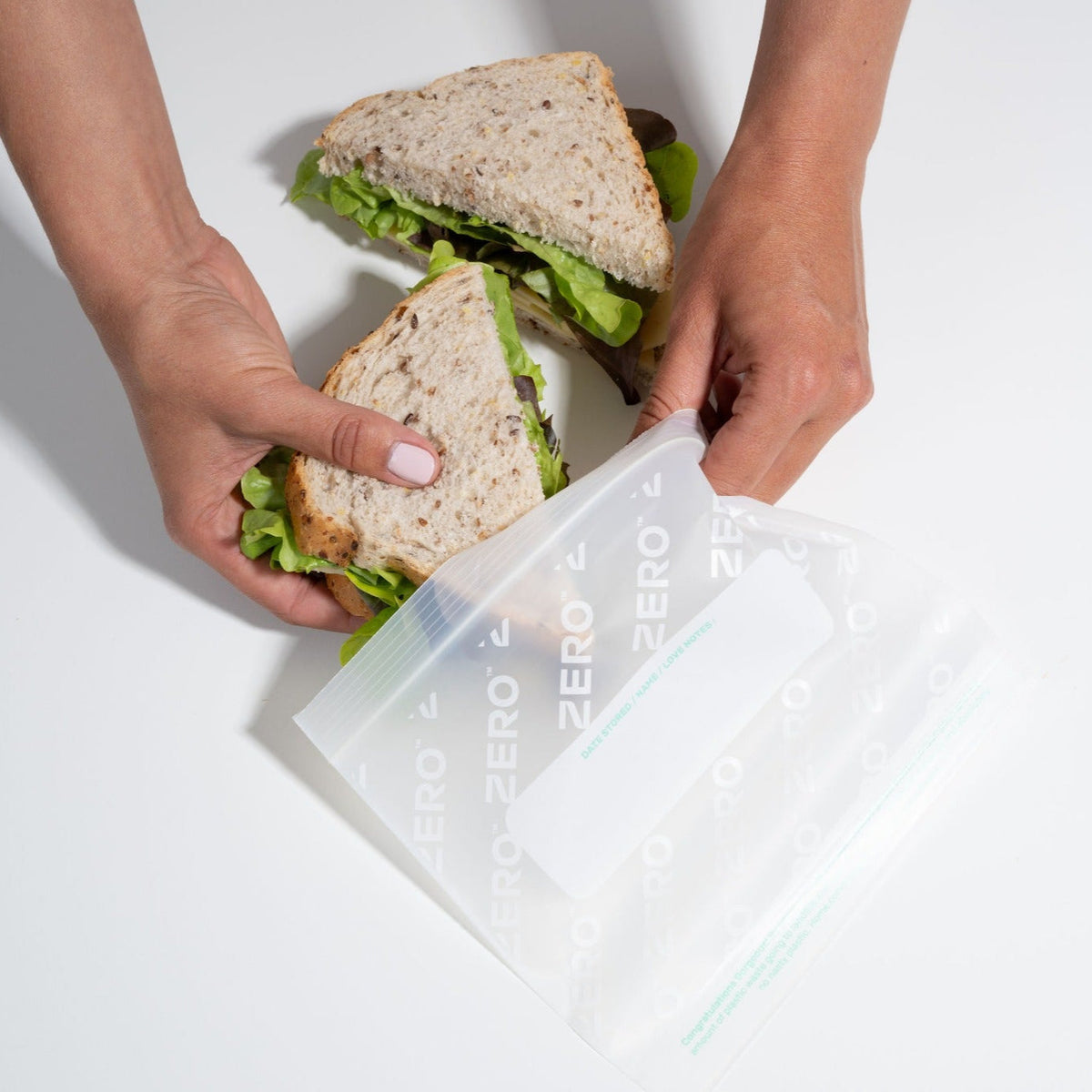
The Zero Store’s catalogue reflects exactly this discipline. Its Plastic-Free Cling Wrap, Resealable Food Storage Bags, Reusable Cleaning Cloths, Cleaning Wipes, Plastic Free Produce Bags, Baby Wipes, Commercial Cleaning Cloth, and Makeup Wipes all publish their underlying bio-polymer composition, whether PLA, PBAT, or PHA, rather than relying on a vague “eco-friendly” tag.

That transparency extends to its educational content, including guidance on spotting greenwashing in compostable claims and a breakdown of home versus industrial compostable standards, both aimed at reducing the exact confusion that trips up well-meaning shoppers and manufacturers alike.

What product developers get wrong about compostable claims

What product developers get wrong about compostable claims — overview diagram

Most product developers treat certification as a marketing checkbox rather than an engineering constraint, and that’s backwards. The lab evidence should shape material selection from day one, not get bolted on after packaging is already designed.

If home compostable labelling is genuinely the goal, design for the weakest link in your intended disposal chain. A cling wrap that performs beautifully in a controlled industrial windrow but stalls in a suburban compost bin isn’t home compostable, whatever the marketing copy says. Document every material component honestly, because vague sourcing claims are what turn a defensible certification into a greenwashing accusation.

— Damien

Certified materials, real products: where to go next

Reading about AS 5810 is one thing; seeing it applied to products you can actually buy is another. The Zero Store’s range gives Australian consumers and product teams a concrete look at what compliant, disclosed compostable packaging looks like in practice, rather than a marketing claim with nothing underneath it.

Plastic Free Produce Bags (2 Pack)

If you’re a manufacturer benchmarking your own line, the Plastic-Free Cling Wrap and Resealable Bags collection show how PLA and PBAT blends get documented on a product page, material by material. For cleaning and hygiene categories, the Commercial & Hospitality range demonstrates how the same disclosure standard applies at bulk volumes, not just single retail units. Worth a read alongside your own test reports: the guide on spotting greenwashing in compostable products and the comparison of home versus industrial compostable standards, both written to help teams avoid the labelling mismatches covered above.

If you’re developing a product and want to talk through material specifications or sourcing questions, get in touch with The Zero Store directly through Thezerostore to start that conversation.

Hands inspecting bio-polymer material samples

Where to check certification details before you commit

Start with the ABA’s Home Compostable Verification Programme page for AS 5810 requirements, and cross-check international equivalents like OK compost HOME or BPI’s certification programme if you’re selling into those markets too. Before assuming kerbside collection, confirm acceptance with your local council, since certification doesn’t guarantee kerbside programs will take the product. Speak with an accredited lab and the scheme owner early, not after packaging is finalised.

Sources

Latest Stories

This section doesn’t currently include any content. Add content to this section using the sidebar.