Choose PLA when you need clear, rigid packaging with a bit of structural backbone; choose PBAT, or a PLA/PBAT blend, when you need flexible film that stretches and resists tearing. Both need an industrial composting facility to break down properly, not a backyard compost bin or a landfill. The Zero Store’s Resealable Food Storage Bags apply exactly this logic, built from a blend designed for real-world composting rather than marketing claims.


TL;DR:

  • Certification is essential to confirm a product’s compostability, with standards like ISO 17088, ASTM D6400, and EN 13432 providing verified benchmarks.
  • PLA and PBAT only biodegrade under industrial composting conditions, which involve high temperatures and microbial activity rarely present in home or landfill environments.
  • Blending PBAT into PLA significantly increases flexibility and tear resistance while influencing degradation behavior, but processing quality affects performance.
  • Disposing of PLA or PBAT items in standard household waste or landfills will result in long, unpredictable breakdown times, often risking fragmentation into microplastics.
  • The Zero Store’s resealable bags use certified PLA and PBAT blends designed for industrial composting, with transparent ratios and disposal guidance to avoid greenwashing.

Table of Contents

PLA vs PBAT: what these materials actually are

PLA (polylactic acid) is a plant-based polyester made by fermenting starches, usually from corn or sugarcane, into lactic acid and then polymerising it into a rigid, glassy plastic. PBAT (polybutylene adipate terephthalate) is an aliphatic-aromatic co-polyester, and it’s typically made from fossil feedstock, engineered specifically to be soft, stretchy and quick to break down under composting conditions once discarded.

That feedstock difference matters more than it might sound. PLA’s plant origin is why it’s classed as bio-based, and why production can cut carbon emissions by up to 70% compared with conventional fossil-based plastics when measured cradle-to-gate. PBAT doesn’t offer that same carbon advantage since it’s derived from petroleum, but it earns its place by doing something PLA can’t: bending, stretching and tearing gracefully rather than snapping.

Three terms get thrown around loosely in this space, so it’s worth pinning them down:

  • Bio-based describes where the carbon in the plastic comes from (plants, in PLA’s case), not what happens when you throw it away.
  • Biodegradable means microorganisms can break the material down into water, carbon dioxide and biomass, given the right conditions.
  • Compostable is a stricter, certified version of biodegradable: the material breaks down within a defined timeframe, doesn’t leave toxic residue, and meets a recognised standard.

A material can be biodegradable without being certified compostable, and that gap is where a lot of the confusion (and the greenwashing) lives.

How do PLA and PBAT perform under real-world stress?

PLA behaves like a well-mannered rigid plastic. It has a high modulus, meaning it resists bending and holds its shape, and it’s naturally clear, which is why you’ll find it in cups, cutlery and window-fronted food containers. Its weakness is elongation: PLA is brittle, snapping rather than stretching when pushed past its limit.

PBAT sits at the opposite end. It has high elongation at break and strong tear resistance, so it survives folding, stretching and rough handling without splitting, which is exactly what you want in a film or a flexible bag.

  • PLA: high stiffness, good clarity, low elongation, brittle under stress.
  • PBAT: low stiffness, high elongation, excellent tear resistance, softer to the touch.
  • Blends: tuned ratios borrow strength from both, trading a bit of clarity for a lot of flexibility.

Heat resistance is the other big divide. PLA starts softening at around 55 to 60°C, which is why a PLA cup left in a hot car or filled with boiling liquid can warp. PBAT tolerates somewhat higher service temperatures, which suits it to applications where the film might sit somewhere warm before use.

Blending changes the picture faster than most people expect. Even 10 to 30% PBAT mixed into a PLA matrix can increase elongation at break by orders of magnitude, turning a brittle sheet into a genuinely usable flexible film. Getting that right isn’t just a matter of mixing two pellets together, though. Compatibilisers and processing conditions decide whether the blend holds together evenly or separates into weak, uneven patches, and recent advances in PLA/PBAT blend films have specifically targeted better tear strength for food packaging. Grade and processing method matter as much as the base recipe.

Where manufacturers actually use PLA, PBAT and blends

Product designers don’t pick a material at random. Each polymer’s mechanical profile points it towards a specific job, and most compostable packaging on shelves today reflects that logic directly.

  1. Rigid cups, clamshells and cutlery rely on pure PLA or heat-treated CPLA, taking advantage of its clarity and stiffness where shape retention matters more than flexibility.
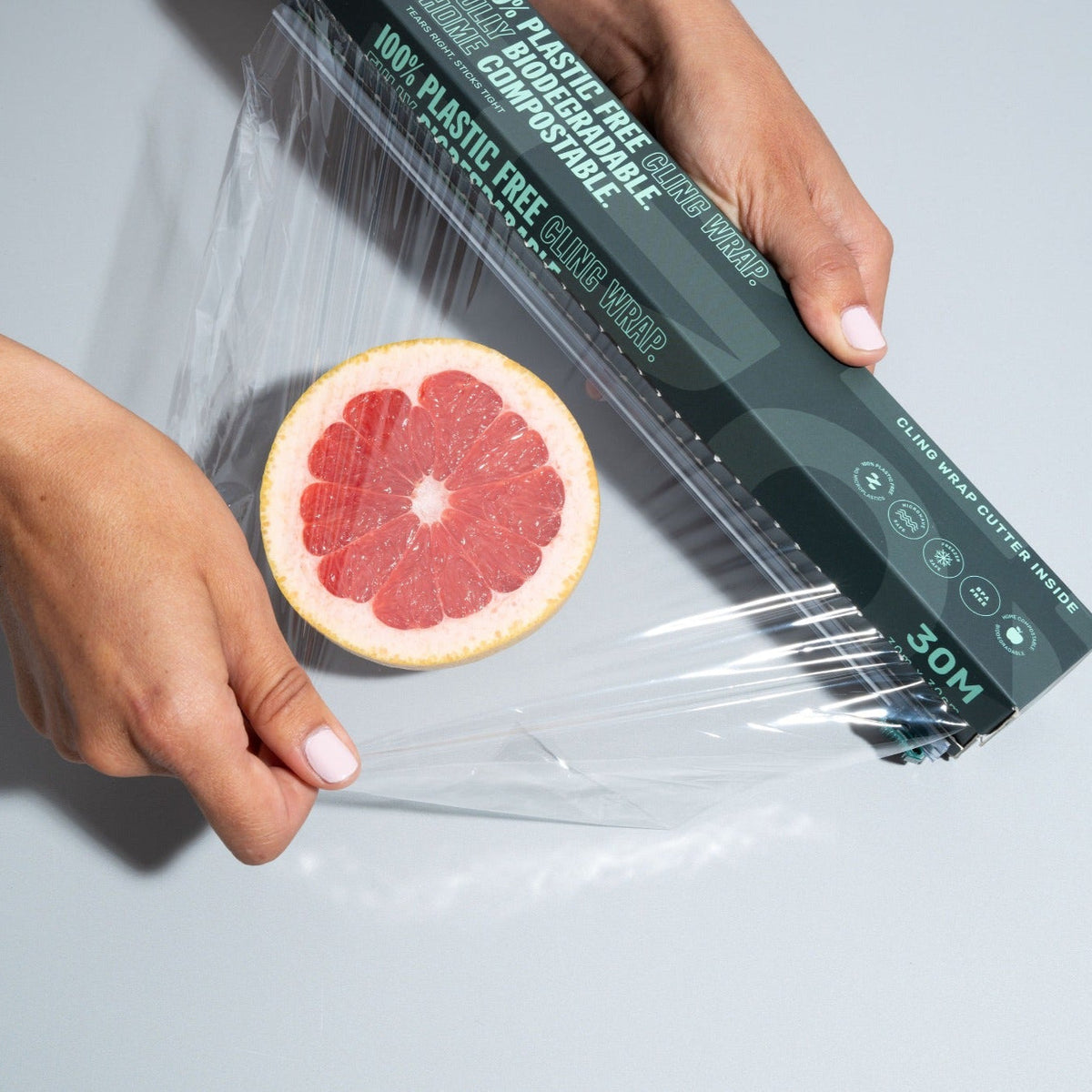
  2. Films and cling film alternatives lean on PBAT-heavy blends, since flexibility and tear resistance are non-negotiable for anything that needs to stretch over a bowl or wrap around food.
  3. Agricultural mulch film typically uses PBAT-rich formulations, chosen because the material needs to survive weather and handling in the field before breaking down in soil.
  4. Compostable bags and liners, including resealable storage bags, generally use PLA/PBAT blends, balancing PLA’s structure with PBAT’s stretch so the bag holds its shape yet still seals and flexes.

Blend ratios vary by application, but 60/40 and 70/30 PLA-to-PBAT mixes are common starting points in film work. Push PBAT content higher and you gain flexibility at the cost of some clarity and stiffness; push PLA higher and you get a crisper, clearer film that’s more prone to tearing. Processing matters too: PBAT is added partly because it improves how well a film blows during manufacturing, reducing the tear-prone weak spots that pure PLA films tend to develop when stretched thin.

Does PLA or PBAT actually biodegrade, and under what conditions?

Both materials biodegrade, but only under conditions most households and councils don’t provide. That’s the single most misunderstood fact in this entire category.

Does PLA or PBAT actually biodegrade, and under what conditions? — overview diagram

International standards spell out exactly what “compostable” is supposed to mean. ISO 17088 and ASTM D6400 both require materials to hit measurable disintegration and biodegradation thresholds within a set window, and EN 13432 follows a similar logic in European testing. Under these standards, both PLA and PBAT need aerobic industrial composting conditions, roughly 55 to 60°C, high moisture and active microbial populations, to reach 90% biodegradation within 180 days. PLA specifically can disintegrate within 12 weeks and reach that 90% biodegradation mark within 24 weeks under standardised industrial conditions.

Home compost heaps rarely get anywhere near 55°C, and landfill is worse: it’s anaerobic, cool, and largely starved of the microbial activity these materials need. Put a PLA container in either environment and it won’t vanish. It will sit there, potentially fragmenting into smaller pieces over a much longer, unpredictable timeframe.

Manufacturing method changes the outcome more than most people assume. In one trial, 3D-printed PLA specimens reached over 90% disintegration within 12 weeks under industrial composting, while injection-moulded PLA specimens of the same material managed only around 54% in the same period.

That gap comes down to surface topography and crystallinity, not the base polymer. A 3D-printed part has more exposed surface area for microbes to colonise, while an injection-moulded part is denser and more resistant. The practical takeaway: the same material, sold in two different product forms, can behave very differently once it hits a composting facility. Buyers shouldn’t assume uniform performance just because the label says “PLA.”

Are PLA and PBAT safe, and what about microplastics?

PLA is generally considered safe for food-contact applications when it’s sourced responsibly and free of harmful additives, and PBAT is formulated specifically to be non-toxic as it breaks down in composting environments. Neither material is inherently the safety concern; the risk sits in what happens when they’re disposed of incorrectly.

Here’s the distinction that gets lost most often: biodegradation and fragmentation are not the same process. True biodegradation is microbial mineralisation, where microorganisms actually consume the polymer and convert it into water, carbon dioxide and biomass. Fragmentation is what happens when a compostable plastic ends up somewhere without enough heat or microbial activity, breaking into smaller physical pieces without being properly digested. Those fragments can behave like microplastics, at least in the short term, even though the base polymer is technically biodegradable under the right conditions.

That’s why disposal route matters more than the material itself. A few practical checks reduce the risk:

  • Check for food-contact certification before assuming a product is safe for direct contact with food.
  • Follow the disposal instructions on the packaging rather than guessing.
  • Avoid home composting for PLA or PBAT items. If your council doesn’t collect for industrial composting, general waste is the more honest option than a garden bin.
  • Watch for PLA microplastic concerns specifically tied to incomplete or improper disposal, rather than the material’s inherent chemistry.

How to spot a genuine compostable claim (and avoid greenwashing)

Not every product labelled “biodegradable” or “eco-friendly” has earned it. Certification is the difference between a tested claim and a marketing decision, and four standards do most of the heavy lifting worldwide: AS 4736 (the Australian standard for industrial compostability), EN 13432 (the European equivalent), ISO 17088, and ASTM D6400 (both used widely across international testing). Each one certifies that a product disintegrates and biodegrades within a defined timeframe under industrial composting, not that it will vanish in a home bin.

Before trusting a “compostable” label, check these details:

  • The declared blend ratio (PLA-heavy, PBAT-heavy or an even mix), since that shapes both performance and disposal behaviour.
  • The intended disposal route stated on the packaging: industrial composting, home composting, or general waste.
  • Whether the brand publishes or references actual test reports against a named standard, rather than a vague “eco” claim.
  • Supplier transparency: a business willing to name its certification body and test lab is a stronger signal than one that isn’t.

Experts caution against assuming “compostable means home-compostable,” and Australian Packaging Covenant Organisation guidance recommends checking for recognised certification and confirming your local facility actually accepts the material before buying.

Pro Tip: Ring your local council or check its waste guide before assuming a “compostable” product will be accepted at your nearest industrial composting facility. Certification tells you the product can biodegrade correctly; it doesn’t guarantee your bin collection does anything with it.

Why The Zero Store treats certification as non-optional

Damien, writing for The Zero Store, has spent enough time in this category to know that “compostable” printed on a packet means almost nothing without a standard behind it. The Zero Store builds its resealable bags around PLA and PBAT specifically because the blend logic described above isn’t theoretical. It’s the same reasoning that governs which polymer goes into a rigid tub versus a stretchy film, applied to a household product people actually use daily.

Evaluating a material for a resealable bag means checking three things before it ever reaches a warehouse:

  • Does the blend ratio genuinely deliver both structure (so the bag holds its shape when packed) and flexibility (so the seal actually reseals)?
  • Is the certification real and checkable, rather than a self-assigned “eco” badge?
  • Does the product come with honest disposal guidance, rather than vague sustainability language?

Customers buying Resealable Food Storage Bags should expect the same end-of-life reality covered throughout this piece: these bags are built for industrial composting pathways, not a backyard heap. That’s not a limitation The Zero Store hides. It’s the standard the whole category should be held to.

What actually matters when you’re choosing between these materials

The industry conversation around PLA and PBAT spends too much time arguing which material is “better” and not enough time on the question that actually determines outcomes: what happens to this product after you’re done with it? A PLA cup and a PBAT film aren’t competing products; they’re tools built for different jobs, and most of the meaningful engineering happens in how they’re blended, not in picking a side.

Where conventional advice falls short is treating “compostable” as a finish line rather than a conditional promise. It’s conditional on temperature, moisture, microbial activity and, as the research on 3D-printed versus injection-moulded PLA shows, even on how the product was manufactured. A label without a named standard behind it is a guess dressed up as a guarantee.

If there’s one thing worth prioritising over everything else in this comparison, it’s checking whether your local facility will actually accept the product you’re about to buy. The best material in the world is worthless in a landfill.

— Damien

Find compostable food storage that matches this guidance

Reading a technical comparison like this one is useful, but it doesn’t put a better product in your kitchen drawer. The Zero Store exists to close that gap: every bag in the range is built from certified PLA and PBAT blends chosen using the exact material logic covered above, not a generic “green” label slapped on standard plastic.

Resealable Food Storage Bags

If you’ve been storing leftovers in single-use plastic bags and want a resealable option built on genuine compostable chemistry rather than marketing shorthand, The Zero Store’s Resealable Food Storage Bags are designed exactly for that switch. They combine PLA’s structure with PBAT’s flexibility so the seal actually holds, and they’re built with industrial composting end-of-life in mind rather than vague eco-claims. For procurement teams or households comparing sustainable packaging options more broadly, resources like Spaceman’s guide to green packaging for businesses cover useful adjacent ground. Head to the Resealable Food Storage Bags product page to check current pack sizes and add a set to your next order.

Standards and studies worth checking directly

Verifying a compostable claim yourself takes ten minutes and beats trusting a packaging blurb. Start with the standards bodies and regulator guidance that actually define what “compostable” means in practice:

  • ISO 17088 and ASTM D6400 requirements explained by HealthShare Victoria, covering the composting conditions and timeframes both PLA and PBAT must meet.
  • APCO’s guidance on compostable packaging claims, for checking AS 4736 certification and local acceptance.
  • The RSC Sustainability study on manufacturing effects on PLA degradation, for anyone who wants the underlying disintegration data.

Confirm with your own council or waste provider whether your nearest facility accepts the specific product before you buy it, since certification and local acceptance are two separate checks.

Sources

Latest Stories

This section doesn’t currently include any content. Add content to this section using the sidebar.